

Digital out-of-home advertising continues to reshape brand engagement strategies, with sports-focused placements delivering measurable results across diverse venue types. The choice between sports bars and stadium gates represents a fundamental strategic decision that directly impacts campaign performance, audience reach, and return on investment for brands entering 2025.
Recent data reveals that 76% of consumers take action after viewing DOOH advertisements, with 62% of consumers noticing digital billboards within the past month. This engagement translates to substantial business impact, particularly when placements align with audience behavior and consumption patterns in sports-focused environments.
Sports Bars: Sustained Engagement and Conversion Opportunities
Sports bars create consistent touchpoints with passionate fan audiences throughout extended sports seasons, establishing regular viewing patterns that translate to repeated brand exposure. The venue environment supports prolonged engagement sessions, with typical patron visits lasting 2-3 hours compared to brief gate interactions at stadium venues.
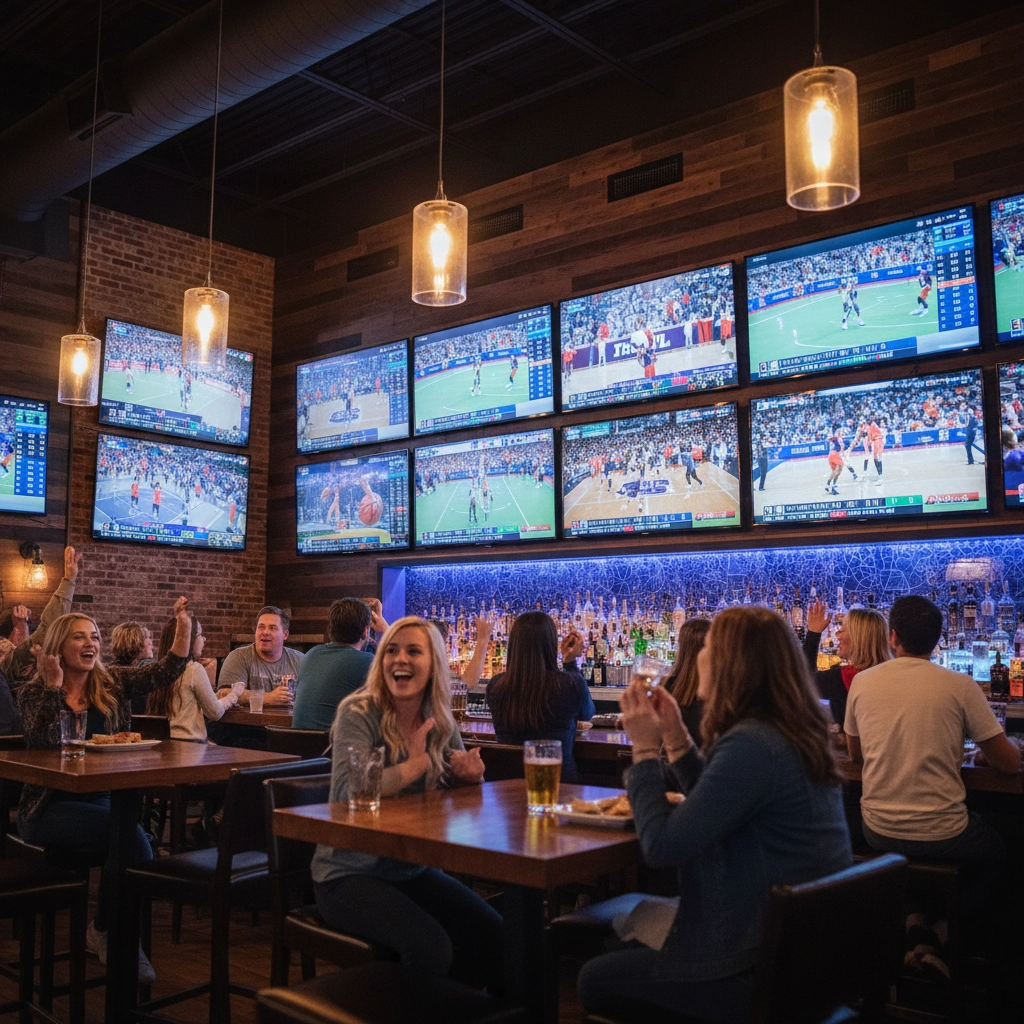
Data indicates that live sports programming drives a 21% increase in unit-level sales at bar and restaurant establishments, creating an environment where consumers demonstrate heightened spending behavior and brand receptivity. This consumption mindset aligns with immediate conversion opportunities for food delivery services, beverage brands, sports betting platforms, and team merchandise.
Audience Characteristics and Behavior Patterns
Sports bar patrons exhibit distinct engagement characteristics that benefit DOOH campaigns. The social atmosphere encourages mobile device usage, with 74% of mobile users taking action on their phones after viewing DOOH advertisements. This behavior pattern supports direct response campaigns, app downloads, and immediate purchase decisions.
Regular patronage patterns create frequency advantages throughout sports seasons. Weekly or bi-weekly visits by dedicated fans generate repeated brand exposure cycles that support brand recall and purchase consideration development. The relaxed environment promotes message absorption during natural viewing breaks between game action.
Campaign Execution Considerations
Sports bar DOOH campaigns require distributed inventory management across multiple independent venues, presenting both opportunities and challenges for brand marketers. Screen quality, placement positioning, and audience demographics vary significantly between establishments, requiring flexible creative approaches and localized messaging strategies.
Attribution measurement in sports bar environments benefits from proximity-based tracking technologies and mobile engagement metrics. The extended dwell time supports comprehensive interaction tracking, from initial ad exposure through mobile actions and potential in-venue purchases.
Stadium Gates: Mass Reach and Premium Brand Association
Stadium advertising delivers unmatched scale during live events, engaging thousands of attendees simultaneously across professional sports games, concerts, and large-scale entertainment gatherings. These venues attract highly engaged audiences fully immersed in event excitement, creating emotional environments where brand associations achieve maximum impact.
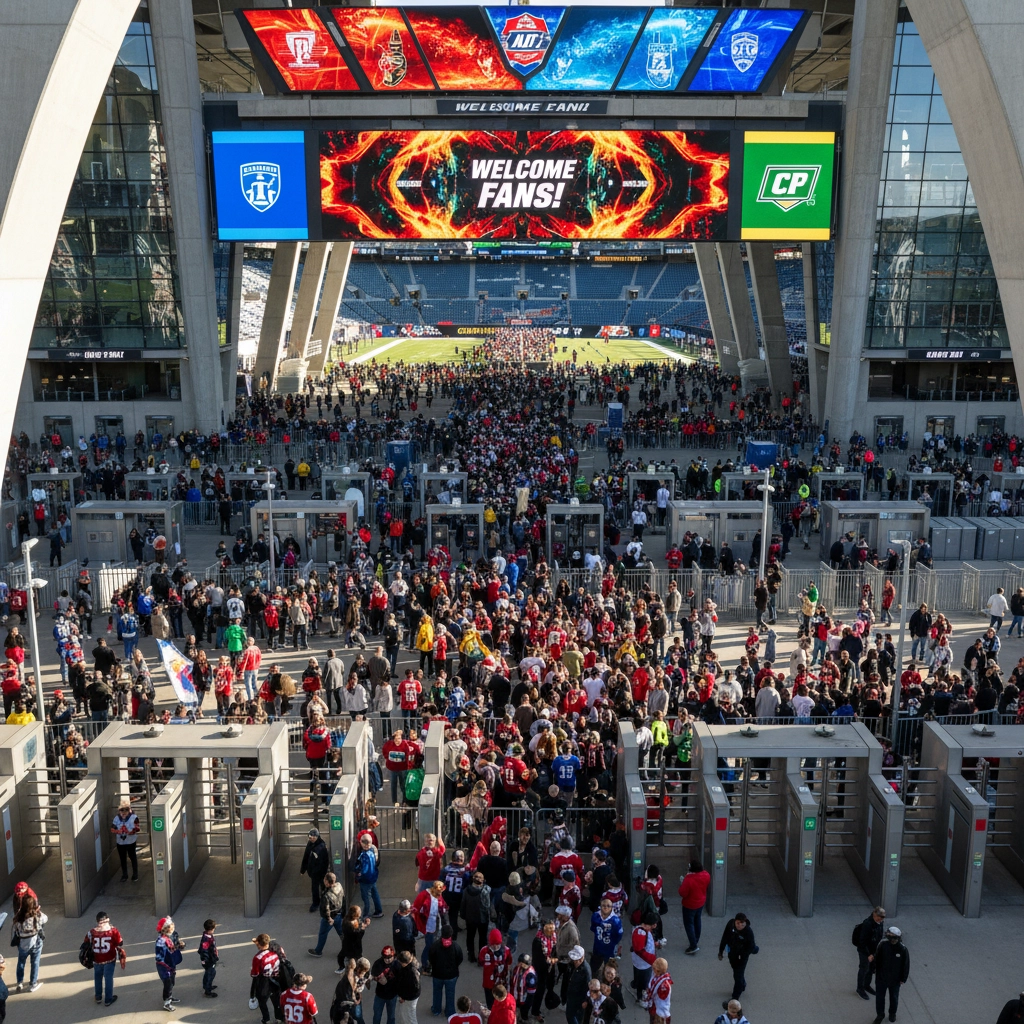
Major stadium venues host 20,000-80,000+ attendees per event, providing massive single-event reach that exceeds sports bar capabilities. Digital displays around entry points, concourses, and scoreboards ensure high visibility during peak excitement moments when audience attention focuses on event-related content.
Strategic Advantages and Brand Positioning
Stadium DOOH placements offer premium brand positioning opportunities through association with professional sports teams and major entertainment events. This prestige factor elevates brand perception and creates memorable connections between products and high-profile sporting moments.
Aided ad recall for DOOH advertising reaches approximately 82%, with stadium environments amplifying this effect through high-energy settings and concentrated audience attention. The emotional investment of live event attendance enhances message retention and brand association development.
Operational Requirements and Investment Levels
Stadium advertising typically requires premium pricing structures tied to venue exclusivity and event prestige. Minimum investment levels exceed sports bar campaigns, with costs concentrated around high-profile events and championship seasons when audience engagement peaks.
Exposure frequency remains limited to event days, typically 40-80 occasions per year for professional stadium venues. This concentrated schedule requires strategic timing alignment with product launches, promotional campaigns, and seasonal marketing objectives.
Performance Comparison and Strategic Analysis
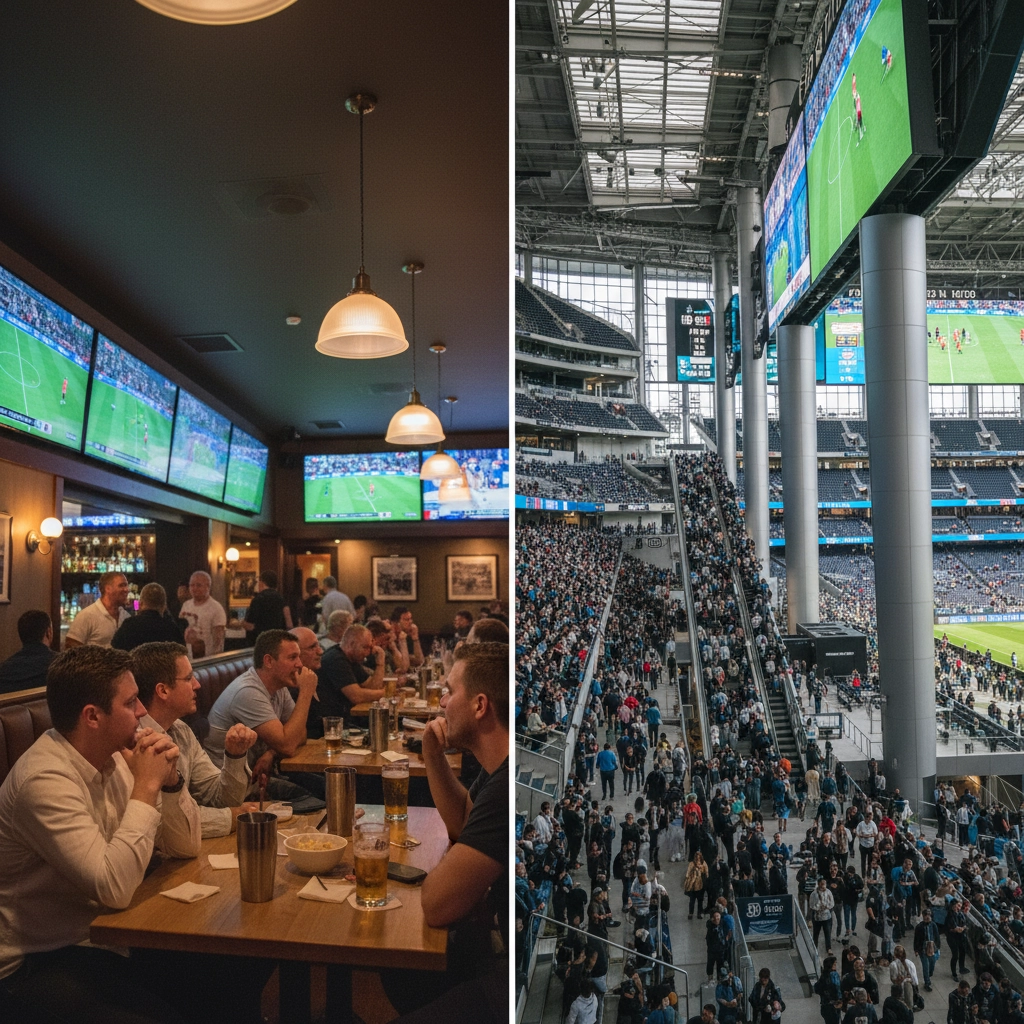
The fundamental difference between sports bar and stadium gate DOOH placements centers on reach versus frequency trade-offs. Sports bars deliver consistent frequency throughout sports seasons, while stadiums provide massive reach during concentrated event periods.
Reach and Frequency Metrics:
- Sports bars: 50-300 viewers per location with weekly exposure patterns
- Stadium gates: 20,000-80,000+ attendees with limited event-day exposure
Engagement Duration Analysis:
- Sports bars: 2-3 hour viewing sessions supporting extended brand exposure
- Stadium gates: 30 seconds to 2 minutes during gate passage
Conversion Environment Assessment:
- Sports bars: Immediate consumption mindset with mobile engagement opportunities
- Stadium gates: Brand awareness focus with delayed conversion potential
Strategic Placement Recommendations
Brands prioritizing direct response metrics and measurable conversions benefit from sports bar placements due to extended dwell times and immediate mobile engagement opportunities. The environment supports conversion-focused campaigns for local and regional brands with modest budget allocations seeking consistent seasonal presence.
National brands pursuing maximum reach and prestige brand association achieve optimal results through stadium gate placements. These venues excel during product launches, championship seasons, and major sporting events when media attention and fan engagement reach peak levels.
Hybrid Campaign Strategies
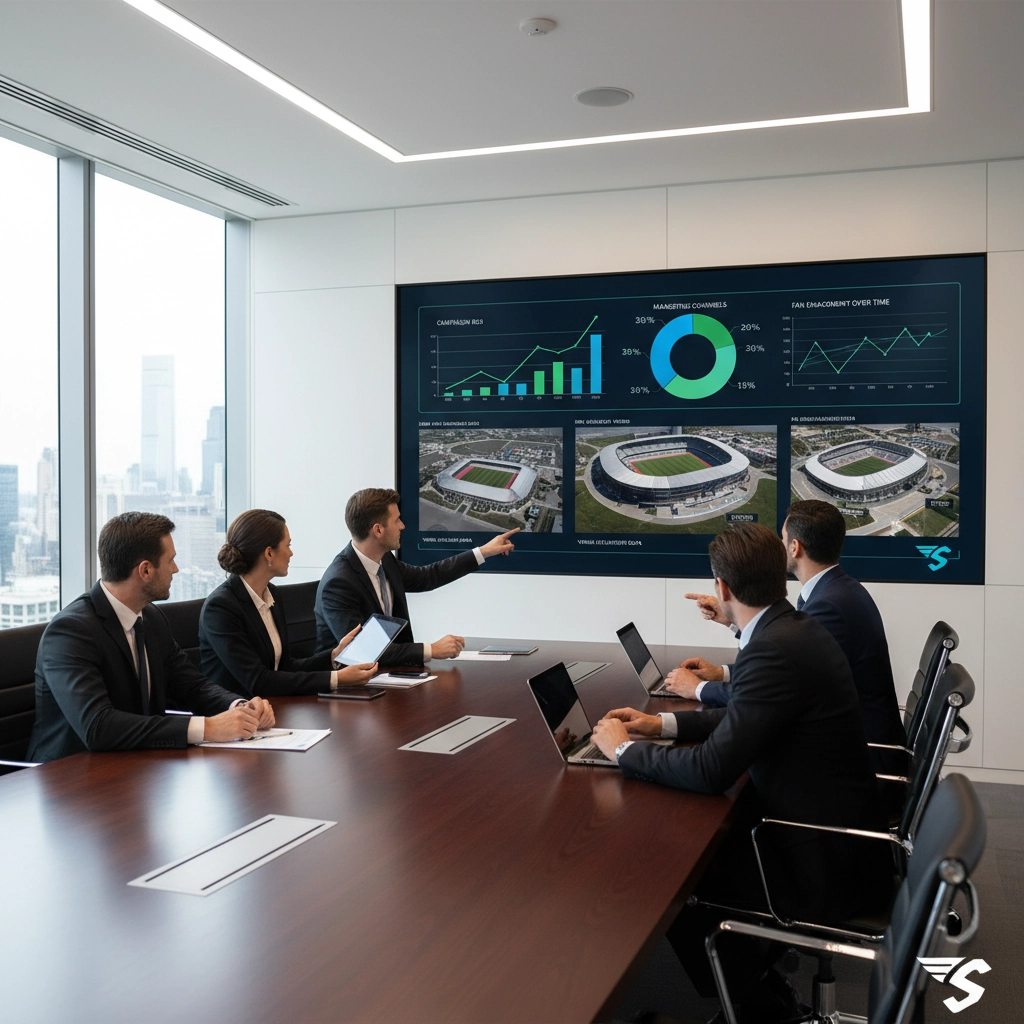
Advanced brands implement integrated approaches leveraging both placement types strategically. Stadium DOOH builds broad awareness and emotional brand connections during marquee events, while sports bars deliver consistent reinforcement and conversion opportunities throughout extended seasons.
This integrated methodology leverages the 316% ROI boost that out-of-home advertising provides when combined with mobile campaigns, creating comprehensive touchpoints along customer journey progression. The approach maximizes both reach objectives and performance-based outcomes.
Budget Allocation and Campaign Planning
Sports bar campaigns support flexible budget distribution across multiple venues with lower entry requirements, enabling testing and optimization throughout campaign periods. Stadium placements require concentrated budget allocation around specific events with premium pricing structures.
Performance measurement varies significantly between placement types. Sports bars support detailed attribution tracking through mobile engagement metrics and proximity-based technologies. Stadium campaigns focus on brand lift studies, aided recall measurement, and long-term brand preference development.
Technology Integration and Advanced Targeting
Programmatic DOOH capabilities enhance both placement types through real-time optimization and audience targeting refinements. Sports bars benefit from weather-triggered content, game schedule integration, and local event coordination. Stadium placements leverage event-specific messaging, team performance triggers, and championship progression content.

Advanced measurement technologies including device ID tracking, geofencing, and cross-platform attribution provide comprehensive campaign performance analysis. These capabilities support budget optimization, creative testing, and audience segment refinement across both venue types.
2025 Market Outlook and Investment Priorities
Industry projections indicate 85% of global advertising executives anticipate increased DOOH investment driven by advanced targeting capabilities and measurement improvements. Sports-focused placements benefit from this trend through enhanced technology integration and audience data availability.
The digital transformation of traditional out-of-home inventory creates new opportunities for dynamic content delivery and real-time campaign optimization. Sports bars and stadium venues increasingly offer programmatic buying options, automated content management, and integrated analytics platforms.
For brands evaluating sports-focused DOOH strategies in 2025, the optimal approach balances reach objectives with engagement depth requirements. Sports bars currently deliver superior measurable ROI through extended exposure periods and immediate conversion opportunities. Stadium gates remain essential for brands prioritizing mass awareness, emotional connections, and premium brand positioning despite higher investment requirements.
Strategic success depends on aligning placement selection with specific campaign objectives, target audience characteristics, and measurement priorities. Both venue types offer compelling opportunities when matched appropriately with brand goals and budget parameters.
Ready to optimize your sports DOOH strategy for maximum ROI? Contact Dan Kost, CEO at OOH Sports, for expert guidance on placement selection and campaign execution. Visit www.OOHSports.com or call +1 (970) 703-0102 to develop your winning approach.
#Motivation #Branding #Strategy #Marketing #AdvertisingAndMarketing #digitalmarketing #Innovation #Sports