

The OOH Sports network has reached a significant milestone in its expansion strategy, adding seven major metropolitan markets to its sports-focused digital out-of-home platform. This growth extends programmatic DOOH capabilities to key sports markets across the United States, providing media buyers with unprecedented access to passionate sports audiences at scale.
The expansion increases total network coverage by approximately 8,400 digital screens across strategic locations surrounding professional sports venues, college athletic facilities, sports bars, fitness centers, and high-traffic sports entertainment districts. The move represents a strategic response to growing advertiser demand for precise, sports-focused DOOH inventory that reaches fans during high-engagement moments.
Seven Markets That Reshape Sports DOOH Strategy
The network expansion encompasses markets identified for their robust sports culture, demographic diversity, and substantial year-round sporting event calendars. The newly added markets include:
Atlanta Market: Over 1,200 screens positioned across venues near Mercedes-Benz Stadium, State Farm Arena, and Truist Park, capturing audiences engaged with professional football, basketball, baseball, and soccer. The market's emergence as a soccer hub, combined with its substantial college sports presence, positions it as one of the fastest-growing sports advertising markets in the Southeast.
Dallas-Fort Worth Market: Approximately 1,400 screens covering areas surrounding AT&T Stadium, American Airlines Center, Globe Life Field, and the thriving Frisco sports district. This market delivers access to audiences passionate about professional football, basketball, baseball, hockey, and soccer, plus significant college football engagement.
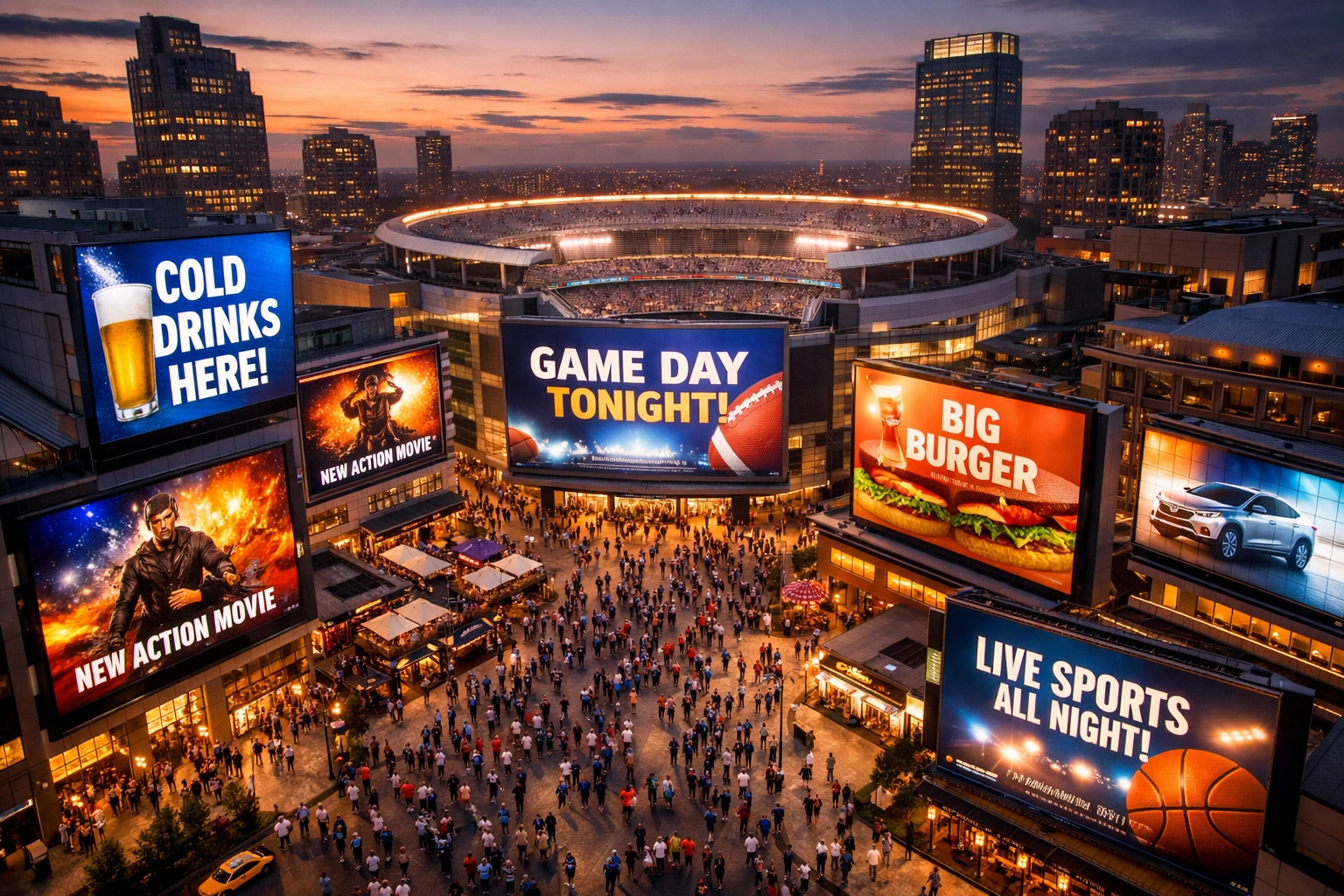
Houston Market: Nearly 1,100 screens concentrated around NRG Stadium, Toyota Center, Minute Maid Park, and the expanding sports entertainment corridor. The market provides strong demographics across professional football, basketball, baseball, and soccer audiences, with notable Hispanic market representation.
Kansas City Market: Over 800 screens positioned near Arrowhead Stadium, Kauffman Stadium, and T-Mobile Center, offering targeted access to dedicated football and baseball fan bases. The market's passionate sports culture and demographic composition make it valuable for brands seeking authentic fan engagement.
Philadelphia Market: Approximately 1,300 screens covering the South Philadelphia Sports Complex area and surrounding entertainment districts near Lincoln Financial Field, Wells Fargo Center, and Citizens Bank Park. This market delivers one of the nation's most engaged sports fan bases across football, basketball, baseball, and hockey.
Boston Market: Roughly 1,100 screens strategically placed around Fenway Park, TD Garden, and Gillette Stadium, capturing audiences for baseball, basketball, hockey, football, and soccer. The market's passionate sports culture and high household income demographics create premium advertising opportunities.
Seattle-Tacoma Market: Close to 1,500 screens positioned around Lumen Field, T-Mobile Park, and Climate Pledge Arena, accessing football, baseball, hockey, and soccer audiences. The market's tech-savvy demographics and strong outdoor sports culture provide unique targeting opportunities.
Strategic Impact for Media Buyers
The expansion delivers three critical advantages for programmatic DOOH campaigns targeting sports audiences.
First, geographic diversification enables national brands to execute coordinated campaigns across multiple markets simultaneously while maintaining consistent messaging near sporting events. Rather than negotiating individual market contracts or managing fragmented vendor relationships, media buyers access standardized inventory across all seven markets through a single platform.
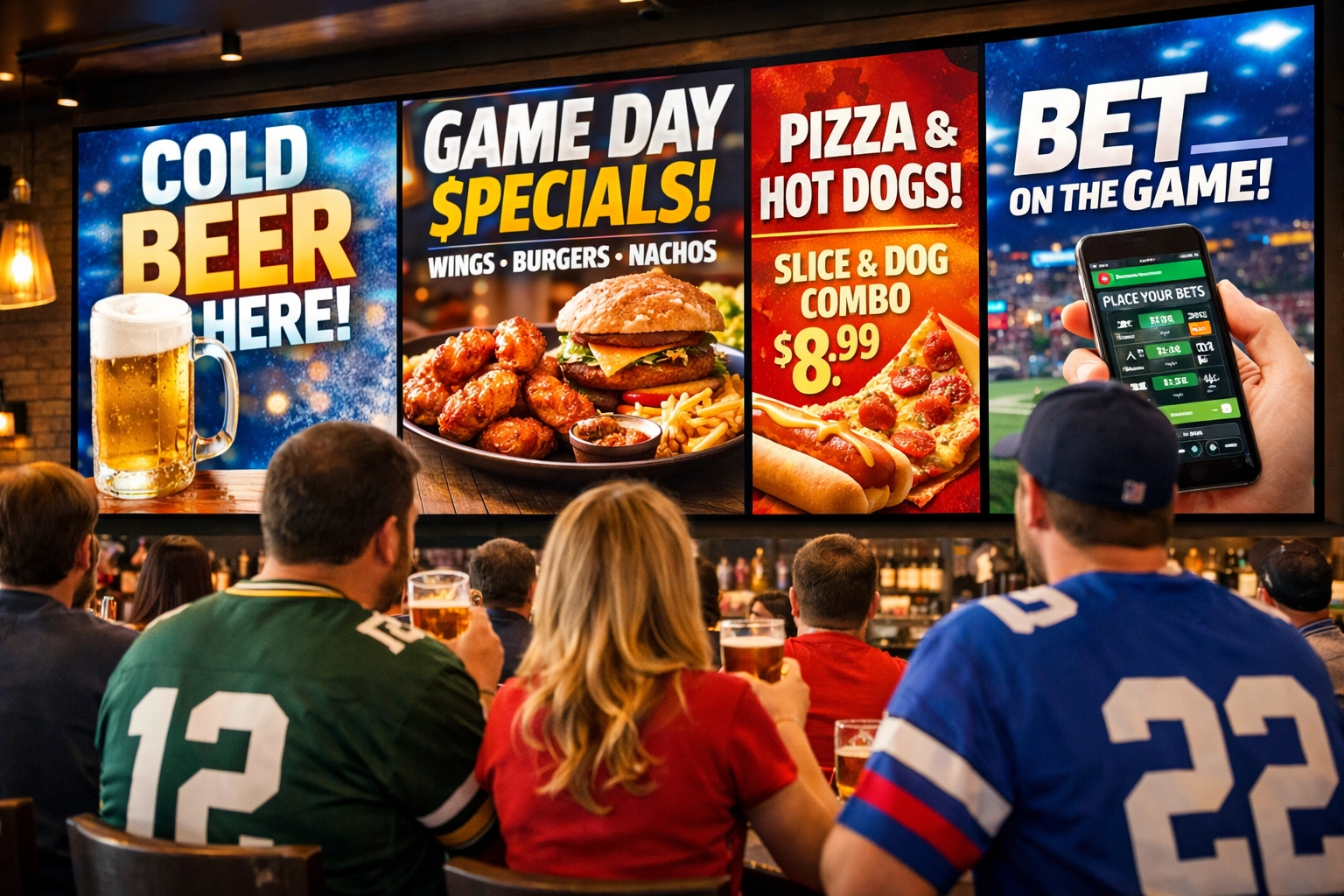
Second, the increased screen density within each market improves frequency and reach metrics. With multiple touchpoints surrounding major venues, campaigns achieve higher impression volumes during game days, tournament weekends, and playoff periods. The concentration of screens in sports-centric locations reduces wasted impressions on audiences with lower sports affinity.
Third, the expansion increases available inventory during peak sports seasons, addressing capacity constraints that previously limited campaign scale during high-demand periods. Media buyers gain more flexibility to secure premium placements during major sporting events without competing for limited screen availability.
Network Capabilities and Coverage Details
The expanded network encompasses diverse venue types strategically selected for sports audience concentration. Screen placements include:
- Sports bars and restaurants within a two-mile radius of major sports venues
- Fitness centers and health clubs with sports-focused clientele
- Transit hubs serving stadium and arena routes
- Entertainment districts adjacent to sports complexes
- College campus locations near athletic facilities
- Retail locations in sports-centric neighborhoods
- Gas stations and convenience stores on routes to sporting venues
Screen formats vary by location, incorporating large-format displays in high-visibility outdoor locations, medium-format screens in bars and restaurants, and smaller-format screens in retail and transit environments. This format diversity enables creative flexibility and allows campaigns to deploy different messaging strategies based on viewing context and dwell time.
All inventory within the seven new markets connects to programmatic buying platforms, enabling real-time bidding, dynamic creative optimization, and automated campaign management. Integration with major demand-side platforms ensures seamless access for media buyers already operating within programmatic ecosystems.
Advanced Targeting and Activation Capabilities
The network expansion brings sophisticated audience targeting capabilities to all seven markets. Location-based targeting parameters enable campaigns to activate based on:
- Proximity to specific venues during scheduled events
- Time-based triggers aligned with game schedules
- Weather conditions impacting outdoor sporting events
- Team performance metrics such as winning streaks or playoff positioning
- Rivalry matchups generating elevated fan engagement

Data integration partnerships enable campaigns to layer first-party and third-party audience data onto geographic targeting, creating precise audience segments. Media buyers can target demographics, behavioral segments, and custom audiences while maintaining the geographic focus that makes sports DOOH effective.
Dynamic creative capabilities allow campaigns to update messaging in real time based on game scores, player statistics, or other live data feeds. This functionality proves particularly valuable for sports betting advertisers, QSR brands promoting game-day offers, and beverage companies capitalizing on in-the-moment fan excitement.
Attribution methodologies track campaign exposure and correlate it with downstream actions including website visits, store visits, app downloads, and purchases. Device ID matching enables measurement of DOOH campaign impact on digital behavior, providing closed-loop attribution that demonstrates campaign effectiveness beyond impression delivery.
Market Selection Methodology
The selection of these seven specific markets followed a data-driven evaluation process examining multiple factors relevant to sports DOOH effectiveness.
Sports event density ranked as a primary criterion. Markets hosting multiple professional teams across different sports, combined with substantial college athletics programs, generate consistent year-round inventory demand. Seasonal variations in sports calendars create natural opportunities for different advertiser categories throughout the year.
Population demographics and household income levels factored into market selection, ensuring sufficient audience scale and purchasing power to support diverse advertiser categories. Markets with growing populations and positive migration trends received prioritization over mature or declining markets.
Venue accessibility and transportation patterns influenced screen placement strategies within each market. Markets with concentrated sports districts benefited from higher screen densities in smaller geographic areas, while markets with distributed venues required broader coverage patterns.
Digital infrastructure and connectivity capabilities ensured reliable screen performance and data transmission. Markets with robust cellular and broadband networks support the real-time data exchanges necessary for programmatic campaign execution and performance measurement.
Implications for Campaign Planning
The expanded network geography changes how media buyers approach sports DOOH campaign planning in several ways.
Regional campaigns gain viability as an efficient reach-building strategy. Rather than focusing solely on the largest markets or attempting fragmented national coverage, brands can concentrate budgets across the seven new markets to achieve meaningful scale while maintaining sports audience focus. This approach proves particularly effective for regional brands seeking efficient expansion or national brands testing sports DOOH before broader rollouts.
Test-and-learn strategies become more robust with access to multiple comparable markets. Media buyers can execute simultaneous campaigns across different markets using varied creative approaches, targeting parameters, or dayparting strategies, then compare performance to identify optimal tactics before scaling investment.
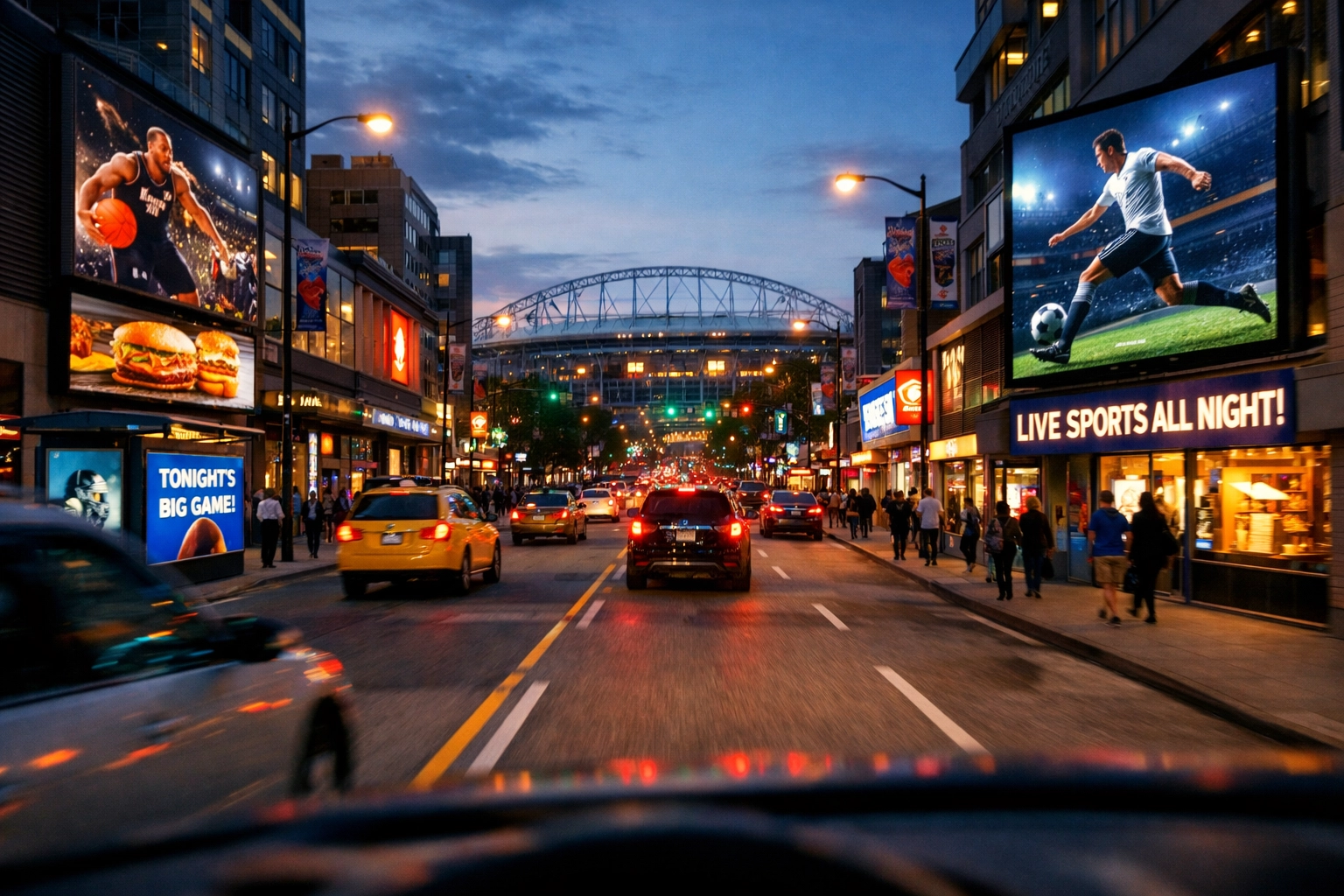
Event-specific activations gain efficiency through coordinated multi-market execution. National sporting events, tournament weekends, or league-wide initiatives enable synchronized campaigns across all seven markets with centralized management and unified reporting.
The expanded inventory base accommodates larger budget allocations from major advertisers who previously exhausted available sports DOOH inventory in individual markets. This capacity increase enables CPG brands, automotive advertisers, financial services companies, and national restaurant chains to deploy sports DOOH as a substantial component of media plans rather than a tactical add-on.
Integration with Broader Media Strategies
The network expansion enhances OOH Sports' role within omnichannel media strategies by providing critical mass across sufficient markets to justify integration with other channels.
Cross-channel frequency management becomes more effective when DOOH coverage spans multiple markets included in national media plans. Brands running television, digital video, social media, and display advertising campaigns can layer sports DOOH across the seven new markets to boost overall reach and frequency among sports audiences.
Retargeting strategies gain scale with expanded geographic coverage. Audiences exposed to DOOH messages within the seven markets become targetable through mobile, display, and video retargeting, creating sequential messaging opportunities that move prospects through marketing funnels. The larger exposed audience pool improves retargeting campaign efficiency and justifies investment in custom creative development.
Attribution models improve with multi-market coverage because larger sample sizes increase statistical confidence in measurement results. Brands can more reliably assess DOOH contribution to conversions, website traffic, store visits, and other KPIs when exposure occurs across seven markets rather than one or two.
The network's integration with major programmatic platforms enables unified buying alongside other digital channels, simplifying campaign execution and budget management. Media buyers allocate budgets across display, video, and DOOH inventory through single interfaces, reducing operational complexity and enabling real-time optimization across channels based on performance data.
Looking Forward
The seven-market expansion represents continued momentum in sports-focused DOOH infrastructure development. As advertiser demand for sports audience access intensifies, particularly amid fragmented media consumption and rising traditional media costs, digital out-of-home positioned around sports venues provides measurable, high-engagement inventory.
The expansion creates opportunities for new advertiser categories to test sports DOOH effectiveness. Categories traditionally underrepresented in sports marketing can now access sports audiences through flexible, programmatic buying rather than committing to long-term sponsorship agreements. This flexibility lowers barriers to entry and encourages experimentation from brands seeking growth.
For media buyers already incorporating sports DOOH into campaigns, the expanded network delivers immediate benefits through increased inventory availability, broader geographic reach, and enhanced campaign scalability. The standardized platform across all seven markets simplifies campaign management while maintaining the local market relevance that drives sports DOOH effectiveness.
Additional information about network coverage, available inventory, and targeting capabilities is available at OOH Sports.