
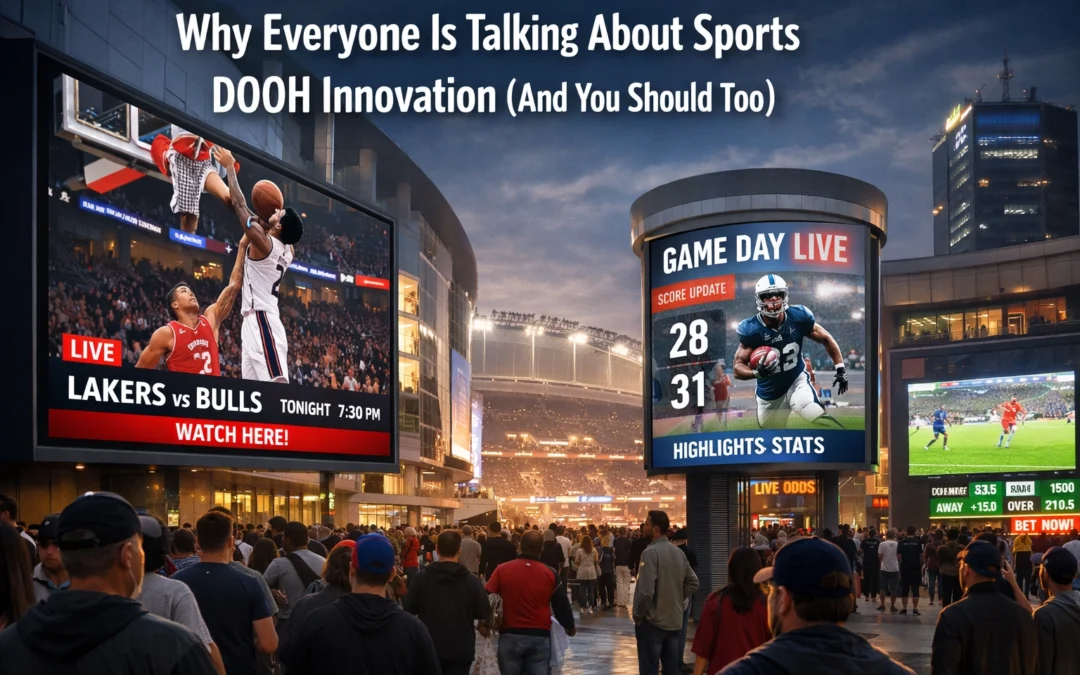
Sports venues have always been prime real estate for advertisers. But something has shifted. Digital out-of-home (DOOH) advertising in sports environments is no longer just another channel. It has become the centerpiece of conversations among media buyers, brand managers, and marketing strategists across industries.
The reason is straightforward: sports DOOH now combines unprecedented scale, proven consumer engagement, and technological capabilities that allow real-time campaign adaptation during live events. For brands looking to reach audiences at high-intent moments, the opportunity is difficult to ignore.
The Scale Opportunity in Sports Environments
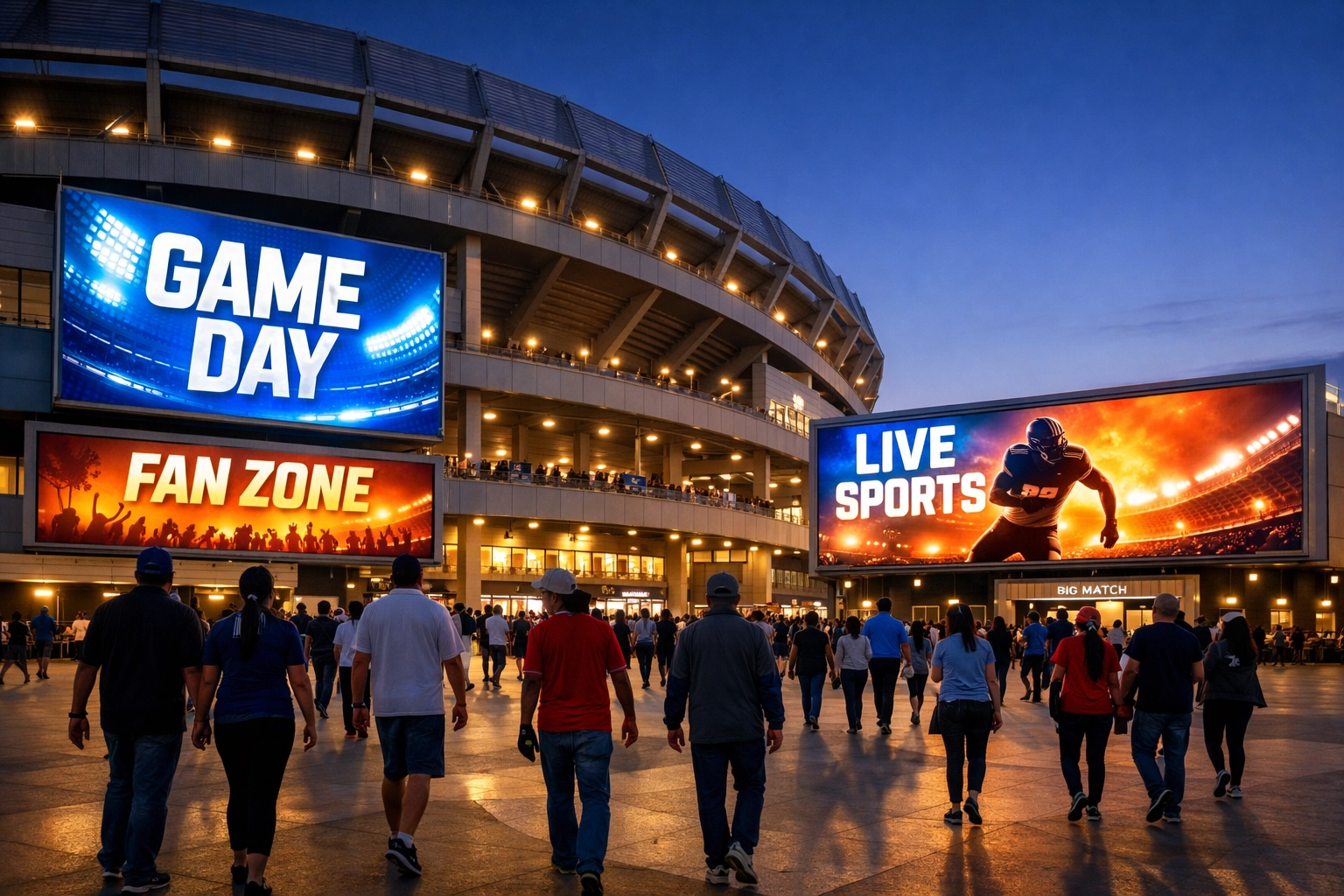
Major sporting events create concentrated audiences that few other channels can match. Millions of fans move through airports, stadiums, transit hubs, and city streets during tournaments, championships, and regular season games. This fan movement generates advertising reach that extends far beyond the stadium itself.
Consider the dynamics at play:
- Fans travel to and from venues through predictable corridors
- Pre-game and post-game activities extend engagement windows
- Local businesses and entertainment districts see increased foot traffic
- Digital screens throughout these environments capture attention during natural dwell times
The physical infrastructure for DOOH in sports contexts has expanded dramatically. Thousands of digital screens now surround sports venues, line transit routes, and populate the retail and hospitality zones where fans congregate. This network creates multiple touchpoints for brand messaging throughout the fan journey.
Proven Engagement and Measurable ROI
The data behind sports DOOH performance makes a compelling case for budget allocation. Research indicates that nearly six in ten fans recall seeing out-of-home advertising at major sporting events. More importantly, over 90 percent of those who notice these ads take a follow-up action.
The conversion metrics are equally striking:
- 99 percent of fans who attend a game after seeing OOH advertising spend money locally
- 42 percent of consumers discuss sporting events with friends and family after seeing OOH ads
- Word-of-mouth amplification extends brand reach beyond the initial impression
These engagement rates exceed what many digital channels deliver. The combination of a captive audience, emotional context, and physical presence creates conditions where advertising messages resonate more effectively.
For media buyers focused on attribution, sports DOOH campaigns now offer measurement capabilities that rival digital advertising. Device ID tracking, foot traffic analysis, and brand lift studies provide concrete evidence of campaign impact. This shift toward measurable outcomes has moved DOOH from a brand awareness play to a performance marketing channel.
Learn more about how brands have achieved measurable results with programmatic DOOH in this case study on White Claw's campaign, which drove a 74% lift in purchase consideration.
Dynamic Creative Capabilities
Static billboards served their purpose for decades. But the real innovation in sports DOOH lies in dynamic creative optimization (DCO) and programmatic buying capabilities.
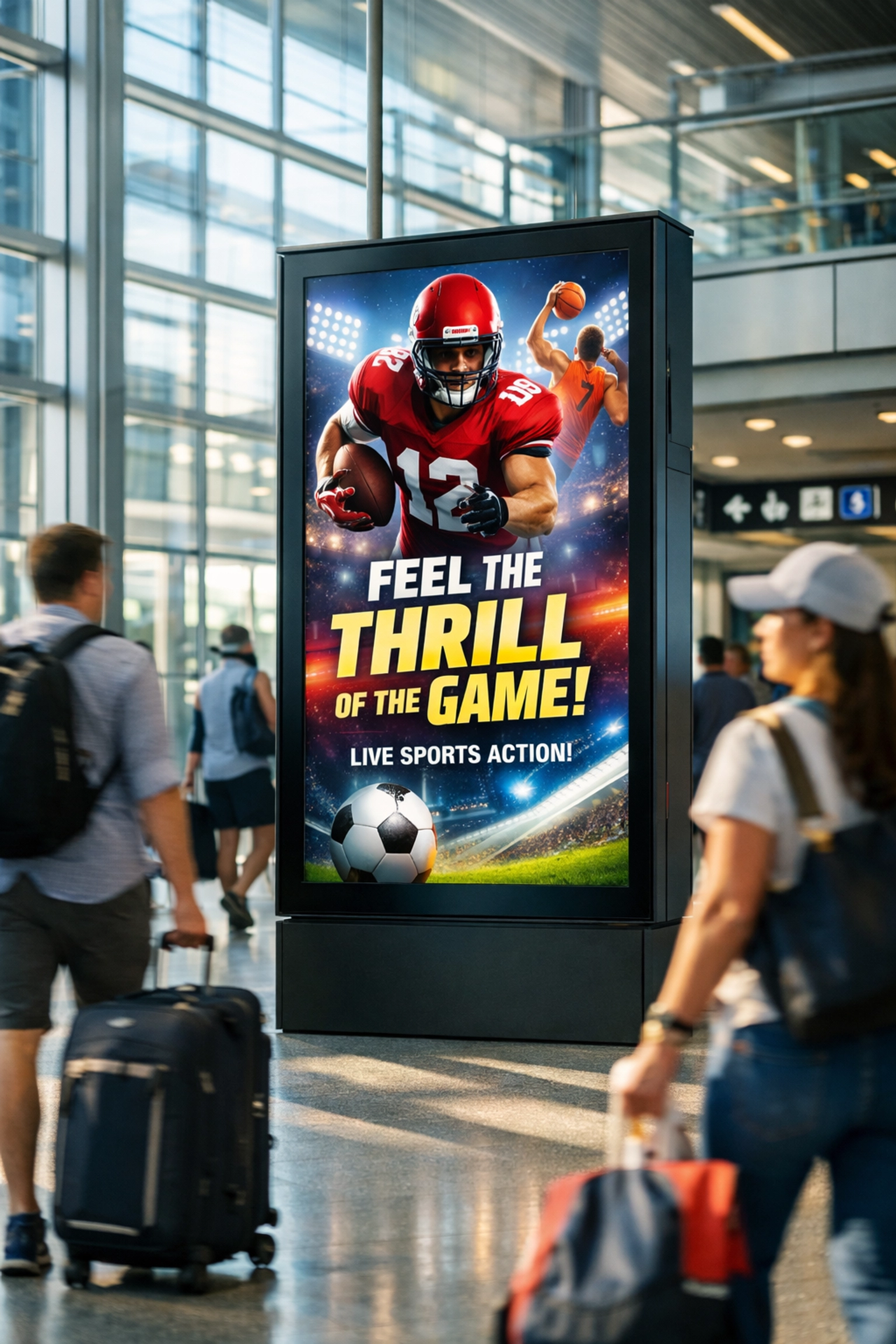
Programmatic digital OOH (pDOOH) enables messaging updates in real time. Advertisers can now:
- React to game events: Update creative at halftime, after major plays, or following score changes
- Respond to weather conditions: Adjust messaging based on temperature, precipitation, or other environmental factors
- Target based on crowd movement: Shift budget allocation as fans move between venues or gather in specific areas
- Optimize for time of day: Serve different creative during pre-game, in-game, and post-game periods
Geofencing and device data enable precise targeting based on actual fan movement patterns rather than assumptions about static screen placement. This granularity allows brands to reach specific audience segments at the exact moments when relevance is highest.
The practical application of these capabilities transforms campaign strategy. A beverage brand can celebrate a home team victory moments after the final whistle. A sports betting company can update odds and promotions as games unfold. A quick-service restaurant can drive traffic during the post-game rush when fans are seeking food options.
For a deeper look at interactive features transforming fan engagement, explore these 10 interactive DOOH features that turn spectators into brand advocates.
Streaming Fragmentation and the DOOH Advantage
Sports viewing habits have fragmented across linear TV, streaming platforms, and mobile devices. This fragmentation creates challenges for advertisers trying to reach sports fans through traditional media buying.
DOOH fills a critical gap in this landscape. While viewers may consume content across multiple screens and platforms, they still exist in physical spaces. Sports events, by their nature, create concentrated audiences in predictable locations. DOOH captures these audiences regardless of how they consume game broadcasts.
The integration opportunity extends further. Modern campaigns combine DOOH with mobile retargeting, connected TV (CTV), and social media to create omnichannel experiences. Device IDs captured during DOOH exposure enable follow-up messaging across other channels, extending campaign impact beyond the initial physical impression.
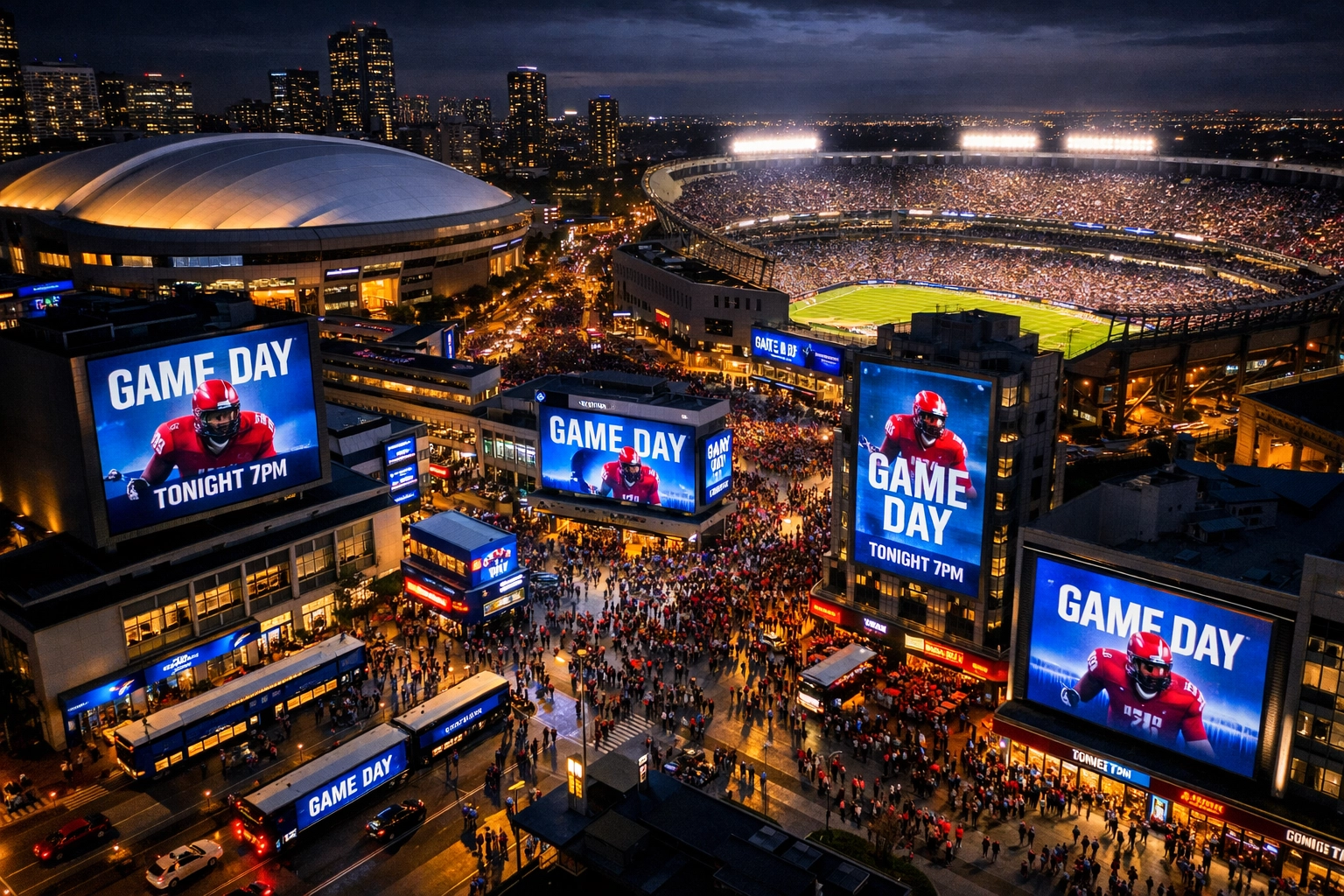
DOOH spending reflects this growing importance. Industry projections indicate that digital out-of-home will account for 45.2 percent of total OOH ad spending by 2028, up from 22.0 percent in 2016. Sports environments represent a significant driver of this growth.
Strategic Considerations for Media Buyers
For media buyers and brand managers evaluating sports DOOH opportunities, several strategic factors deserve attention.
Timing and Inventory Planning
Premium sports DOOH inventory sells out well in advance of major events. Early planning and booking secure access to high-traffic placements. However, programmatic buying has introduced more flexibility, allowing brands to purchase available inventory closer to event dates.
Creative Development
Dynamic creative capabilities require planning for multiple message variations. Brands benefit from developing creative frameworks that allow for real-time customization rather than single static assets. This preparation enables full utilization of DCO features.
Measurement Integration
Establishing measurement protocols before campaign launch ensures accurate attribution. Working with DOOH platforms that offer device ID tracking, foot traffic measurement, and brand lift studies provides the data needed to evaluate performance and optimize future campaigns.
Budget Allocation
Sports DOOH often delivers strongest results when integrated into broader omnichannel campaigns rather than operating in isolation. Allocating budget for mobile retargeting of exposed audiences extends the value of DOOH impressions.
For brands concerned about common pitfalls, this guide on sports DOOH campaign mistakes offers practical solutions.
The Competitive Landscape
Brand presence in sports environments has evolved beyond official sponsorships. While stadium naming rights and jersey sponsorships remain valuable, DOOH enables brands without official partnerships to reach fans in the spaces surrounding events.
This democratization of sports advertising access has increased competition for consumer attention. It has also created opportunities for challenger brands to establish presence alongside category leaders.
The strategic implications are significant. Brands can now achieve sports marketing objectives without the multi-year commitments and premium costs associated with official sponsorships. Programmatic buying enables targeted, efficient campaigns that deliver measurable results.

Moving Forward with Sports DOOH
The convergence of major sporting events, measurable performance data, and technological advances positions sports DOOH as a unique opportunity for brands. Reaching audiences at high-intent moments when engagement peaks delivers value that translates into brand awareness, consideration, and conversion.
For media buyers and brand managers who have not yet incorporated sports DOOH into their media mix, the time to explore these opportunities has arrived. The channel has matured beyond experimentation into a proven performance driver with clear metrics and attribution capabilities.
The conversation around sports DOOH innovation continues for good reason. The combination of scale, engagement, and technology creates conditions where advertising investment generates measurable returns. Understanding these dynamics positions brands to capitalize on the opportunities ahead.
To learn more about capturing market share in the growing sports DOOH space, visit OOH Sports for additional resources and campaign strategies.