
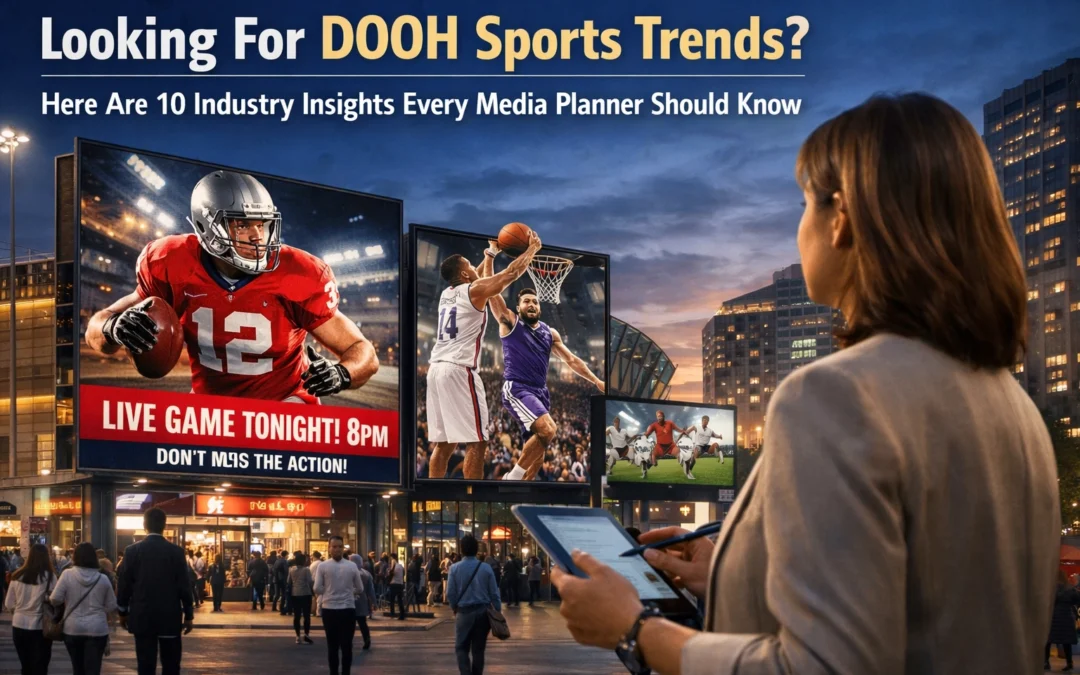
Digital out-of-home advertising has evolved from a secondary tactic to a strategic cornerstone in sports marketing. Media planners now have access to unprecedented scale, real-time capabilities, and measurable impact that traditional channels struggle to match. The shift is not incremental, it is fundamental.
The following ten insights capture where the industry stands and where momentum is building. Each represents a meaningful shift in how brands reach sports audiences, from venue corridors to streaming fragmentation to gamified broadcast experiences.
1. Real-Time Campaign Adaptation During Live Events
Modern DOOH infrastructure allows brands to adjust messaging instantly as games unfold. When momentum shifts, when a player makes a defining play, or when weather changes the atmosphere, campaigns can respond in real time. This capability transforms DOOH from static messaging to dynamic storytelling that mirrors the energy of live sports.
The advantage lies in capturing audiences during peak engagement windows. Fans are emotionally invested, attention is focused, and brand messages delivered in these moments carry disproportionate impact. Real-time adaptation requires technical infrastructure and operational readiness, but the payoff in relevance and memorability is substantial.

2. Streaming Fragmentation Creates a DOOH Advantage
Sports viewing has splintered across linear television, streaming platforms, and mobile devices. While this fragmentation complicates media planning in traditional channels, it creates a distinct advantage for DOOH. Sports fans still concentrate in predictable physical spaces, venues, transit corridors, bars, restaurants, and hospitality zones, regardless of how they consume broadcasts.
DOOH fills the gap left by media fragmentation. It reaches audiences where they gather, creating consistent touchpoints that complement fragmented digital viewing. This physical presence becomes increasingly valuable as traditional broadcast reach becomes harder to guarantee.
3. Explosive Infrastructure Growth Around Venues
Thousands of digital screens now surround major sports venues. Transit routes, retail districts, entertainment zones, and hospitality areas have all seen significant screen deployments. This infrastructure creates multiple touchpoints throughout the entire fan journey, from commute to arrival to post-game celebration.
The scale of this buildout cannot be overstated. What was once a handful of premium locations has become a dense network of high-impact screens strategically positioned where sports audiences naturally flow. Media planners now have inventory options that cover every stage of the fan experience, enabling campaigns to build frequency and reinforce messaging across multiple environments.
4. Omnichannel Integration Multiplies Campaign Impact
DOOH no longer operates in isolation. Modern campaigns integrate DOOH with mobile retargeting, connected TV, and social media to create cohesive omnichannel strategies. Device IDs captured during DOOH exposure enable follow-up messaging across other channels, extending campaign impact well beyond the initial physical impression.

This integration transforms DOOH from a standalone awareness driver to the anchor of a multi-channel attribution strategy. Brands can measure not just DOOH impressions but subsequent online behavior, store visits, and conversions. The ability to connect physical exposure to digital action fundamentally changes how DOOH performance is measured and valued.
5. Predictable Audience Corridors Maximize Efficiency
Sports fans travel through predictable corridors to and from venues. Pre-game and post-game activities extend engagement windows, creating opportunities to reach audiences when they are receptive and in the right mindset. Media planners can strategically place screens at high-dwell moments, maximizing both reach and message retention.
This predictability is rare in modern media planning. While digital audiences fragment and shift, sports fans follow consistent patterns. They use the same transit lines, visit the same bars and restaurants, and park in the same lots. This behavioral consistency allows for efficient, high-impact screen placement that traditional digital targeting struggles to replicate.
6. Significant Market Growth Trajectory
Digital out-of-home will account for 45.2% of total OOH ad spending by 2028, up from 22.0% in 2016. Sports environments represent a significant driver of this growth. The combination of passionate audiences, predictable foot traffic, and measurable impact makes sports DOOH one of the fastest-growing segments in the broader OOH market.
This growth trajectory reflects both advertiser demand and technological maturation. Programmatic buying platforms, attribution capabilities, and creative flexibility have all improved dramatically. As these capabilities expand, more media planners are shifting budgets from traditional channels to DOOH, recognizing the unique advantages it offers in sports marketing contexts.

7. Local Broadcasts Drive Higher Engagement and Ad Value
The strategic shift toward local media rights highlights an important reality. Viewing audiences are more engaged on local broadcasts due to rooted fan interests, with longer viewing times and markedly more valuable advertising. Streaming these local games will approach a 50/50 split with traditional viewing, creating new opportunities for DOOH to complement local broadcast strategies.
Local fans are invested differently than national audiences. They follow teams through entire seasons, know player storylines, and care about outcomes on a personal level. DOOH campaigns targeting these local markets benefit from this heightened engagement, particularly when messaging aligns with team performance, rivalries, or community pride.
8. Authentic, Behind-the-Scenes Content Resonates
Brands increasingly empower athletes to create personalized, story-driven content emphasizing authenticity and real-life moments. These athlete-led narratives allow brands to integrate naturally into daily fan engagement rather than relying on polished, brand-led campaigns.
This trend extends to DOOH creative strategy. Campaigns featuring authentic athlete content, unscripted moments, and genuine personality perform better than traditional advertising approaches. Fans respond to realness, and DOOH provides a canvas for showcasing these authentic connections at scale in physical environments where fans are most receptive.
9. Interactive and Hybrid Experiences Attract Broader Audiences
Hybrid sports experiences are blurring traditional boundaries between disciplines, entertainment, lifestyle, and technology. Basketball events staged like music festivals, endurance races designed as social content playgrounds, and similar innovations travel seamlessly across physical venues, streaming platforms, and social feeds.
These experiences unlock new storytelling opportunities for brands and attract younger, participation-focused audiences. DOOH plays a critical role in amplifying these hybrid events, extending their reach beyond venue walls into surrounding neighborhoods and transit corridors. The screens become part of the event experience, creating visual continuity between physical and digital spaces.

10. Gamification and Alternate Broadcasts Are Becoming Core Experiences
Leagues are redesigning broadcasts to be interactive, data-rich, and participatory. Alternate broadcasts featuring branded characters, interactive elements, and entertainment-led production are shifting from add-on features to core viewing experiences.
This shift creates new opportunities for DOOH integration. As broadcasts become more interactive and game-like, DOOH can extend these experiences into physical spaces. QR codes linking to interactive content, real-time statistics displayed on screens, and gamified challenges visible to passing fans all become possible. The line between viewing and participating continues to blur, and DOOH is positioned to bridge physical and digital engagement in meaningful ways.
Strategic Implications for Media Planners
These ten trends collectively point toward a fundamental shift in how sports marketing operates. DOOH is no longer supplemental. It is a primary channel with unique advantages in reach, engagement, and measurability.
Media planners should evaluate DOOH not as a broadcast alternative but as a distinct medium with its own strengths. The ability to reach audiences in high-intent physical moments, the precision of corridor targeting, the flexibility of real-time creative adaptation, and the power of omnichannel integration all represent capabilities that traditional channels cannot match.
The infrastructure is in place. The audience behaviors are predictable. The measurement tools are mature. The remaining question is not whether DOOH works in sports marketing, but how quickly brands will shift budgets to capture the opportunity before competition saturates the space.
Sports fans are where they have always been, moving through physical environments with passion and purpose. DOOH meets them there, at scale, with messages that matter in moments that count.