
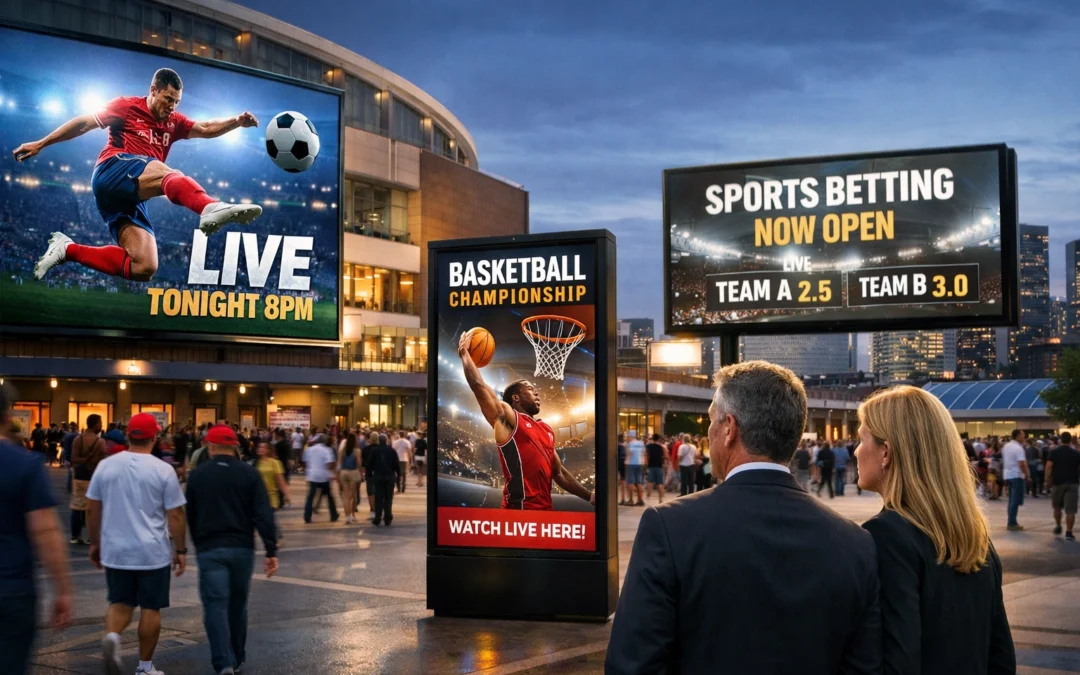
The digital out-of-home sports advertising landscape has shifted dramatically. Industry leaders are no longer relying on static placements and long-term sponsorship commitments alone. Instead, they are leveraging data-driven, moment-responsive campaigns that deliver measurable business outcomes.
This shift represents a fundamental change in how brands connect with sports fans. The following trends reveal what separates industry leaders from those still operating with traditional approaches.
Dynamic Creative Optimization: Real-Time Responsiveness
Leading brands have moved beyond pre-planned creative executions. Dynamic Creative Optimization (DCO) enables advertisers to adapt messaging instantly based on live events, weather conditions, unexpected match outcomes, and crowd movements.
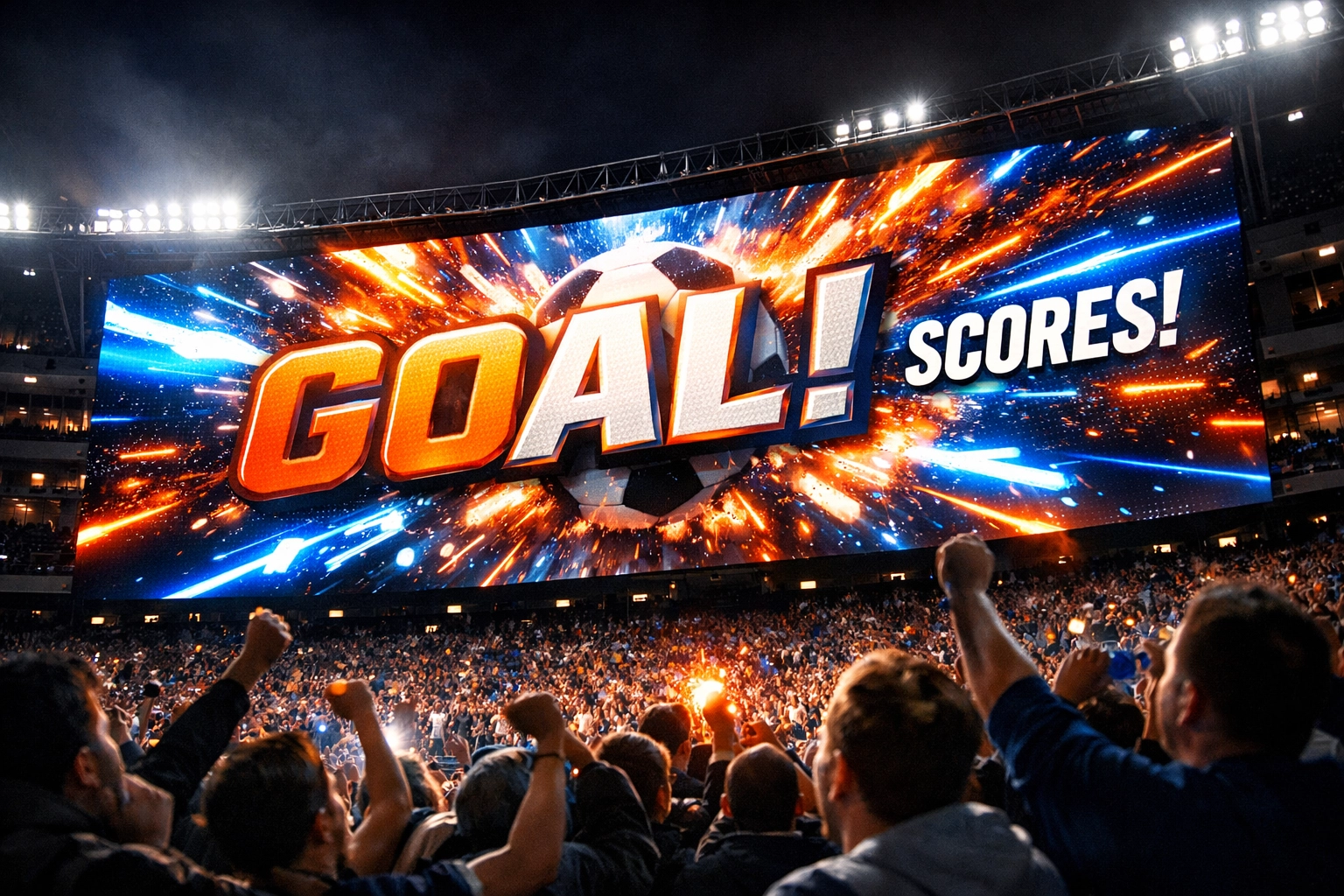
This technology allows campaigns to remain relevant during high-engagement moments. When a team scores, when weather shifts, or when an unexpected upset occurs, creative content adjusts automatically to capture fan attention at peak emotional intensity.
The distinction is clear: traditional campaigns deliver the same message regardless of context, while DCO-enabled campaigns respond to the environment in real time. This responsiveness creates stronger connections with audiences who are already highly engaged with the unfolding action.
Advanced Targeting Beyond Screen Selection
Industry leaders have abandoned broad demographic targeting in favor of behavior-based activation strategies. These approaches identify and reach high-intent audiences with precision:
- Geofencing technology identifies fans in airports, stadiums, fan zones, transit hubs, and nightlife districts where sports enthusiasm runs highest
- Device data integration enables targeting based on actual movement patterns and location history
- Programmatic digital OOH (pDOOH) provides flexibility to activate campaigns closer to kickoff or during critical game moments
- Omnichannel integration captures device IDs during DOOH exposure, enabling follow-up messaging across mobile, connected TV, and social media platforms
This level of targeting precision was previously unattainable with traditional out-of-home advertising. Leaders now reach fans based on their behaviors and movements rather than simple proximity to a screen.
Democratized Access Through Programmatic Buying
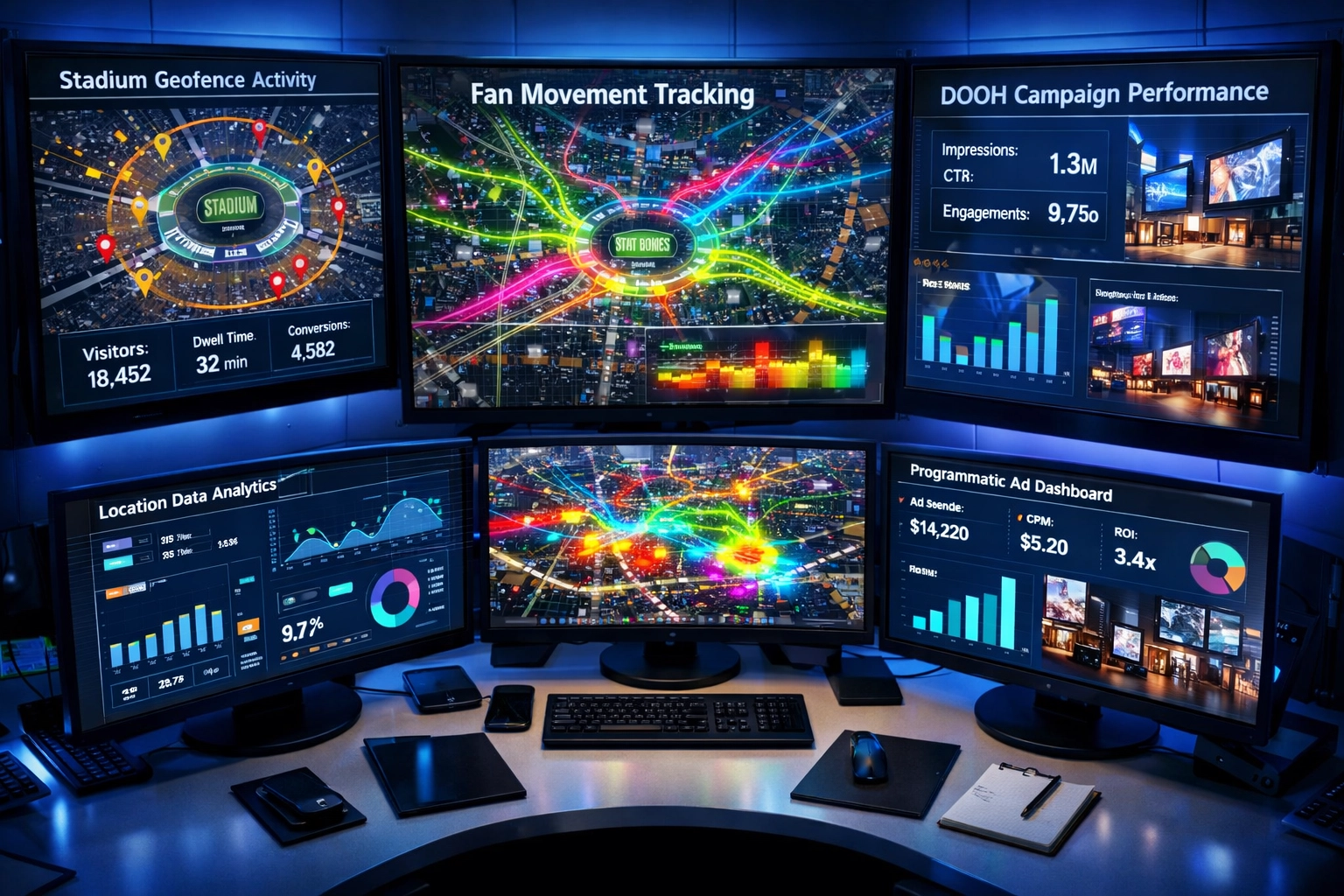
The traditional sports advertising model required multi-year sponsorship commitments and premium costs that locked out smaller brands. Programmatic buying has disrupted this model entirely.
Challenger brands without official partnerships can now reach fans efficiently in spaces surrounding major sporting events. This development has intensified competition while lowering barriers to entry. Brands can activate campaigns during specific games, target particular venues, and adjust spending based on real-time performance data.
The shift toward programmatic access means more brands compete for fan attention, but it also means smarter allocation of advertising budgets. Brands invest in moments that matter rather than long-term commitments with uncertain returns.
According to market research, DOOH will account for 45.2% of total OOH ad spending by 2028, up from 22.0% in 2016. This growth reflects the strategic advantage programmatic capabilities provide.
Interactive Elements That Drive Engagement
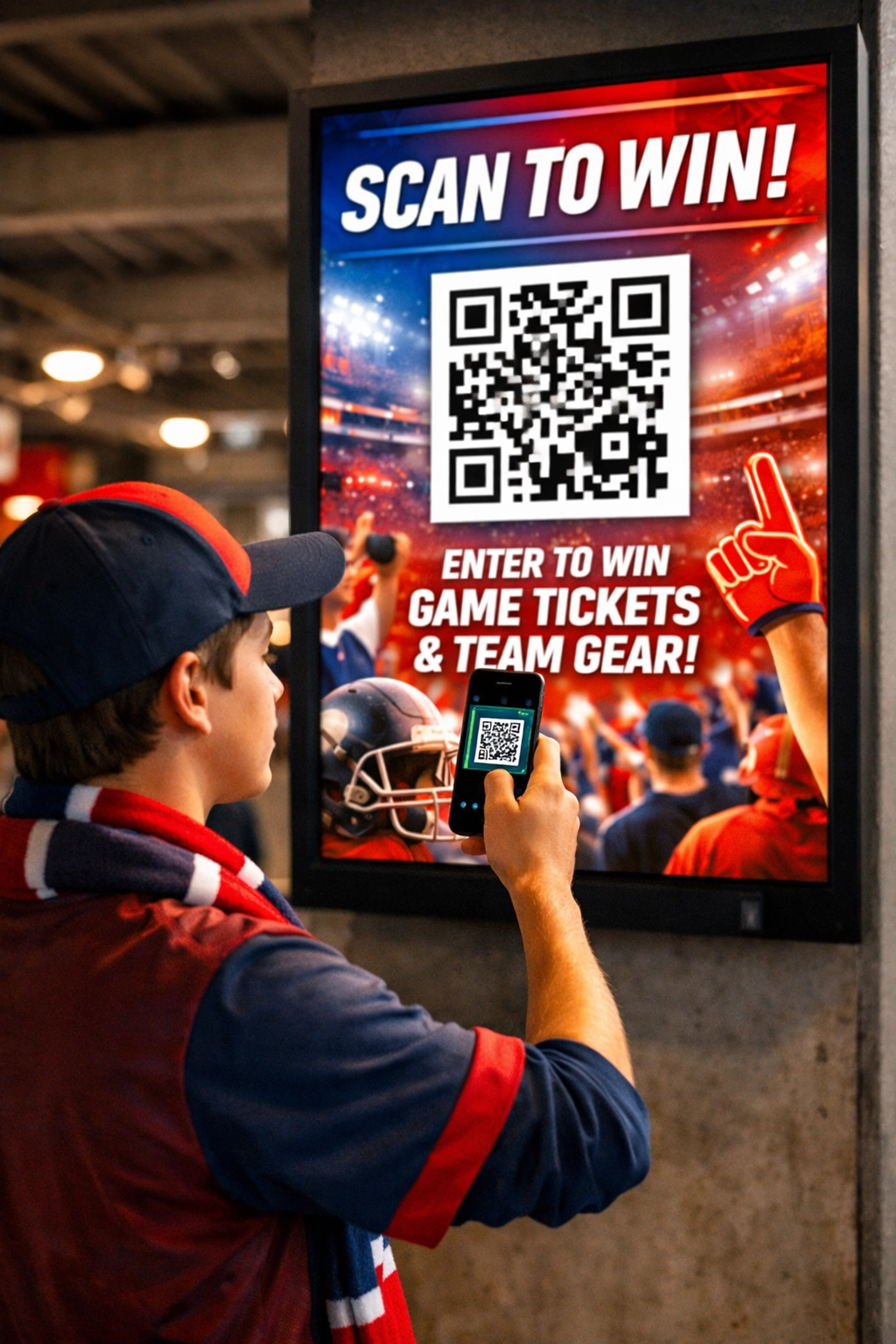
Forward-thinking brands have transformed passive impressions into active engagement opportunities. QR codes, mobile prompts, and live polls within DOOH campaigns create direct connections between fans and brands.
These interactive elements serve multiple purposes:
- Immediate action: Fans can respond to offers, enter contests, or access exclusive content without leaving the venue
- Data collection: Each interaction provides valuable first-party data about fan preferences and behaviors
- Extended reach: Mobile integration extends the campaign beyond the physical screen into digital channels fans already use
- Measurable engagement: Unlike traditional OOH, interactive elements provide concrete metrics on audience response
The entertainment industry itself has embraced this trend. The NFL tests entertainment-led alternate broadcasts, while the NBA partners with major entertainment companies to feature characters in live game broadcasts. These experiments demonstrate how interactivity reshapes the viewing experience.
Measurement Tied to Real-World Business Outcomes
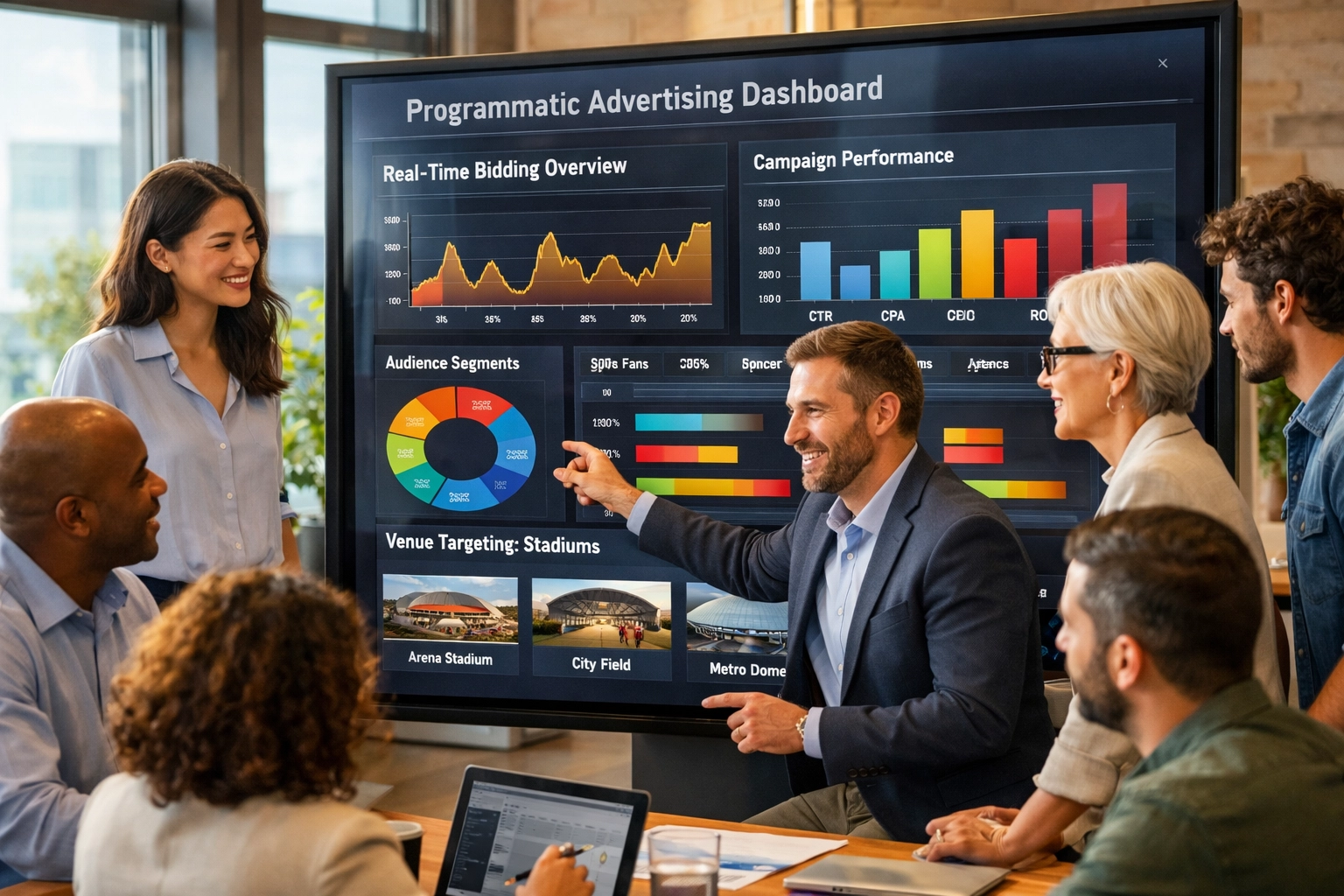
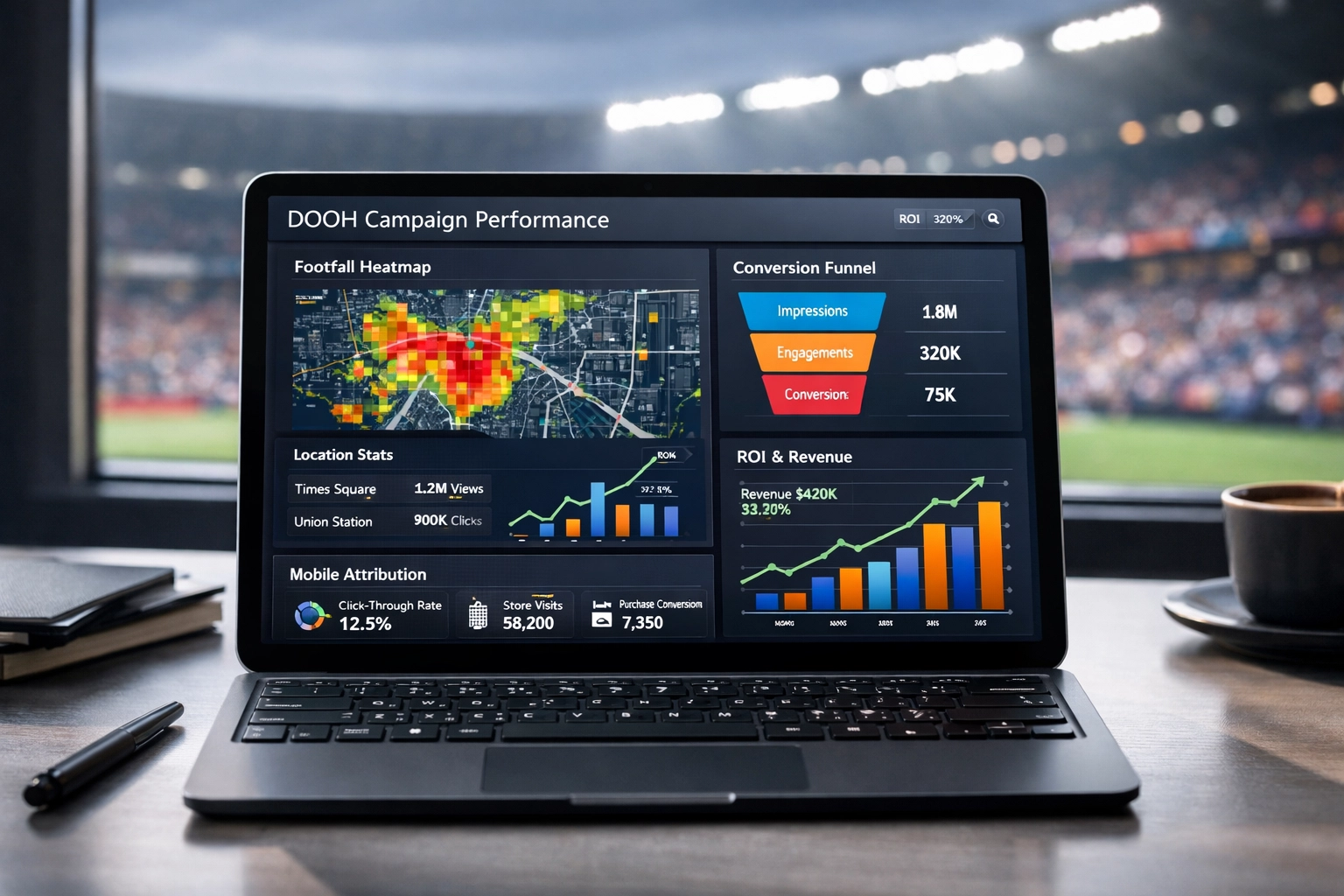
The most significant differentiator among industry leaders is their commitment to measurable results. Unlike traditional OOH campaigns that relied on estimated impressions, DOOH campaigns now connect exposure to specific business outcomes.
Leaders employ multiple measurement approaches:
- Mobile-location data tracks visits to specific venues, stores, or restaurants following DOOH exposure
- Footfall analytics measure traffic patterns near stadium exits, transit lines, and retail locations
- App download tracking identifies spikes in downloads and loyalty program activations on match days
- Brand lift studies assess awareness, consideration, and preference changes at key campaign moments
- Attribution modeling links DOOH exposure to online conversions and purchase behavior
This measurement capability transforms DOOH from a brand awareness tool into a performance marketing channel. Brands can optimize campaigns based on actual behavior changes rather than estimated reach.
The results speak for themselves. Streaming-exclusive sports content now delivers ads with 66% higher effectiveness than traditional cable and broadcast averages. This performance gap reflects the superior targeting and measurement capabilities digital platforms provide.
Integration Across the Customer Journey
Industry leaders recognize that DOOH functions best as part of an integrated marketing approach rather than a standalone channel. The most successful campaigns coordinate DOOH with mobile, social, display, and connected TV advertising.
This integration creates multiple touchpoints with fans:
- Awareness: DOOH captures attention in high-traffic sports environments
- Consideration: Mobile retargeting delivers detailed product information to interested fans
- Conversion: Social media campaigns drive immediate action with limited-time offers
- Loyalty: Connected TV reinforces brand messaging in the home environment
The device IDs captured during DOOH exposure enable this seamless journey. Brands follow fans from the stadium to their smartphones to their living rooms, maintaining consistent messaging while adapting to each channel's unique characteristics.
Strategic Activation Timing
Leaders have moved away from constant presence toward strategic activation during high-value moments. Rather than maintaining year-round campaigns, they concentrate investment around specific events, rivalries, and cultural moments when fan engagement peaks.
This approach delivers several advantages:
- Higher impact: Concentrated spending during peak engagement moments generates stronger brand recall
- Budget efficiency: Resources focus on periods when fan receptivity is highest
- Creative relevance: Messaging aligns with specific events and storylines fans care about
- Performance optimization: Results from one activation inform strategy for subsequent events
The flexibility of programmatic DOOH enables this strategic timing. Brands can activate campaigns days or even hours before events, responding to emerging storylines and fan interest.
Looking Ahead
The trends outlined here represent the current state of DOOH sports advertising among industry leaders. However, the pace of innovation continues to accelerate. Advances in artificial intelligence, computer vision, and audience measurement will further expand what becomes possible.
Brands that embrace data-driven, moment-responsive approaches position themselves to capitalize on these emerging capabilities. Those that maintain traditional strategies risk falling behind as fans increasingly expect personalized, relevant advertising experiences.
The distinction between leaders and followers in DOOH sports advertising comes down to three factors: commitment to real-time optimization, investment in advanced targeting capabilities, and dedication to measuring real-world outcomes. Brands that excel in these areas achieve results that traditional approaches cannot match.
For more insights on how programmatic DOOH compares to traditional sponsorships, explore the detailed analysis at OOH Sports.