
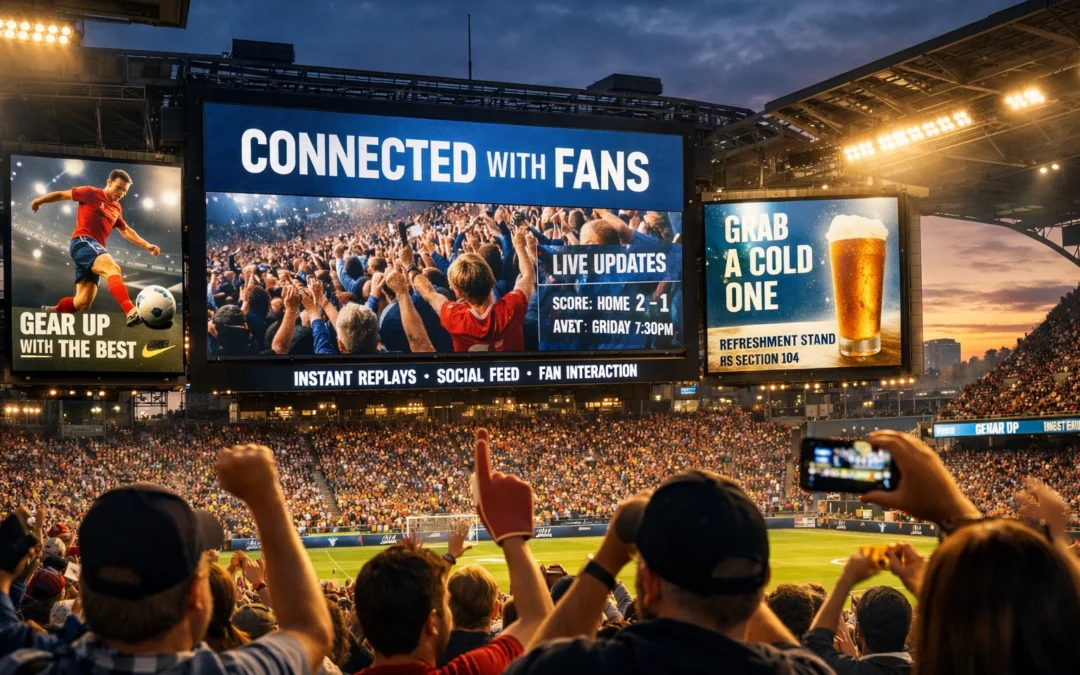
The traditional playbook for sports advertising has remained largely unchanged for decades. Brands purchase static billboards near stadiums, secure expensive official sponsorships, or invest in broadcast spots that reach broad audiences with little targeting precision. While these tactics deliver visibility, they lack the responsiveness, measurability, and cost-efficiency that modern marketing demands.
Digital out-of-home (DOOH) advertising in sports environments represents a fundamental shift in how brands connect with fans. Rather than treating sports marketing as isolated moments of exposure, DOOH innovation enables continuous engagement throughout the entire fan journey, from pre-game anticipation to post-event follow-up. This transformation stems from three core capabilities: real-time campaign adaptation, omnichannel integration, and democratized access to premium sports audiences.
The Scale and Engagement Advantage
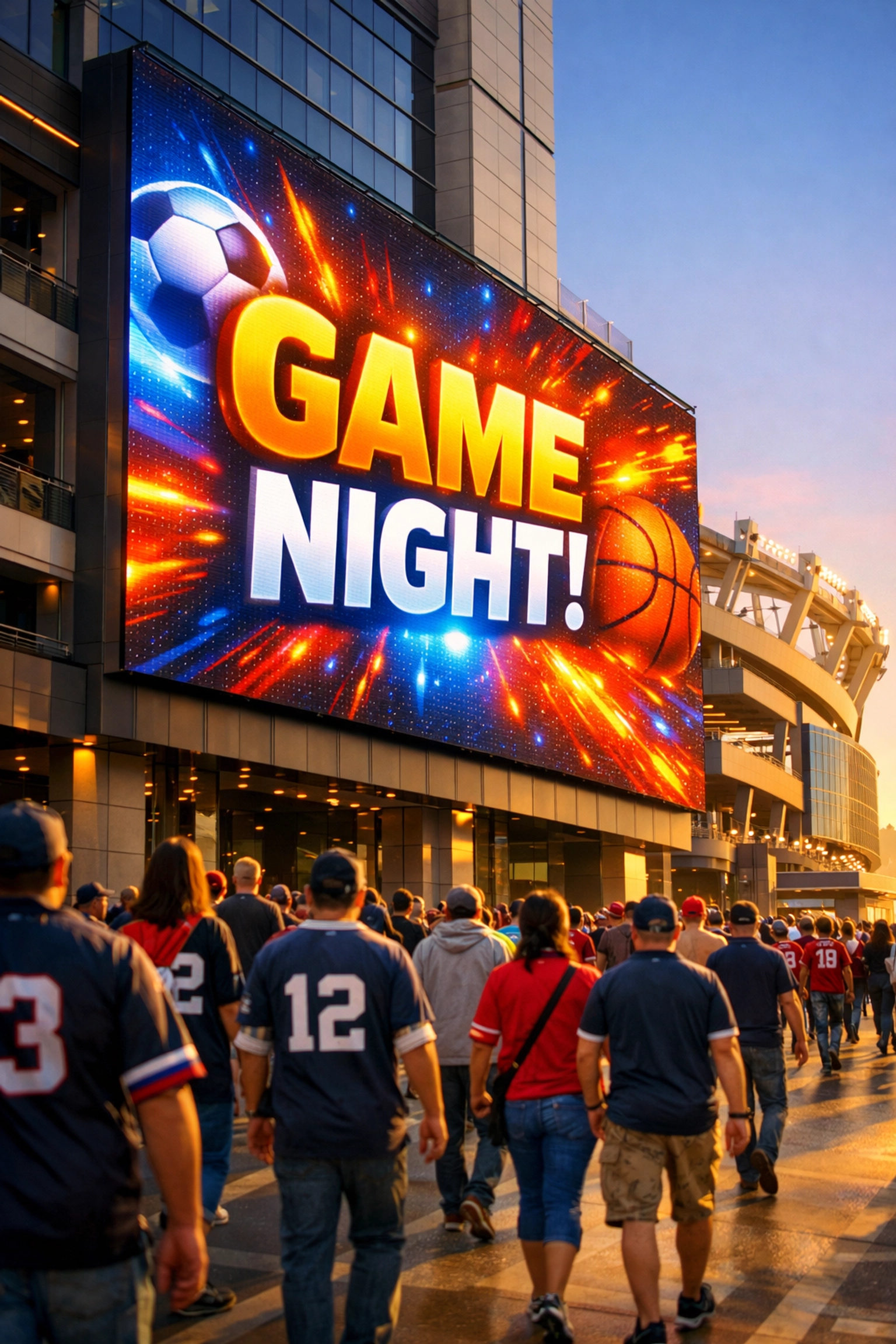
Sports fans represent one of the most engaged consumer segments available to advertisers. Research indicates that nearly six in ten fans recall seeing out-of-home advertising around major sporting events. More significantly, over 90% of those who notice OOH messaging take follow-up action, whether researching products, visiting websites, or making purchases.
The physical infrastructure supporting sports DOOH has expanded dramatically. Thousands of digital screens now surround venues, transit routes, hospitality zones, and retail corridors where fans naturally gather before and after events. This density creates multiple touchpoints that reinforce messaging across the fan experience rather than limiting brands to a single impression.
The economic impact extends beyond brand awareness. Data shows that 99% of fans who attend games after seeing OOH advertising spend money locally. This combination of high recall, strong engagement rates, and immediate spending behavior demonstrates why sports environments deliver measurable returns for brands.
Real-Time Responsiveness Transforms Campaign Relevance
Traditional sports advertising relies on pre-produced creative that cannot adapt to live circumstances. A billboard message remains static whether a team wins or loses, whether weather disrupts an event, or whether unexpected storylines emerge during competition.
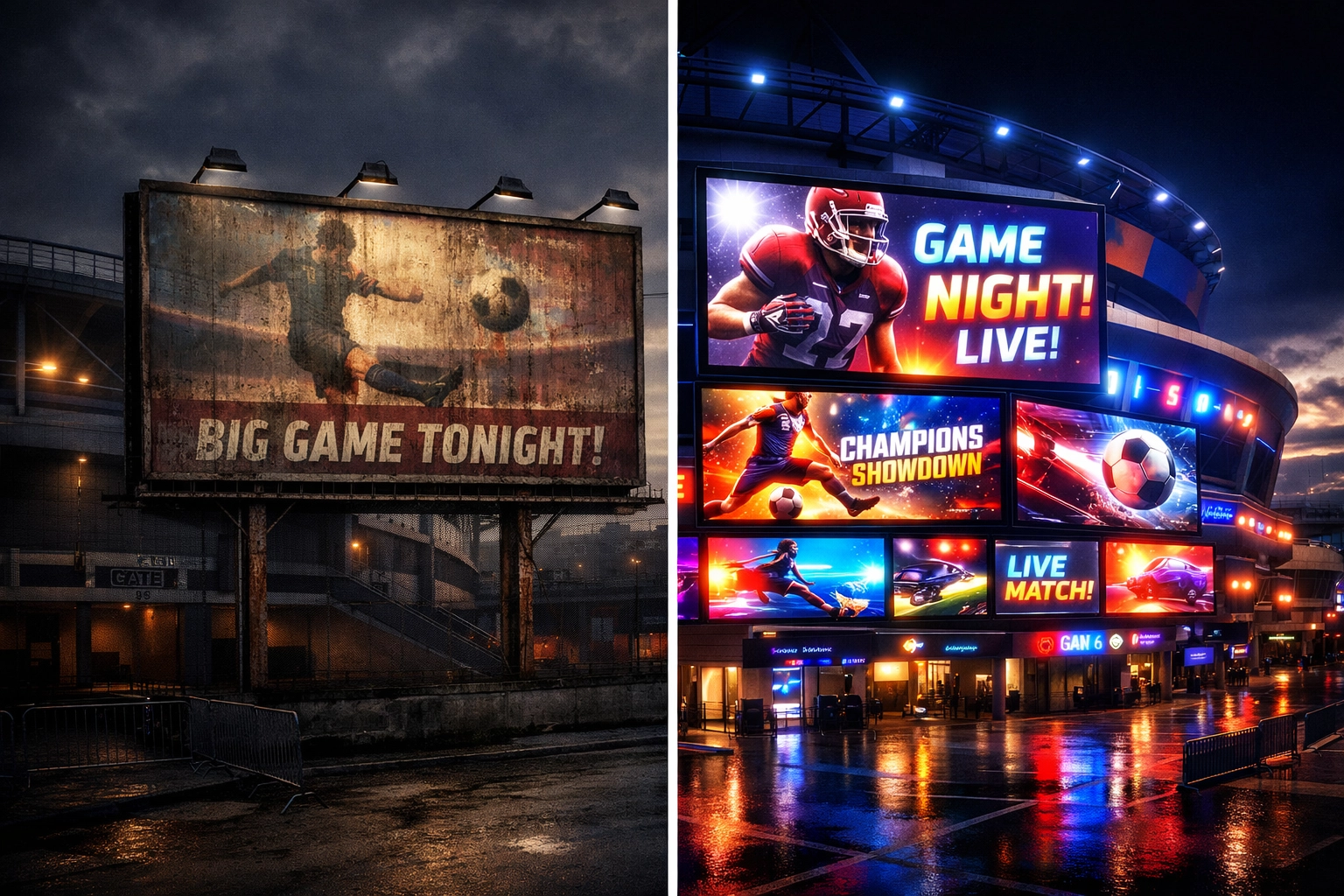
Dynamic Creative Optimization (DCO) enables DOOH campaigns to respond instantly to live conditions. When a team scores, when attendance exceeds projections, or when weather impacts outdoor events, campaign messaging can adjust in real-time to maintain relevance. This responsiveness ensures that brand communications align with what fans are experiencing in the moment rather than delivering generic content that may feel disconnected from the actual event atmosphere.
The technical infrastructure behind this capability involves automated triggers linked to live data feeds, game scores, weather APIs, and foot traffic sensors. Advertisers establish decision trees that determine which creative variants display under specific conditions. This automation removes the need for manual intervention while maintaining message relevance throughout multi-hour events or tournament series spanning days or weeks.
For media buyers, this represents a significant operational advantage. Rather than committing to static creative that may underperform if circumstances change, campaigns can optimize themselves based on real-world conditions. This flexibility reduces wasted impressions and improves campaign efficiency across varied scenarios.
Omnichannel Integration Extends Campaign Impact
Sports DOOH functions as a physical anchor point for broader marketing ecosystems rather than existing as a standalone tactic. The most sophisticated campaigns use DOOH exposure as the trigger for multi-channel follow-up across mobile, connected TV, and social platforms.
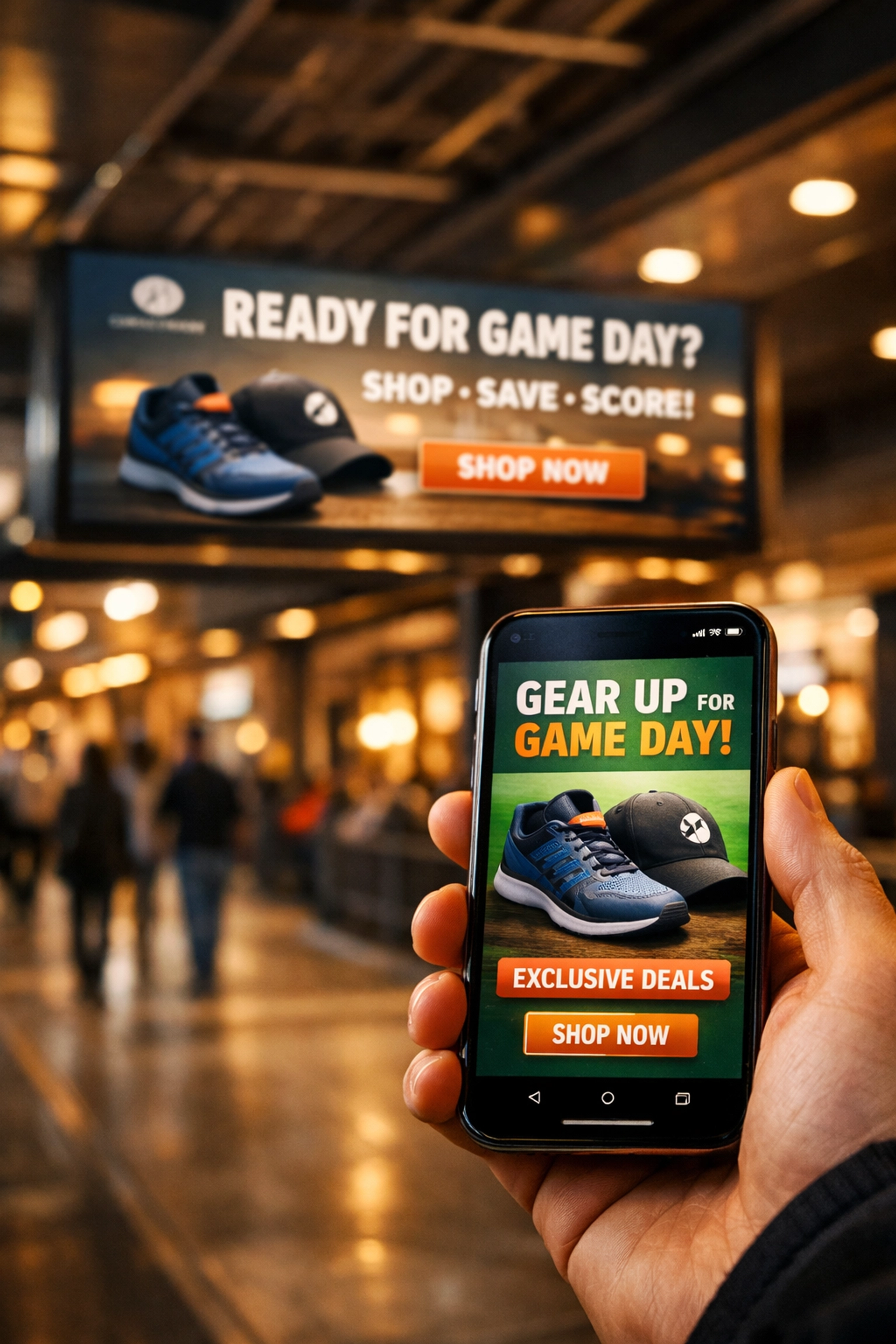
Device ID capture technology enables advertisers to identify mobile devices exposed to DOOH screens in sports environments. These device IDs become retargeting audiences for subsequent digital campaigns. A fan who sees a DOOH advertisement near a stadium can receive follow-up mobile ads while traveling home, video content on streaming platforms later that evening, and social media messaging in the days following the event.
This omnichannel approach transforms passive viewing into active engagement. QR codes on transit advertising enable immediate interaction, allowing fans to access exclusive content, enter promotions, or make purchases while brand awareness remains high. Location-based mobile retargeting delivers offers when fans enter retail locations or specific geographic zones, capitalizing on proximity to drive conversion.
The data connectivity between DOOH and digital channels also improves attribution modeling. Advertisers can measure which DOOH placements drive the strongest digital engagement, which creative variants generate the highest conversion rates, and which audience segments respond most favorably across the full campaign journey. This closed-loop measurement provides clarity on return on investment that traditional OOH could never deliver.
Democratized Access Without Premium Partnership Costs
Official sports sponsorships require multi-year commitments, minimum spending thresholds, and lengthy approval processes. These barriers restrict access to well-funded brands with established relationships to leagues, teams, and venues. For many advertisers, the cost of official partnerships exceeds available budgets or makes sense only for sustained, long-term positioning.
DOOH advertising enables brands to reach sports audiences in the spaces surrounding events without securing official sponsorship rights. Transit routes to venues, hospitality districts, retail corridors, and entertainment zones all attract concentrated fan traffic before and after games. Digital screens in these locations deliver targeted impressions to the same audiences that official sponsors reach, but at significantly lower investment levels and with greater flexibility.
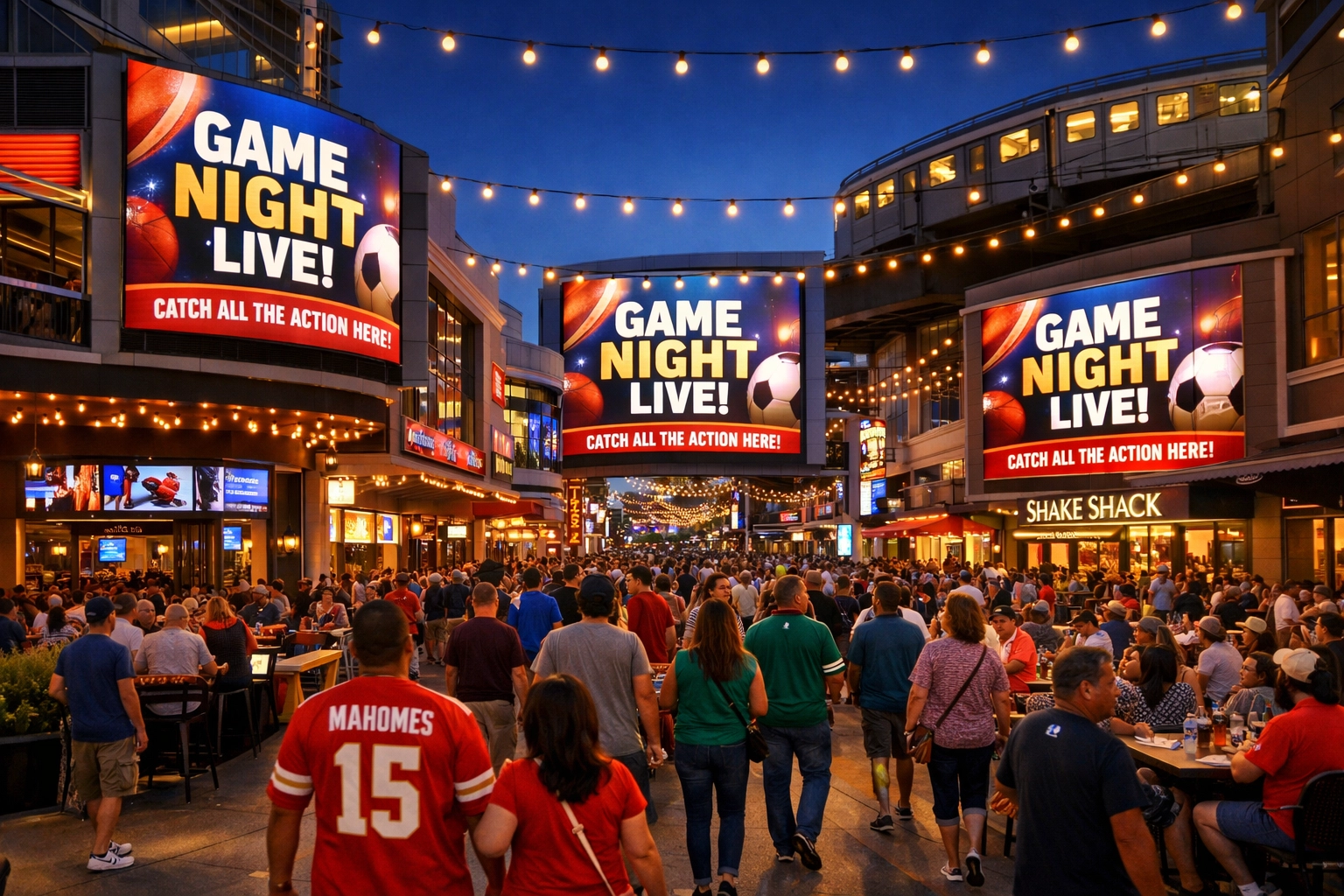
Programmatic buying further democratizes access by allowing advertisers to purchase specific dayparts, geographic zones, or audience segments rather than committing to full-event takeovers. A brand can activate only during playoff games, target only visitors from specific markets, or focus exclusively on high-value demographic segments. This precision reduces wasted impressions and aligns spending with strategic priorities.
The flexibility extends to campaign duration and budget allocation. Rather than locking into season-long sponsorships, brands can test sports environments with limited campaigns, scale investments based on performance, and adjust tactics as market conditions change. This agility proves particularly valuable for brands new to sports marketing or those with seasonal product cycles that align with specific sporting calendars.
Measurable Impact and Market Trajectory
Industry projections indicate that digital out-of-home will account for 45.2% of total OOH advertising spending by 2028, up from 22.0% more than a decade earlier. Sports environments represent a significant driver of this growth, as advertisers recognize the superior targeting, measurement, and engagement capabilities that DOOH delivers compared to traditional static formats.
The shift reflects broader marketing trends toward data-driven decision-making and performance accountability. Media buyers increasingly demand clear attribution, audience verification, and campaign optimization capabilities. DOOH platforms provide these requirements through impression tracking, audience measurement partnerships, and integration with broader marketing technology stacks.
For brand managers, this trajectory signals that competitors are adopting DOOH strategies and securing advantages in fan engagement. The brands that establish DOOH expertise and build omnichannel capabilities around sports environments position themselves to capture attention during the moments when consumers are most receptive to messaging related to entertainment, food and beverage, automotive, retail, and countless other categories aligned with sports fan demographics.
Strategic Implementation for Modern Sports Marketing
The transformation of sports advertising through DOOH innovation requires a strategic shift in how media buyers and brand managers approach campaign planning. Rather than viewing sports marketing as a premium add-on reserved for major activations, DOOH enables continuous presence throughout sports calendars at accessible investment levels.
Successful implementation begins with understanding the complete fan journey rather than focusing exclusively on game-day exposure. Fans engage with sports content across pre-game anticipation, travel to venues, in-venue experiences, post-game discussion, and ongoing team loyalty between events. DOOH placements across this journey create reinforcement and frequency that single-point sponsorships cannot match.
The technical capabilities of modern DOOH platforms allow for sophisticated audience targeting based on location patterns, time-of-day behaviors, and demographic profiles. Advertisers can layer these targeting parameters to reach specific segments with customized messaging rather than delivering one-size-fits-all creative to diverse audiences.
Integration with broader marketing strategies amplifies impact. DOOH should connect to mobile campaigns, social media activations, retail promotions, and CRM systems to create seamless experiences that guide fans from awareness through consideration to conversion. The brands that master this integration will dominate sports marketing in increasingly competitive advertising landscapes.
The innovation cycle in sports DOOH continues accelerating as new screen formats, measurement technologies, and programmatic capabilities emerge. Staying current with these developments and testing new approaches positions brands to maintain competitive advantages as the medium evolves.
Learn more about how programmatic DOOH delivers measurable results for sports marketing campaigns.