

The question circulates frequently among media buyers and brand managers evaluating their sports marketing investments. Static stadium billboards, once the cornerstone of venue sponsorships, face scrutiny in an era dominated by digital transformation. The answer, however, is more nuanced than a simple yes or no.
Static stadium billboards are not dead. Rather, they are evolving within a hybrid ecosystem where digital out-of-home (DOOH) innovation complements traditional formats instead of replacing them. This shift represents a fundamental change in how brands approach sports venue advertising, with both static and digital formats serving distinct strategic purposes within integrated campaigns.
The Evolution From Replacement to Integration
The initial assumption that digital billboards would eliminate static formats has proven incorrect. Brands increasingly treat static and digital inventory as complementary tools within unified campaigns rather than competitive alternatives. This approach reflects a broader recognition that different formats deliver different strengths within the sports marketing landscape.
Static billboards maintain their value for bold visual storytelling and consistent brand presence throughout multi-game seasons. A brewery logo positioned prominently behind home plate delivers continuous exposure across every broadcast and in-person experience without the complexity of content rotation or technical management. The simplicity and reliability of static formats continue to serve specific campaign objectives effectively.
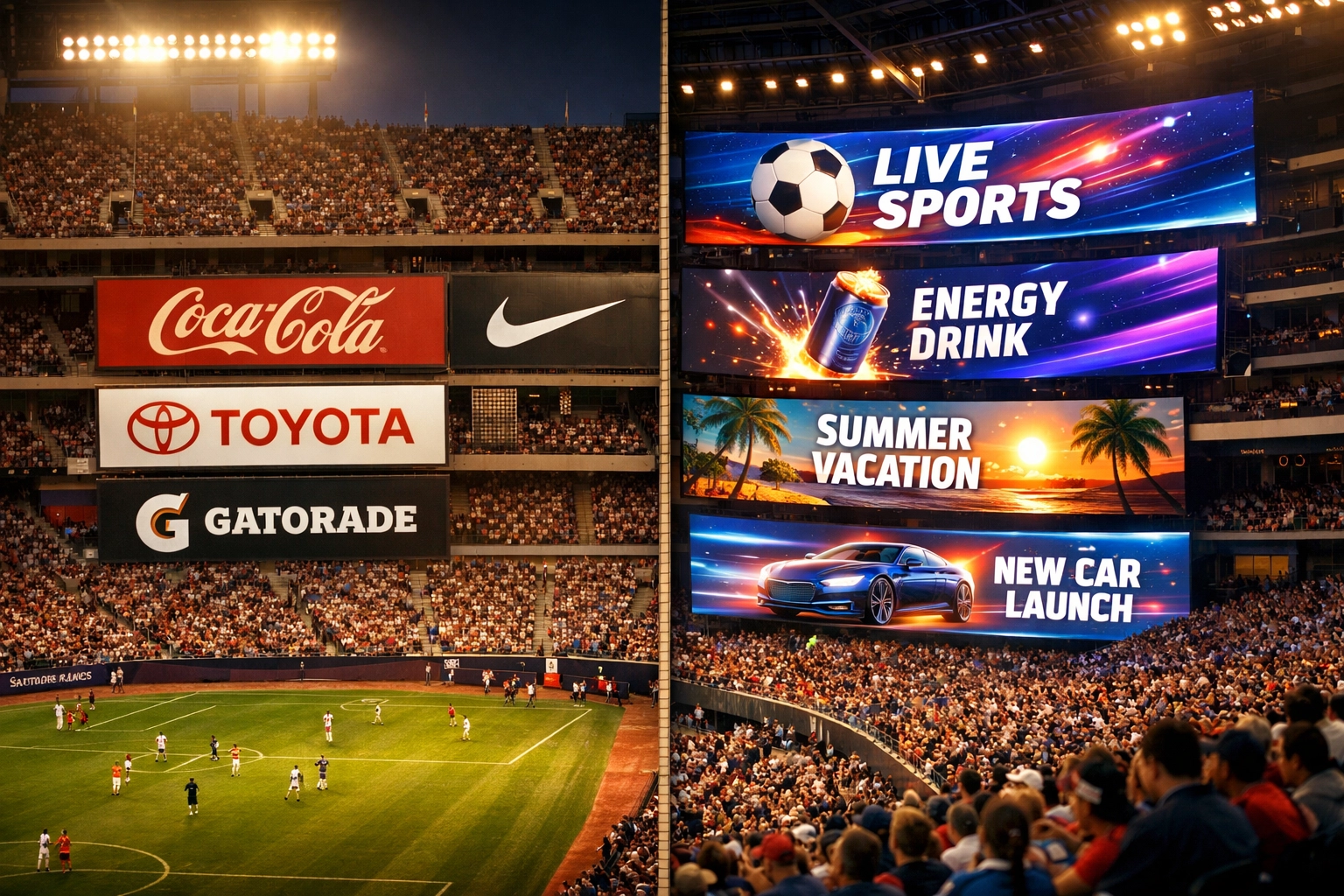
Digital formats introduce capabilities that static billboards cannot match. Real-time content adjustments, dayparting strategies, and dynamic creative optimization enable brands to respond to game situations, time of day, and audience demographics. When a home team scores, DOOH screens can instantly display celebratory branded content that resonates with the emotional peak of fan engagement.
This integration strategy allows marketers to deploy both formats based on specific campaign goals. Static placements handle long-term brand building and category ownership, while digital inventory manages tactical activations, promotional campaigns, and time-sensitive messaging.
Key Innovations Transforming Sports DOOH
The advancement of digital out-of-home technology in sports venues extends beyond basic screen installations. Modern DOOH infrastructure incorporates sophisticated capabilities that fundamentally alter advertising effectiveness and measurement.
Hyperlocal smart billboards equipped with sensors, GPS integration, and artificial intelligence tailor content based on real-time conditions. Weather data triggers relevant creative variations, such as beverage brands emphasizing cold drinks during high-temperature games or hot beverages during winter matchups. Traffic patterns inform content timing to maximize exposure during peak ingress and egress periods.
These technologies deliver measurable performance improvements. Campaigns utilizing real-time data optimization demonstrate 6% higher action rates compared to static content. Purchase intent increases by 1.3 times when audiences receive contextually relevant messaging rather than generic advertisements. Additionally, 55% of audiences report feeling that campaigns using smart billboard technology are personally relevant to their circumstances.
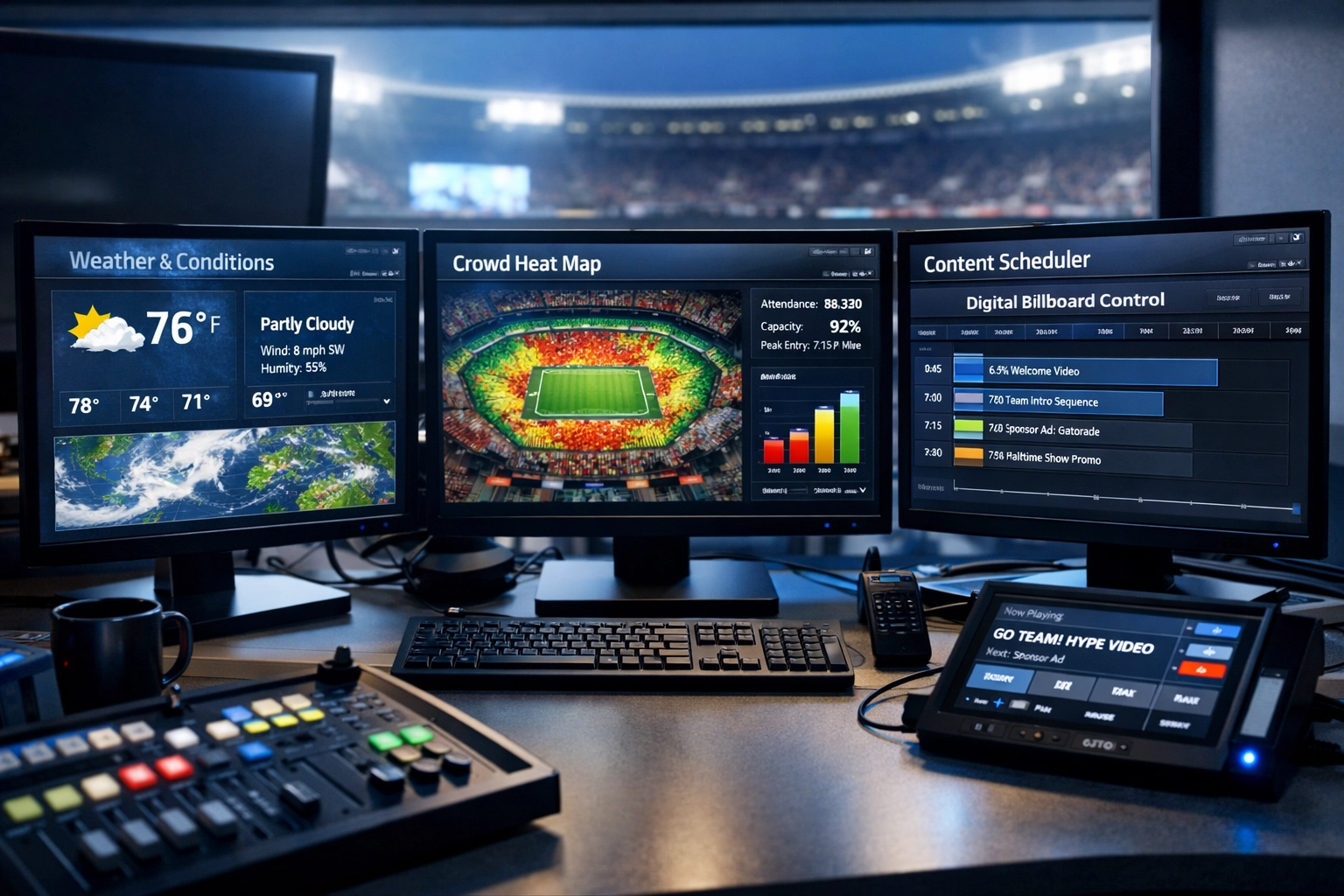
Programmatic buying capabilities represent another significant innovation. Media buyers access sports venue inventory through demand-side platforms, enabling automated purchasing, audience targeting, and cross-channel campaign coordination. This approach eliminates traditional barriers associated with venue sponsorship negotiations, allowing brands to execute stadium advertising campaigns with the same efficiency as other digital channels.
Real-time attribution linking connects billboard exposure directly to online actions. By tracking device IDs within stadium perimeters and correlating them with subsequent website visits, search behavior, and conversions, marketers measure campaign influence with unprecedented precision. This attribution capability addresses a historical limitation of out-of-home advertising and provides media buyers with performance data comparable to digital channels.
Programmatic Capabilities Reshape Buying and Planning
The introduction of programmatic infrastructure to sports venues fundamentally changes how media buyers approach stadium advertising. Traditional models requiring season-long commitments and fixed placement negotiations give way to flexible, data-driven buying strategies.
Programmatic DOOH allows brands to purchase specific time blocks aligned with campaign objectives. An automotive brand launching a new model can secure premium digital inventory during high-profile games without committing to an entire season. A quick-service restaurant chain can run breakfast messaging during morning events and dinner promotions during evening games, optimizing creative relevance throughout the day.
Audience targeting extends beyond basic demographics. Behavioral data, location history, and purchase patterns enable precise audience segmentation. A premium spirits brand can target high-income audiences during luxury suite events, while a mass-market beverage brand focuses on general admission areas during family-friendly games.
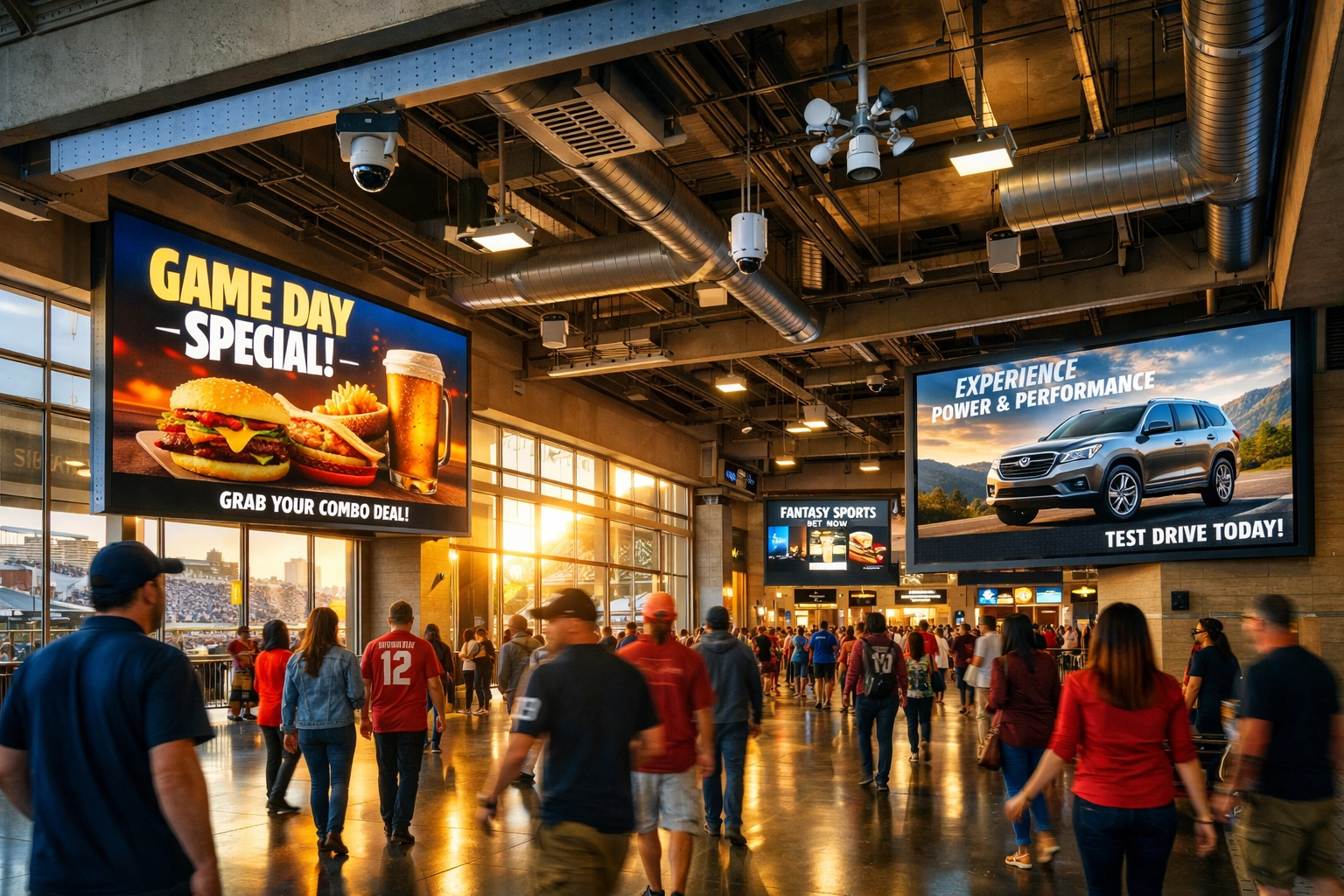
Cross-channel coordination represents a significant strategic advantage. Programmatic platforms integrate sports venue DOOH with mobile, video, and display advertising, creating synchronized omnichannel campaigns. A fan exposed to a brand message on stadium screens receives coordinated follow-up advertising on mobile devices after leaving the venue, reinforcing the initial exposure and driving conversion through retargeting.
The attribution capabilities inherent in programmatic infrastructure provide performance measurement comparable to digital channels. Media buyers track search lift, website traffic increases, and foot traffic attribution linked directly to stadium billboard exposure. This data-driven approach enables continuous optimization and budget reallocation based on documented performance rather than assumptions about reach and frequency.
Strategic Advantages for Modern Sports Marketers
The evolution of sports venue advertising creates distinct strategic advantages for brands willing to embrace hybrid approaches and technological innovation. These advantages extend beyond creative flexibility to encompass measurement, efficiency, and brand safety considerations.
Brand safety represents a significant benefit of DOOH compared to purely digital platforms. Sports venues provide premium, professionally managed environments free from adjacency concerns associated with user-generated content platforms. Brands avoid placement near controversial content, inappropriate messaging, or brand-damaging contexts that create risk in social and programmatic digital campaigns.
Venues like SoFi Stadium exemplify the infrastructure advantages of modern sports facilities. Digital inventory throughout the venue enables seamless transitions between events and advertisers without physical installation requirements. A concert on Saturday and a football game on Sunday each feature completely different brand presences without manual changeovers or installation costs.
The sustainability focus increasingly influences venue advertising strategies. Eco-friendly materials for static installations and solar-powered digital screens align with corporate environmental commitments. Seventy-two percent of consumers indicate willingness to pay premium prices for brands demonstrating environmental responsibility, making sustainability-focused advertising infrastructure a strategic asset rather than merely a cost consideration.

Fragmented media environments elevate the importance of out-of-home advertising as a stabilizing channel. While digital platforms face audience fragmentation, ad blocking, and declining reach efficiency, sports venues deliver guaranteed exposure to captive, highly engaged audiences. This reliability provides media buyers with performance consistency increasingly difficult to achieve through digital-only strategies.
The Future of Stadium Advertising Infrastructure
The trajectory of sports venue advertising points toward continued integration rather than format elimination. Static billboards will maintain their position for specific use cases while digital innovation expands to cover increasingly sophisticated applications.
Emerging technologies promise further advancement. Augmented reality integrations may enable personalized brand experiences visible through mobile devices while maintaining neutral physical environments. Advanced attribution modeling will connect sports venue exposure to long-term brand equity metrics and customer lifetime value rather than limiting measurement to immediate response metrics.
The expansion of programmatic infrastructure beyond premium venues will democratize access to sports advertising. Regional stadiums, minor league facilities, and college sports venues increasingly adopt digital inventory and programmatic buying capabilities, extending sophisticated sports marketing tactics beyond major professional leagues.
Media buyers and brand managers benefit from approaching sports venue advertising as an integrated ecosystem rather than a binary choice between static and digital formats. Strategic deployment of both formats, supported by programmatic capabilities and advanced measurement, delivers optimal campaign performance across brand building and conversion objectives. The question is not whether static billboards are dead, but rather how to leverage the strengths of both traditional and innovative formats within comprehensive sports marketing strategies.