
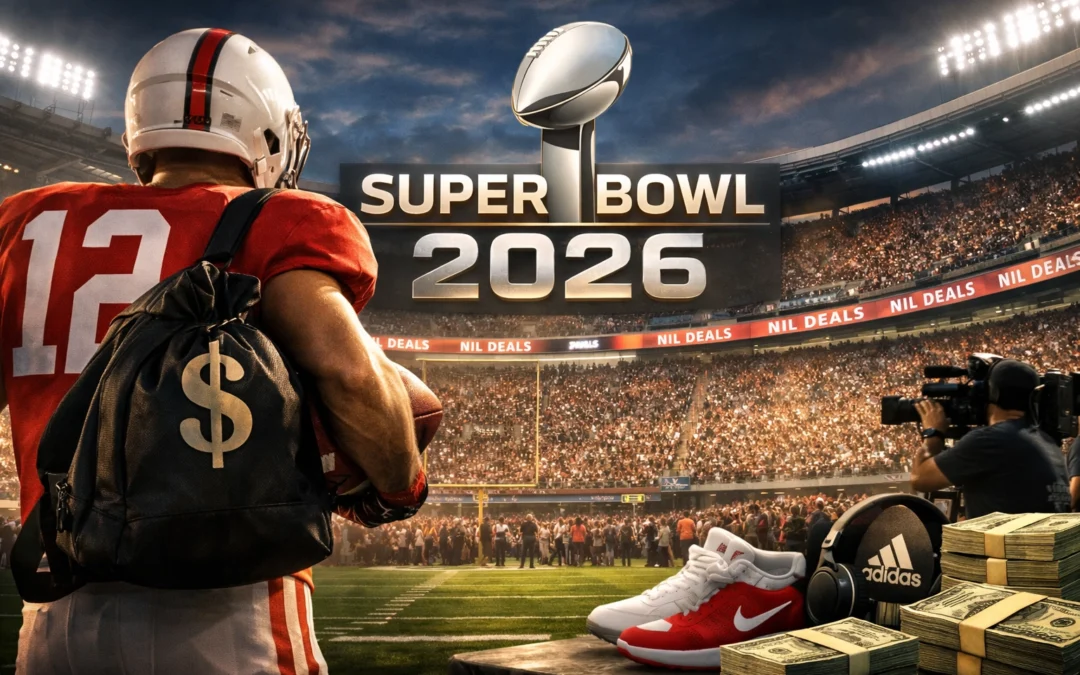
Media buyers preparing campaigns for Super Bowl 2026 face a landscape that has fundamentally shifted. The brands that will dominate this year's biggest advertising moment are not simply buying airtime and hoping for viral moments. They are deploying a coordinated NIL (Name, Image, Likeness) student-athlete strategy that amplifies reach, builds authentic connections, and extends campaign impact far beyond a single game day.
The advantage top brands possess is access to scale. Specifically, access to over 20,000 verified student-athlete voices that can carry messaging into communities, campuses, and social channels that traditional advertising cannot penetrate. This represents the difference between launching a campaign and building a movement.
The Five-Step NIL Framework Fortune 100 Brands Are Using
Top-tier brands are not treating student-athlete partnerships as last-minute additions or experimental tactics. They are implementing a structured five-step framework designed for maximum impact during high-stakes moments like Super Bowl 2026.
The framework begins with early relationship cultivation. Rather than scrambling for partnerships in January or February, leading brands begin identifying and recruiting student-athletes months in advance. This allows time for genuine collaboration and ensures that partnerships feel organic rather than transactional when campaigns launch.
Portfolio diversification follows. Instead of placing all resources behind a single high-profile athlete, brands build rosters of student-athletes across multiple sports, schools, and audience demographics. This approach mitigates risk and expands reach across varied fan bases.

Authentic co-creation represents the third phase. Brands provide creative direction and campaign parameters but allow student-athletes to shape content in their own voice. This balance maintains brand safety while preserving the authenticity that drives engagement with younger audiences.
Dual-track strategy deployment ensures that student-athlete content runs parallel to traditional advertising efforts rather than replacing them. The two channels reinforce each other, with NIL partnerships extending campaign life and deepening audience connection beyond what paid media alone can achieve.
Finally, integrated measurement tracks performance across both channels. Brands assess how NIL content amplifies traditional advertising metrics and how traditional placements drive traffic to athlete-generated content. This closed-loop approach reveals the true multiplier effect of combined strategies.
Why 20,000 Student-Athlete Voices Create Competitive Advantage
The scale of a 20,000-student-athlete network fundamentally changes what is possible during a Super Bowl campaign window. Each athlete represents a distinct audience segment, from niche sports communities to major university fan bases. Combined, these voices create penetration across demographics that would require massive media buys to achieve through traditional channels alone.
Student-athletes carry inherent credibility within their communities. When a college basketball player shares branded content, their followers perceive it as a peer recommendation rather than corporate advertising. This credibility translates to engagement rates that consistently outperform traditional influencer partnerships and paid social placements.
Geographic distribution provides another strategic advantage. A national NIL network places branded messaging in markets across the country simultaneously. For Super Bowl 2026 campaigns targeting multiple regions, this distributed approach delivers localized relevance at national scale.
The velocity of content production amplifies during critical campaign windows. With thousands of athletes creating and sharing content, brands can flood social channels with authentic messaging in a way that no single creative team could replicate. This volume creates momentum and ensures that branded content dominates feeds during the Super Bowl conversation.
https://www.youtube.com/watch?v=l6J-0zileKE
Integrated Approaches Outperform Single-Channel Strategies
Data from recent campaigns confirms that brands combining traditional advertising with NIL partnerships see measurably better performance than those relying on either strategy in isolation. The reason is simple: each channel compensates for the weaknesses of the other.
Traditional Super Bowl advertising delivers massive reach and brand awareness but often struggles with authenticity and sustained engagement. Viewers understand they are watching expensive productions designed to sell products. The messaging may be memorable, but the connection can feel distant.
NIL student-athlete content, by contrast, provides authenticity and engagement but lacks the reach and production polish of major advertising. Student-athletes speak to niche audiences in genuine voices but cannot deliver the same impression volume as a nationally televised ad spot.
When brands deploy both strategies simultaneously, traditional advertising builds broad awareness while NIL content deepens engagement and extends campaign life. The Super Bowl commercial introduces the campaign. Student-athlete content keeps it alive in social feeds for days and weeks afterward. This extended window transforms a single advertising moment into an ongoing conversation.

The integration also creates multiple entry points for audience engagement. Some consumers respond to high-production advertising, others trust peer recommendations from athletes they follow. By activating both channels, brands capture both audience segments rather than forcing a choice between reach and authenticity.
Creator Partnerships as Primary Distribution, Not Secondary Support
A strategic shift is underway in how brands position student-athletes within Super Bowl campaigns. Rather than treating them as secondary endorsers who amplify existing creative, forward-thinking brands now position student-athletes as primary content creators and distribution channels.
This approach recognizes that for many audience segments, social feeds have replaced traditional media as the primary information source. Student-athletes do not just share brand messages. They create content that their followers actively seek out and engage with. This makes them more valuable as distribution partners than as simple endorsers.
Positioning student-athletes as primary creators also aligns with broader consumer trends favoring authenticity over polish. Audiences increasingly tune out highly produced advertising in favor of content that feels genuine and conversational. Student-athletes produce exactly this type of content naturally.
The Carl's Jr. partnership with influencer Alix Earle provides a relevant case study. By sharing behind-the-scenes clips and ad sneak peeks rather than simply endorsing the brand, the partnership achieved 91% follower growth and a 47% engagement rate. The content felt like insider access rather than advertising, which drove significantly higher performance than traditional influencer posts.
Brands applying this model to student-athlete partnerships during Super Bowl 2026 are creating similar insider moments. Athletes share practice footage wearing branded gear, post reaction videos to commercials, and create original content riffing on campaign themes. This approach transforms passive viewers into active participants in the campaign narrative.

The Early Planning Advantage: Why Brands Start Months Before Game Day
The timeline for effective NIL integration into Super Bowl campaigns has shifted dramatically. Brands that wait until January to activate student-athlete partnerships are already behind. Top-performing campaigns begin relationship building in the fall, allowing time for authentic collaboration to develop.
Early planning serves multiple strategic functions. First, it allows brands to secure partnerships with high-demand athletes before competitors. Student-athletes with strong followings and engagement receive multiple partnership requests. Brands that initiate conversations early secure first-mover advantage.
Second, extended timelines enable genuine relationship development. Student-athletes can become familiar with brand values, product benefits, and campaign messaging over months rather than days. This familiarity translates to more authentic content when campaigns launch.
Third, early planning allows for content pre-production. Brands can work with athletes to create content libraries that deploy throughout the campaign window. This ensures consistent messaging and reduces reliance on real-time content creation during the chaotic Super Bowl week.
Finally, early partnerships allow for iterative testing. Brands can pilot content with small athlete cohorts, measure performance, and refine creative direction before full-scale launch. This reduces risk and optimizes messaging before the highest-stakes moment.
Building Super Bowl Campaigns as Ecosystems, Not Moments
The most sophisticated brands treat Super Bowl 2026 as an ecosystem rather than a single advertising moment. This ecosystem encompasses traditional advertising, student-athlete content, cultural conversations, and fan engagement across multiple platforms and touchpoints.
Within this ecosystem, student-athletes serve as connective tissue. They bridge the gap between expensive television advertising and organic social conversation. They translate brand messaging into peer-to-peer communication. They extend campaign reach into communities that traditional media cannot efficiently access.
This ecosystem approach also creates campaign resilience. If one element underperforms, others compensate. If a television commercial fails to go viral, student-athlete content can still drive engagement. If social media algorithms shift, traditional placements maintain baseline reach.
For media buyers, the strategic implication is clear. Super Bowl 2026 campaigns require integrated planning across traditional and NIL channels from the outset. Budget allocation, creative development, and performance measurement must account for both channels as equally important components of campaign success.
The brands that will dominate Super Bowl 2026 advertising are already building these integrated ecosystems. They have recruited student-athlete partners, developed content strategies, and aligned traditional and digital efforts. Media buyers who have not yet begun this process face a significant strategic disadvantage.
Access to 20,000 student-athlete voices represents a competitive advantage that no amount of traditional media spending can replicate. The question for media buyers is not whether to integrate NIL partnerships into Super Bowl campaigns. The question is whether they can move quickly enough to catch brands that have already built this advantage into their strategies.