
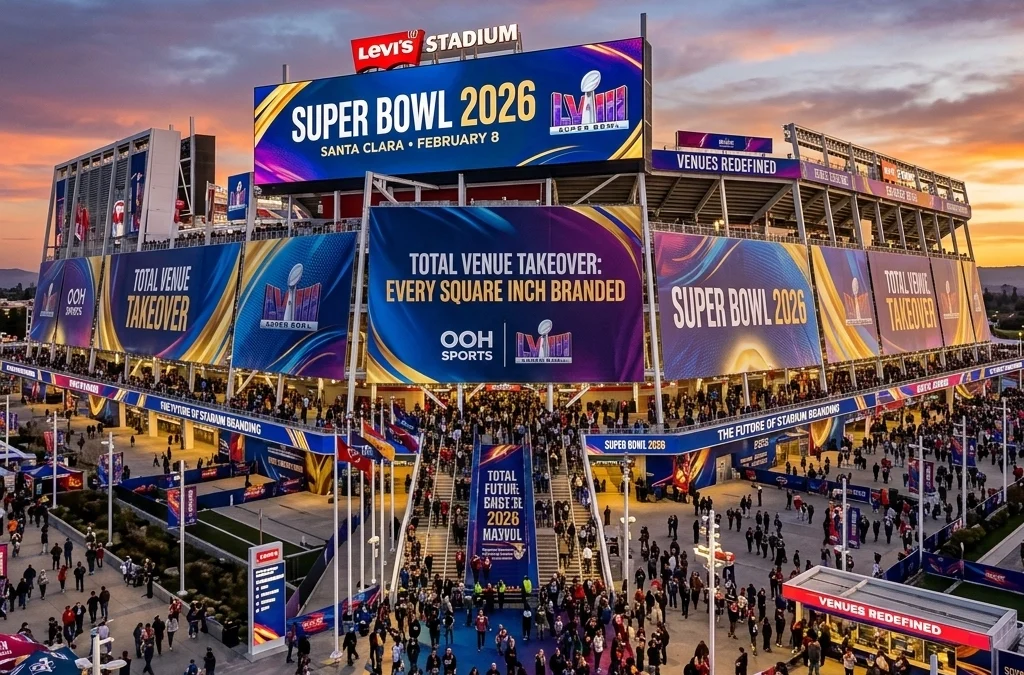
The landscape of sports marketing is undergoing a massive shift as the industry moves toward the 2026 Super Bowl. While a thirty second television spot remains a prestigious milestone for many brands, the conversation has shifted toward a more immersive and persistent strategy known as the Total Venue Takeover. This approach focuses on dominating the physical environment where fans live, breathe, and celebrate the game. By saturating a venue from the floors to the billboards, advertisers are creating a surround sound brand ecosystem that is impossible to ignore.
Forty Years of Advertising Leadership
OOH Sports has established a foundation of excellence over four decades in the advertising industry. This long history of leadership has allowed for the development of sophisticated strategies that go beyond simple placements. In the early days, sports marketing was limited to perimeter signage and basic scoreboard mentions. Today, the expertise gathered over forty years enables a brand to execute complex, multi layered campaigns that turn an entire stadium into a cohesive marketing canvas.
The evolution of out of home (OOH) advertising has reached a point where digital integration and physical presence meet. This expertise is vital when preparing for an event as massive as the 2026 Super Bowl. The ability to manage logistics, secure high traffic inventory, and maintain brand consistency across various media types is what sets industry leaders apart. For more information on the history and vision behind these campaigns, the about page provides deep insights into the company heritage.
The Strategy of Total Venue Takeovers
A Total Venue Takeover (TVT) is a comprehensive branding strategy where a single advertiser or a select group of partners claim every available surface within a specific proximity. The objective is to eliminate competitor noise and ensure that the brand is the primary visual narrative for the consumer. This is not just about quantity. It is about the strategic placement of assets to follow the fan journey.
Objective and Strategy
The primary objective for the 2026 Super Bowl is to capture the attention of the millions of people descending upon the host city. The strategy involves a three pronged approach:
- Pre Game Anticipation: Utilizing high impact billboards and transit advertising to greet fans as they arrive at airports and train stations.
- Venue Dominance: Implementing floor graphics, wall wraps, and Sportrons inside the stadium and surrounding fan zones.
- Post Game Momentum: Sustaining the brand presence through digital screens that provide real time updates and highlights.
By covering everything from the floors beneath the fans' feet to the massive digital displays above their heads, the brand becomes part of the architecture of the event. This level of saturation ensures that every social media post, every television background shot, and every fan selfie carries the brand's message.
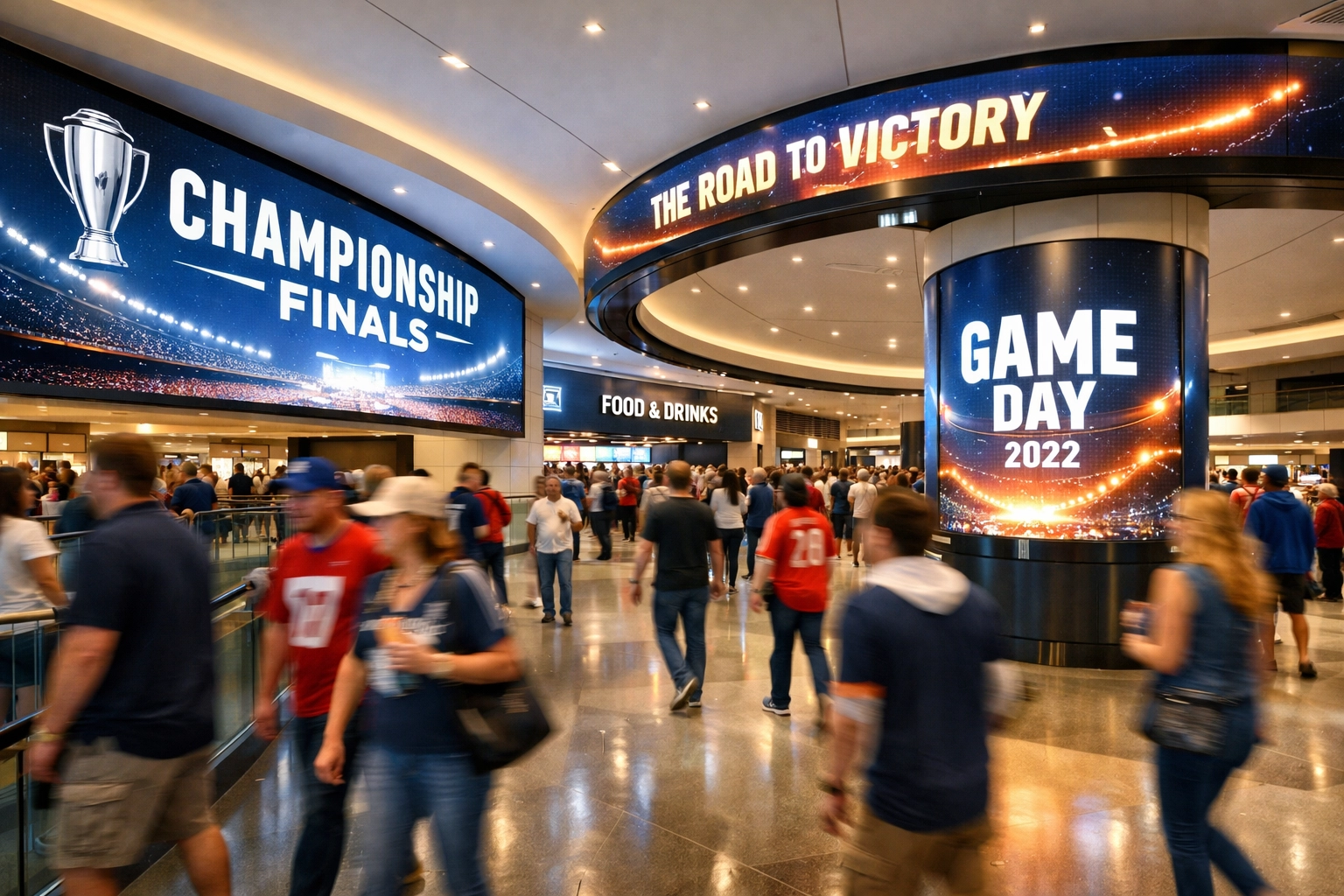
From Floors to Billboards: The Physical Execution
The logistical execution of a venue wide takeover requires precision. It begins with the floors. Floor graphics are often an underutilized asset in traditional advertising, but in a crowded stadium environment, people are frequently looking down at their phones or their path. High durability adhesive vinyl allows brands to turn walkways and concourses into vibrant storytelling paths.
Moving up the vertical plane, wall wraps and pillar wraps transform dead space into high value real estate. These placements are particularly effective in high traffic choke points like concession lines and restroom entrances. Finally, the billboards and large format digital screens provide the "hero" moments of the campaign. These are the assets that provide the scale and reach necessary for a Super Bowl level activation.
The integration of these physical assets creates a cohesive experience. A fan might walk over a branded floor graphic, pass a wrapped pillar, and then see a synchronized message on a Sportron display. This repetition reinforces brand recall without being perceived as intrusive.
Technology and Programmatic Integration
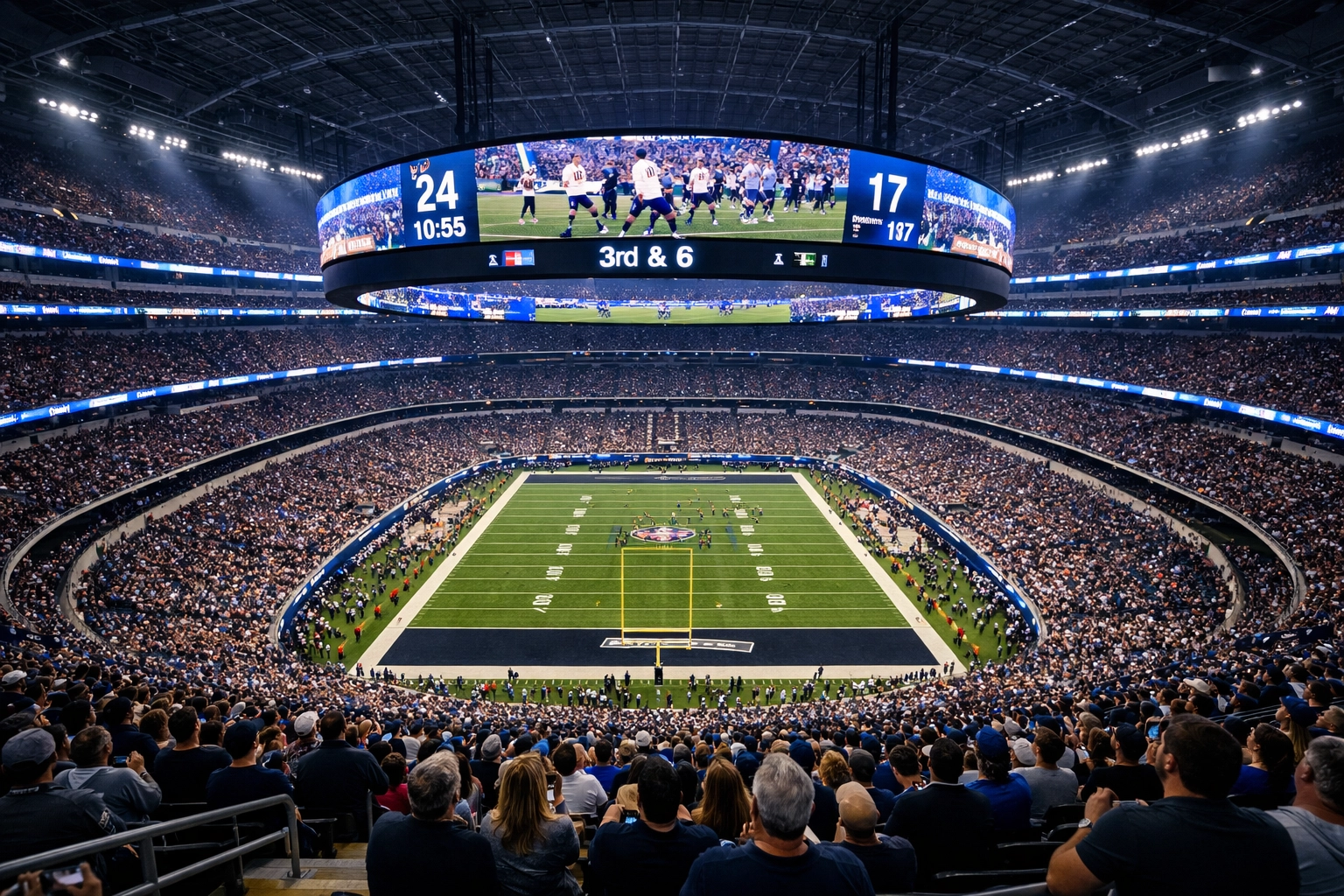
Modern venue takeovers are powered by advanced technology. Programmatic digital out of home (DOOH) allows for real time flexibility that traditional static signage cannot match. For the 2026 Super Bowl, brands will use data to trigger specific creative content based on the time of day, the weather, or even the current score of the game.
Technology Partners
Working with top tier platforms such as the StackAdapt DSP allows for the seamless execution of these campaigns. By using programmatic tools, advertisers can buy inventory across multiple networks with the same precision they use for online display ads. This level of control is essential for managing the high stakes of a global sporting event.
https://www.youtube.com/watch?v=l6J-0zileKE
The use of real time data ensures that the branding remains relevant throughout the entire Super Bowl weekend. If a specific player is trending or a major play occurs, the digital billboards can reflect that moment within minutes. This agility is a key component of why everyone is talking about venue takeovers for 2026.
Measurable Results and ROI
In the past, the effectiveness of OOH advertising was often estimated based on traffic counts. Today, the results are quantified with high precision. By using mobile location data and device IDs, OOH Sports can track how many people were exposed to the venue takeover and then later performed a desired action, such as visiting a website or making a purchase.
Impact Measurements
Recent data shows that sports advertising is on a massive upward trajectory. Projections suggest that DOOH sports advertising will hit $50 billion by 2030. This growth is driven by the clear ROI delivered by immersive campaigns.
When comparing programmatic DOOH vs traditional stadium ads, the venue takeover model consistently provides better results for brand lift. For example:
- A 74% lift in purchase consideration was observed in recent beverage campaigns using similar programmatic strategies.
- Brand preference ratings can increase by over 100% when a brand utilizes a "surround sound" ecosystem rather than a single ad placement.
These statistics prove that the total venue takeover is not just a trend but a data driven strategy that delivers results.
Case Study: The Power of Immersive Branding
Looking at previous successes provides a roadmap for the 2026 Super Bowl. In past years, brands like Nike have successfully dominated the conversation during major sporting events without even being the official sponsor. This is achieved through aggressive and clever OOH placements in the host city. For instance, the 2025 NYC Marathon campaign demonstrated how a brand could "own" the event in the eyes of the public through sheer visual presence.
Similar strategies have been used by beverage giants and automotive brands to drive massive increases in brand image. By focusing on the high traffic areas and the venue itself, these brands create a perceived sponsorship that often carries more weight than an official title.
Preparing for Super Bowl 2026
The planning for a 2026 Super Bowl venue takeover must start early. The inventory for floors, walls, and billboards in the host city is highly competitive. Brands looking to secure a dominant position must look at the marketing strategies that align with their specific goals.
Whether the objective is to launch a new product or to solidify a market leading position, the venue wide coverage model offers a unique opportunity. It combines the massive reach of traditional advertising with the precision of modern digital tools.

Conclusion: The Future of Stadium Advertising
The 2026 Super Bowl will be a landmark event for the advertising industry. As brands move away from fragmented media buys and toward cohesive venue takeovers, the standard for "success" is being redefined. It is no longer enough to be seen. A brand must be experienced.
Through forty years of leadership and a commitment to simple, effective communication, OOH Sports continues to lead the way in this evolution. By utilizing everything from floor graphics to massive digital billboards, the Total Venue Takeover ensures that the brand is the star of the show.
For those ready to explore how this strategy can be applied to their next campaign, the contact page is the first step toward a total market takeover. The future of sports marketing is here, and it is covering every inch of the venue.