
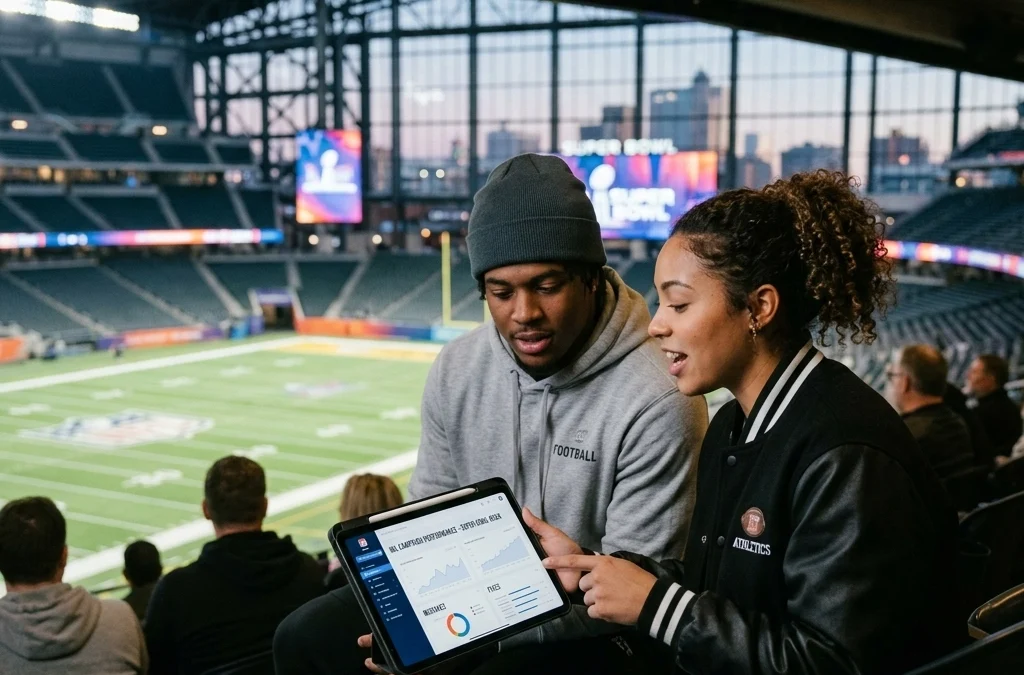
It is April 2026, and the planning phase for the upcoming Super Bowl is already in full swing. For media buyers, the landscape has changed drastically over the last couple of years. The introduction of Name, Image, and Likeness (NIL) has turned college athletes into some of the most influential voices in the country. However, many brands are still treating NIL like traditional celebrity endorsements, which leads to wasted budgets and missed opportunities.
OOH Sports provides a bridge between brands and over 20,000 authentic student-athlete voices. By avoiding common pitfalls, advertisers can maximize their reach and build real connections with fans. Here are the seven biggest mistakes seen in Super Bowl NIL campaigns and how to fix them for 2026.
1. Betting Everything on the "Big Game" Day
One of the most frequent errors is focusing the entire budget on the day of the Super Bowl. While the game itself is the peak of attention, the noise is also at its loudest. Ad costs skyrocket, and consumers are bombarded with messages.
The fix is to treat the Super Bowl as a season rather than a single day. Student-athletes have active, engaged followings year-round. Starting NIL campaigns weeks in advance allows for brand familiarity to grow. By the time the game kicks off, the audience already associates the brand with their favorite athletes. This multi-week approach often results in a higher return on investment compared to a single, high-priced game-day post.

2. Prioritizing Star Power Over Engagement
It is tempting to go after the biggest names in college football. While a Heisman winner has prestige, their engagement rates often pale in comparison to localized or niche athletes. The "Mistake of the Megastar" happens when a brand spends 80 percent of its budget on one athlete who has millions of followers but a low connection with their audience.
The fix is to leverage the power of the crowd. Instead of one superstar, OOH Sports suggests utilizing dozens or hundreds of athletes with smaller, more dedicated fanbases. These "micro-influencers" in the NIL space often see 10 times the engagement of professional athletes. With access to over 20,000 voices, media buyers can spread their message across a diverse range of sports and regions, creating a grassroots movement that feels more authentic to the consumer.
3. Ignoring the Power of Out-of-Home Integration
Many media buyers treat NIL as a strictly digital or social media play. This is a mistake because it misses the physical connection fans have with their local communities. A social media post is easily scrolled past, but a physical presence in the real world creates a lasting impression.
The fix is to combine NIL voices with programmatic digital out-of-home (DOOH) advertising. Imagine a student-athlete from a major university appearing on digital screens across their college town or in the Super Bowl host city. This hybrid approach bridges the gap between the digital world and the physical one. It reinforces the message and makes the campaign feel much larger than a standard social media buy.
4. Using Scripted, "Corporate" Creative
When a brand forces a student-athlete to read a stiff, corporate script, the audience can tell. It feels like an advertisement, not a recommendation. This lack of authenticity is the fastest way to lose the trust of Gen Z and Millennial audiences who value genuine content.
The fix is to give athletes creative freedom within a set of brand guidelines. These athletes know their audience better than any agency does. They know the slang, the humor, and the formats that perform well. When student-athletes are allowed to use their own voice, the content feels organic. This leads to higher trust and better conversion rates. OOH Sports simplifies this process by managing the communication with thousands of athletes to ensure the message stays on track without losing its soul.

5. Failing to Use Data-Driven Targeting
Some campaigns are launched based on "gut feeling" or because a brand executive likes a particular school. This leads to wasted impressions on people who have no interest in the product. In 2026, there is no excuse for a lack of precision in targeting.
The fix is to use the data available through modern platforms. OOH Sports uses advanced analytics to match brands with athletes whose followers align with specific demographics and purchase behaviors. Whether the goal is to drive purchase consideration or brand lift, the strategy should be rooted in numbers. For example, looking at previous case studies shows how data-driven OOH campaigns have significantly boosted brand preference in specific markets.
6. Managing the Campaign Manually
Trying to manage hundreds of NIL contracts manually is a logistical nightmare. It leads to missed deadlines, inconsistent messaging, and legal headaches. Many media buyers shy away from large-scale NIL campaigns because they do not have the bandwidth to handle the paperwork.
The fix is to use an automated NIL platform. OOH Sports handles the heavy lifting, from athlete recruitment to contract management and payment. This allows media buyers to focus on the overall strategy while the platform ensures that 20,000 voices are speaking in unison. Automation makes it possible to scale a campaign from five athletes to five hundred without increasing the administrative workload.
https://www.youtube.com/watch?v=l6J-0zileKE
7. Forgetting to Measure Attribution
The final mistake is not knowing if the campaign actually worked. Many brands look at "likes" and "shares" as the only metrics of success. While these are useful, they do not tell the full story of how an NIL campaign affected the bottom line.
The fix is to implement robust attribution modeling. By using specialized technology partners, brands can track things like foot traffic increases, website visits, and purchase lift. It is important to know if a Super Bowl NIL campaign actually moved the needle in the real world. Modern DOOH and NIL integrations allow for tracking device IDs and measuring how exposure to an ad translated into a consumer action.

The Future of Super Bowl Advertising
The Super Bowl is no longer just a television event. It is a cultural phenomenon that lives on every screen and in every street. For 2026, the winners will be the brands that understand how to use the authentic voices of student-athletes to tell a story.
By avoiding these seven mistakes, media buyers can ensure their budget is spent effectively. It is about being smarter, not just louder. Using a platform like OOH Sports gives brands the scale they need with the authenticity they want. The era of the "one and done" TV commercial is fading, and the era of the community-driven NIL campaign is here.
If you are looking to start your 2026 strategy, exploring the blog for more insights on programmatic advertising and NIL trends is a great place to start. The world of sports marketing is moving fast, but with the right tools and the right voices, your brand can stay ahead of the pack.

Key Takeaways for 2026 Media Buyers
- Scale is your friend: Do not be afraid to work with hundreds of athletes.
- Mix your media: Combine social NIL with physical OOH for maximum impact.
- Trust the talent: Authentic voices beat scripted ads every time.
- Start early: The Super Bowl conversation begins months before the coin toss.
- Measure what matters: Look beyond vanity metrics to real-world attribution.
The student-athlete voice is the most powerful tool in a modern marketer's arsenal. With the right strategy and a focus on authenticity, Super Bowl 2026 can be the most successful year yet for your NIL initiatives. Whether you are a local brand or a global powerhouse, connecting with fans through the athletes they love is a winning play.
For more information on how to get started or to learn about our specific marketing solutions, reach out to the team at OOH Sports today. Let us help you find your voice among the 20,000 we represent.