
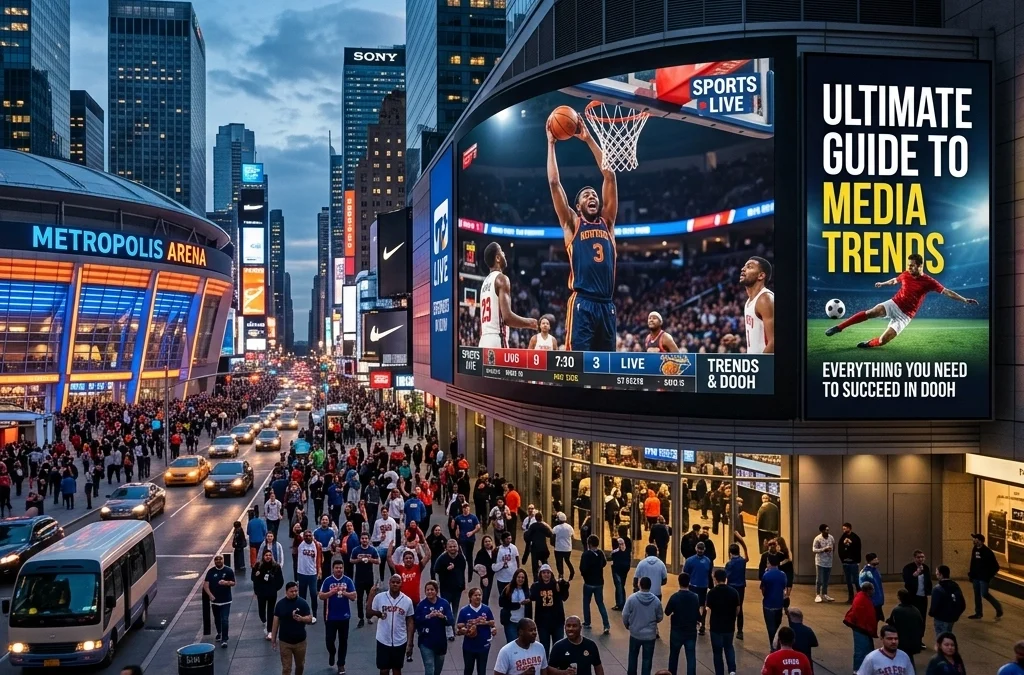
The landscape of sports media is undergoing a massive transformation. As traditional television viewership fragments, digital out-of-home (DOOH) advertising has emerged as a cornerstone for brands looking to capture the attention of high-affinity sports fans. The integration of real-time data, programmatic buying, and mobile location intelligence has turned public spaces into dynamic arenas for brand engagement.
For those navigating this space, success requires a shift from static placements to data-driven, responsive strategies. Reports suggest that DOOH sports advertising will hit $50 billion by 2030. To capture a share of this growth, advertisers must understand the specific trends and technological advancements driving the industry forward.
Objective and Strategy: The Shift to Fan-Centric Marketing
The primary objective in modern sports DOOH is no longer just visibility. It is about relevance. Traditional stadium advertising provides a concentrated burst of attention, yet it is often limited to a single location and a specific timeframe. Modern strategy focuses on the entire fan journey, extending far beyond the stadium walls.
Effective campaigns now prioritize routine-based marketing. This approach targets fans where they spend 99 percent of their time, including transit hubs, gyms, sports bars, and shopping centers. By aligning brand messaging with the daily movements of sports enthusiasts, advertisers create a persistent presence that reinforces traditional broadcast or stadium sponsorships.
Strategic choices are increasingly guided by the concept of the priming effect. Research indicates that when a consumer sees an advertisement on a digital urban panel or transit screen during their commute, their receptivity to a subsequent TV spot or social media ad increases significantly. This omnichannel approach ensures that DOOH serves as a powerful reinforcement tool rather than a siloed channel.

Dynamic Creative Optimization: The Power of Real-Time Data
One of the most significant trends in sports media is the adoption of Dynamic Creative Optimization (DCO). Static creative is no longer sufficient for an audience that consumes information in real-time. DCO allows advertisers to automatically update ad content based on live data feeds.
Key triggers for dynamic content include:
- Live game scores and halftime countdowns.
- Player statistics and milestone achievements.
- Weather conditions that influence apparel or beverage choices.
- Real-time sports betting odds and betting line shifts.
- Social media sentiment and trending hashtags.
For example, a beverage brand might trigger celebratory creative the moment a local team scores a touchdown. Alternatively, a sports betting platform can use live feeds to display updated odds on screens in sports bars, providing immediate utility to the viewer. This level of responsiveness transforms an advertisement into a relevant piece of content, making it feel like a part of the sporting event rather than an interruption.
Technology Partners and Programmatic Execution
The execution of these complex campaigns relies on a sophisticated ecosystem of technology partners. Programmatic DOOH has replaced manual, one-to-one negotiations with automated, data-driven buying processes. This allows for unprecedented agility in sports marketing.
Platforms like StackAdapt DSP enable advertisers to launch campaigns that can be paused, adjusted, or scaled in real-time based on game outcomes or audience behavior. This flexibility is critical in sports, where the narrative can change in a matter of seconds.
Through programmatic infrastructure, brands can utilize:
- Geofencing: Targeting specific areas around stadiums or high-traffic fan zones.
- Audience Segmenting: Reaching consumers who have recently visited sports venues or downloaded sports-related apps.
- Trigger-Based Buying: Only purchasing ad impressions when specific conditions are met, such as a game starting or a specific temperature being reached.
This technological foundation ensures that marketing budgets are allocated with precision, reducing waste and maximizing impact during peak moments of fan engagement.

Multi-Moment Activation Framework
Success in sports DOOH requires a structured approach to timing. Industry leaders utilize a three-phase activation framework to maintain relevance throughout the sporting calendar.
Pre-Game: Building Anticipation
The goal during this phase is to drive tune-in and build excitement. Creative content often focuses on countdowns, rivalry history, and win/loss records. Placements in transit hubs and office districts are particularly effective here, as they reach fans while they are planning their evening or weekend viewing.
During-Game: Capitalizing on High Emotion
This is where DCO shines. Advertisers use live scores and game updates to stay in the moment. By synchronizing DOOH activations with the live broadcast, brands create a surround sound effect. If a major play happens on TV, the same excitement can be reflected on digital screens in public spaces, capturing the attention of those who may not be seated in front of a television.
Post-Game: Reinforcing Connection
After the final whistle, the strategy shifts to reinforcement. Content is updated to reflect the game outcome. Winners receive congratulatory messaging, while upcoming matchups are promoted to keep the momentum going. This phase is crucial for apparel brands looking to capitalize on a win or for streaming services promoting the next big event.

Comparative ROI: DOOH vs. Traditional Stadium Ads
When evaluating where to allocate budget, it is essential to compare the performance of DOOH against traditional stadium advertising. While stadium ads offer high prestige, programmatic DOOH often delivers better ROI through targeted reach and lower entry costs.
A detailed analysis of programmatic DOOH vs. traditional stadium ads reveals that DOOH provides a more flexible and measurable environment. Stadium ads are permanent for the duration of the event, whereas DOOH allows for minute-by-minute optimization. Furthermore, DOOH extends the brand's reach to the millions of fans who are watching from home or at public venues, rather than just the thousands inside the arena.
Measurement and Results: Quantifying Impact
The ultimate measure of success in any DOOH campaign is its ability to drive real-world outcomes. Modern measurement techniques go beyond simple impression counts to analyze brand lift, foot traffic, and purchase consideration.
Several high-profile campaigns demonstrate the efficacy of this approach:
- White Claw: A programmatic DOOH campaign for a vodka launch resulted in a 74 percent lift in purchase consideration.
- AB InBev (Mike’s Hard Iced Tea): By utilizing strategic DOOH placements, the brand saw a 119 percent lift in positive brand image.
- Sea-Doo: Their first digital OOH campaign successfully increased purchase consideration by 144 percent.
These results are achieved by connecting DOOH exposure to mobile device IDs. This allows researchers to track whether a consumer who was exposed to an ad later visited a retail location or searched for the brand online. This level of attribution provides the data necessary to justify and refine sports media investments.
Best Practices for Execution
To succeed in the competitive sports DOOH landscape, advertisers should adhere to several key best practices:
- Keep it Simple: Digital screens in public spaces are often viewed for only a few seconds. Messaging should be clear, bold, and focused on a single call to action.
- Leverage Local Context: Tailoring creative to specific cities or neighborhoods increases relevance. A campaign in New York City should feel different from one in Los Angeles, reflecting local team loyalties and culture.
- Integrate Mobile: Use DOOH to prime audiences for mobile retargeting. This creates a seamless journey from seeing a large-format screen to engaging with a personalized ad on a smartphone.
- Focus on Utility: Provide value to the fan. Whether it is a live score, a weather update, or a betting tip, ads that provide information are more likely to be remembered.

The Future of Sports Media in Public Spaces
As technology continues to evolve, the line between the digital and physical worlds will continue to blur. The rise of augmented reality (AR) and more advanced computer vision will allow DOOH screens to interact with fans in even more personalized ways.
For brands and agencies, the path to success involves embracing the programmatic shift and prioritizing data-driven creative. By focusing on the fan's routine and utilizing real-time triggers, advertisers can ensure their message is not just seen, but felt.
For more information on how to implement these strategies, visit the OOH Sports marketing page or explore the latest case studies to see these trends in action. Success in DOOH is no longer about who has the biggest screen, it is about who has the smartest strategy.