
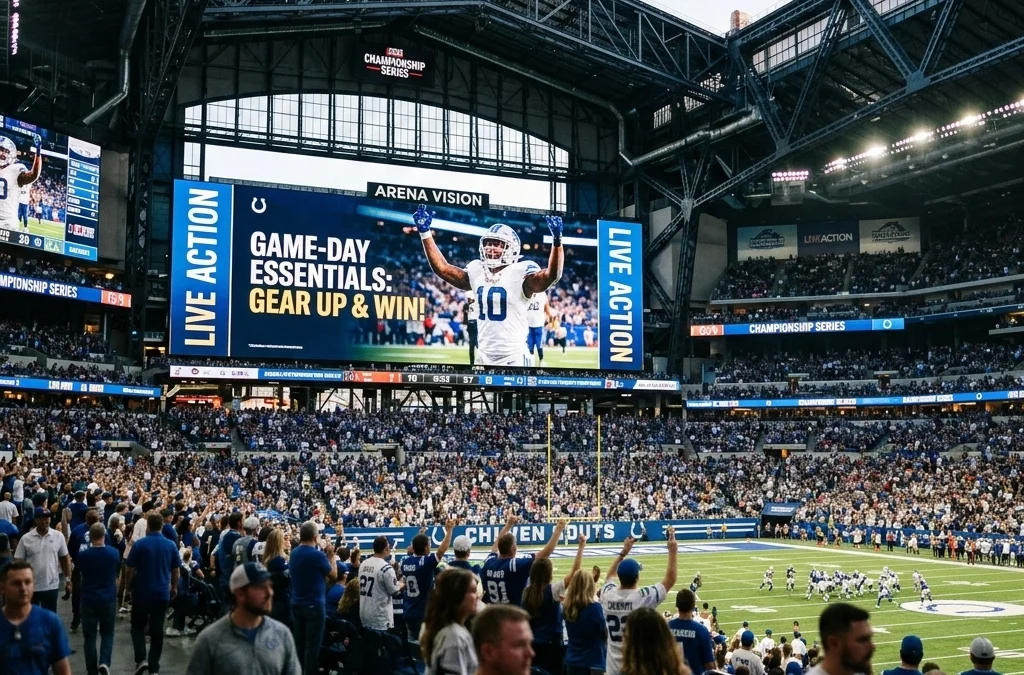
Digital Out-of-Home (DOOH) advertising has transformed the way brands interact with sports fans. By blending the physical presence of traditional billboards with the flexibility of digital technology, sports DOOH provides a powerful medium for high impact engagement. However, even the most sophisticated marketing teams frequently fall into common traps that diminish ROI and weaken brand sentiment.
Effective sports marketing requires more than simply placing a logo on a large screen near a stadium. It demands a technical understanding of audience movement, real-time data integration, and strategic timing. When executed correctly, DOOH can drive significant brand lift and foot traffic. When executed poorly, it becomes an expensive oversight.
The following sections detail the seven most prevalent mistakes found in sports DOOH strategies and provide data-driven solutions for correction.
1. Delayed Campaign Initiation and Inventory Scarcity
One of the most frequent errors in sports DOOH is the failure to account for lead times. Many advertisers attempt to secure premium inventory just days before a major event, such as a championship game or a season opener.
High-traffic locations, including stadium perimeters, transit hubs, and popular sports bars, often reach full capacity four to six weeks in advance. Waiting too long forces brands to settle for secondary locations that do not align with the target demographic or have lower visibility.
The Fix: Strategic Advance Planning
To ensure access to the best inventory, campaigns should be finalized and booked at least six weeks before the event. This proactive approach allows for better rate negotiation and ensures that the brand maintains a presence in the most impactful zones. For those interested in maximizing their presence near venues, stadium perimeter branding provides a roadmap for securing visibility during high-stakes moments.

2. Operating in a Marketing Silo
A significant mistake is treating DOOH as a standalone channel. When a sports DOOH campaign is disconnected from a brand’s mobile, social, and television efforts, the message becomes fragmented. Fans do not experience brands in isolation; they move from social media apps to physical environments and then back to digital platforms.
The Fix: Omnichannel Integration
DOOH should serve as a physical anchor for a broader digital strategy. Incorporating programmatic DOOH allows for more fluid integration.
- Utilize retargeting: Collect anonymized device IDs exposed to the DOOH screens to serve follow up ads on mobile devices.
- Sync messaging: Ensure the creative on the street matches the creative in the fan’s social feed.
- Drive action: Use clear calls to action that transition the physical viewer to a digital participant.
For a deeper look at how this compares to traditional methods, review the analysis on programmatic DOOH vs. traditional stadium sponsorships.
3. Creative Complexity and Cognitive Overload
In an effort to be informative, many brands clutter their DOOH creative with too much text, small fonts, and multiple logos. In the world of out-of-home advertising, the viewing window is often limited to a few seconds. If a fan has to squint or read for more than five seconds, the message is lost.
The Fix: The Seven-Word Rule
The most successful DOOH creatives are minimalist.
- Limit copy to seven words or fewer.
- Use high-contrast colors to ensure legibility from a distance.
- Focus on one clear objective, whether it is brand awareness or a specific promotional offer.
- Use bold, sans-serif fonts that remain readable even to those in moving vehicles.
4. Neglecting Venue-Specific Context and Mindset
Running the same creative at a fitness center, a transit station, and a sports bar is a missed opportunity. The audience's mindset at a gym is focused on performance and health, whereas the mindset at a sports bar is focused on social interaction and entertainment. Failing to adapt the message to the physical environment results in a lack of relevance.
The Fix: Place-Based Creative Customization
Marketers must tailor their creative to match the location context.
- In fitness centers: Focus on endurance, recovery, or game-readiness.
- In sports bars: Focus on the "here and now," such as live scores or social camaraderie.
- Near transit hubs: Use high-frequency, high-energy messaging to capture the attention of commuters heading to the game.

5. Underutilizing Real-Time Data and Triggers
Traditional billboards are static, but DOOH is inherently dynamic. A major error is treating a digital screen like a printed poster. If a campaign does not react to what is happening on the field, it ignores the primary reason fans are engaged in the first place.
The Fix: Reactive Content Strategies
The technology exists to change creative in real-time based on live data feeds.
- Score triggers: Update the board instantly when a team scores or wins.
- Weather triggers: Change messaging based on local conditions (e.g., promoting rain gear or cold beverages).
- Countdown clocks: Build anticipation for the start of a match.
This level of agility creates a sense of "FOMO" (fear of missing out) and ensures the brand remains at the center of the conversation. Understanding these industry secrets is essential for staying ahead of the competition.
6. Poor Geographic Precision
Broadly targeting a whole city can lead to wasted impressions and diluted budgets. In sports, location is everything. Fan loyalty is often hyper-local, concentrated around specific neighborhoods, stadiums, or training facilities. Ignoring these geographic nuances results in inefficient spending.
The Fix: Proximity and DMA Targeting
Strategies should prioritize proximity targeting to ensure the message is seen where the fans actually congregate.
- Geofencing: Activate screens within a specific radius of a stadium or event center.
- Route mapping: Identify the primary paths fans take to reach the venue and place inventory along those routes.
- Regional affinity: Tailor the creative to the specific team allegiances of the local neighborhood.

7. Lack of Measurement and Attribution
The final and perhaps most critical mistake is the failure to measure the impact of the campaign. Some marketers still view OOH as purely a top-of-funnel awareness play that cannot be tracked. This is no longer the case. Without proper attribution, it is impossible to calculate ROI or justify future spending.
The Fix: Data-Driven Performance Tracking
Modern DOOH offers several ways to measure success.
- Foot traffic studies: Use anonymized location data to determine if people who were exposed to the ad later visited a retail location or the stadium.
- Brand lift surveys: Measure changes in brand awareness, perception, and intent among exposed audiences versus a control group.
- Online conversion tracking: Use unique promo codes or vanity URLs to track digital actions back to the DOOH exposure.
Analyzing ROI delivery helps brands understand which strategies provide the best return on their marketing investment.
Conclusion: Refining the Sports DOOH Playbook
Avoiding these seven mistakes requires a shift from a "set it and forget it" mentality to a dynamic, data-driven approach. By starting early, integrating channels, simplifying creative, and leveraging real-time triggers, brands can move beyond simple visibility and achieve genuine engagement.
The goal of sports DOOH is to enhance the fan experience rather than interrupt it. When the strategy is technically sound and geographically precise, the brand becomes a natural part of the game day ritual. Success in this space is defined by the ability to be present in the right place, at the right time, with the right message.
