
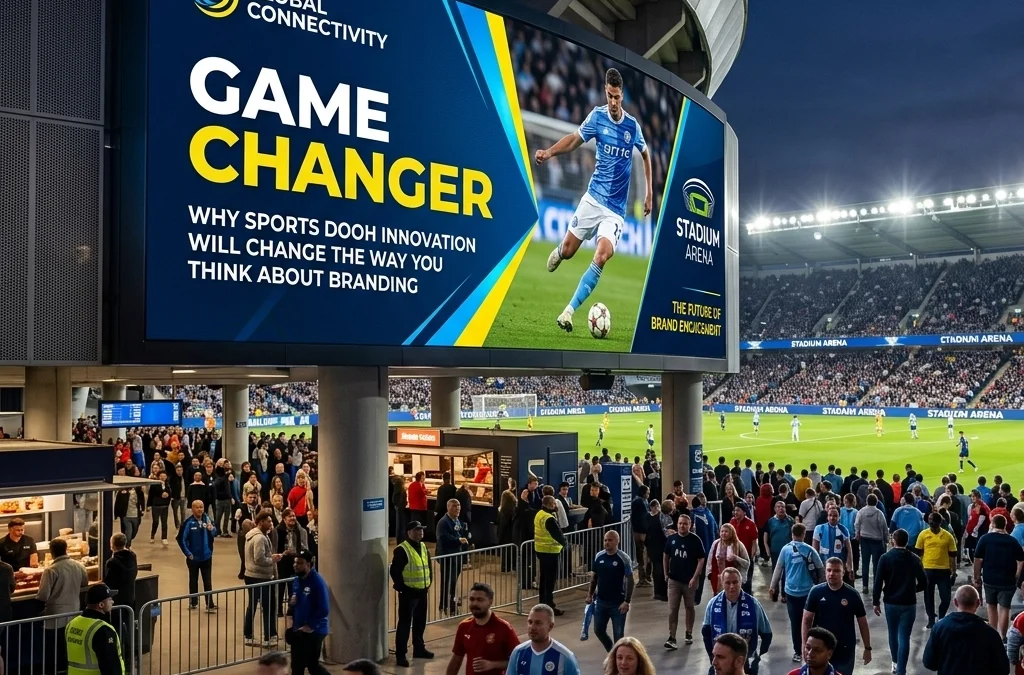
The landscape of sports marketing has undergone a radical transformation. For decades, branding within the sports industry was defined by high-cost, static placements like stadium naming rights or fixed signage behind a home plate. While these methods offered high visibility, they often lacked the flexibility and data-driven precision required in a modern digital economy. The rise of Digital Out-of-Home (DOOH) innovation is shifting the paradigm, moving away from simple location-based advertising toward a more sophisticated, routine-based strategy.
This shift is not merely a change in technology. It is a fundamental evolution in how brands connect with fans. By leveraging programmatic capabilities and real-time data, sports DOOH allows for a level of engagement that was previously impossible. Media buyers and brand managers are now finding that the "old way" of thinking about sports branding is being replaced by a more dynamic, integrated approach that follows the fan throughout their entire daily journey.
From Location-Based to Routine-Based Strategy
Traditional sports advertising focuses on the venue. The assumption is that the brand must be physically inside the stadium to reach the fan. However, innovation in DOOH has proven that the fan journey begins long before the whistle blows and continues long after the game ends.
Instead of buying a specific spot on a scoreboard, modern branding strategies focus on the daily routines of the audience. This includes the morning commute, the visit to the gym, the midday coffee run, and the evening gathering at a local sports bar. By placing digital displays in these high-traffic areas, brands can maintain a consistent presence in a fan's life.
This routine-based approach ensures that a brand is not just a "sponsor of the game" but a "fixture in the fan's life." It allows for a frequency of touchpoints that static stadium ads cannot match. When a brand moves from being an occasional sight to a constant companion, the psychological impact on brand recall and preference is significant.

The Power of Omnichannel Reinforcement
One of the most effective ways DOOH innovation changes branding is through the priming effect. Research indicates that when a consumer is exposed to a brand on a digital screen in the physical world, they are more likely to engage with that same brand on their mobile devices or through television advertisements.
A well-executed marketing strategy utilizes DOOH to reinforce messaging across multiple channels. For example, a fan might see a high-impact digital billboard on their way to work, a 6-second video snippet on a transit screen, and then the full-length commercial during the live broadcast of a game. This multi-layered approach creates a cohesive narrative.
Key benefits of this omnichannel reinforcement include:
- Increased brand memory through repeated, contextual exposure.
- Higher ROI as each channel supports and amplifies the others.
- Reduced ad fatigue by varying the format and environment of the message.
- Stronger mental associations between the brand and the excitement of the sporting event.
Real-Time Personalization and Dynamic Creative
In the past, outdoor ads were "set and forget." Once a vinyl billboard was up, it stayed there for months, regardless of what happened on the field. Innovation in sports DOOH has introduced Dynamic Creative Optimization (DCO). This technology allows brands to update their messaging in real-time based on external triggers such as live game scores, weather conditions, or local events.
Imagine a brand that can instantly update a digital display to congratulate a local team seconds after a championship win. Or a sports apparel company that triggers ads for rain gear the moment a storm is forecasted for a game day. This level of contextual relevance makes the advertisement feel like a part of the conversation rather than an interruption.
This capability is particularly useful for stadium perimeter branding, where the energy and outcomes of the game can change in an instant. Dynamic ads capture attention because they are useful and timely, providing fans with information they actually care about.

Democratizing the Playing Field for Brands
Historically, sports marketing was the playground of global conglomerates with multi-million dollar budgets. The innovation of programmatic DOOH has democratized this space. Media buyers can now purchase inventory in small increments, targeting specific neighborhoods or time slots that align with their audience.
This allows local and emerging brands to compete alongside industry giants. A local craft brewery can target the blocks surrounding a stadium just during the hours leading up to a game. An emerging tech startup can focus on transit hubs where they know young professionals are commuting to watch a match.
By removing the high barrier to entry associated with traditional sports sponsorships, DOOH has opened the door for a more diverse range of brand voices. This variety keeps the advertising landscape fresh and more aligned with the actual interests of the community.
Strategic Execution and Programmatic Efficiency
The logistics of sports branding have also been simplified through programmatic platforms. Media buyers no longer need to negotiate individual contracts for every single screen. Instead, they can use automated systems to bid on inventory that meets their specific criteria.
This efficiency allows for more agile campaign management. If data shows that certain locations are performing better than others, budgets can be shifted in real-time. This level of control is a major reason why many are moving toward programmatic DOOH vs traditional stadium ads.
Strategy highlights for modern media buyers:
- Precision Targeting: Using mobile location data to identify where fans congregate.
- Flexibility: Starting or stopping campaigns based on team performance or season changes.
- Cost-Effectiveness: Paying only for the impressions that matter most to the objective.
- Scalability: Easily expanding a local campaign to a national level using the same digital assets.

Building Authentic Community Engagement
Modern fans value authenticity. They are quick to dismiss brands that feel like they are just "buying their way in" without contributing to the culture of the sport. DOOH innovation allows brands to show up in a way that feels organic to the community.
By utilizing screens in places like community centers, local bars, and residential lobbies, brands can participate in the collective experience of being a fan. This localized presence helps build a sense of trust and shared identity. When a brand is there for the highs and lows of a season alongside the fans, it builds a level of loyalty that a standard commercial cannot achieve.
The use of products like Sportrons exemplifies this approach. By integrating brand messaging with high-value sports content in the environments where fans are already gathered, the advertising becomes a value-add rather than a distraction.
Measuring What Matters: Data and Attribution
One of the biggest hurdles in traditional OOH was measurement. It was often difficult to prove exactly how many people saw a sign and what they did afterward. Today, innovation in data tracking has solved much of this mystery.
Through the use of anonymized device IDs and brand lift studies, media buyers can now track the effectiveness of their DOOH campaigns with high precision. They can see how many people visited a store or a website after being exposed to a digital screen. This level of attribution is a game changer for brand managers who need to justify their spending with hard data.
Focusing on these metrics allows for a more analytical approach to branding. It moves the conversation from "Does this look good?" to "Does this drive results?". This data-centric mindset is essential for any brand looking to stay competitive in the evolving sports landscape.
Conclusion: The Future of Sports Branding
The innovation in sports DOOH is not just a trend, it is a new standard for how branding should function in a connected world. By prioritizing the fan's routine, leveraging real-time data, and utilizing programmatic efficiency, brands can create more meaningful and impactful connections.
As the technology continues to advance, the gap between traditional advertising and innovative DOOH will only widen. Brands that embrace these changes will find themselves more deeply integrated into the fan experience, while those that stick to static methods may find it increasingly difficult to capture attention in a crowded market.
For those ready to explore the next level of engagement, understanding the mechanics of these digital tools is the first step toward a more successful branding future. Whether it is through localized targeting or large-scale programmatic buys, the opportunities to innovate are vast and ever-expanding.