
![[HERO] 72 Mistakes You’re Making with Your Sports DOOH Strategy (and How to Fix Them)](https://cdn.marblism.com/gWEgnaZf4NA.webp)
Digital Out-of-Home (DOOH) advertising within the sports industry represents one of the most high-impact opportunities for brands to connect with a passionate, engaged audience. The intersection of live events, high-traffic venues, and emotional fan investment creates a unique environment for messaging. However, as the technology surrounding programmatic DOOH matures, the margin for error increases. Many advertisers continue to apply traditional out-of-home logic to a digital landscape that requires data-driven precision and contextual relevance.
Identifying and correcting these strategic oversights is essential for maximizing Return on Ad Spend (ROAS). By analyzing current industry trends and campaign data, several recurring mistakes emerge. Addressing these errors allows brands to transition from passive background noise to an integrated part of the fan experience.
1. Fragmented Location Selection Without Data
The most common error in sports DOOH is selecting screen locations based on simple availability or general proximity rather than granular foot traffic data. Many brands assume that any screen near a stadium will yield results. This approach often leads to wasted impressions in areas where the audience is moving too quickly or is preoccupied with logistics rather than the screen content.
The Fix: Prioritize High-Density Fan Funnels
A successful strategy involves mapping the "fan funnel." This includes identifying primary transit hubs, fan zones, and key pedestrian arteries leading to the venue. Ten screens located in a high-density funnel where fans congregate or wait for transportation are significantly more valuable than a hundred screens scattered randomly across a city. Utilizing mobile location data to track historical movement patterns during game days ensures that screens are activated exactly where the target demographic spends the most time.

2. Neglecting Performance and Attribution Measurement
For many years, out-of-home advertising was viewed as a top-of-funnel awareness play with limited measurement capabilities. Continuing to view sports DOOH through this lens is a mistake. Advertisers who fail to implement real-time tracking or brand lift studies miss the opportunity to optimize campaigns mid-flight or prove the effectiveness of their investment.
The Fix: Implement Real-Time Data and Brand Lift Studies
Brands must demand real-time data tracking that includes proof-of-play and impression data at the screen and hourly level. To measure true impact, successful campaigns often utilize brand lift studies to quantify shifts in perception. For instance, an analysis of AB InBev’s Mike’s Hard Iced Tea campaign showed a 119 percent lift in positive brand image by utilizing programmatic DOOH with precise measurement. By comparing exposed versus unexposed audiences using device IDs, marketers can determine if a campaign actually drove purchase intent or brand favorability.
3. Using Non-Optimized Creative Assets
A frequent technical error is the direct repurposing of social media or television creative for DOOH screens. Content designed for a small handheld device or a long-form television slot does not translate effectively to a large format screen in a high-distraction environment. Messaging that is too wordy or lacks visual contrast will be ignored by fans who are in transit.
The Fix: Adhere to the Three Second Rule
Creative assets for sports DOOH must be designed with brevity and high impact as the primary goals. The "three second rule" suggests that a viewer should be able to grasp the core message and the call to action while walking at a brisk pace. This requires bold typography, high-contrast color palettes, and minimal text. If the message cannot be understood in the time it takes to walk past a screen, the creative requires simplification.
4. Ignoring the Power of Dynamic Content and Triggers
Static messaging in a live sports environment is a missed opportunity for relevance. Fans are hyper-aware of scores, player statistics, and game-time conditions. Running a generic ad while a major play is happening, or after a significant win, creates a disconnect between the brand and the audience's current emotional state.
The Fix: Utilize Programmatic Triggers and Real-Time Swaps
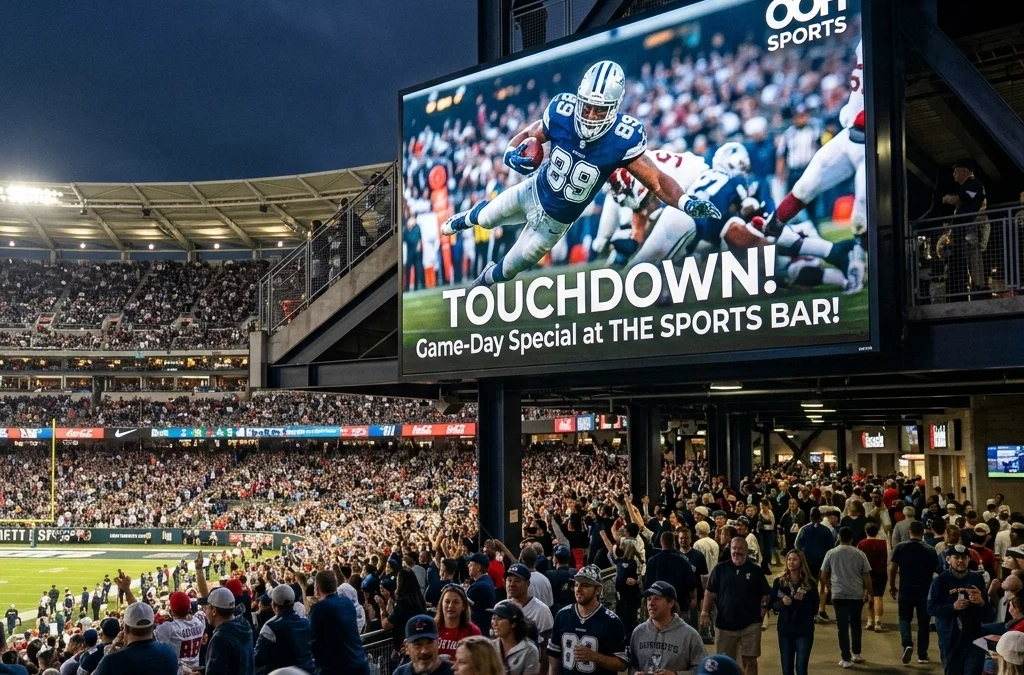
Modern DOOH networks allow for dynamic creative optimization (DCO). Advertisers should set triggers based on real-time events. For example, messaging can change instantly if a specific player hits a home run, if a game goes into overtime, or even based on local weather conditions at the stadium. This level of contextual relevance transforms a standard advertisement into a reactive piece of content that resonates with the fan's immediate experience.

5. Misjudging the Timing of the Fan Journey
A sports event is not just the three hours of play. It is a multi-stage journey that includes the pre-game buildup, the arrival, the event itself, and the post-game departure. A mistake many strategists make is treating every hour of the campaign the same way. The mindset of a fan three hours before kickoff is vastly different from their mindset thirty minutes after a loss.
The Fix: Align Messaging with Fan Sentiment and Logistics
The strategy must adapt to the phases of the event. Pre-game messaging should focus on excitement, preparation, and retail opportunities (such as where to buy beverages or gear). Post-game messaging should pivot toward celebration, commiseration, or transportation and dining options. By aligning the creative tone with the likely emotional state of the fan at specific times, the brand becomes a more intuitive part of the day.
6. Overlooking the Shareability of Physical Assets
In the digital age, DOOH is often the starting point for a cross-platform viral moment. A mistake is viewing the screen as an end-point rather than a catalyst for social media engagement. If the creative is bland or purely transactional, it fails to capitalize on the "share factor."
The Fix: Design for the "Share Factor"
When developing sports DOOH, designers should ask if the visual is compelling enough for a fan to take a photo and share it on social media. High-impact visuals, clever localized copy, or interactive elements can drive significant earned media. Brands that successfully bridge the gap between physical screens and digital sharing see a much higher overall reach. This is particularly effective in sports, where fans are already inclined to document their game-day experience.

7. Relying on Subpar Technical Infrastructure
Execution failure is a silent campaign killer. Screens that go dark, creative that lags, or networks with low uptime can ruin a high-stakes campaign during a championship event. Relying on unvetted networks or failing to verify the technical reliability of the screens in the buy is a risk that often leads to wasted budget.
The Fix: Vet Infrastructure and Partner with Specialized Networks
It is critical to work with partners who provide robust technical support and high network uptime. Specialized sports DOOH networks, such as those utilizing Sportrons, offer infrastructure specifically designed for the demands of high-traffic sports environments. Prioritizing technical reliability ensures that the message is delivered exactly when the audience is present, without the risk of hardware or software failure during peak windows.
Strategic Summary
The transition from traditional OOH to a sophisticated sports DOOH strategy requires a shift in mindset from "broadcasting" to "contextual engagement." The most successful campaigns in the current landscape are those that treat the fan as a moving target with changing needs throughout the game day.
By avoiding these seven common mistakes, brands can move beyond simple awareness. Utilizing programmatic triggers, data-backed location selection, and format-specific creative allows for a level of precision previously unavailable in physical advertising. As seen in various case studies, the shift toward data-driven, dynamic DOOH results in significant lifts in brand consideration and purchase intent.
Correcting these errors does not require a complete overhaul of marketing budgets, but rather a more analytical approach to how those budgets are deployed. In the competitive world of sports marketing, the brands that leverage technology to meet fans where they are, with the right message at the right time, are the ones that ultimately win the "ground game" of advertising.
For more information on optimizing your strategy and exploring specialized sports networks, visit the OOH Sports About page to learn more about industry leading practices.