
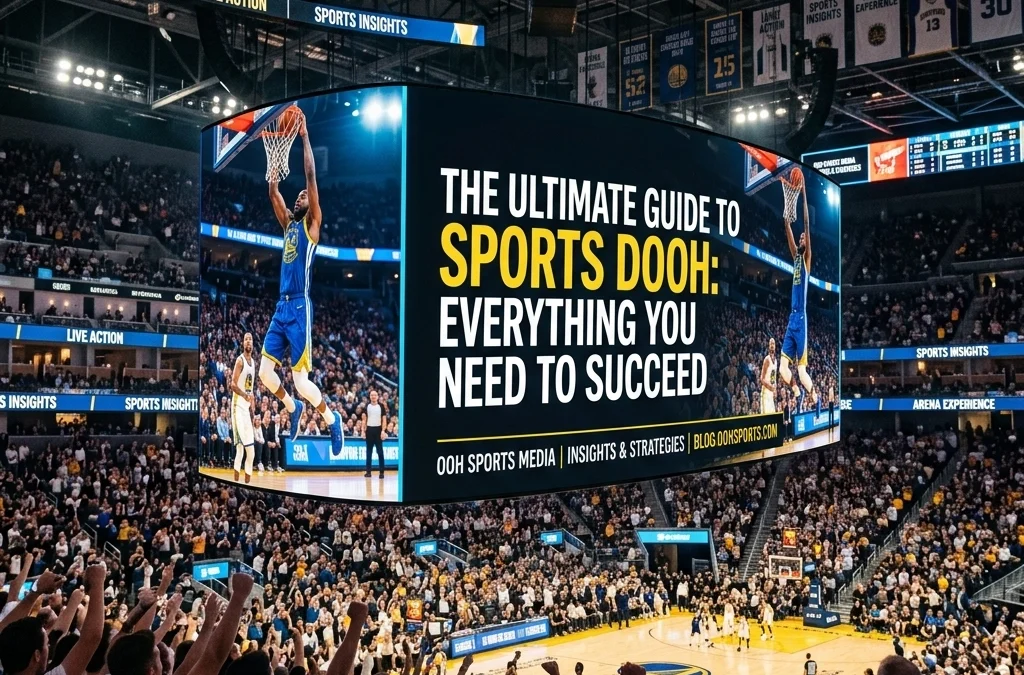
Digital Out-of-Home (DOOH) advertising has undergone a significant transformation, moving from a secondary media buy to a primary driver of brand engagement in the sports industry. For media buyers and brand managers, the challenge is no longer just about getting a logo on a screen, it is about connecting with fans during high-emotion moments through precision targeting and dynamic content.
This guide provides a comprehensive overview of how to leverage Sports DOOH to achieve measurable results, moving beyond traditional stadium boundaries to capture audience attention wherever fans live, work, and play.
The Strategic Shift: Beyond the Stadium Walls
Traditional sports marketing often focuses heavily on stadium sponsorships and in-venue signage. While these placements offer prestige, they are often limited by physical attendance and high entry costs. Modern sports marketing strategies recognize that the majority of fan attention exists outside the stadium.

Sports DOOH allows brands to follow the fan journey through every phase of the game day experience. This includes transit hubs, retail locations, sports bars, and residential neighborhoods. By utilizing sportrons, brands can maintain a consistent presence in environments where fans are naturally gathered and highly attentive. The objective is to transition from a location-based strategy to a routine-based strategy, ensuring the brand message remains relevant throughout the entire day.
The Power of Programmatic DOOH in Sports
The introduction of programmatic technology has changed the landscape of outdoor advertising. Programmatic DOOH (pDOOH) allows for automated buying, selling, and delivery of out-of-home content. This level of flexibility is particularly beneficial for sports marketing, where conditions can change in an instant.
Efficiency and Flexibility
Unlike traditional static billboards that require long lead times and manual installation, pDOOH can be activated or paused with minimal notice. This allows brand managers to align their spend with specific events or momentum shifts. If a team enters the playoffs unexpectedly, a brand can launch a localized campaign within hours rather than weeks.
Better ROI for Sports Marketing
When comparing programmatic options to traditional stadium ads, the efficiency of spend becomes clear. Advertisers can target specific DMAs (Designated Market Areas) and audience segments, reducing waste and ensuring the budget is focused on high-value impressions. Detailed comparisons often show that pDOOH delivers a better ROI for sports marketing by providing more granular control over where and when ads appear.
Dynamic Creative Optimization: Real-Time Engagement
One of the most effective tools in the Sports DOOH toolkit is Dynamic Creative Optimization (DCO). This technology allows digital ads to update automatically based on external data triggers. In a sports context, this creates a level of relevance that static creative simply cannot match.
Common Data Triggers for Sports
- Live Scores: Creative that reflects the current score of a game in real time.
- Weather Conditions: Triggering apparel ads for rain gear if precipitation begins at the stadium.
- Game Phases: Changing messaging for pre-game hype, mid-game intensity, or post-victory celebration.
- Social Sentiment: Integrating trending hashtags or fan comments directly onto the screen.
Using DCO ensures that the brand does not just talk at the fan, but participates in the conversation. When an ad responds to a specific play or a major upset, it ceases to be an interruption and becomes part of the game narrative.
The Three-Phase Activation Framework
To succeed in Sports DOOH, campaigns should be structured around the emotional lifecycle of a sporting event. This framework ensures that messaging is synchronized with fan behavior.
Phase 1: Pre-Game (Anticipation)
The goal during this phase is to build buzz and drive intent. Whether it is a season opener or a championship match, fans are in a state of high anticipation.
- Tactics: Use countdown clocks, highlight key matchups, and promote game-day specials.
- Placements: Commuter routes, transit stations, and grocery stores where fans are stocking up for watch parties.
Phase 2: Game-Time (Participation)
During the game, fans are at their peak level of emotional engagement. Even those who are not at the stadium are often in "second-screen" mode or gathered in social environments.
- Tactics: Deploy live score updates and reactive creative that mirrors the momentum of the game.
- Placements: Sports bars, entertainment districts, and high-traffic pedestrian areas near the venue.
Phase 3: Post-Game (Reflection)
The period immediately following a game is a prime window for reinforcing brand loyalty. The emotional state of the fan (either elation or frustration) provides a unique opportunity for targeted messaging.
- Tactics: Congratulatory messages for winning teams or "better luck next time" promotions for the runners-up.
- Placements: Exits near stadiums, major transit hubs, and social hubs where fans gather to discuss the outcome.

Case Studies: Proof of Performance
The effectiveness of Sports DOOH is supported by significant data from major brands. These case studies demonstrate how specialized targeting and programmatic execution lead to substantial brand lift.
- White Claw: By utilizing programmatic DOOH for a vodka launch, the brand saw a 74% lift in purchase consideration. The campaign focused on reaching consumers in high-intent environments, proving that DOOH can drive bottom-funnel results.
- Mike’s Hard Iced Tea: This campaign achieved a 119% lift in positive brand image. By aligning messaging with social occasions and utilizing programmatic precision, the brand successfully shifted consumer perception.
- Sea-Doo: In its first digital OOH campaign, the brand increased purchase consideration by 144%. The success was attributed to identifying specific audience segments and reaching them in contextually relevant locations.
These examples highlight that when DOOH is executed with a data-driven approach, the results are quantifiable and impactful.
Targeting Strategies for Media Buyers
Precision targeting is the differentiator between a generic outdoor campaign and a high-performance sports activation. Media buyers should focus on three primary layers of targeting.
Location Intelligence
Understanding where fans aggregate is essential. This goes beyond the stadium itself to include "third places" like fitness centers, sports bars, and fan zones. By using location data, OOH Sports can identify high-density areas of sports enthusiasts and activate screens precisely where those audiences are present.
Behavioral Data
By leveraging anonymized mobile location data, advertisers can understand the lifestyle habits of their target audience. Do they frequent sports bars? Do they attend live games regularly? Do they shop at athletic apparel stores? This data allows for the creation of audience profiles that inform which DOOH assets will be most effective.
Strategic Technology Partnerships
The choice of a Demand-Side Platform (DSP) is critical for programmatic success. Partners like StackAdapt enable media buyers to integrate DOOH into a broader omnichannel strategy, ensuring that the message seen on a street-level screen is reinforced on a mobile device or through connected TV.
Measuring Success in Sports DOOH
A common misconception about outdoor advertising is that it is difficult to measure. In reality, the digital nature of modern DOOH provides several robust measurement options.
- Brand Lift Studies: Surveys conducted among exposed versus unexposed audiences to measure changes in awareness, favorability, and purchase intent.
- Foot Traffic Attribution: Using mobile location data to track whether individuals exposed to a DOOH ad subsequently visited a retail location or a stadium.
- Online Conversion Tracking: Measuring the lift in website visits or app downloads following a DOOH flight in specific geographic areas.
- Sales Lift: Correlating DOOH exposure with point-of-sale data to determine the direct impact on revenue.

Conclusion: The Future of Fan Engagement
The sports industry is an environment of passion, loyalty, and real-time action. To succeed in this space, brand managers must adopt tools that are as dynamic as the games themselves. Sports DOOH offers the perfect blend of high-impact visuals, programmatic flexibility, and data-driven precision.
By focusing on the entire fan journey, utilizing dynamic creative, and measuring results through advanced attribution models, brands can secure their place in the sports marketing landscape. As the industry continues to evolve, the integration of DOOH will remain a cornerstone of successful omnichannel strategies. For those looking to stay ahead, the time to integrate these tactics is now. Explore more strategies and insights on the OOH Sports blog to stay updated on the latest innovations in the field.