
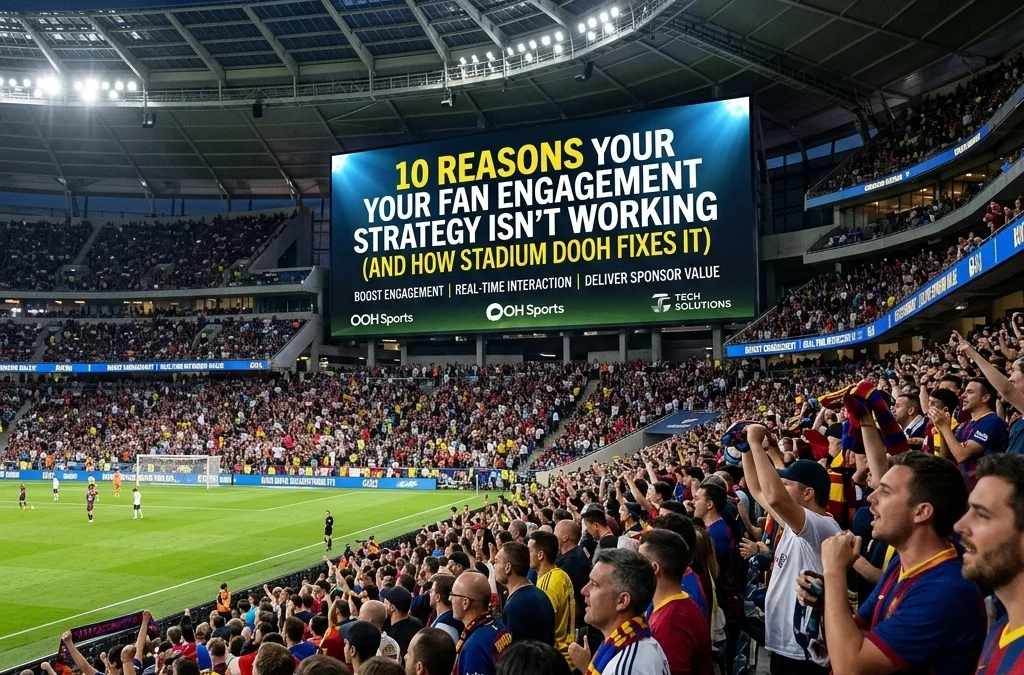
Fan engagement is the cornerstone of modern sports marketing, yet many brands struggle to convert the high energy of a live game into measurable brand equity. Despite record breaking investments in digital advertising and social media sponsorships, the disconnect between a brand and its audience often widens during the heat of competition. Traditional strategies frequently rely on passive methods that fail to capture the visceral, high stakes environment of the stadium.
The problem often lies in a lack of presence where it matters most: the field of play. When a brand relies solely on mobile push notifications or static banner ads, it competes with a thousand other distractions. Stadium Digital Out-of-Home (DOOH) advertising, particularly through sportrons, offers a solution by embedding the brand directly into the fan’s visual experience.
1. Digital Fatigue and Content Saturation
The modern sports fan is bombarded with content. From live tweets to fantasy sports updates, the digital landscape is crowded. Research indicates that a high percentage of fans feel overwhelmed by the sheer volume of brand messages on their mobile devices during a game. This "noise" leads to ad blindness, where users subconsciously filter out marketing content.
How Stadium DOOH Fixes It: Unlike a mobile ad that can be swiped away, stadium perimeter advertising is part of the environment. It occupies the fan's peripheral and direct vision without being intrusive. By appearing on high-definition LED displays around the field, the message becomes a backdrop to the action, making it impossible to ignore but easy to digest.
2. The Second Screen Distraction
While "second screen" engagement was once hailed as the future of sports marketing, it has become a hurdle for brand recall. If a fan is looking at their phone during a pivotal play, they are not looking at the brand’s high-cost television commercial or the static signage in the concourse.
How Stadium DOOH Fixes It: Stadium DOOH recaptures the "first screen" experience. When the game reaches a climax, every eye in the building is focused on the field. Strategic placement on perimeter boards ensures that the brand is present during the most watched seconds of the match. This eliminates the competition for attention between the phone and the field.

3. Lack of Contextual Relevance
Many fan engagement strategies fail because the messaging is disconnected from the current state of the game. A generic "Buy Now" ad shown during a stressful tie-breaking moment feels out of touch. If the creative does not mirror the emotional state of the crowd, it loses its impact.
How Stadium DOOH Fixes It: Through programmatic DOOH, brands can change their creative in real-time. If a home team scores a goal, the perimeter boards can immediately switch to a celebratory brand message. This level of synchronization creates a shared emotional experience between the brand and the fan.
4. Inflexible Creative Assets
Traditional stadium signage is often static, requiring weeks of lead time for production and installation. This rigidity prevents brands from being agile. If a new product launches or a specific player becomes a viral sensation, static boards cannot adapt to the cultural moment.
How Stadium DOOH Fixes It: Digital displays allow for unlimited creative rotations. Marketing teams can test different slogans, highlight different products, or even respond to live weather conditions. This flexibility ensures the content stays fresh and relevant throughout the entire season, preventing the visual "decay" that happens with permanent signage.
5. Missing the Peak Emotional Moment
Marketing is most effective when it reaches consumers at a point of high emotional intensity. Most digital strategies attempt to reach fans before or after the game, missing the window when adrenaline is at its peak.
How Stadium DOOH Fixes It: By being physically present during the game, DOOH leverages the "halo effect" of the sporting event. When a brand is associated with a winning moment or a record breaking play, the positive emotions of that event are transferred to the brand. This is a level of psychological engagement that a standard display ad simply cannot replicate.

6. Over-Reliance on Skippable Media
Social media platforms and streaming services offer "skip" buttons or allow users to scroll past ads in milliseconds. This leads to low view-through rates and poor brand recognition. Creative directors often find that their best work is never actually seen by the target audience.
How Stadium DOOH Fixes It: There is no skip button in a stadium. The perimeter boards are a permanent fixture of the live viewing experience. Whether a fan is in the stands or watching the broadcast from home, the brand remains in the frame. This "unskippable" nature ensures that the total impressions are high quality and long duration.
7. Poor Integration with the Local Market
Many national brands struggle to feel "local" when advertising in specific cities. A generic national campaign can feel cold and corporate to a fan base that is deeply loyal to their local community and team.
How Stadium DOOH Fixes It: Stadium DOOH allows for hyper-local targeting. A brand can use the local team’s colors, reference local landmarks, or use regional slang in their digital creative. This localized approach builds trust and makes the brand feel like a part of the community, rather than an outside intruder.
8. Inability to Drive Real-World Action
A common critique of fan engagement is that it creates "likes" but not "leads." Without a clear bridge between the physical world and the digital world, the ROI of a stadium campaign can be difficult to quantify.
How Stadium DOOH Fixes It: Modern DOOH can integrate QR codes or specific URLs that fans can interact with during breaks in the action. By offering an immediate incentive: such as a discount code for a nearby retailer: brands can drive foot traffic and online sales directly from the stadium seat. Case studies, such as the White Claw programmatic campaign, have shown that this approach significantly lifts purchase consideration.

9. Fragmented Audience Data
CMOs often struggle to see the full picture of who is attending the games. If the data from the ticketing office does not talk to the marketing department, the strategy remains a guessing game.
How Stadium DOOH Fixes It: Through the use of StackAdapt DSP and other programmatic tools, OOH Sports can help brands target specific demographics based on mobile device IDs present in the stadium. This allows for retargeting after the game, ensuring the conversation continues long after the fans have left the parking lot.
10. Low Brand Recall in Broadcast
Many fans watch the game on television or through streaming platforms rather than in person. If a brand's strategy only focuses on the fans inside the stadium, they miss out on the millions watching at home.
How Stadium DOOH Fixes It: Stadium perimeter boards are designed to be "camera-ready." They are positioned at the exact height and angle most frequently captured by broadcast cameras during game play. This provides a secondary layer of exposure that is often more valuable than the primary in-stadium audience. A brand can effectively "ambush" a major sporting event without being an official broadcast sponsor, as seen in the Nike NYC Marathon strategy.
The Strategic Shift to Stadium DOOH
The transition from traditional engagement to a DOOH-first strategy requires a shift in mindset. It is no longer about just "showing up"; it is about being an active participant in the game. When a brand uses dynamic, data driven creative on stadium perimeters, it stops being a distraction and starts being part of the entertainment.
Data from recent campaigns supports this shift. For example, Mike’s Hard Iced Tea saw a 119 percent lift in positive brand image by utilizing programmatic DOOH to reach fans in high-energy environments. Similarly, Sea-Doo increased purchase consideration by 144 percent by focusing on out-of-home channels that matched their target audience's lifestyle.

Implementing a Better Strategy
To fix a failing fan engagement strategy, brands must look beyond the phone screen. The objective should be to create a seamless journey that begins with a high impact visual in the stadium and ends with a conversion.
Steps for success include:
- Utilizing real-time data to trigger creative changes based on game events.
- Integrating DOOH with omnichannel campaigns to ensure consistent messaging.
- Leveraging programmatic buying to maximize budget efficiency and targeting.
- Prioritizing high-visibility perimeter boards that capture both in-person and broadcast audiences.
The sports marketing industry is projected to see significant growth, with DOOH sports advertising hitting $50 billion by 2030. Brands that fail to adapt to these dynamic, physical channels risk being left behind in the digital noise.
For more information on how to integrate these tactics into a broader marketing plan, the OOH Sports marketing page provides detailed insights into current industry standards and technological capabilities. Effective fan engagement is not about reaching the most people; it is about reaching the right people when they are most excited. Stadium DOOH is the most direct path to that goal.