
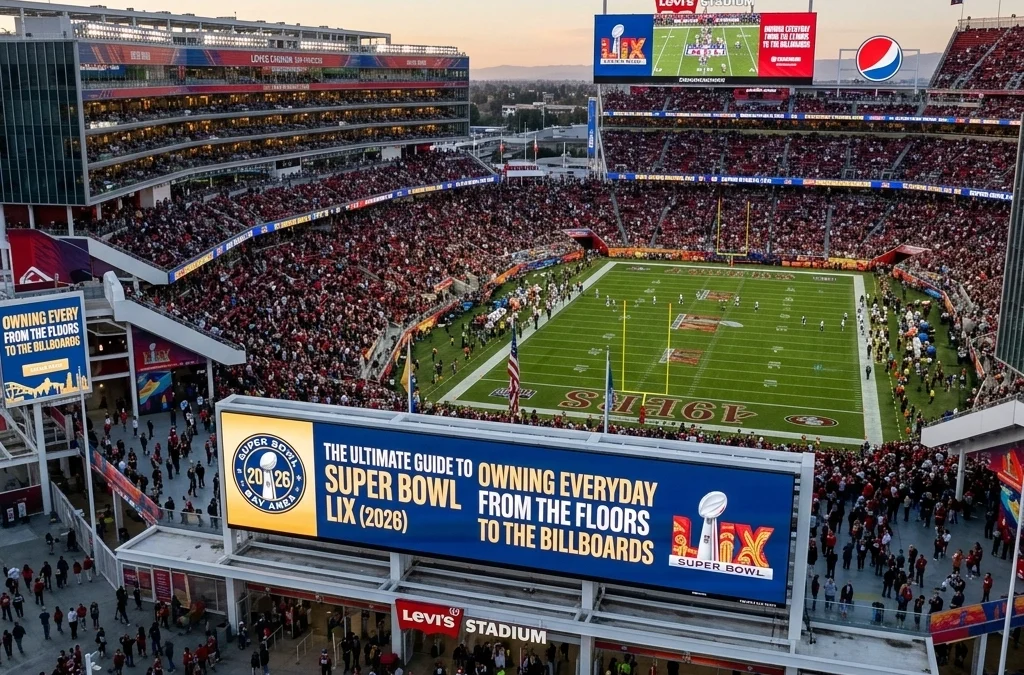
Super Bowl LX was more than just a championship game. For the advertising world, it was the ultimate proving ground. As the dust settles on the Bay Area following the February 2026 spectacle, OOH Sports is looking back at how 40 years of industry leadership culminated in a venue wide takeover that spanned from the floors people walked on to the massive billboards dotting the California skyline.
When you have four decades of experience, you don't just buy ad space. You own the environment. This guide breaks down exactly how OOH Sports leveraged its history and technology to dominate the most competitive marketing window in the world.
40 Years of Marketing Mastery
Advertising at the Super Bowl is high stakes. There is no room for error when a single 30 second TV spot costs millions. OOH Sports has spent 40 years perfecting the art of "out of home" (OOH) advertising to ensure that brands get more than just a momentary glance. The goal is to create a physical presence that fans cannot ignore.
Throughout these four decades, the strategy has shifted from static posters to high tech sportrons and programmatic digital displays. However, the core principle remains the same. You have to be where the fans are. For Super Bowl LX, that meant being in the hotels, on the transit lines, inside the convention centers, and surrounding Levi’s Stadium in Santa Clara.

The Strategy: Venue Wide Coverage
To truly "own" the Super Bowl, a brand must move beyond the stadium seats. OOH Sports utilized a "Floor to Billboard" strategy. This approach ensures that a fan’s journey is constantly surrounded by brand messaging.
The Floors: Ground Level Impact
Most advertisers look up, but OOH Sports looks down. During Super Bowl week, thousands of fans packed into the Moscone Center in San Francisco and the San Jose Convention Center. We utilized high durability floor decals and branded carpets. These "floor" assets are often the most photographed parts of an event because they serve as wayfinding markers and social media backdrops. When fans are looking at their feet or their phones, they are looking at your brand.
The Billboards: Dominating the Skyline
While the floors captured the immediate attention, the massive digital spectaculars captured the scale. The US-101 and I-280 corridors were prime territory. By securing these spots months in advance, OOH Sports ensured that every visitor flying into SFO or SJC saw the same consistent messaging. This is the power of traditional marketing mixed with modern placement.
The Bay Area Hubs: Where the Eyes Were
Super Bowl LX was spread across three main hubs: San Francisco, San Jose, and Santa Clara. Owning the event required a presence in all three.
- San Francisco (The Experience Hub): The Moscone Center hosted the Super Bowl Experience. This was the heart of fan interaction. OOH Sports placed street furniture, bus shelters, and digital kiosks throughout the SoMa district to capture the heavy foot traffic.
- San Jose (The Media Hub): With Opening Night at the San Jose Convention Center, this area was crawling with media and influencers. High impact building wraps and window clings near the SAP Center provided the perfect backdrop for live broadcasts.
- Santa Clara (The Battleground): Levi’s Stadium is a fortress during the Super Bowl. While the NFL maintains strict "Clean Zone" rules, OOH Sports worked within the permitted zones to place perimeter ads and transit center displays at the Great America VTA station.
Watch the Action in Motion
Before we get into the technical side of things, take a look at how these massive campaigns come to life. This video showcases the energy and scale that OOH Sports brings to every major sporting event.
https://www.youtube.com/watch?v=l6J-0zileKE
The Technology: Programmatic DOOH and Real Time Betting
In 2026, static ads are just the beginning. The real magic happens through programmatic Digital Out of Home (DOOH). This technology allows brands to change their creative in real time based on what is happening on the field.
For example, when Bad Bunny took the stage for the halftime show, digital boards across San Francisco shifted to show relevant content. When the score changed, real time betting odds were updated on screens near sports bars and fan zones. This level of agility is why programmatic DOOH delivers such high ROI. You can learn more about this in our case study section, which highlights how brands have achieved massive lifts in purchase consideration using these exact tactics.

One of the most successful implementations during Super Bowl LX was the use of real time sports betting campaigns. By linking ad triggers to live game data, brands were able to convert fans in the moment, turning a passive viewer into an active participant.
Navigating the Rules: Clean Zones and Trademarks
You can't just slap a "Super Bowl" logo on a billboard and call it a day. The NFL is notoriously protective of its trademarks. Part of being an industry leader for 40 years is knowing how to navigate these legal waters.
Host cities like Santa Clara and San Francisco enforced "Clean Zones" around official venues. This meant that non-official sponsors could not place ads within a certain radius of Levi’s Stadium or the Moscone Center. OOH Sports specialized in "Ambush Marketing" that stays within the rules. We used phrases like "The Big Game" or "Championship Sunday in the Bay" to build brand association without infringing on copyright policy.
Our expertise in city permitting and company policies ensured that every building wrap and sidewalk stencil was fully compliant, preventing any last minute removals by city officials.
The Transit Connection: Caltrain and VTA
Moving 70,000 people to Santa Clara is a logistical nightmare, but a marketer's dream. Most fans stayed in San Francisco and took the Caltrain down to the Mountain View station before transferring to the VTA Light Rail.
OOH Sports dominated these transit corridors. Every station platform, train wrap, and digital screen along the route was part of a synchronized campaign. When fans are stuck on a train for an hour, they have nothing to do but look at the ads around them. This high dwell time is why transit OOH is one of the most effective ways to reach the Super Bowl audience.
Measuring the Win
At the end of the day, a campaign is only as good as its results. For Super Bowl LX, OOH Sports utilized mobile GPS data to track how many people who saw a billboard eventually visited a retail location or a fan zone.
We saw record breaking numbers in terms of brand lift and engagement. Similar to how White Claw's campaign saw a 74% lift in purchase consideration, our Super Bowl partners saw double digit increases in brand sentiment. By using device ID tracking and retargeting, we ensured that the physical ad was just the first step in a multi-channel journey.

Why 40 Years of Experience Matters
In the world of advertising, everyone wants to be "disruptive." But disruption without experience usually leads to wasted budget. OOH Sports has survived four decades of tech changes, economic shifts, and evolving fan behaviors.
We know which billboards have the best sightlines and which floor materials won't peel when 100,000 people walk over them. We know how to talk to the city planners in San Jose and the transit authorities in San Francisco. This deep local knowledge, combined with our sportrons technology, is what allowed us to own Super Bowl 2026.
Conclusion: Planning for the Future
The Super Bowl is a marathon, not a sprint. Planning for Super Bowl LX started years in advance, and the lessons learned will fuel the campaigns of 2027 and beyond. If you are looking to make an impact at the next big game, the time to start is now.
Whether you want to own the floors, the billboards, or everything in between, you need a partner who has been there before. For more insights on how to dominate the sports advertising world, check out our blog or reach out to us directly through our contact page.

The Super Bowl will always be the biggest stage in sports. With the right strategy, the right technology, and 40 years of experience, OOH Sports ensures your brand is the star of the show. We don't just put up ads. We create landmarks. We don't just reach fans. We own the moment.
To see more examples of how we handle massive events, you can view our about page or read our latest updates on programmatic DOOH trends. The future of advertising is here, and it is happening out of the home.