

The sports advertising landscape is shifting beneath the feet of traditional media planners. Digital out-of-home advertising has moved from a supporting player to a starting lineup position in sports marketing strategies. Media planners focused on reaching sports audiences are tracking distinct patterns that signal where the industry is headed and where budgets should follow.
The shift is not theoretical. Nearly 60% of US adults recall seeing an OOH ad for a major sporting event, and 90% take action afterward, whether tuning in, sharing online, or discussing with friends. These numbers have rewritten assumptions about attention and activation in an increasingly fragmented media environment.
Smart planners are watching ten specific trends that define the current evolution of sports DOOH.
1. Programmatic Buying Becomes Standard Operating Procedure
Programmatic DOOH advertising has crossed the threshold from experimental tactic to standard practice. Brands are integrating DOOH with omnichannel marketing campaigns and leveraging location-based targeting to reach sports audiences with precision rather than proximity alone.
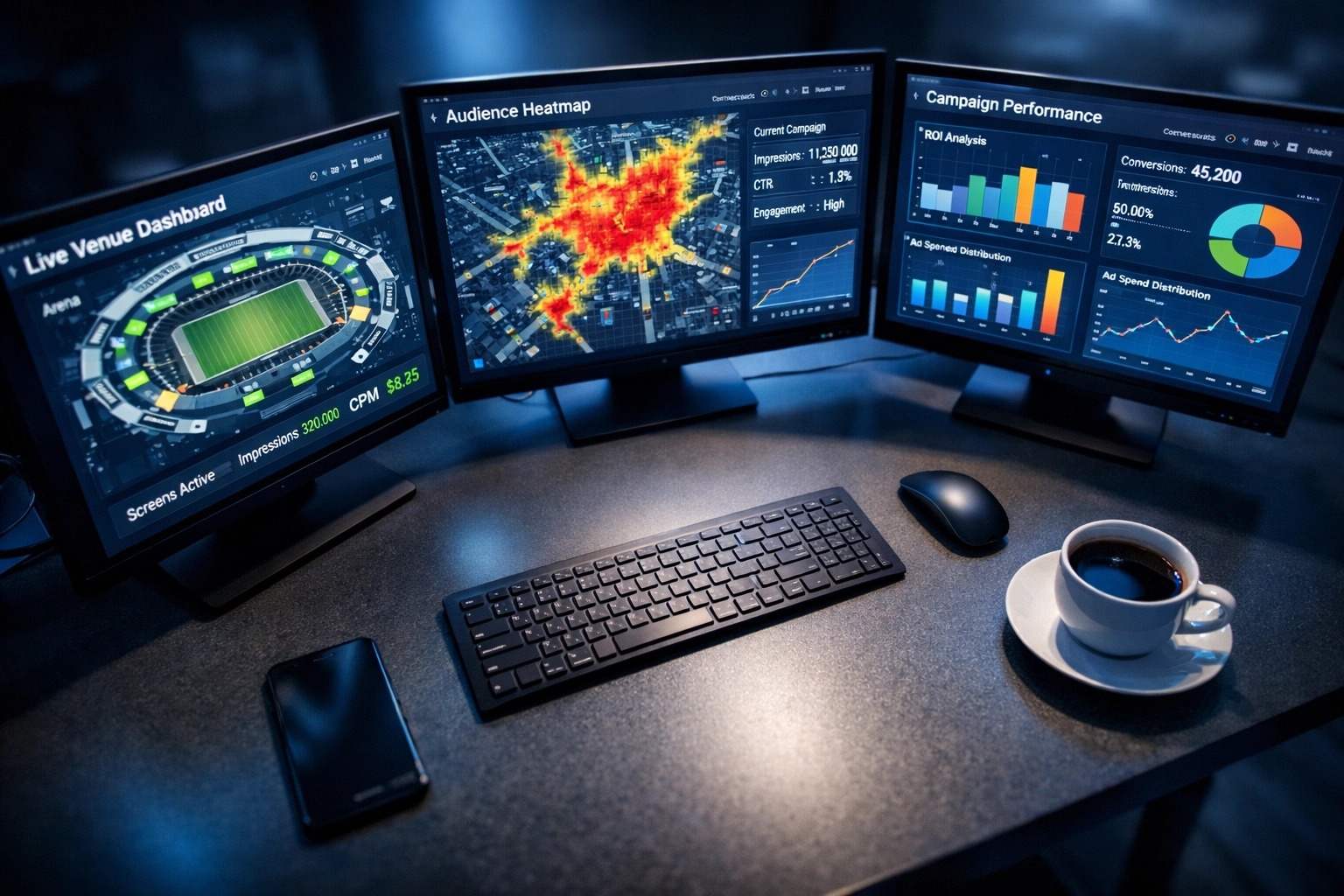
Digital out-of-home is projected to account for 45.2% of total OOH ad spending by 2028, up from 22.0% in 2016. This acceleration reflects both technological maturity and buyer confidence. Planners are no longer asking whether programmatic DOOH works for sports campaigns. They are asking how to optimize it.
The integration of DOOH into broader programmatic ecosystems allows for audience targeting that mirrors digital channels while maintaining the high-impact nature of out-of-home placements. Campaigns can now adjust creative, timing, and placement based on real-time data signals, weather patterns, game outcomes, or audience movement.
2. Global Event Infrastructure Expands Opportunity Windows
Major sporting events are driving DOOH infrastructure investment at an accelerating pace. As global events introduce more digital screens and connected displays, brands gain new opportunities to engage fans on both local and international stages.
The expansion is not limited to host cities. The ripple effect of major tournaments creates viewing occasions in sports bars, public venues, and gathering spaces across multiple countries. Planners are mapping these extended footprints to capture attention beyond the stadium and the living room.
Event-driven infrastructure upgrades often remain in place long after tournaments conclude, creating permanent inventory that shifts local advertising markets. Smart planners are identifying these post-event opportunities early.
3. Hyper-Relevant Placement Replaces Pure Reach Optimization
The shift from reach to relevance is reshaping DOOH placement strategies. Rather than only pursuing high-profile inventory near major venues, brands are embedding campaigns where sports audiences naturally gather: gyms, sports bars, golf clubs, recreational facilities, and community spaces.
This approach makes advertising feel contextually authentic rather than intrusive. A fitness brand message displayed in a cycling studio carries inherent credibility that the same message on a highway billboard cannot match. A sports betting promotion shown in a sports bar during game time reaches an audience already in the mindset to engage.
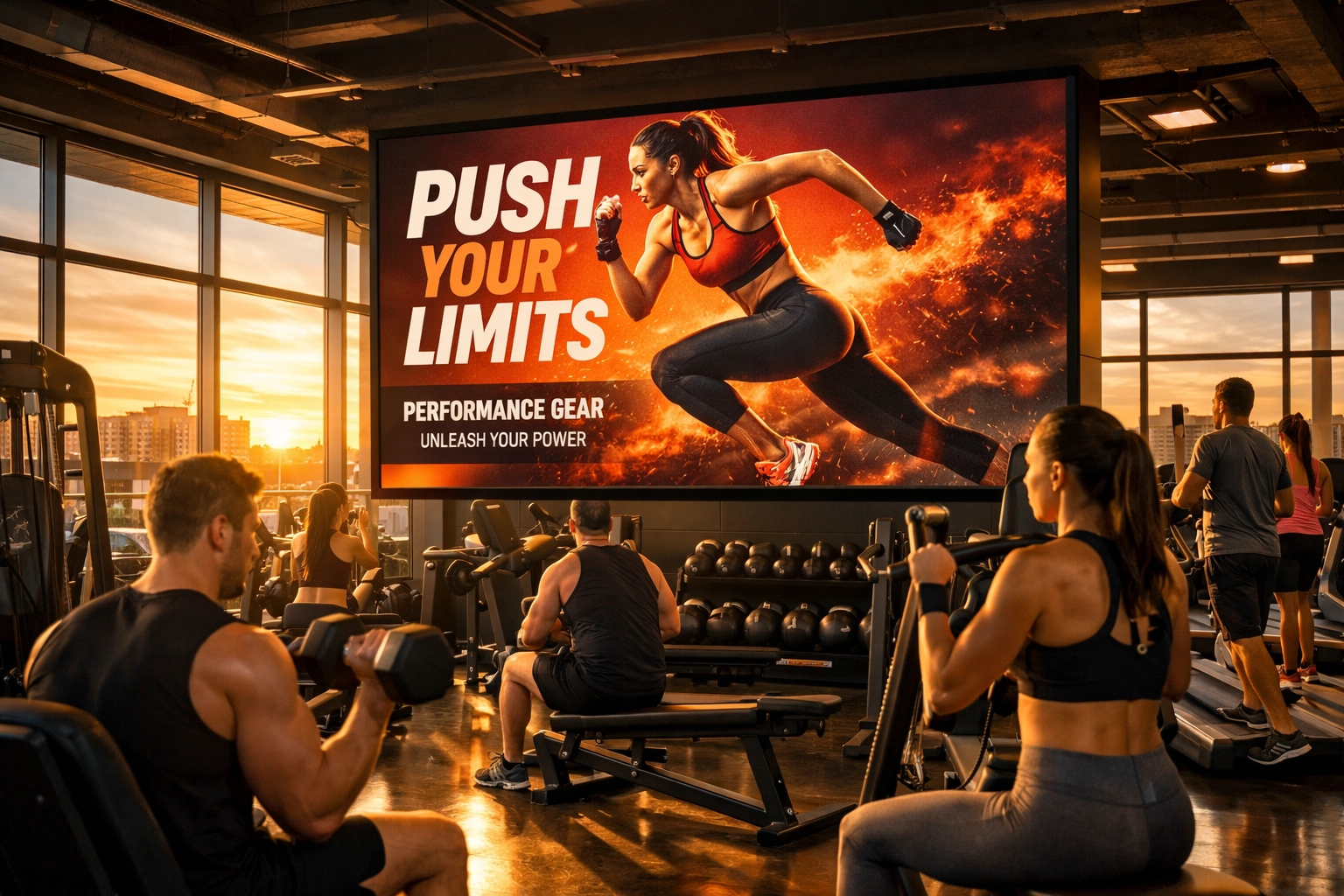
The economics support this shift. Hyper-relevant placements often deliver higher engagement rates at lower CPMs than premium stadium-adjacent inventory. Planners are building venue-specific creative that acknowledges context and speaks directly to the audience's immediate environment and mindset.
4. Out-of-Stadium Audience Engagement Captures the Full Journey
Premium out-of-home video options are capturing the sports viewing journey beyond the stadium and traditional household viewing. The fan experience now extends across multiple touchpoints: pre-game meals at restaurants, post-game celebrations at bars, next-day discussions at coffee shops.
Brands can now reach fans during these micro-moments with contextually relevant messages that extend conversations beyond live game moments. A beverage brand can connect with fans during pre-game gatherings, a sports apparel brand can reach them during post-game analysis at sports bars, and a QSR brand can intercept them on the commute home.
This expanded definition of the sports viewing occasion opens inventory that was previously considered peripheral to sports marketing. Planners are mapping the full fan journey and identifying DOOH placements that intercept fans at each stage.
5. Real-Time Engagement Capitalizes on Pause Moments
Brands are capitalizing on pause moments in the sports viewing experience. With 92% of viewers pausing for longer than 30 seconds and 42% of sports viewers staying engaged during these breaks, programmatic DOOH enables brands to reach fans at maximum engagement points.
The opportunity extends beyond commercial breaks. Halftime analysis, pre-game shows, rain delays, and post-game coverage all create pause moments where attention shifts from the screen to the surrounding environment. DOOH placements in viewing venues capture this wandering attention.
Real-time triggers allow campaigns to activate based on game events, score changes, or specific moments that drive conversation. A brand can deploy creative that references a game-changing play within minutes, creating relevance that static campaigns cannot match.
6. Streaming Shift Creates Complementary DOOH Strategies
The linear-to-streaming migration is creating DOOH opportunities rather than challenges. As viewing migrates across platforms, DOOH strategies complement streaming buys by reaching fans before, during, and after they engage with streaming content.
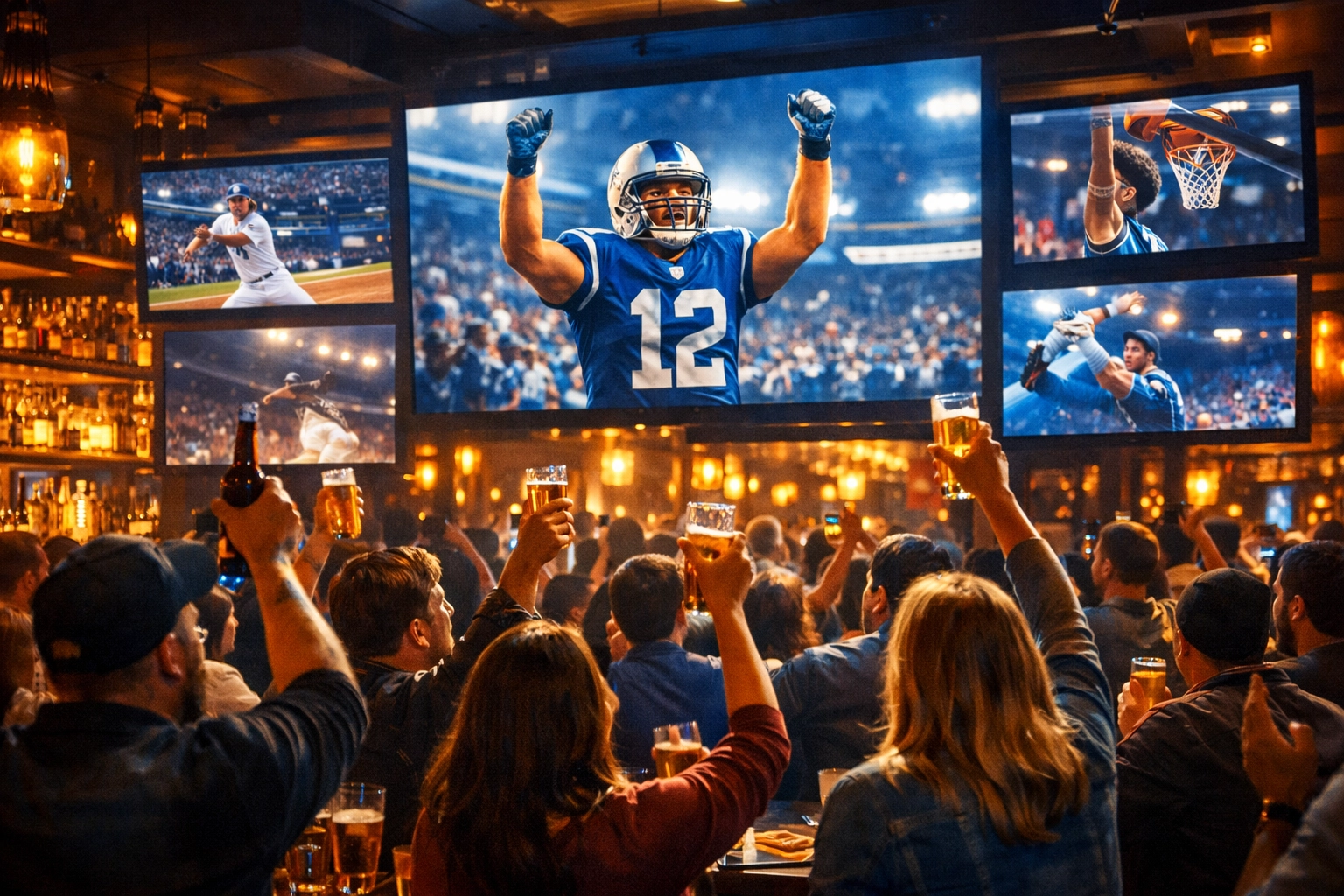
Smart TV home screens allow brands to capture attention before fans enter live matches or streaming apps. DOOH placements in gyms, bars, and public venues reach cord-cutters who stream games on mobile devices or laptops. The fragmentation of viewing platforms has paradoxically increased the value of physical-world touchpoints that aggregate audiences.
Planners are building integrated campaigns that follow fans across streaming platforms and physical locations, using DOOH to provide the high-impact brand moments that small-screen streaming cannot deliver.
7. Athlete-Led Content Becomes Amplification Channel Material
Athletes are becoming primary content creators, and brands are empowering them to create personalized, story-driven content featuring behind-the-scenes moments, training routines, and recovery processes. DOOH serves as an amplification channel for this authentic storytelling.
The shift reflects changing consumption patterns. Fans increasingly follow athletes directly through social platforms rather than relying solely on sports media coverage. Brands that partner with athletes for content creation can extend that content through DOOH placements that reach fans in physical environments.
The strategy works because athlete-created content carries authenticity that traditional advertising often lacks. When displayed on DOOH screens in gyms or sports facilities, the content feels native to the environment and the audience's interests.
8. Hybrid Sports-Entertainment Experiences Expand Creative Possibilities
Sports events are integrating music, fashion, gaming, and culture in ways that blur traditional category lines. Basketball events staged as music festivals, endurance races designed as social content playgrounds, and esports tournaments presented as multi-day entertainment experiences create new DOOH advertising opportunities.
These hybrid experiences attract audiences beyond hardcore sports fans, expanding the addressable market for sports-adjacent brands. DOOH placements at these events can deliver messages that feel culturally connected and shareable rather than purely transactional.
The trend also creates opportunities for brands outside traditional sports categories. Fashion brands, technology companies, and lifestyle products can leverage sports event DOOH inventory to reach audiences in contexts where sports and culture intersect.
9. Data-Driven First-Party Audience Activation Delivers Precision
Precision targeting through first-party data has become standard practice. Media providers are offering integrated packages that combine upfront buys with scatter flexibility, paired with data-driven targeting to reach league and sports fans across linear TV, streaming, and DOOH with guaranteed in-game inventory.
The integration of first-party data allows planners to build audience segments based on actual viewing behavior, purchase history, and engagement patterns rather than demographic proxies. DOOH campaigns can target these segments with the same precision as digital channels while maintaining the impact of large-format displays.
Attribution models are connecting DOOH exposure to downstream actions, closing the loop on campaigns that previously operated on faith rather than measurement. Planners can now optimize DOOH buys based on actual performance rather than assumed impact.
10. Measurement Standards Mature Beyond Impressions
The industry is moving beyond impression-based measurement toward attention metrics, dwell time analysis, and attribution modeling that connects DOOH exposure to business outcomes. New measurement frameworks account for screen visibility, audience composition, and engagement duration.
Advanced attribution connects device IDs exposed to DOOH placements with subsequent online behavior, store visits, and purchases. This closed-loop measurement allows planners to evaluate DOOH performance using the same metrics applied to digital channels.
The maturation of measurement standards is accelerating budget shifts toward DOOH. Brands that previously allocated limited experimental budgets to out-of-home are now building DOOH into core media plans with performance expectations comparable to programmatic display or paid social.
The Path Forward
The trends shaping sports DOOH represent more than tactical adjustments. They signal a fundamental recalibration of how brands reach sports audiences in an environment where attention is fragmented, streaming is ascendant, and fans expect relevance rather than interruption.
Media planners watching these shifts are building strategies that integrate DOOH as a core channel rather than a supplementary tactic. The question is no longer whether DOOH belongs in sports marketing plans. The question is how to deploy it with the same sophistication and measurement rigor applied to digital channels.
The brands that answer that question first will capture advantage while others are still evaluating the opportunity.