
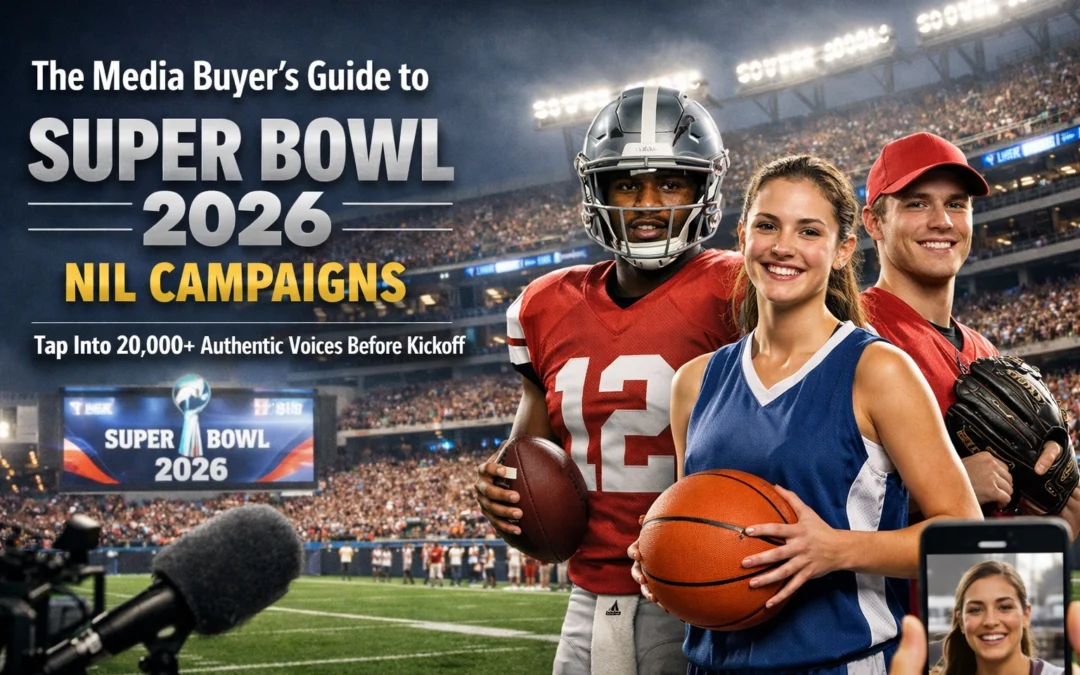

Super Bowl 2026 presents media buyers with an unprecedented opportunity to leverage Name, Image, and Likeness (NIL) partnerships at scale. The game, scheduled for February 2026, sits at the intersection of college sports culture and the biggest advertising stage in sports. For brands allocating multi-million dollar budgets to Super Bowl media, NIL campaigns offer an extension strategy that reaches audiences through trusted, authentic voices rather than purely transactional ad placements.
The challenge for media buyers is not whether to activate NIL partnerships, but how to do so strategically. With over 20,000 student-athletes now accessible through structured NIL platforms, the scale has shifted from experimental pilot programs to measurable, data-driven campaigns that complement traditional Super Bowl media investments.
Why Student-Athletes Deliver Authentic Reach for Super Bowl Campaigns
Student-athletes occupy a unique position in the marketing landscape. They combine local market influence with demographic appeal to younger audiences that increasingly avoid traditional broadcast advertising. Research indicates that Gen Z consumers engage with influencer content at rates 2-3x higher than traditional brand messaging, and student-athletes function as micro-influencers with dedicated follower bases in specific geographic markets.

For Super Bowl campaigns, this translates to several strategic advantages:
- Pre-game buzz generation – Student-athletes can begin campaign activation weeks before the Big Game, building anticipation and message frequency that traditional 30-second spots cannot achieve alone
- Local market penetration – College athletes have concentrated influence in specific DMAs, allowing brands to target Super Bowl host cities or key retail markets with precision
- Content diversification – NIL partnerships produce social media content, in-person appearances, and digital touchpoints that extend campaign reach beyond broadcast windows
- Demographic targeting – Student-athletes skew younger and more diverse than many traditional celebrity endorsers, aligning with brands seeking to reach multicultural audiences
The authenticity factor matters significantly in campaign performance. Student-athletes create content that feels native to social platforms rather than scripted advertising, resulting in higher engagement rates and lower cost-per-engagement metrics compared to traditional influencer partnerships.
The 20,000+ Athlete Network: Scale Meets Precision
NIL platforms have matured from scattered, individual deals to structured networks offering media buyers access to thousands of verified student-athletes across all NCAA divisions and sports. The availability of 20,000+ athletes creates opportunities for both broad reach campaigns and hyper-targeted activations.
For Super Bowl campaigns, this scale enables several strategic approaches:
Broad Reach Strategy – Brands can activate hundreds or thousands of student-athletes simultaneously, creating a distributed content wave that saturates social feeds in the weeks leading to kickoff. This approach works particularly well for consumer packaged goods, quick-service restaurants, and mass-market beverage brands that benefit from frequency and wide exposure.
Targeted Market Strategy – Media buyers can select athletes based on school location, sport, follower demographics, or content style to reach specific audience segments. A brand sponsoring a Super Bowl party promotion might activate athletes at schools in the host city, while a sports apparel brand might focus exclusively on football, basketball, and track athletes with performance-oriented follower bases.
Tiered Ambassador Programs – Campaigns can layer high-profile athletes with emerging talent, balancing the reach of recognizable names against the cost efficiency of athletes with smaller but highly engaged audiences.
The platform approach solves traditional challenges in influencer marketing: verification, contract management, content approval workflows, and performance tracking. Media buyers gain campaign management tools that aggregate reporting across thousands of individual partnerships, providing consolidated metrics on impressions, engagement, and conversion attribution.
Pre-Kickoff Timing: Maximizing Campaign Windows
Super Bowl advertising traditionally focuses on the broadcast window, with brands investing heavily in 30 or 60-second spots during the game itself. NIL campaigns shift this paradigm by extending the activation timeline.
Strategic timing for Super Bowl 2026 NIL campaigns includes:
- 6-8 weeks pre-game – Initial athlete selection, contract execution, and creative briefing
- 4-6 weeks pre-game – First wave of content creation and social posting to build early awareness
- 2-3 weeks pre-game – Peak activation period with daily content drops, in-person appearances, and coordinated posting schedules
- Game week – Final content push, watch party activations, and real-time engagement during the broadcast
- Post-game – Recap content and extended messaging to capture search volume and social conversation
This extended timeline allows brands to amortize campaign costs across multiple touchpoints rather than concentrating budget in a single broadcast moment. Cost-per-impression metrics for NIL campaigns typically range from $0.02 to $0.15 depending on athlete tier and engagement levels, compared to Super Bowl broadcast CPMs exceeding $50.
Implementation Framework for Media Buyers
Executing a Super Bowl NIL campaign requires structured planning and clear workflow management. Media buyers should establish the following framework:
Campaign Objectives – Define specific, measurable goals tied to brand awareness, engagement, traffic, or conversion metrics. Super Bowl campaigns typically prioritize reach and brand lift, but NIL components can also drive lower-funnel actions through promo codes and trackable links.
Athlete Selection Criteria – Develop filtering parameters based on follower count, engagement rate, content quality, demographic alignment, and brand safety considerations. Platforms provide verification tools to confirm athlete eligibility and compliance with NCAA regulations.
Creative Guidelines – Provide athletes with talking points, brand assets, and content examples rather than fully scripted copy. Authenticity depends on athletes using their own voice while conveying key campaign messages. Approval workflows should balance brand control with content authenticity.
Budget Allocation – Determine split between high-tier athletes (higher cost, broader reach) and emerging athletes (lower cost, niche audiences). Typical Super Bowl NIL budgets range from $100,000 for targeted activations to $2 million+ for Fortune 500 brands executing national campaigns.

Measurement Framework – Establish baseline metrics pre-campaign and tracking methodology during execution. Key performance indicators include total impressions, engagement rate, video views, link clicks, promo code usage, and brand lift studies conducted via survey partners.
Legal and Compliance – Coordinate with NIL platforms to ensure all contracts comply with NCAA regulations, state laws, and FTC disclosure requirements. Proper disclosure language must appear in all paid content to maintain transparency with audiences.
Measurement and ROI Considerations
Quantifying NIL campaign performance requires both platform-level data and broader brand impact measurement. Media buyers should track multiple layers of performance:
Direct Response Metrics – Platform dashboards provide real-time data on content impressions, engagement actions, and traffic driven to branded destinations. Cost-per-engagement typically ranges from $0.50 to $3.00 depending on athlete tier and content format.
Brand Lift Studies – Survey-based measurement tools can assess changes in brand awareness, favorability, and purchase intent among audiences exposed to NIL content compared to control groups. Super Bowl campaigns with integrated NIL components have demonstrated brand lift increases of 8-15% in tested markets.
Attribution Modeling – Unique promo codes, custom landing pages, and pixel-based tracking allow media buyers to connect NIL exposure to downstream conversions. Multi-touch attribution models can assign credit to NIL touchpoints within the broader Super Bowl media mix.
Competitive Context – Analyze share of voice among competitor brands activating NIL partnerships during the same Super Bowl window. Category leaders in beverages, snacks, and automotive have increased NIL spending by 40-60% year-over-year as platforms mature.
The ROI case for NIL campaigns strengthens when viewed as an extension of total Super Bowl investment rather than a standalone channel. Brands spending $7-10 million on in-game advertising can allocate an additional 5-15% of budget to NIL activations that extend reach, increase frequency, and create content assets usable beyond the game itself.
Competitive Advantage in the Super Bowl Window
Super Bowl 2026 will mark a tipping point in NIL adoption by major advertisers. Fortune 100 brands that establish cross-functional teams combining legal, marketing, and compliance expertise gain first-mover advantages in athlete relationships and platform partnerships.
Media buyers face a strategic choice: activate early to secure top-tier athletes before competitors saturate the market, or wait for late-stage opportunities at potentially lower rates. Historical patterns suggest that premium athletes commit to partnerships 8-12 weeks before major sporting events, leaving late entrants with diminished selection.

The Super Bowl window represents peak demand for athlete partnerships, creating pricing dynamics similar to traditional media markets. Media buyers should negotiate rates and secure athlete commitments by December 2025 to ensure access to desired talent for February 2026 activations.
Platform selection matters significantly. Media buyers should evaluate NIL platforms based on athlete network size, verification processes, contract management tools, reporting capabilities, and compliance infrastructure. The difference between a successful campaign and a compliance headache often comes down to platform operational maturity.
As the Super Bowl 2026 advertising market takes shape, NIL campaigns offer media buyers a proven strategy for extending reach, building authentic connections, and maximizing the return on multimillion-dollar Super Bowl investments. The 20,000+ athlete network provides the scale and targeting precision necessary to execute campaigns that complement traditional broadcast placements while reaching audiences through voices they trust.
Media buyers preparing Super Bowl 2026 strategies should begin athlete evaluation and platform selection now to secure optimal partnerships before the market reaches capacity. The opportunity window for strategic NIL activation closes as game day approaches.