
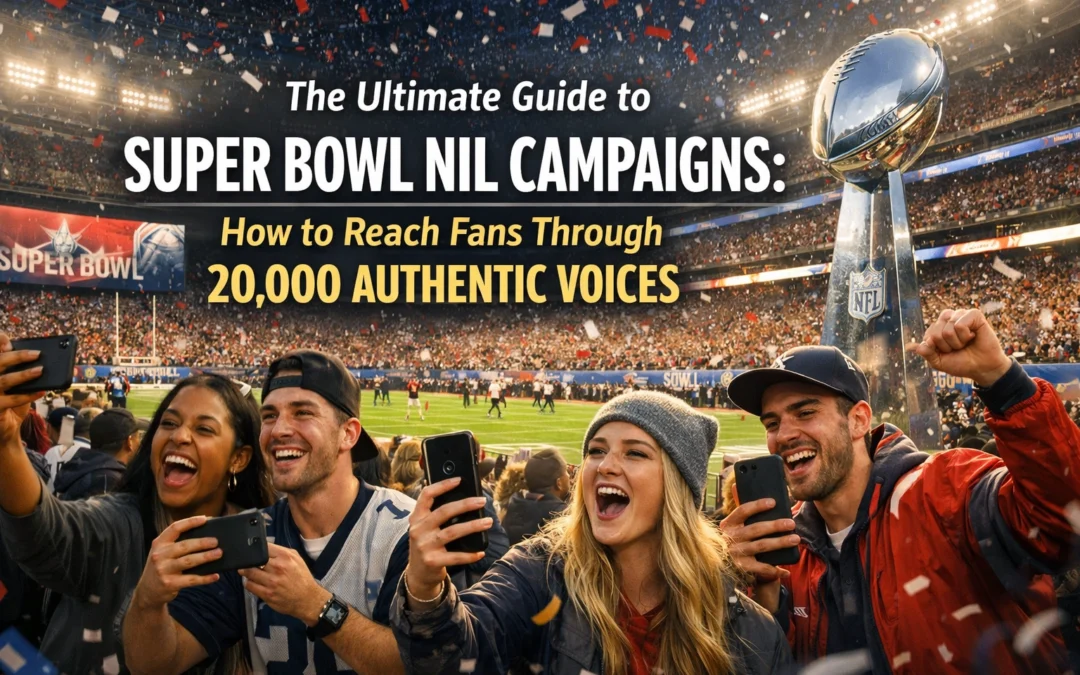
The landscape of Super Bowl advertising has undergone a massive transformation. As of March 2026, the era of relying solely on a single, high-priced 30-second television spot is fading. Media buyers are now looking toward more distributed, authentic, and high-frequency touchpoints to capture fan attention. One of the most significant shifts in this space is the rise of Name, Image, and Likeness (NIL) campaigns. By leveraging the power of over 20,000 student-athlete voices, brands are finding ways to penetrate niche markets and local communities that traditional commercials simply cannot reach.
This guide explores how OOH Sports and the NIL platform are redefining the Big Game experience for advertisers. It focuses on the strategic architecture of these campaigns, the logistical timeline for success, and how combining digital influence with physical presence creates an unbeatable marketing mix.
The NIL Ecosystem in 2026
The power of NIL lies in its scale and its authenticity. While a celebrity endorsement provides a flash of recognition, a recommendation from a student-athlete feels like a tip from a peer. For the 2026 Super Bowl season, the ability to activate 20,000 authentic voices creates a blanket of coverage that spans the entire country. These athletes are not just influencers. They are community leaders, campus icons, and trusted voices for the hardest-to-reach demographic: Generation Z.

Using a distributed network of athletes allows brands to maintain a constant presence throughout the Super Bowl festivities. Instead of one moment of peak awareness during the broadcast, the brand message is reinforced daily through social feeds, locker room stories, and community engagement. This approach addresses the fundamental limitation of traditional media, which often struggles to sustain engagement after the final whistle blows.
Strategic Architecture: The Tiered Athlete Model
Successful campaigns do not treat all 20,000 voices the same way. A sophisticated NIL strategy utilizes a tiered participation model to ensure both mass reach and hyper-local conversion.
- Top-tier Athletes (100,000+ followers): These athletes serve as the campaign anchors. They provide high-production content and broad visibility that mirrors the reach of traditional national spots.
- Mid-tier Athletes (10,000 to 100,000 followers): This group provides the necessary volume and geographic distribution. They are often the stars of regional powerhouse programs, ensuring that the brand is visible in specific high-value markets.
- Micro-athletes (Under 10,000 followers): These athletes are the secret weapon for authentic engagement. They deliver hyper-local activation and peer-to-peer recommendations. Their followers are often friends, family, and fellow students, resulting in engagement rates that often triple those of national celebrities.
By balancing these tiers, advertisers can achieve a blend of national scale and localized credibility. This multi-layered structure ensures that the brand is not just seen, but also discussed within the communities that matter most.
The Importance of Planning and Timeline
The window for a successful Super Bowl campaign does not start in February. To truly harness the power of 20,000 voices, a lead time of 90 to 120 days is essential. This period allows for meticulous athlete recruitment, content vetting, and coordination.
A standard campaign sequence includes:
- The Pre-game Phase (2-3 weeks out): Athletes begin building anticipation through predictions, training montages, and behind-the-scenes content that integrates the brand naturally.
- Game Week: This is the period of peak activation. Coordinated content volume ensures that the brand dominates the conversation as fans travel, party, and prepare for the game.
- The Post-game Phase: While traditional ads stop airing, NIL campaigns maintain momentum. Athletes provide analysis, share their favorite moments, and continue the brand story into the following weeks.
This extended timeline ensures a higher return on investment by spreading the cost over a month of active engagement rather than a few seconds of airtime.
Visualizing the Impact
To understand the energy and scale of modern sports marketing, it is helpful to see the synergy in action. The following video illustrates the dynamic nature of athlete-driven content and its impact on modern audiences.
https://www.youtube.com/watch?v=l6J-0zileKE
Integrating NIL with Digital Out of Home (DOOH)
While the digital influence of student-athletes is undeniable, the most effective Super Bowl campaigns bridge the gap between the phone screen and the physical world. This is where OOH Sports provides a unique advantage. By integrating NIL content with a massive network of digital screens, brands can follow the fan journey from their social feed to the sports bar and the stadium.
OOH Sports recently announced that the OOH Sports network expanded to 25,000 digital screens across America. This expansion means that the same student-athlete faces seen on Instagram and TikTok can also appear on large-format digital displays in high-traffic areas.

This cross-channel approach reinforces the message. When a fan sees a favorite athlete talking about a brand on their phone and then sees that same athlete on a digital screen at a local venue, the brand’s credibility is cemented. This strategy is part of a larger movement in the industry, as detailed in our ultimate guide to sports DOOH trends.
Case Studies and Measurable Results
The data suggests that this distributed model is not just a trend but a superior financial choice for many advertisers. During a record-breaking 72-hour campaign period, Sports Media Inc. observed that participating athletes reported their highest engagement numbers ever. Some athletes experienced follower growth exceeding 300 percent during the Super Bowl window.
The cost efficiency is equally compelling. NIL partnerships typically require an investment that is a small fraction of the cost of a single national TV spot. Yet, the results in terms of brand lift and purchase consideration are often much higher. For example, White Claw’s programmatic digital out of home campaign drove a 74 percent lift in purchase consideration. Similar successes were seen with AB InBev, where brand image improved significantly through targeted, high-frequency digital displays.
Content Guidelines: Balancing Safety and Freedom
One of the biggest hurdles for media buyers is managing brand safety while maintaining the athlete’s authentic voice. The most successful 2026 campaigns avoid rigid scripts. Instead, they provide athletes with creative guardrails and key talking points, allowing the individual to express the brand message in their own style.
Generation Z consumers have a high sensitivity to anything that feels overly corporate or "fake." By giving student-athletes the freedom to integrate brands into their natural content flow, the message becomes a recommendation rather than an interruption.

Conclusion: The New Playbook for Media Buyers
The Super Bowl remains the biggest stage in advertising, but the way brands perform on that stage has changed. Reaching fans through 20,000 authentic voices provides a level of saturation and trust that traditional media cannot match. By combining the social influence of NIL athletes with the physical reach of the OOH Sports network, advertisers can create a 360-degree experience that resonates long after the game is over.
For media buyers looking to stay ahead of the curve, the message is clear. The strategy should focus on authenticity, scale, and the seamless integration of digital and physical touchpoints.
To learn more about how to activate a national NIL campaign or to explore our network of digital screens, visit the OOH Sports contact page today. The future of sports advertising is here, and it is powered by the voices of the athletes themselves.