
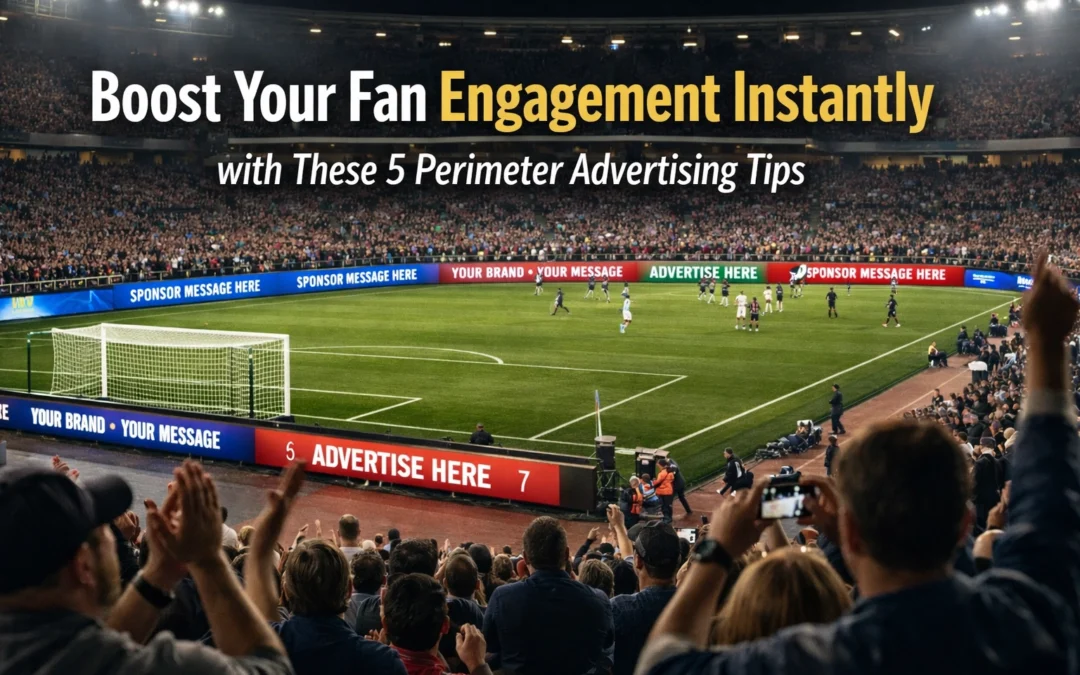
The landscape of sports marketing is undergoing a significant transformation. As traditional media consumption habits shift, the physical environment of the stadium remains one of the few places where brand attention is both guaranteed and highly concentrated. Stadium perimeter advertising, once a secondary thought for many creative directors, has evolved into a high-tech pillar of modern brand strategy. Industry projections suggest that digital out-of-home (DOOH) sports advertising is on a trajectory to reach 50 billion dollars by the end of the decade. This growth is driven by the ability of these placements to bridge the gap between physical attendance and digital reach.
For Chief Marketing Officers and Creative Directors, the challenge lies in moving beyond static visibility to genuine fan engagement. A logo on a board is a baseline, but a strategic placement in a high-emotion environment is a catalyst for brand recall and purchase intent. To achieve these results, brands must leverage the unique psychology of the sports fan and the technical capabilities of modern LED systems.
1. Strategic Placement During High-Emotion Moments
The effectiveness of a perimeter board is often determined by its physical location relative to the field of play. Boards positioned directly behind goals or near corner flags are strategically superior to those along the central touchline for one primary reason: high-emotion visibility.
When a goal is scored or a critical play occurs near the end zone, the visual focus of every fan in the stadium, and every viewer on a broadcast, converges on that single point. These moments are characterized by peak emotional investment. When a brand logo is captured in the background of a celebration, it becomes subconsciously linked to that positive emotional spike. These images do not just live for a moment; they are replayed in highlight reels, shared on social media, and archived in sports history.
By focusing on these "hot zones," advertisers ensure that their messaging is visible when engagement is at its absolute maximum. This strategy moves the advertisement from a passive background element to an active participant in the most memorable moments of the match.

2. Prioritize Visual Simplicity and Dynamic Movement
In a fast-moving sports environment, the human brain processes simple, bold imagery more effectively than complex text. Creative directors should prioritize high-contrast logos and clear brand colors over detailed slogans or fine print. The objective is instant recognition, not deep reading.
The shift from static boards to dynamic LED displays has revolutionized recall rates. Moving imagery is naturally more eye-catching to the human eye than fixed graphics. However, the movement must be calculated. Subtle animations that draw the eye toward the brand name without distracting from the game are most effective. Research indicates that dynamic displays significantly outperform static ones in terms of brand recall because they break the visual monotony of the stadium environment.
When designing for these displays, the use of bright, saturated colors ensures the brand stands out against the green of the pitch or the varied colors of the crowd. Simple, rotating animations provide a sense of life and energy that aligns with the atmosphere of the stadium.

3. Design for Multi-Platform Social Sharing
A perimeter advertisement is no longer confined to the stadium walls. In the era of the second screen, every fan is a potential content creator. When fans record video clips or take photos for social media, the perimeter boards often serve as the backdrop.
To maximize this "earned" media, advertisements must be designed with the smartphone camera in mind. This means ensuring that logos are sized appropriately to be legible even when blurred in the background of a portrait-mode video. A single, well-placed LED board can generate thousands of organic impressions across platforms like Instagram, TikTok, and X as fans share their personal experiences.
This multi-platform reach is a cost-effective way to extend the life of a campaign. When a brand is visible in a viral fan clip, it gains a level of authenticity that paid broadcast commercials often lack. It becomes part of the authentic fan narrative rather than an interruption to it. For more insights on how these strategies scale, visit https://oohsports.com/marketing.
4. Integration with Cross-Channel Digital Touchpoints
Perimeter advertising should not exist in a vacuum. To move a fan from awareness to action, the stadium placement must be integrated into a broader omnichannel strategy. This is where programmatic DOOH and mobile retargeting become essential.
Successful campaigns often use perimeter boards to trigger immediate digital actions. This can be achieved through the use of localized discount codes or by using geofencing technology to serve coordinated mobile ads to fans present in the stadium. For example, a fan seeing a beverage brand on the perimeter board might simultaneously receive a promotional offer on their phone for that same product at a nearby retail location.
The impact of this integrated approach is documented in several high-performance campaigns:
- Brand Lift: Strategic programmatic DOOH campaigns have shown a 119 percent lift in positive brand image for major beverage brands. Details on these results can be found at https://oohsports.com/2024/10/21/ab-inbevs-mikes-hard-iced-tea-sees-a-119-lift-in-positive-brand-image-with-programmatic-dooh-campaign.
- Purchase Consideration: By combining physical presence with digital targeting, some brands have seen purchase consideration increase by 144 percent. Learn more about this methodology at https://oohsports.com/2024/11/21/how-sea-doos-first-digital-ooh-campaign-increased-purchase-consideration-by-144.
- Market Share: Targeted strategies are used to drive significant lifts in purchase consideration, such as the 74 percent increase seen in vodka launch campaigns. Case studies are available at https://oohsports.com/2024/09/21/white-claws-programmatic-digital-out-of-home-campaign-drives-74-lift-in-purchase-consideration-for-vodka-launch.

5. Implementation of Rotation and Geographic Targeting
Modern LED technology allows for a level of precision that was previously impossible. Through digital rotation, brands can maintain a consistent presence throughout a match without causing viewer fatigue. A common tactic is the 2:2 rotation, where a brand is visible for a set duration, then cycles out, only to reappear later. This keeps the messaging fresh and ensures that the brand is associated with different phases of the game.
Furthermore, geographic targeting allows advertisers to display different messages to different broadcast regions watching the same match. A global brand can promote one product to the local stadium audience and a completely different product to viewers in another country. This relevance significantly increases the efficiency of the media spend.
This level of targeting is particularly effective for real-time sports betting and retail activations that require immediate relevance. Technology partners play a critical role in executing these complex rotations, ensuring that the right message reaches the right audience at the right moment. For information on the technology behind these displays, see https://oohsports.com/sportrons.

Strategy and Technology Execution
The success of stadium perimeter advertising is rooted in the combination of creative excellence and technical logistics. It is not enough to have a great design; the design must be optimized for the specific hardware in use. OOH Sports focuses on ensuring that the aspect ratios, refresh rates, and color profiles of the creative assets are perfectly matched to the stadium's LED systems.
The objective is to create a seamless visual experience that enhances the event rather than distracting from it. When executed correctly, perimeter advertising is perceived by fans as a natural part of the professional sports environment. This perception of "belonging" is a key factor in building long-term brand authority.
Measurement and Results
The efficacy of these strategies is measured through a combination of brand lift studies, device ID tracking, and attribution modeling. By analyzing the behavior of fans who were exposed to stadium perimeter ads versus those who were not, advertisers can quantify the exact impact on brand preference and purchase intent.
The data consistently shows that the stadium environment provides a unique "halo effect." Brands that appear on the perimeter of major sporting events are viewed as more established, reliable, and premium. This intangible benefit, combined with measurable increases in digital engagement and retail foot traffic, makes perimeter advertising a critical component of a high-performance marketing mix.
To explore how these strategies can be tailored to specific brand objectives, contact the team at https://oohsports.com/contact or read more about the company's approach to sports marketing at https://oohsports.com/about. Consistent application of these five tips ensures that a brand does not just sit on the sidelines but becomes a central part of the fan experience.