
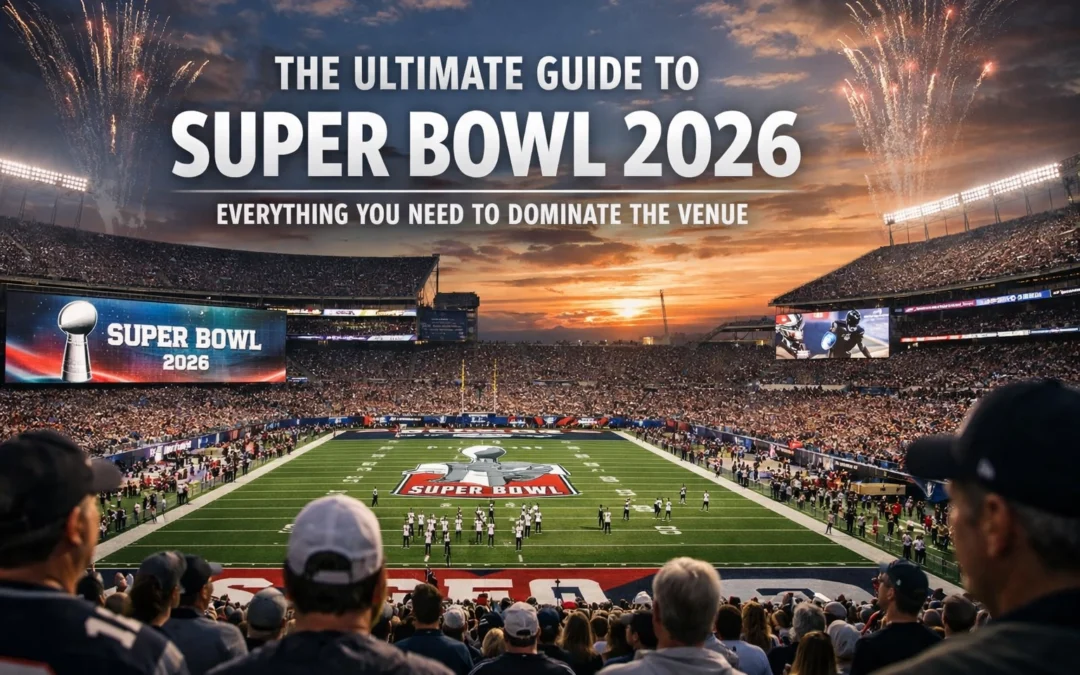
Super Bowl LX has officially entered the history books. On February 8, 2026, the world turned its attention to Levi’s Stadium in Santa Clara, California. It was a historic night where the Seattle Seahawks secured a 29-13 victory over the New England Patriots. While the action on the field kept fans on the edge of their seats, the action off the field was just as intense. For advertisers, this event was the culmination of months of planning and decades of industry evolution.
OOH Sports has spent 40 years leading the charge in advertising leadership. Under the guidance of CEO Dan Kost, the company has transformed how brands interact with fans in high pressure environments. This guide breaks down the strategies used to dominate Super Bowl 2026, from the ground floor of the stadium to the massive digital billboards overlooking the Bay Area.
Forty Years of Advertising Leadership
Dominating a venue like Levi’s Stadium does not happen overnight. It requires a deep understanding of fan behavior and the technical infrastructure of modern stadiums. OOH Sports has spent four decades refining this process. The transition from traditional printed banners to sophisticated programmatic digital out of home (DOOH) displays has changed the game for everyone involved.
In the early days, stadium advertising was static. Today, it is dynamic, responsive, and data driven. The ability to pivot creative messaging in real time based on the score of the game or the mood of the crowd is a standard expectation. For more on the history and mission of the company, the About page provides a deeper look into the 40 year journey of OOH Sports.
![[LOGO] OOH Sports Logo](https://cdn.marblism.com/2e0OiOG56xA.png)
The Strategy: Floor to Billboard Coverage
To truly dominate a venue, a brand cannot rely on a single screen. The most successful campaigns at Super Bowl 2026 utilized a floor to billboard approach. This means every touchpoint a fan encounters is an opportunity for engagement.
When fans walked into the Moscone Center for the Super Bowl Experience, they were greeted by immersive floor graphics and eye level digital kiosks. As they moved toward Levi’s Stadium, the scale of the advertising grew. Massive billboards along the transit routes captured the attention of the 68,500 people heading to the game.
Inside the stadium, the strategy focused on high dwell time areas. This included concession stands, restrooms, and concourses. By blanketing the venue with consistent messaging, brands created a sense of omnipresence. This type of venue wide coverage ensures that a brand is not just seen, but remembered.

Leveraging Programmatic DOOH for Real Time Impact
One of the standout features of the 2026 campaign cycle was the heavy use of programmatic DOOH. This technology allows advertisers to buy and display ads in real time. Platforms like StackAdapt have been instrumental in driving this adoption. By using programmatic technology, brands could adjust their creative for the Super Bowl halftime show featuring Bad Bunny or react to the U.S. Air Force flyover that celebrated the nation’s 250th birthday.
The results of these programmatic efforts are measurable and significant. For instance, a recent study on StackAdapt DSP highlighted how omnichannel campaigns are becoming the new standard for sports marketing.
https://www.youtube.com/watch?v=l6J-0zileKE
Lessons from Past Success
The strategies used in 2026 were built on the successes of previous years. OOH Sports has documented several instances where digital out of home campaigns led to massive lifts in brand performance.
For example, the White Claw campaign saw a 74 percent lift in purchase consideration. Similarly, AB InBev achieved a 119 percent lift in positive brand image. These figures prove that when OOH is done correctly, the ROI is undeniable. These case studies serve as a blueprint for any brand looking to make a splash at a major sporting event.

Dominating the Stadium Atmosphere
Levi’s Stadium is a unique venue. As the home of the San Francisco 49ers, it is built for high capacity and high energy. Hosting its second Super Bowl in ten years, the stadium was equipped with the latest in Sportron technology. Sportrons are specialized LED displays that integrate seamlessly into the stadium architecture.
During Super Bowl LX, these displays were used to show live stats, social media feeds, and targeted advertisements. The goal was to keep the fans engaged even when the ball was not in play. Because fans are often on their phones during breaks, the physical advertisements in the venue act as a bridge between the physical and digital worlds. This omnichannel approach is detailed further in our look at digital OOH and ROI.
Logistics and Planning for the Big Game
The logistics of Super Bowl LX were massive. Events spanned from January 30 to February 9, impacting the entire San Francisco Bay Area. For advertisers, this meant the window of opportunity was much wider than just the four hours of the game.
The Super Bowl Experience and the Pro Bowl Games provided additional venues for brand activation. Effective campaigns started weeks in advance, building momentum leading up to kickoff. Planning for such a large scale operation requires a firm grasp of local regulations and venue policies. Advertisers often consult the Company Policies and Terms of Service to ensure their campaigns are compliant and effective.

The Future of Sports Advertising
As we look past 2026, the trend is clear. Sports advertising is on a trajectory to hit $50 billion by 2030. To stay ahead, brands must adopt new strategies that prioritize fan experience and technological integration.
The 2026 Super Bowl showed us that fans respond to ads that feel like part of the event rather than an interruption. Whether it is through real time betting updates or interactive displays, the future of the industry lies in creating value for the spectator. For those looking to launch their own campaigns, our Marketing section offers tools and insights to get started.
Summary of Key Tactics used in Super Bowl LX
To recap, the brands that dominated Levi’s Stadium used the following tactics:
- Omnipresence: Utilizing every available surface from floors to billboards.
- Programmatic Speed: Buying ads in real time to match the game’s narrative.
- Data Driven Decisions: Using case studies and past performance to guide creative choices.
- Venue Integration: Using Sportrons and high tech displays to blend with the stadium environment.
- Early Activation: Starting the conversation weeks before the game at secondary events like the Super Bowl Experience.
Super Bowl 2026 was a landmark event for the Seattle Seahawks and a monumental success for OOH Sports. By combining 40 years of experience with the latest in programmatic technology, the venue was not just covered, it was dominated.
If you are ready to plan your next big play in the world of sports advertising, feel free to visit our Blog for daily updates or reach out through our Contact page. The game is always changing, and OOH Sports is here to help you lead the way.

Disclaimer: All campaign data and strategic insights are based on OOH Sports internal metrics and industry standard reporting. For more information on our data handling, please see our Privacy Policy.