
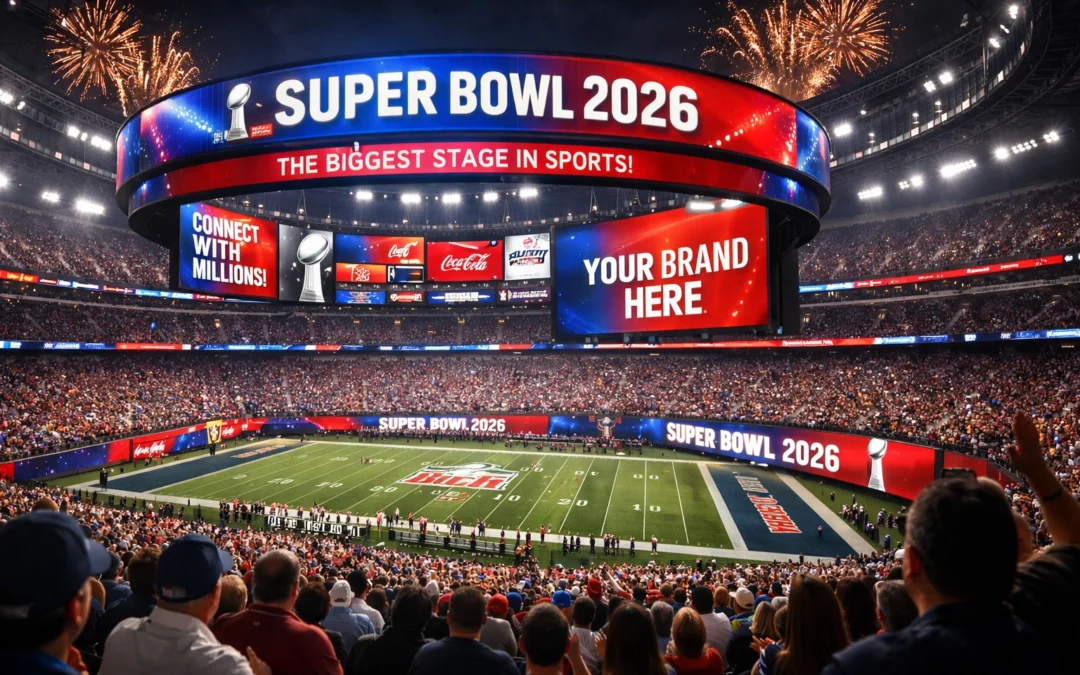
The Super Bowl has always been the gold standard for advertising. For decades, the conversation was dominated by the elusive 30-second television spot. Brands would spend millions of dollars for a fleeting moment of attention, hoping viewers did not head to the kitchen for a snack. But as we look at the fallout and the massive success of the Super Bowl 2026 season, the narrative has officially shifted. The biggest winners this year did not just buy airtime. They bought the venue.
Venue-wide advertising has become the primary strategy for brands that want to dominate the physical and digital space where the action actually happens. At OOH Sports, we have spent 40 years leading the charge in outdoor and stadium advertising. Under the leadership of CEO Dan Kost, we have seen the industry evolve from static paper billboards to high-tech digital ecosystems that cover everything from the floors of the concourse to the massive screens hanging over the field.
40 Years of Leadership in the Stadium Space
Experience matters when you are dealing with the most-watched sporting event in the world. For four decades, OOH Sports has been at the forefront of the advertising industry. We have transitioned through every major technological shift, and our focus has always remained the same: capturing the fan where they are most engaged.
In the early days, this meant securing the best physical billboard placements on the roads leading to the stadium. Today, it means a fully integrated, venue-wide takeover. This approach ensures that a brand is not just a guest at the party, but the host of the entire experience. By leveraging 40 years of industry knowledge, we help brands navigate the complex logistics of stadium environments to ensure maximum visibility.
Why Venue-Wide Coverage Beats the Traditional TV Spot
The economics of the Super Bowl are changing. Recent data shows that a traditional 30-second broadcast commercial can cost between $8 million and $10 million. While the reach is massive, the engagement is often passive. Viewers multitask, check their phones, or skip commercials entirely if they are watching on a delayed stream.
In contrast, venue-wide advertising offers a surround-sound experience. When a fan enters the stadium, they are in a captive environment for four to five hours. A single placement on a digital billboard or a series of floor graphics can deliver dozens of impressions per person throughout the event. This creates a significantly better cost-per-impression ratio than a single, fleeting TV spot.

From Floors to Billboards: The Total Takeover Strategy
A true venue-wide campaign leaves no stone unturned. It starts in the parking lot with large-scale LED displays and continues the moment a fan steps through the gates. The strategy involves multiple touchpoints that reinforce the brand message throughout the day.
- Floor Graphics and Concourse Displays: These are often overlooked but highly effective. Fans spend a significant amount of time walking to concessions or restrooms. Floor graphics provide a unique, eye-level engagement point that guides the fan experience.
- Digital Concession Screens: While fans wait for their food, their eyes are glued to the menu boards. Integrated advertising here ensures that your brand is part of their "break time."
- In-Bowl Digital Signage: This includes the ribbon boards that circle the stadium and the massive jumbotrons. These screens are where the most emotional moments of the game are displayed, and being associated with those moments is invaluable.
- Perimeter Targeting: Using geographically targeted DOOH, brands can capture the attention of fans as they move through specific zones of the venue.

Real Results from the Field
We have seen this strategy deliver incredible results for brands across various categories. For instance, when looking at programmatic digital out-of-home (DOOH) campaigns, the numbers speak for themselves. AB InBev's Mike’s Hard Iced Tea saw a 119% lift in positive brand image using these types of targeted strategies.
Similarly, White Claw utilized programmatic DOOH to drive a 74% lift in purchase consideration for their vodka launch. These are not just vanity metrics. They represent a fundamental shift in how consumers interact with brands during live events. By the time the game is over, the brand is etched into the fan's memory because it was a constant part of their physical environment.
The Technology Powering the Experience
The secret sauce behind venue-wide advertising is the technology. We no longer rely on static images that stay the same for the whole game. With programmatic DOOH and AI-powered analytics, campaigns can be adjusted in real-time based on what is happening on the field.
If a specific player scores a touchdown, the screens across the entire venue can update instantly to feature that player alongside a brand message. This level of real-time relevance is something traditional TV simply cannot match. It is one reason why DOOH sports advertising is projected to hit $50 billion by 2030.

To see exactly how this technology looks in action, check out this video showcasing the power of modern stadium advertising:
https://www.youtube.com/watch?v=l6J-0zileKE
The Logistics of a Super Bowl Takeover
Planning a venue-wide campaign for an event as big as the Super Bowl requires precision. It is not just about buying space. It is about understanding the flow of the crowd. Our team analyzes fan movement patterns to determine which screens and surfaces will get the most "dwell time."
For example, the entrance gates see high traffic but low dwell time. In contrast, the areas near stadium lounges and charging stations see high dwell time. We tailor the creative content to fit these specific contexts. A quick, punchy logo might work at the gate, but a more detailed, interactive ad is perfect for the lounge areas where fans are lingering.

Why Traditional Stadium Sponsorships Are Evolving
There was a time when a stadium sponsorship just meant having your name on the building. Today, that is just the baseline. The real value is in the 25,000 digital screens that now populate modern venues. These screens allow for multiple brands to share the space in a way that is dynamic and engaging rather than cluttered.
Traditional sponsorships are being replaced by "digital ownership." This means a brand can own a specific "moment of exclusivity" where every screen in the stadium syncs up to show their content. Imagine the entire stadium turning blue for a specific brand the moment a field goal is kicked. That is the kind of impact that stays with a fan long after they leave the parking lot.
Measuring the Impact
One of the biggest hurdles in the past for outdoor advertising was measurement. How do you know if it worked? With modern AI-powered analytics, we can now track success with incredible accuracy. We look at:
- Mobile Retargeting: We can identify devices that were exposed to the venue-wide ads and retarget them with digital ads later that week.
- Brand Lift Studies: Measuring the change in consumer perception before and after the event.
- Foot Traffic Attribution: Tracking if fans who saw the ads in the stadium later visited a retail location or made an online purchase.
For example, Sea-Doo's first digital OOH campaign increased purchase consideration by 144%. This data proves that being present in the stadium translates directly to the bottom line.
Getting Ready for the Next Big Event
If the success of Super Bowl 2026 has taught us anything, it is that you cannot wait until the last minute to secure your spot. The competition for venue-wide dominance is heating up. Brands are moving away from the "one-and-done" TV commercial model and toward a comprehensive stadium strategy.
Whether it is the Super Bowl, the World Cup, or a regular-season local game, the principles remain the same. You need to be where the fans are. You need to use the technology available to make your message real-time and relevant. And you need a partner with the experience to execute a campaign without a hitch.
At OOH Sports, we are proud of our 40-year legacy and even more excited about the future. The stadium is no longer just a place to watch a game. It is a massive, interactive canvas for brands to tell their stories. If you want to be part of the conversation for the next big event, it is time to look at the floors, the walls, and the billboards. The whole venue is waiting.