
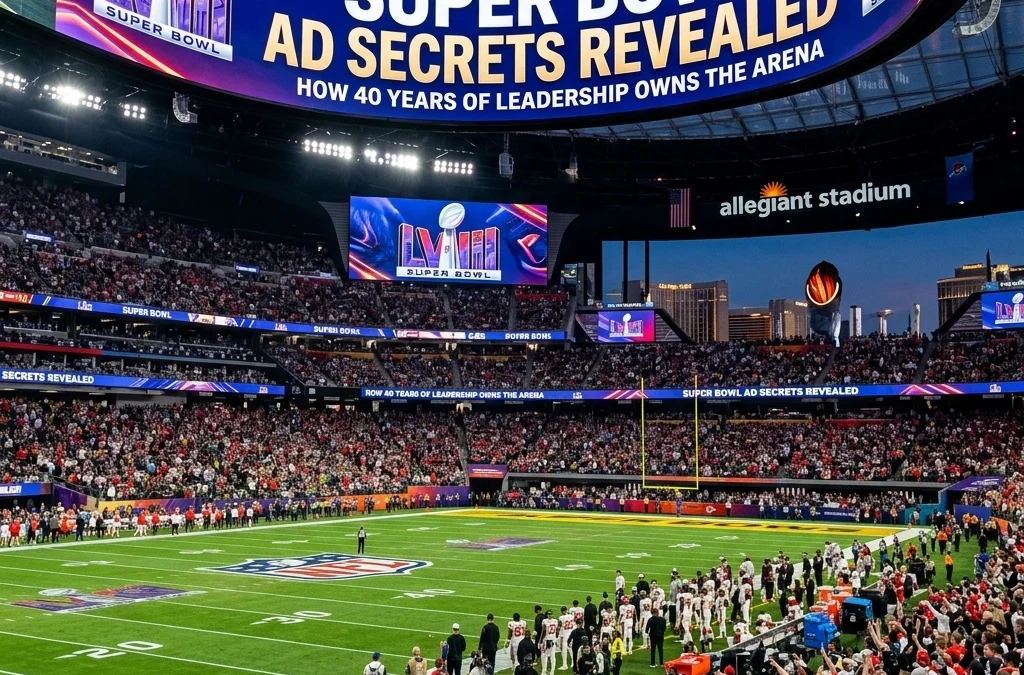
The Super Bowl is not just a football game. It is the single biggest moment in the world of advertising. As we look ahead to Super Bowl LXI in 2026, the stakes have never been higher. For four decades, the leaders in this industry have been perfecting the art of capturing attention. It is not just about the thirty second TV spot anymore. It is about owning the entire arena and every street leading up to it.
At OOH Sports, we have watched this evolution from the front row. We have seen how the landscape has shifted from simple paper billboards to massive, interactive digital displays that can change in real time. This year, we are diving deep into the secrets that make a Super Bowl campaign truly legendary. It comes down to experience, venue wide coverage, and the ability to tell a story that people cannot look away from.
Forty Years of Advertising Mastery
When you have been in the game for forty years, you start to see patterns. You learn what works and what is just noise. The biggest secret to Super Bowl success is not actually a secret at all. It is consistency and leadership. The brands that win are the ones that have been building their narrative for years, not just weeks.
In the mid-eighties, a Super Bowl ad was a standalone event. You ran your commercial, and you hoped people talked about it at the water cooler the next morning. Today, that is just one piece of the puzzle. Leadership in this space means understanding the omnichannel approach. It means your message needs to be on the fan's phone, on the digital billboard they pass on the way to the stadium, and on the floor graphics they walk over to get to their seats.

Total Venue Coverage: From Floors to Billboards
The modern arena is a canvas. If you are only looking at the big screens, you are missing half the opportunity. True leadership in sports advertising means owning the environment. This is where venue wide coverage comes into play. Fans are bombarded with messages, so yours needs to be part of the physical space they inhabit.
Think about the journey a fan takes. They start miles away, seeing programmatic digital out of home (DOOH) ads that are triggered by the time of day or the current weather. As they get closer to the stadium, the billboards become more frequent and more intense. Once they enter the gates, the experience continues. Floor graphics guide them to their sections while reinforcing brand imagery.
OOH Sports specializes in this kind of 360 degree saturation. Whether it is Sportrons flashing the latest scores or floor decals that turn a hallway into a branded tunnel, the goal is to make the brand unavoidable. It is about creating a feeling that the brand belongs there as much as the players on the field.
Why the Arena Matters More Than the Screen
While everyone talks about the cost of a TV spot, the real ROI often happens on the ground. When a brand owns the arena, they are reaching a captive, highly engaged audience. These are fans who have spent thousands of dollars to be there. They are in a state of high emotion, which is the perfect time for a brand to make a lasting impression.
Our research into programmatic DOOH vs traditional stadium ads shows that the flexibility of digital displays provides a significant edge. You can update your creative based on what is happening in the game. If a specific player makes a huge play, your ads can reflect that within seconds. That kind of real-time relevance is what separates the leaders from the followers.
https://www.youtube.com/watch?v=l6J-0zileKE
The Power of Real Time Engagement
The 2026 Super Bowl will be a masterclass in real-time marketing. We are moving toward a world where ads are not static. They are living, breathing parts of the event. Leadership in this space requires a technology partner that can handle the speed of the game.
For example, look at how brands are using real time sports betting campaigns to convert fans in under 24 hours. By using DOOH screens to show live odds and special offers during the pre-game festivities, brands can drive immediate action. This is a far cry from the "set it and forget it" mentality of forty years ago.

Learning from the Best: Case Studies in Dominance
We have seen some incredible successes in the lead-up to this year's big game. Consider how White Claw used programmatic DOOH to drive a 74 percent lift in purchase consideration. They did not just put up a few signs. They used data to be in the right place at the right time. You can read more about that here.
Another great example is how Nike managed to dominate the conversation around the NYC Marathon without even being an official sponsor. They used clever OOH placements to make it seem like they owned the streets. This is the kind of strategic thinking we bring to our clients at OOH Sports. You can find that case study at this link: Nike's NYC Marathon Strategy.
The Evolution of the "Big Ad"
Forty years ago, the "big ad" was a creative masterpiece that lived on television. Today, the "big ad" is an ecosystem. It starts with a teaser on social media, moves to a massive billboard in Times Square, and culminates in a venue-wide takeover.
The secret revealed here is that scale matters. You cannot be timid when you are playing on the world's biggest stage. You need to use every tool in the shed. This includes everything from the traditional billboards to the most advanced Sportrons and digital screens.

Planning for the Future of Sports Advertising
As we look toward 2030, the sports advertising market is expected to hit 50 billion dollars. That is a lot of competition for a limited amount of space. The brands that will own the arena in the future are the ones that are investing in leadership and strategy today.
It is not enough to just show up. You have to have a plan that covers every inch of the fan experience. You need to understand the technology behind the screens and the psychology behind the fans. Most importantly, you need a partner who has been doing this for decades.
A Casual Note from the Top
At OOH Sports, we love this stuff. We love the energy of the crowd and the challenge of making a brand stand out in a sea of noise. Our CEO, Dan Kost, always says that if you are not having fun with your advertising, you are doing it wrong. The Super Bowl is the ultimate playground for marketers. It is the one time of year when people actually want to see the ads.
We take that responsibility seriously. We want to make sure that every piece of creative we put on a screen or a floor is something that adds to the excitement of the day. That is what forty years of leadership looks like. It is about respect for the game and respect for the audience.

Final Thoughts on the 2026 Super Bowl
The road to Super Bowl LXI is already being paved with incredible OOH campaigns. From the early teasers to the final championship celebrations, the brands that win will be the ones that own the arena from top to bottom. They will use every billboard, every floor graphic, and every digital screen to tell a story that lasts long after the final whistle blows.
If you are ready to take your brand to the next level and explore what venue wide coverage can do for you, we would love to chat. You can reach out to us at our contact page to learn more about our strategies and how we can help you own the arena.
The secrets are out. Leadership, coverage, and real-time engagement are the keys to the kingdom. Now, it is time to get to work and make some history. See you at the game.