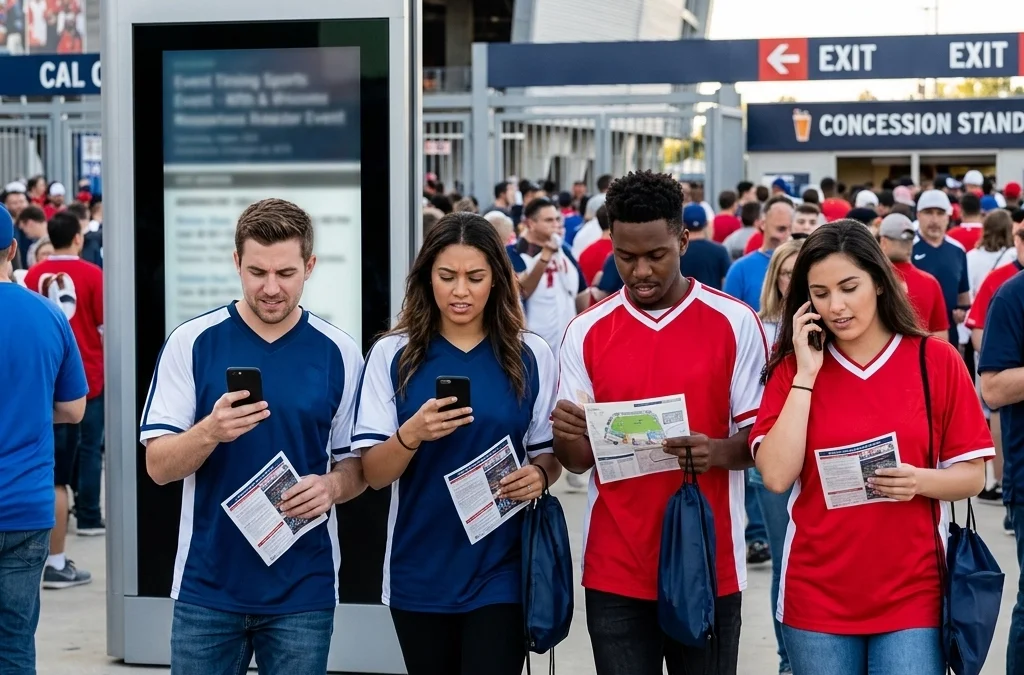
Stadiums represent more than just a venue for sports. They are high density hubs of passion, loyalty, and captive attention. For brand managers and creative directors, the perimeter of a stadium is prime real estate. However, many campaigns fall short because they apply traditional advertising logic to a very non-traditional environment.
Engaging a fan who is walking toward a kickoff is different from engaging a consumer browsing a mall. The emotional stakes are higher, and the window of opportunity is narrower. To win in this space, brands must avoid common pitfalls that lead to wasted impressions and ignored messaging.
Below are the seven most common mistakes made in stadium perimeter advertising and the strategic fixes to ensure a campaign scores.
1. Relying on One Way Communication
Many brands treat stadium billboards and digital screens as one way broadcast tools. They display a logo or a static slogan and hope for the best. In the modern sports landscape, fans expect to be participants rather than just observers. One way communication fails to build the necessary bridge between the brand and the fan experience.
The Fix: Implement Interactive Digital Out of Home (DOOH)
The objective is to transform a passive viewer into an active participant. Utilizing Sportrons and interactive displays allows brands to invite fan feedback. This can include live polls, trivia, or social media aggregators that display fan photos in real time. When a fan sees their own content or opinion reflected on a large scale screen near the stadium, the brand moves from being a background noise to a part of their game day story.

2. Ignoring Mobile First Behavior
Research indicates that over 85 percent of sports fans use their mobile devices while at the game. A common mistake is creating an Out of Home (OOH) campaign that exists in a vacuum, completely separated from the digital device in the fan's hand. If an ad does not prompt a mobile action, it misses a massive opportunity for conversion and data collection.
The Fix: Bridge the Gap with Omnichannel Integration
Creative directors should design OOH assets that act as a "handshake" with mobile devices. This involves using visual triggers like QR codes or location based triggers. A fan sees a dynamic ad on the stadium perimeter and receives a synchronized push notification or a social media ad on their phone. This creates a seamless loop. By integrating marketing strategies that combine physical presence with digital retargeting, brands can move fans down the funnel from awareness to direct action.
3. Delivering Generic Messaging to a Specialized Crowd
A fan attending a rivalry game has a specific set of emotions and triggers. Using the same generic creative that is running on a highway or in an airport is a strategic error. Generic messaging feels out of place and demonstrates a lack of understanding of the fan culture.
The Fix: Use Data Driven Personalization and Programmatic DOOH
The strategy should focus on relevance. Programmatic DOOH allows brands to change creative based on the specific event taking place inside the stadium. If a basketball team is playing, the creative should reflect basketball culture. If a concert is happening, the tone should shift. Brands can use programmatic DOOH to deliver hyper specific messages that resonate with the immediate audience, increasing brand preference ratings and emotional connection.
4. Neglecting the Logistics of Fan Movement
Advertisers often place ads based on traffic volume alone without considering the "dwell time" or the physical state of the fan. For example, a high detail, long copy ad placed in a fast moving egress route will never be read. Conversely, an ad in a parking lot where fans are stuck for 30 minutes should offer more than just a five word slogan.
The Fix: Strategize Based on Dwell Time and Transit Flow
Analyze the stadium's infrastructure, including parking lots, security lines, and public transit hubs. In areas with high dwell time, such as security queues, provide engaging, informative, or entertaining content. In high speed transit areas, focus on high impact, bold visuals. Understanding the ultimate guide to stadium perimeter branding ensures that the creative matches the physical reality of the fan's journey.

5. Overlooking Local Nuance and Fan Identity
National brands often struggle to connect with local fans because they feel like outsiders. A "one size fits all" national campaign can come across as cold or corporate. Sports fans are deeply protective of their local identity and community.
The Fix: Adopt an "Official Local Fan" Persona
The strategy involves researching local traditions, chants, and neighborhood icons. Even if a brand is not an official sponsor, it can gain significant traction by acting like one through clever, localized OOH placements. A classic example is how Nike dominated the NYC Marathon without being the official sponsor. By showing up in the right places with the right local tone, a brand can earn the trust of the local crowd.
6. Going Dark on Non Match Days
Stadiums are massive landmarks that attract visitors every day of the year, not just during games. Many brands only activate their stadium perimeter ads during the few hours of an event. This leaves a significant amount of "white space" on the table.
The Fix: Leverage Year Round Visibility
The stadium perimeter is a constant point of interest for tours, community events, and daily commuters. A brand should maintain a baseline presence that keeps the brand top of mind. Digital screens allow for easy transitions between "game mode" and "community mode." This evergreen approach ensures that the investment in stadium OOH provides value 365 days a year, not just on the dozen or so days when the home team is playing.

7. Failing to Measure Real Impact
The final and perhaps most common mistake is treating stadium OOH as a "vanity play" that cannot be measured. Many CMOs hesitate to invest heavily in stadium perimeters because they believe the ROI is strictly anecdotal. Without measurement, it is impossible to optimize or justify future spend.
The Fix: Use Advanced Attribution and Data Analytics
Modern OOH technology allows for sophisticated measurement. By using device IDs, brands can track how many people were exposed to an ad near the stadium and then later visited a website or made a purchase. Brand lift studies can quantify the increase in brand favorability among exposed fans versus a control group. Moving toward a data first approach allows creative directors to see exactly what worked and why. These industry secrets are what separate high level media buyers from the rest.
Strategy and Execution: The Path Forward
Correcting these mistakes requires a shift in perspective. The stadium perimeter should not be viewed as a place for billboards, but as a platform for experiences.
Objective and Strategy
The primary objective is to align brand messaging with the fan's emotional journey. This is achieved by:
- Identifying the specific "quadrants" of fan engagement (inside/outside stadium, on/off match days).
- Selecting technology partners that offer dynamic, programmatic capabilities.
- Developing creative that respects the local culture and the physical context of the venue.
Technology Partners and Tools
Execution relies on a robust tech stack. This includes:
- Dynamic Creative Optimization (DCO) to change ads in real time based on scores or weather.
- Mobile location data to retarget fans after they leave the stadium area.
- High resolution LED displays like Sportrons that provide visibility even in direct sunlight.
Results and ROI
When these fixes are implemented, the results are measurable. Campaigns that use interactive and personalized DOOH typically see a higher recall rate compared to static perimeter ads. By focusing on the fan's actual behavior, brands can achieve double digit increases in brand preference and significantly higher mobile engagement rates.

Conclusion
The stadium environment is a unique ecosystem. It is where logic takes a backseat to emotion, and where a well timed message can create a lifelong brand advocate. By avoiding these seven mistakes, creative directors and CMOs can ensure their brands do more than just show up. They can ensure their brands win.
For those looking to explore how to maximize their presence around the world's most iconic venues, OOH Sports provides the platform and expertise to turn stadium perimeters into high performing assets. Whether it is through case studies or strategic consultations, the goal is always the same: connect with fans where they are most engaged.