
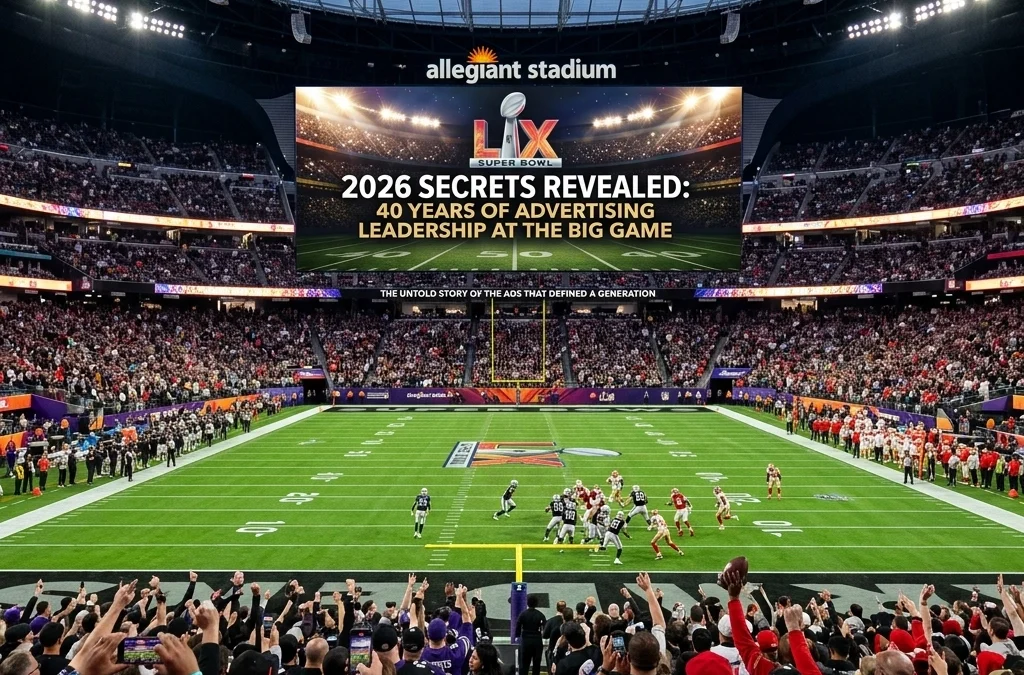
Super Bowl LX (60) is officially in the books and what a ride it was. The atmosphere at Levi’s Stadium in San Francisco was electric as the Seattle Seahawks took on the New England Patriots. While fans were glued to the performance of Sam Darnold and Drake Maye, those of us in the advertising world were watching something else entirely. We were looking at the culmination of 40 years of industry leadership and a masterclass in venue-wide advertising coverage.
At OOH Sports, we have seen the industry change from simple banners to high-tech digital experiences. But Super Bowl 2026 was different. It was the moment where veteran experience and modern technology finally merged into something truly spectacular. From the floors of the concourse to the massive digital billboards overlooking the bay, every square inch of the event was a canvas for brand storytelling.
The Game That Shook the Bay
Before we dive into the advertising secrets, let’s talk about the game itself. The Seahawks came out on top in a victory that will be talked about for years. It was a classic clash of veteran composure and young talent. The NBC broadcast was a feat of engineering, using over 100 cameras to capture every possible angle. But the real magic happened in the stadium.
While the millions watching at home saw the commercials, the fans in the seats were immersed in a total brand environment. This is where OOH Sports thrives. We don't just look at the game as a series of plays. We look at it as a giant ecosystem where brands can connect with fans on a personal level.

40 Years of Advertising Leadership
You don’t reach the level of Super Bowl execution overnight. It takes decades of trial, error, and refinement. Dan Kost, a name synonymous with arena advertising for 40 years, has often spoken about the "Secrets" behind these massive events. The secret isn't a new app or a viral trend. The secret is infrastructure and execution.
In an industry where many are looking for the latest "growth hack," the 2026 game proved that there is no substitute for veteran expertise. The advertising leadership on display was built on a foundation of understanding how fans move, how they look at screens, and how they interact with physical spaces.
Whether it is through stadium perimeter branding or massive floor graphics, the goal is always the same: visibility. But 40 years of leadership teaches you that visibility is nothing without strategy. You have to know where the eyes are going before the fan even knows they are looking.
Venue-Wide Coverage: From Floors to Billboards
One of the most impressive parts of Super Bowl 2026 was the venue-wide coverage. This wasn’t just about the big screen in the end zone. It was a 360-degree experience.
Brands are no longer satisfied with a single logo placement. They want to own the space. During the 2026 game, we saw advertisements on the floors of the entryways, wrapped around every pillar, and integrated into the very fabric of the stadium. This type of marketing requires a deep understanding of the venue’s layout.
We saw brands using Sportrons to deliver real-time content that changed based on the game’s momentum. If the Seahawks scored, the ads changed to celebrate. If there was a timeout, the floor graphics pointed fans toward the nearest refreshment stand. It was seamless, it was smart, and it was highly effective.

The Three Waves of Execution
Behind every successful ad campaign at the Super Bowl is a project management framework that keeps the wheels turning. Based on the 40 years of experience we have seen in this industry, the 2026 execution followed three distinct waves.
Wave 1: The Foundation (The Spine)
This is the setup phase. It involves the physical installation of the hardware and the mapping of the digital assets. Without a solid "spine," the entire campaign falls apart. This is where the logistics of handling a crowd of 70,000 people come into play.
Wave 2: The Product Proof (The Validation)
Before the game starts, every screen and every floor wrap is tested. This is the validation phase where brands ensure their message is clear and the technology is functioning perfectly. We’ve discussed these types of industry secrets before, and they were more relevant than ever in 2026.
Wave 3: The Muscle (Digital Execution)
This is game day. This is when the digital execution takes over. It is the raw power of the brand message reaching the audience at the exact right moment.
Why This Matters for Your Brand
You might be thinking, "I'm not a Super Bowl advertiser, so why does this matter to me?" It matters because the strategies used at the Big Game trickle down to every other level of sports marketing. The innovation we saw with programmatic DOOH at Levi’s Stadium is becoming the standard for smaller arenas and local stadiums too.
Using high-level data to target fans based on their location within a venue is no longer a futuristic dream. It is happening now. By looking at how the big players did it in 2026, smaller brands can learn how to maximize their ROI without needing a million-dollar budget.

The Technical Mastery of Super Bowl LX
Let's talk about the tech. The 2026 broadcast was legendary not just for the game, but for how it looked. NBC used augmented reality (AR) overlays that made the stadium feel like a living, breathing entity. Advertising wasn't just "on top" of the game. It was part of it.
When you have 40 years of leadership in this space, you know that the best ads are the ones that don't feel like ads. They feel like useful information. The AR graphics showed player stats sponsored by major brands, and the venue-wide digital billboards showed live social media feeds from fans in the stands. It created a community feel that is hard to replicate in traditional advertising.
For a deeper look at how these innovations are changing the game, check out this video:
https://www.youtube.com/watch?v=l6J-0zileKE
The Power of Out-of-Home Sports Advertising
The reason OOH Sports (OOH Sports) focuses so heavily on the stadium environment is because that is where the fans are most engaged. Unlike a TV commercial that someone might skip or ignore while they check their phone, an ad on a stadium floor or a massive digital board in the concourse is impossible to miss.
In 2026, we saw a massive shift toward "omnichannel" experiences. A fan might see a billboard on the way to the game, a floor graphic as they walk to their seat, and a synchronized ad on their phone via the stadium's Wi-Fi. This creates multiple touchpoints that build brand recognition in a way that a single 30-second spot just can't do.

Lessons from the 2026 Playbook
If we have learned anything from 40 years of advertising leadership, it is that you have to be ready for anything. The 2026 game showed that while the technology changes, the core principles of advertising remain the same:
- Be Where the People Are: Don't just stick to the screens. Look at the floors, the walls, and the rafters.
- Timing is Everything: Use real-time data to update your message based on what is happening in the game.
- Experience over Hype: Focus on creating a professional, seamless experience for the fan rather than just chasing a viral moment.
These lessons are detailed in our case studies and represent the backbone of how we approach sports marketing.
Looking Ahead to the Future
Super Bowl 2026 was a milestone. It was a celebration of how far the industry has come since the 1980s. With 40 years of experience behind the leaders of this event, it is clear that the future of stadium advertising is bright. We are moving toward a world where every surface is a potential connection point and every fan experience is personalized.
The secrets revealed at Levi’s Stadium weren't about complex algorithms or secret meetings. They were about the power of long-term vision and the discipline to execute at the highest level. Whether you are a fan of the Seahawks, the Patriots, or just a fan of great marketing, there was a lot to love about the 2026 Big Game.

If you want to learn more about how to bring this level of advertising leadership to your next event or campaign, feel free to reach out to us at OOH Sports. We have been in the game a long time, and we are just getting started. For more insights on the industry, you can also explore our blog or read about our copyright policy to see how we protect the creative work that goes into these massive campaigns.