
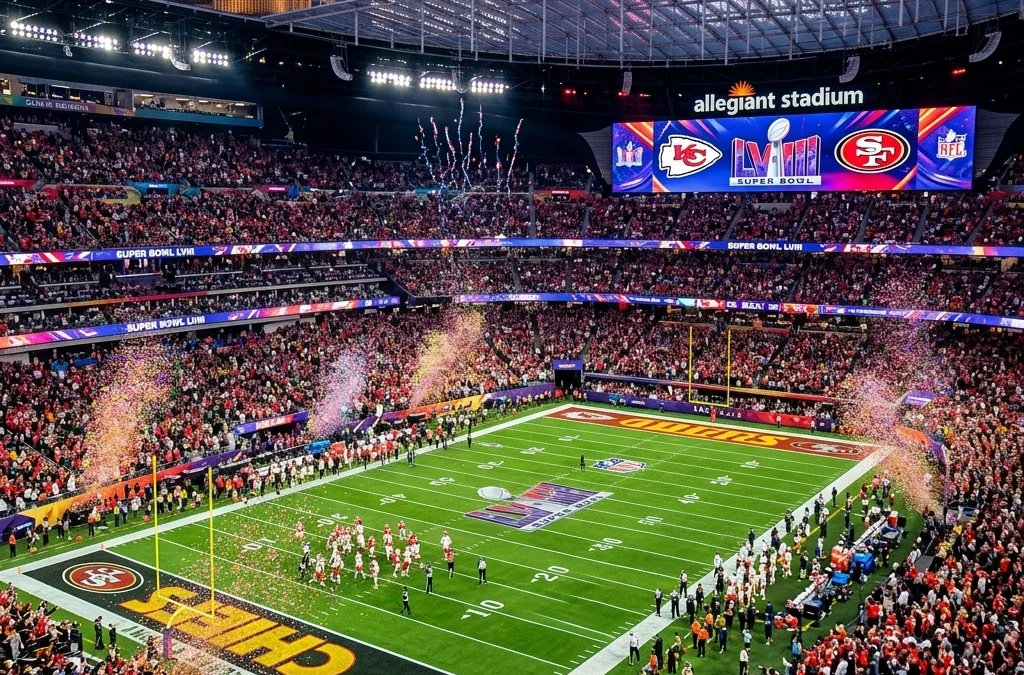
The landscape of sports advertising reached a new pinnacle during the 2026 Super Bowl in Santa Clara. As the dust settles on another historic championship, the focus shifts toward how brands can achieve total venue dominance in an increasingly crowded media environment. Achieving success at the highest level of professional football requires more than just a standard commercial spot. It demands a comprehensive strategy that spans 40 years of advertising leadership and leverages every available inch of the stadium, from the concourse floors to the massive digital billboards visible from miles away.
The 40 Year Evolution of Super Bowl Advertising
The journey to venue dominance began decades ago. Over the last 40 years, the transition from simple static signage to integrated digital ecosystems has redefined how fans interact with brands. In the early days, a single stadium banner might suffice. Today, the complexity of a Super Bowl venue requires a sophisticated multi channel approach. OOH Sports has been at the forefront of this evolution, guiding partners through the shifting sands of technology and fan expectations.
Experience in this field is not just about tenure. It is about understanding the psychological journey of a fan. From the moment a spectator parks their car in one of the 35,000 required spaces to the moment they take their seat in a 70,000 plus capacity stadium, every touchpoint is an opportunity. This long history of leadership ensures that placement is not accidental but part of a calculated move to capture maximum attention during the world's most watched sporting event.

Comprehensive Venue Coverage: From Floors to Billboards
True dominance means being unavoidable. A successful campaign does not rely on a single medium. Instead, it utilizes a "floor to ceiling" philosophy. This includes high traffic floor graphics in the concourse, wrap around digital displays, and the iconic Sportrons that provide vibrant, real time engagement.
When a brand occupies the floor space, it captures the "heads down" attention of fans navigating the stadium. When that same brand appears on the massive perimeter billboards and stadium screens, it captures the "heads up" moments of peak excitement. This dual approach ensures that whether a fan is buying a hot dog or cheering for a touchdown, the brand remains a constant part of the visual environment.
Strategy and Venue Selection Criteria
The process of dominating a Super Bowl venue starts years before the kickoff. The NFL selection committee follows strict criteria for host cities, and understanding these requirements is essential for strategic planning. Cities like Miami and New Orleans have dominated the hosting history with 11 Super Bowls each because they consistently meet these rigorous standards.
Key Requirements for a Host Stadium:
- A minimum capacity of 70,000 seats to accommodate the massive influx of fans.
- Extensive media and electrical infrastructure to support global broadcasts.
- At least 35,000 parking spaces located within one mile of the stadium.
- Climate control or a roof for cities where the average temperature drops below 50 degrees.
For advertisers, these requirements dictate the flow of people. A stadium with a roof, like the ones seen in recent years, provides a controlled lighting environment that makes digital Out of Home (DOOH) advertising pop with even more clarity. Knowing the marketing layout of these massive facilities allows for the precise placement of assets to maximize return on investment.
Leveraging Modern Stadium Technology
Modern venues like Levi’s Stadium in Santa Clara and SoFi Stadium in Los Angeles are not just sports arenas. They are massive technological hubs. For the 2026 season, the integration of programmatic DOOH has allowed for more flexibility than ever before. Brands can now adjust their messaging in real time based on game events, weather, or crowd sentiment.
https://www.youtube.com/watch?v=l6J-0zileKE
The use of programmatic DOOH offers a distinct advantage over traditional static sponsorships. While traditional signs are fixed, digital screens can rotate content, engage in countdowns, and display social media feeds. This creates a dynamic environment where the advertisement feels like a part of the live entertainment rather than an interruption.

Objectives and Execution Strategy
The primary objective for any brand entering the Super Bowl arena is high impact visibility. To achieve this, the execution must be flawless. The strategy involves mapping out the fan journey and identifying "bottleneck" areas where dwell time is highest. This includes entry gates, security lines, and concession areas.
By deploying a mix of large scale billboards and smaller, tactical digital screens, a brand can maintain a consistent presence. The stadium perimeter branding acts as the anchor, while interior assets reinforce the message. This creates a cohesive narrative that follows the fan throughout the four hour event.
Data Driven Results and ROI
In the world of high stakes advertising, data is the ultimate validator. Results from recent campaigns show that venue wide dominance leads to significantly higher brand recall compared to isolated advertisements. By using device ID tracking and brand lift studies, it is possible to measure exactly how many fans were exposed to the signage and how their perception of the brand changed post game.
According to research into DOOH industry secrets, campaigns that utilize multiple formats within a single venue see a 40 percent increase in engagement. This is because the repetition across different mediums (floor, screen, and billboard) cements the brand in the viewer's memory. When compared to traditional stadium ads, the ROI for integrated digital campaigns is consistently higher due to the ability to retarget audiences after they leave the stadium.

The "Home Team" Advantage and Future Venues
A rare but powerful phenomenon in Super Bowl history is the "home team" victory. Only the Tampa Bay Buccaneers and the Los Angeles Rams have won championships in their own stadiums. While the Seattle Seahawks took the title in Santa Clara in 2026, the local impact of the venue remained a massive draw for California based advertisers.
Looking forward, the roadmap is clear. The 2027 Super Bowl is headed to SoFi Stadium in Los Angeles, followed by Atlanta in 2028. Each of these venues offers unique advertising opportunities. Atlanta’s stadium is famous for its circular "halo" board, which requires a specific creative approach to dominate the visual field. Los Angeles, with its massive entertainment district surrounding the stadium, offers a chance for brands to extend their reach far beyond the gates.
Lessons from the Field: Nike and Non-Official Sponsorships
Success at the Super Bowl does not always require being an official league sponsor. Strategic use of OOH media allows brands to achieve dominance through clever placement and timing. A famous example of this can be seen in how Nike navigated the NYC Marathon without being an official sponsor. The same principles apply to the Super Bowl. By securing key billboard locations and digital screens around the venue, a brand can create a "takeover" feel that rivals official partnerships at a fraction of the cost.
Conclusion: Preparing for the Next Kickoff
Dominating a Super Bowl venue is a marathon, not a sprint. It requires a deep understanding of stadium logistics, a clear grasp of modern technology, and a legacy of expertise that only 40 years in the business can provide. As the industry moves toward 2027, the focus remains on innovation and the seamless integration of brand messaging into the fan experience.
For those looking to secure their spot in the next championship cycle, the time to plan is now. Whether it is through contacting the team for a consultation or reviewing a case study of past successes, the path to victory is paved with strategic OOH placements.

The future of sports advertising is here, and it is glowing on the big screen. By covering the venue from the floors to the billboards, brands can ensure they aren't just watching the game. They are winning it. For more insights on the latest in advertising, visit the OOH Sports blog to stay ahead of the competition.