
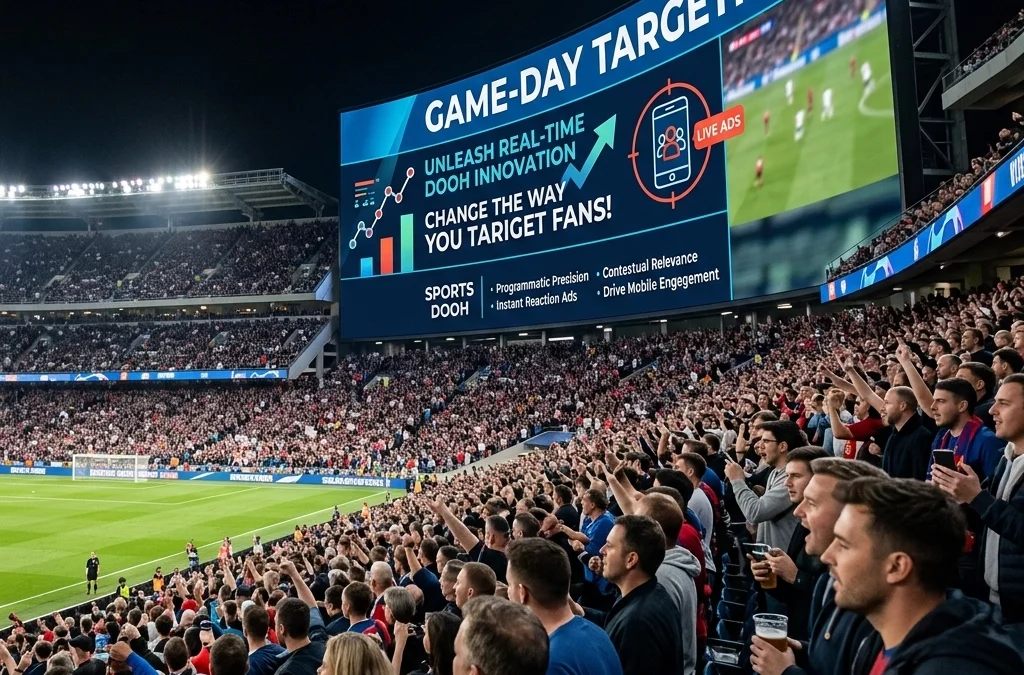
The landscape of sports marketing is undergoing a significant transformation. For decades, reaching a game-day crowd meant securing expensive, static stadium signage or hope for a few seconds of television visibility. These methods, while traditional, often lacked the precision and flexibility required by modern media buyers. Today, Digital Out-of-Home (DOOH) innovation is redefining the standards of engagement. By integrating real-time data and programmatic technology, brands can now connect with fans in ways that were previously impossible.
The shift toward sports DOOH is driven by the need for more efficient, measurable, and contextually relevant advertising. High-level media buyers and brand managers are increasingly moving away from rigid, season-long commitments in favor of agile campaigns that respond to the energy of the game. This evolution ensures that messaging is not just seen, but experienced at the most opportune moments.
The Strategic Shift in Sports Marketing
In the traditional model, stadium branding was a "set it and forget it" tactic. A logo would be placed on a concourse wall or a scoreboard, remaining static regardless of the game's outcome or the crowd's mood. Modern innovation has introduced the concept of dynamic content, allowing brands to adjust their creative based on live events.
Strategy involves identifying the exact moments when a fan is most receptive to a message. This could be the high-energy window immediately following a home team touchdown or the period of anticipation before kickoff. By moving toward a programmatic approach, advertisers gain the ability to buy impressions specifically during these peak times. This efficiency reduces wasted spend and ensures that the marketing budget is focused on high-impact intervals.
For a deeper dive into how this compares to older models, the analysis of programmatic DOOH vs traditional stadium sponsorships provides a detailed look at the ROI differences.
Sportrons: The Technological Edge
A key driver in this innovation is the deployment of specialized hardware and software solutions. One such advancement is the use of Sportrons, which are high-definition digital displays placed strategically within and around sports venues. These units are designed to handle the fast-paced nature of game-day environments, offering brightness and clarity that compete with the stadium’s own internal displays.

Unlike standard billboards, these digital assets are connected to a central nervous system capable of processing live data feeds. This connectivity allows for the seamless integration of scores, stats, and social media updates directly into the brand creative. When a brand utilizes this technology, they are no longer just an advertiser; they become a part of the game-day information stream that fans rely on.
Objective & Strategy: Mapping the Fan Journey
To successfully target a game-day crowd, a brand must understand the fan journey as a multi-stage process. This journey begins hours before the first whistle and continues long after the final score is recorded.
- The Arrival Phase: Fans traveling to the venue are often in a state of high anticipation. Strategic DOOH placement on major transit routes and near parking structures captures attention during this commute.
- The Pre-Game Atmosphere: Once fans are within the vicinity of the stadium, their focus shifts to tailgating and gathering. Proximity-based targeting here allows brands to offer contextually relevant messaging, such as food and beverage promotions.
- The In-Game Experience: During the event, fans are hyper-focused on the action. This is the time for high-impact, short-form creative that complements the game rather than distracting from it.
- The Departure and Celebration: Following a win, the crowd's sentiment is overwhelmingly positive. Brands can capitalize on this "halo effect" by delivering congratulatory messaging on the exit routes.
By mapping these stages, media buyers can execute a stadium perimeter branding strategy that ensures consistent brand presence across the entire event lifecycle.

Illustration of a typical fan journey from home to the stadium and back.
Execution: Harnessing Real-Time Data Triggers
The true power of sports DOOH innovation lies in execution through data triggers. This process involves setting specific conditions that, when met, automatically activate or change the creative displayed on the screens.
- Score-Based Triggers: If the home team takes the lead, the creative can instantly switch to a celebratory animation. If the game is tied in the final minutes, the messaging can pivot to highlight the intensity of the moment.
- Weather-Based Triggers: If a sudden rain delay occurs, an apparel brand can immediately update its creative to feature rain gear or jackets. This level of relevance is unattainable through traditional media.
- Time-Based Triggers: Brands can schedule specific messages to run during half-time or the "seventh-inning stretch," capturing fans when they are likely to be moving around the venue or checking their surroundings.
The execution phase is handled through advanced marketing platforms that allow for granular control over when and where ads appear. This ensures that every dollar spent is tied to a specific strategic objective.
Technology Partners and Programmatic Efficiency
The integration of programmatic technology into the DOOH space has removed many of the barriers to entry for brand managers. In the past, buying OOH space was a manual process involving numerous phone calls and physical proofs. Now, through programmatic platforms, inventory can be purchased and optimized in real-time.
Technology partners play a crucial role in this ecosystem. By utilizing specialized Demand Side Platforms (DSPs), media buyers can set their target demographics, budget caps, and desired locations. The system then automatically bids on available inventory that meets those criteria. This automation allows for the rapid scaling of campaigns across multiple cities or venues simultaneously.
Furthermore, the use of device ID data allows for a more sophisticated understanding of the audience. By analyzing anonymized movement patterns, advertisers can determine which screens are most likely to be seen by specific segments, such as "season ticket holders" or "casual sports fans."
Results and ROI: Moving Beyond Brand Awareness
The ultimate goal of any sports marketing innovation is to drive measurable results. Traditionally, OOH was viewed primarily as an awareness play. However, modern attribution models have changed the conversation.
- Foot Traffic Attribution: By correlating screen exposure with mobile location data, brands can measure how many fans visited a retail location or restaurant after seeing a DOOH ad near the stadium.
- Brand Lift Studies: Digital surveys can be targeted to users who were in the proximity of the digital displays during game-time, providing insights into brand recall and purchase intent.
- Online Conversion Tracking: Using specialized URLs or QR codes, brands can track immediate engagement and sales directly from the screen to the smartphone.

Example of a data dashboard showing fan engagement and foot traffic attribution.
When compared to traditional sponsorships, these innovations often lead to a lower cost-per-thousand (CPM) and a higher conversion rate. The ability to stop, start, or pivot a campaign based on real-time performance data gives brands a level of control that was previously reserved for digital display or social media advertising.
Future-Proofing the Media Buy
As the technology continues to evolve, the distinction between digital marketing and physical marketing will continue to blur. The innovation in sports DOOH is not just a trend; it is a fundamental shift in how people interact with their environment. For media buyers and brand managers, staying ahead of this curve means embracing the data-driven capabilities of platforms like OOH Sports.
By prioritizing flexibility and relevance, brands can move away from the noise of traditional advertising and become a meaningful part of the fan experience. Whether it is through real-time score updates or strategically timed promotions, the goal remains the same: to be in the right place, at the right time, with the right message.
The era of static, one-size-fits-all sports advertising is coming to a close. Innovation has arrived, and it is changing the game for everyone involved. For those ready to explore the possibilities of modern sports marketing, the next step is to look at the available strategies and technology that are making these game-day connections possible.

A wide shot of a crowded stadium exterior featuring vibrant, dynamic digital advertising screens.