
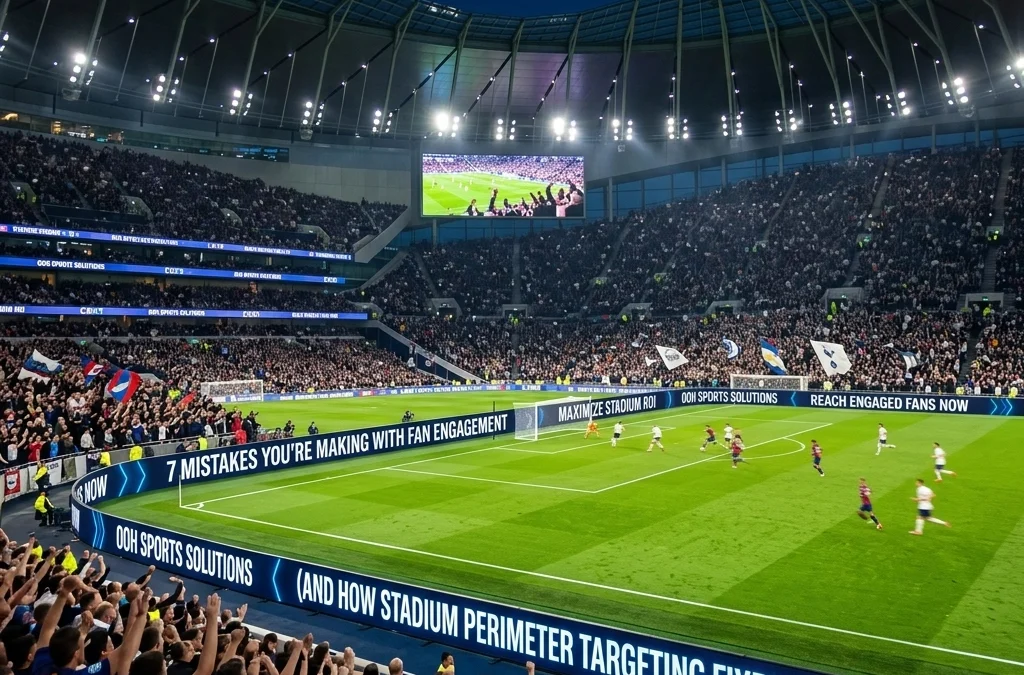
Live sports represent one of the final frontiers of guaranteed, undivided attention. In an era where digital ads are skipped and television commercials are muted, the stadium environment remains a rare space where thousands of people focus on a single point for hours at a time. However, many brands fail to capitalize on this focus because they apply traditional advertising logic to a high-emotion environment.
Creative directors and CMOs often overlook the nuances of the stadium atmosphere, resulting in campaigns that feel like background noise. By identifying common pitfalls and leveraging modern stadium perimeter targeting, brands can transform passive observers into active brand advocates.
1. Treating Sports Fans Like Generic Consumers
The primary mistake in sports marketing is the assumption that a fan is the same as a standard consumer browsing the internet or walking through a mall. A sports fan is emotionally invested, often to the point of tribalism. Generic messaging that lacks the energy of the game feels out of place and is frequently ignored.
Stadium perimeter targeting addresses this by placing the brand directly into the field of play. When a brand occupies the perimeter boards, it stops being an interruption and becomes part of the event’s visual landscape. The alignment between the brand and the intensity of the match creates a psychological association that generic digital banners cannot replicate. Effective engagement requires acknowledging the specific high-stakes environment of the stadium.
2. Over-Reliance on Social Media for Live Engagement
There is a common misconception that the second screen (the smartphone) is the primary driver of engagement during a live game. While social media is vital for pre-game hype and post-game analysis, the most critical moments of the match see fans looking at the field, not their phones. When a goal is scored or a buzzer-beater is attempted, the eyes of every person in the building, and millions watching the broadcast, are on the perimeter of the action.
Brands that rely solely on social media during these windows miss the peak of human attention. Stadium perimeter advertising provides what is often called unskippable visibility. By using the Sportrons technology provided by OOH Sports, brands can ensure they are visible during the exact moments when mobile device usage drops because the action on the field is too intense to look away from.

3. Ignoring the Power of the Emotional Peak
Marketing science shows that consumers are more likely to remember a brand if they encounter it during a moment of high emotional arousal. Many campaigns are spread thin across low-interest periods, wasting budget on audiences who are not engaged.
Stadium perimeter targeting allows brands to be present during the emotional peaks of a game. Whether it is a game-winning play or a high-tension defensive stand, the brand is physically framed within the camera shot and the fan’s field of vision. This creates a halo effect where the positive adrenaline of the game is transferred to the brand. Strategic placement on the perimeter ensures that the brand is associated with victory and excitement rather than the mundane.
4. Maintaining a Static Messaging Strategy
The era of the "set it and forget it" stadium sign is over. One of the biggest mistakes brands make is running the same creative visual for an entire season. Frequent attendees and season ticket holders quickly develop ad blindness to static signage. When the message never changes, it becomes part of the architecture rather than a communication tool.
Modern programmatic DOOH (Digital Out of Home) solutions fix this by allowing for dynamic messaging. Brands can update their creative in real-time to reflect the current state of the season, the specific opponent, or even the energy of the crowd. This flexibility keeps the content fresh and ensures that the audience remains curious about what will appear on the boards next.
5. Underestimating the Prestige of Perimeter Positioning
Some brands view stadium boards as simple "brand awareness" tools with low conversion potential. This perspective ignores the prestige and perceived authority that comes with being on the pitch-side or court-side perimeter. There is a psychological "premium" associated with these positions.
Fans subconsciously categorize brands seen on the perimeter as major players in the industry. This is a level of perceived quality that is difficult to achieve through standard social media feeds. When a brand appears on the perimeter of a major sporting event, it is validated by its proximity to professional athletes and world-class organizations. This positioning is a shortcut to building brand trust and authority.

6. Creating Campaigns Without Contextual Awareness
A campaign that feels tone-deaf to the current environment can actually damage brand perception. For example, promoting a luxury product during a crushing home-team defeat with upbeat, generic copy can feel jarring to the local audience.
Stadium perimeter targeting, when managed through a sophisticated platform like OOH Sports, allows for contextual awareness. Campaigns can be adjusted based on the score, the weather, or the momentum of the game. For instance, a beverage brand might change its creative to feature a refreshing cold drink when the stadium temperature rises, or a sports betting brand might update live odds as the game progresses. This level of relevance significantly increases the likelihood of a conversion.
7. Neglecting Real-Time Contextual Triggers
The most advanced mistake is treating a stadium perimeter board like a traditional highway billboard. A billboard on a road is static because the environment is relatively stable. A stadium is a living, breathing ecosystem where data changes every second.
By utilizing real-time triggers, brands can achieve results that traditional media cannot match. OOH Sports has demonstrated the power of this through various campaigns. For example, a case study on sports betting highlights how updating perimeter boards with live information in under 24 hours can drive immediate action.
Other brands have seen similar success by focusing on high-relevance data:
- Nike utilized strategic placements to dominate the visual landscape of major events without being the primary sponsor, as seen in their NYC Marathon strategy.
- White Claw achieved a 74% lift in purchase consideration by using programmatic DOOH to drive a product launch, a feat detailed in their campaign results.
- AB InBev saw a 119% lift in positive brand image by aligning their messaging with the specific atmosphere of the event environment.
The Strategy for Success: Moving Beyond the Mistake
To avoid these common pitfalls, creative directors and CMOs must shift their focus toward a more integrated, data-driven approach to stadium advertising. The goal is no longer just to "be seen," but to be relevant.
Strategy and Objective
The objective of a modern perimeter campaign should be to bridge the gap between high-level brand awareness and lower-funnel conversion. This is achieved by using the prestige of the perimeter to build trust, and the data-driven nature of programmatic DOOH to drive action.
Technology and Logistics
Platforms like OOH Sports provide the infrastructure to manage these complex campaigns. By leveraging specialized DSPs (Demand Side Platforms), such as the StackAdapt DSP, brands can buy stadium perimeter space with the same precision they use for online display ads. This allows for specific targeting based on audience demographics, game schedules, and even real-world events like weather changes.

Measurable Outcomes
The success of stadium perimeter targeting is not just anecdotal. The data shows significant impact across various metrics:
- Purchase Consideration: Sea-Doo saw a 144% increase in purchase consideration through their first digital OOH campaign.
- Brand Image: Strategic alignment with sports environments has been shown to nearly double positive brand perception in key demographics.
- ROI Comparison: When comparing programmatic DOOH vs. traditional stadium ads, the programmatic approach consistently delivers better ROI due to reduced waste and higher contextual relevance.
Conclusion
Fan engagement is often missed because brands try to shout over the game rather than speaking through it. The stadium perimeter is not just a place for a logo, it is a dynamic communication channel that, when used correctly, addresses the most common mistakes in sports marketing.
By moving away from static, generic, and disconnected messaging, brands can harness the emotional power of live sports. Through the use of real-time triggers, programmatic buying, and contextual awareness, OOH Sports helps brands turn the perimeter into their most effective marketing asset.
For those looking to explore the potential of these strategies, further information can be found on the OOH Sports blog or by reviewing the company policies and service offerings at the official website.
The future of fan engagement is on the field. To capture the share of the projected 50 billion dollar sports advertising market, brands must stop making these seven mistakes and start targeting the perimeter with precision.