
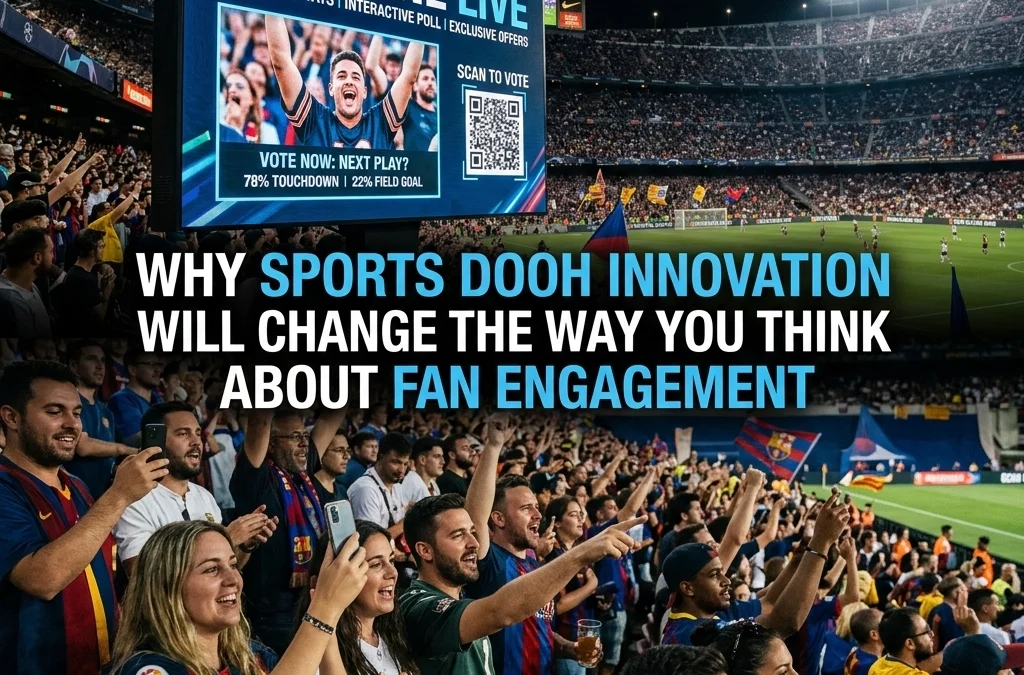
The world of sports marketing is undergoing a massive transformation. For decades, the primary goal for brands was to get a logo onto a jersey or a static billboard inside a stadium. While those methods still hold some value, the modern fan lives in a world that is fast, digital, and constantly moving.
Digital Out-of-Home (DOOH) advertising is the engine driving this change. It is no longer just about putting a digital poster on a highway. In the sports world, DOOH innovation is redefining how brand managers and media buyers think about fan engagement. It is about moving beyond the three hour window of a game and entering the daily lives of fans in a way that feels natural and useful.
Moving Beyond the Stadium Walls
One of the biggest shifts in thinking involves the location of the engagement. Traditionally, sports marketing was stadium-centric. If the game was at the arena, the marketing happened at the arena. However, the fan journey actually starts hours, or even days, before the opening whistle and continues long after the final score is recorded.
Sports DOOH allows brands to reach fans where they live, work, and play. This includes transit hubs, city centers, gyms, bars, and even residential elevators. By mapping out a fan’s routine, advertisers can show up at key touchpoints throughout the day. This turns sports marketing into a routine-based discipline rather than a location-based one. Whether a fan is grabbing a coffee on match day or heading to a sports bar after work, DOOH screens provide a consistent brand presence that follows the excitement of the event across the entire city.

Ads as Utility: Providing Real-Time Value
Engagement changes when an advertisement stops looking like a sales pitch and starts looking like a service. Innovation in DOOH creative allows ads to become "utility content." This means the content on the screen changes based on what is happening in the real world.
For example, a screen in a busy transit station can display live scores, countdown timers to tip-off, or real-time betting odds. When a brand provides this kind of information, the fan views the brand as a helpful part of their experience rather than an interruption.
Consider a scenario where an apparel brand triggers advertisements for rain gear on digital screens around a stadium exactly when a downpour begins. Or imagine a beverage brand pushing a celebratory message to screens across a city the moment the home team clinches a playoff spot. This level of contextual relevance is what separates modern DOOH from traditional advertising. It creates a psychological shift where the fan perceives the brand as being "in the moment" with them.
The Rise of the Extended Stadium
Major sporting events like the World Cup or the Super Bowl transform entire cities into high-energy fan zones. In these moments, the city itself becomes an extension of the stadium. DOOH provides the infrastructure to capture that cultural energy.
Screens in pharmacies, retail districts, and public viewing areas become a unified network that wraps the city in the atmosphere of the game. For media buyers, this offers the ability to scale a campaign nationwide while also having the flexibility to dial spend up or down based on team performance. If a local team is on a winning streak, the excitement in that specific city peaks. OOH Sports provides the tools to capitalize on that peak interest with precision.

Data-Driven Precision and Programmatic Buying
The old model of outdoor advertising involved broad, blunt targeting. Everyone saw the same message regardless of their interests. Today, DOOH uses real-world movement data to reach specific audience segments with incredible accuracy.
Media buyers can now target screens based on:
- Fans of specific leagues or teams.
- People who frequently attend stadiums or arenas.
- Patrons of sports bars and fitness centers.
Programmatic DOOH takes this a step further by allowing campaigns to be turned on or off based on live triggers. This could be a specific time of day, a change in the weather, or a specific event in a game. This efficiency ensures that budget is spent only when and where it is most likely to resonate.
Research shows that this sector is growing rapidly. Industry experts suggest that sports-focused digital advertising is on a path to reach massive global figures in the coming years. For a deeper look at these trends, the article on how DOOH sports advertising will hit 50 billion by 2030 outlines the strategies needed to capture a share of that growth.
Bridging the Gap Between Physical and Digital
Fandom today is a hybrid experience. Fans are watching the game, but they are also checking stats on their phones, posting on social media, and placing bets. DOOH acts as the glue between these physical and digital worlds.
The use of QR codes on DOOH screens is a prime example. A fan seeing a dynamic highlight on a digital board can scan a code to enter a contest, download an app, or access an exclusive merchandise offer. This "screen-to-phone" transition is becoming an expectation for younger, mobile-native fans.
Furthermore, modern DOOH offers measurement capabilities that were previously impossible for outdoor media. Advertisers can now track attribution by connecting screen exposure to website visits or verified purchases. A great example of this impact can be seen in the White Claw programmatic campaign, which saw a 74 percent lift in purchase consideration.

Comparing ROI: DOOH vs. Traditional Stadium Ads
When deciding where to allocate budget, brand managers often weigh the costs of traditional stadium sponsorships against digital alternatives. While a sign inside the stadium reaches the fans in their seats, DOOH reaches the entire city's population of fans.
The flexibility of DOOH often leads to a better return on investment (ROI). Traditional stadium ads are static and fixed for a season. DOOH is dynamic and can be optimized in real time. This means if a creative execution isn't performing, it can be swapped out instantly. For an analytical breakdown of these two approaches, check out the comparison of programmatic DOOH vs traditional stadium ads.
Building Always-On Communities
Historically, sports marketing was episodic. A brand would run a big campaign during the playoffs and then disappear. Innovation in DOOH encourages a shift toward "always-on" engagement.
Because DOOH screens are located in places where people live their daily lives, brands can maintain a persistent presence. This allows for long-term community building. A brand can shift its message through the preseason, the regular season, and the offseason, keeping the conversation with the fan going year round.
This persistent approach turns advertising into a relationship. By using Dynamic Creative Optimization (DCO), brands can continually test and refine their messages based on how fans are reacting. This ensures the content remains fresh and relevant, preventing "ad blindness" and keeping engagement levels high.

The New Playbook for Fan Engagement
To succeed in the modern sports landscape, media buyers and brand managers must adopt a new mental model. This means moving away from the idea of "buying impressions" and moving toward "creating moments."
The innovation in sports DOOH offers a toolkit that was unimaginable a decade ago. It provides:
- A real-time media channel that reacts to the world.
- A utility layer that adds value to the fan experience.
- A bridge that connects the physical world of the stadium to the digital world of the smartphone.
If the goal is to truly engage a fan, the strategy must be as dynamic as the game itself. By leveraging the power of OOH Sports, brands can ensure they are not just spectators, but an active part of the fan's journey every single day.
For those looking to see how these strategies work in the real world, exploring case studies can provide the data and execution details necessary to plan a successful campaign. The future of fan engagement is here, and it is being broadcast on digital screens across the globe.