
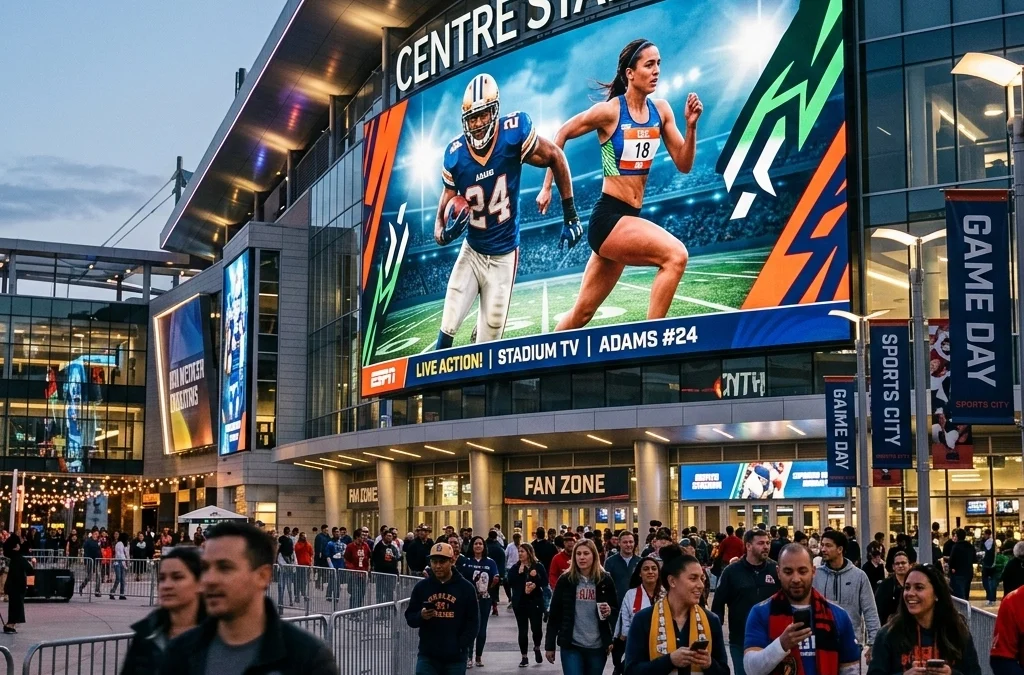
Sports marketing is no longer confined to the four walls of a stadium or the glass of a television screen. Digital Out-of-Home (DOOH) advertising has emerged as a critical bridge between the digital world and the physical spaces where fans gather. This guide explores the strategies, technologies, and tactical executions required to succeed in the rapidly evolving landscape of sports DOOH.
Defining Sports DOOH
Sports DOOH refers to digital advertising screens placed in environments where sports fans congregate. This includes in-venue placements like stadium concourses and jumbotrons, near-venue locations such as transit shelters and street furniture, and "fan spaces" like sports bars, gyms, and quick-service restaurants.
The power of this medium lies in the emotional state of the audience. Fans are highly attentive, often gathered in dense clusters, and experiencing high-stakes moments. Unlike traditional static billboards, sports DOOH allows for programmatic delivery and dynamic creative, enabling brands to react to scores, weather, and social buzz in real time.

Strategic Objectives and Audience Mapping
Before deploying a single pixel, a clear strategy is necessary. Media buyers and brand managers must define specific Key Performance Indicators (KPIs). Common objectives in this space include broad awareness, footfall to retail locations, digital actions like app downloads, and direct sales lift.
Defining the Fan Segments
A successful campaign moves beyond the generic category of "sports fans." Audiences should be segmented by their relationship to the game:
- The Hardcore Fan: Highly attentive to every play, likely present at the venue or a dedicated sports bar.
- The Casual Viewer: Engaged during major events or playoffs, often found in social settings or commuting during game windows.
- The Betting Enthusiast: Focused on real-time data, odds, and prop bets, frequently checking mobile devices while in view of DOOH screens.
- The Social Attendee: Present for the experience and atmosphere, more likely to engage with lifestyle and food-and-beverage messaging.
The Fan Moment Map
Mapping the fan journey is essential for timing the delivery of content.
- Pre-Game: Focus on anticipation. Advertisements in transit hubs or grocery stores can drive tune-in reminders or game-day snack purchases.
- During-Game: Focus on the "now." In-venue and bar networks should feature real-time scores or utility content like win probabilities.
- Post-Game: Focus on the outcome. Messaging can pivot to celebration or "next game" merchandise offers on the commute home.
For more on planning these journeys, the OOH Sports marketing page provides deeper insights into strategic placement.
High-Impact Environments: From Stadiums to Street Level
Successful campaigns utilize a mix of environments to maintain a constant presence throughout the fan's journey.
- In-Venue Screens: These include large-format Sportrons and ribbon boards. They offer high prestige and deep association with the team.
- Transit and Urban Panels: Screens in subways, train stations, and bus shelters reach fans on their way to the game or the bar.
- Retail and Grocery Networks: These are ideal for brands selling beverages or snacks, reaching the consumer at the point of purchase.
- Watch Spaces: Sports bars and casual dining restaurants provide high dwell times and an audience that is focused on the screens for hours at a time.

Programmatic DOOH (pDOOH) vs. Direct Buying
The method of purchase significantly impacts the flexibility of a campaign.
Direct Buying
Direct buys involve purchasing specific screens for a fixed duration. This is preferred for high-demand locations or when a brand seeks a "sponsorship" feel. It guarantees the placement and is often used for major events where inventory is scarce.
Programmatic DOOH
Programmatic buying uses automated systems to bid on inventory in real time based on data triggers. This allows for unparalleled flexibility. Campaigns can be set to run only when specific conditions are met, such as:
- A specific team is leading or trailing.
- The weather reaches a certain temperature (ideal for beverage brands).
- Live betting odds shift significantly.
- High foot traffic is detected in a specific neighborhood.
Utilizing a specialized DSP, such as the StackAdapt platform, helps streamline this process and ensures that budgets are spent only on high-value impressions.
Creative Excellence and Dynamic Optimization
Creative in DOOH must be simple and readable. Most viewers are in motion or in a distracting environment. High contrast, large fonts, and a single, clear call to action are the standards for success.
Dynamic Creative Optimization (DCO)
DCO takes creative a step further by automatically updating the ad content based on live data feeds. A beverage brand might show a "Celebration" creative the moment a goal is scored. A sports betting brand can display live odds that update every minute. This level of relevance significantly increases ad recall.

Measurable Results and Impact
The effectiveness of sports DOOH is not anecdotal. Data-driven case studies consistently show high performance across various categories.
- Alcohol and Beverage: A programmatic DOOH campaign for White Claw saw a 74% lift in purchase consideration during a product launch.
- Brand Sentiment: Mike’s Hard Iced Tea achieved a 119% lift in positive brand image by targeting fans in high-energy social environments.
- Consumer Intent: Sea-Doo utilized DOOH to increase purchase consideration by 144%, proving that high-ticket items can also benefit from the medium.
These results are often measured through brand lift studies, footfall attribution (tracking device IDs from exposure areas to retail locations), and sales data comparison between exposed and control markets. For a broader look at performance data, the OOH Sports case study library offers various examples of successful executions.
The Future Growth of the Industry
Market analysis indicates that sports DOOH is on a massive growth trajectory. Projections suggest that DOOH sports advertising will reach significant global figures by 2030. This growth is driven by the increasing availability of digital screens and the advancement of programmatic technology that makes the medium accessible to brands of all sizes, not just major official sponsors.

Execution Checklist for Media Buyers
To ensure a successful sports DOOH campaign, follow this operational blueprint:
- Establish Primary KPIs: Determine if the goal is brand sentiment, footfall, or direct sales.
- Select Environments: Choose a mix of stadium, near-venue, and lifestyle screens (bars/gyms).
- Set Data Triggers: If using programmatic, define the conditions (scores, weather, time) that will trigger the ads.
- Develop Dynamic Creative: Create templates that can ingest live data feeds for scores or odds.
- Coordinate Omnichannel Efforts: Ensure DOOH visuals align with social media and mobile retargeting efforts.
- Implement Measurement: Partner with an attribution provider to track the lift in store visits or digital conversions.
- Monitor and Optimize: Shift budget in real time toward the locations and times that show the highest engagement.
Summary
Sports DOOH advertising offers a unique opportunity to capture the attention of a highly emotional and engaged audience. By combining the scale of traditional out-of-home with the precision and data-driven capabilities of digital marketing, brands can drive significant lifts in awareness and purchase intent. Whether through high-prestige stadium screens or hyper-targeted bar networks, the medium provides the flexibility required to succeed in a modern, fast-moving sports landscape.
To learn more about how to integrate these strategies into a campaign, interested parties can explore the About section or contact the team for specific media planning assistance.