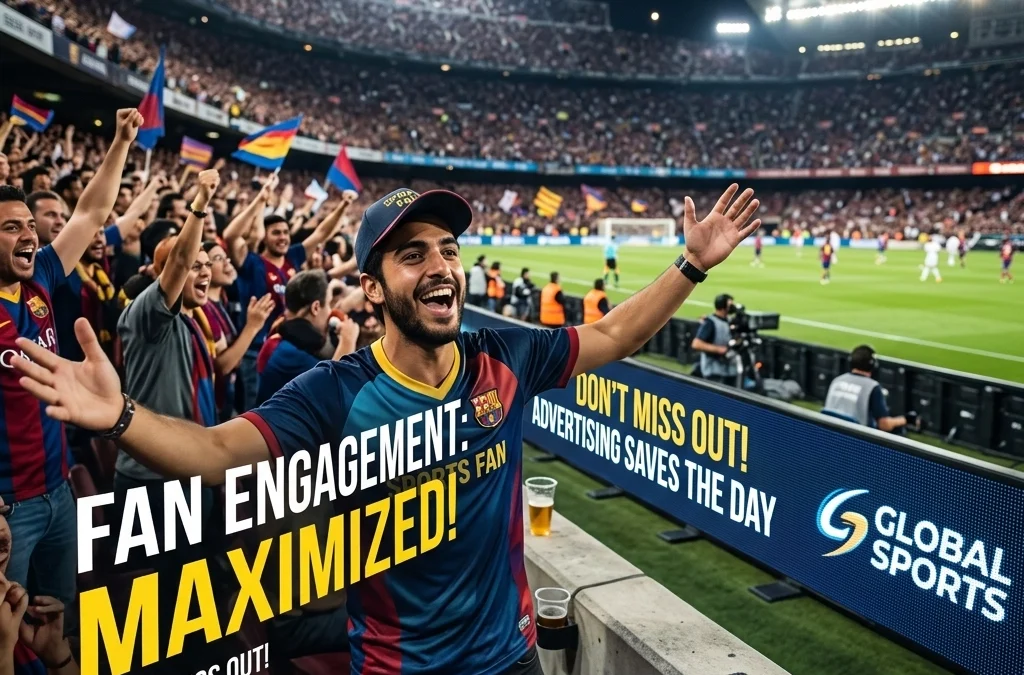
In-stadium fan engagement is becoming increasingly expensive and fragmented, yet for many brands, it is not necessarily becoming more effective. Companies often pour significant budgets into social media campaigns, influencer partnerships, and one-off activations, only to find they are still struggling to become a meaningful part of the live game experience. The most intense moments of play are when fan emotion is at its peak, and this is exactly where many marketing strategies fail to land.
Stadium perimeter media, including LED boards, ribbon boards, and pitch-side placements, is frequently treated as background wallpaper. In reality, it is one of the few channels that sits directly in the line of sight when fan attention is most focused. By shifting the perspective from static signage to dynamic engagement engines, brands can capture the energy of the crowd in real time.
Below are seven common engagement mistakes and the strategic ways perimeter advertising can resolve them.
1. Treating Every Fan as a Single Demographic
The first mistake many brands make is blasting a generic message to the entire stadium. A typical crowd consists of families, students, corporate clients, and hardcore fans, yet they are often served the same logo and the same static offer. When a message is designed for everyone, it often resonates with no one.
Perimeter advertising allows for sophisticated segmentation based on the context of the game. Modern LED systems can rotate creative based on the audience mix of a specific night, such as a family night or a rivalry game. For example, during a family-oriented event, the perimeter can highlight concession offers for children. During high-stakes rivalry games, the creative can shift to reflect the intensity of the competition.
Brands that utilize programmatic digital out-of-home strategies have seen significant lifts in purchase consideration by matching the message to the specific moment and audience.

2. Over-Reliance on Social Media for Live Engagement
A common assumption in modern marketing is that fans are glued to their phones throughout the entire game. While social media is vital for pre-game hype, the reality is that during the most emotional moments: a goal, a touchdown, or a buzzer-beater: phones are put away. Fans are watching the field.
If a brand's entire engagement plan is mobile-only, it misses the window of highest emotional impact. Perimeter boards are unskippable because they sit within the natural line of sight during live play. They cannot be scrolled past or blocked. By syncing perimeter creative with these emotional peaks, brands remain visible when the crowd is most charged.
Rather than competing with the phone, the perimeter can act as the primary canvas. A bold call-to-action on a ribbon board during a timeout can drive fans to a specific landing page or social poll once the action pauses, creating a seamless bridge between the physical and digital worlds.
3. Overlooking Local Heroes and NIL Opportunities
Many national brands rely on global celebrities or generic imagery, missing the deep emotional connection fans have with local stars and student-athletes. Especially among younger demographics, authenticity and local ties are major drivers of brand loyalty.
Stadium perimeters provide a natural stage for showcasing Name, Image, and Likeness (NIL) partnerships. Highlighting a local athlete on the perimeter boards during their home game creates a sense of shared identity. This moves the brand away from appearing like a distant corporate entity and positions it as a supporter of the local community.
Using the perimeter to feature student-athlete highlights or community projects helps build a narrative that fans care about. This strategy has been proven to increase positive brand image, as seen in various sports marketing case studies.
4. Running Static, Context-Blind Creative
One of the most frequent errors in stadium advertising is uploading a single design at the start of the season and leaving it unchanged. This leads to "banner blindness" where fans stop noticing the ad. Worse, it can lead to tone-deaf moments, such as a celebratory "victory" message looping on the boards while the home team is losing by a significant margin.
Dynamic perimeter systems allow for real-time updates based on game states. Triggers can be set for:
- The current score and period.
- Key events like penalties, VAR reviews, or home-run celebrations.
- Weather conditions (e.g., promoting hot beverages during a cold snap).
- Real-time betting odds and updates.
By utilizing real-time sports betting DOOH campaigns, brands ensure their content is always relevant to the current narrative of the game.
5. Viewing Game Day as a One-Off Event
Many brands treat the two or three hours of a game as a isolated window. They focus on impressions during the match but fail to establish a follow-up mechanism. This results in a short spike in visibility without any long-term data collection or relationship building.
Strategic perimeter advertising serves as the entry point for a longer marketing funnel. By incorporating QR codes or SMS triggers into the creative, brands can move fans into owned-audience databases. For instance, a perimeter board might offer a digital poster download in exchange for an email signup.
This approach turns a one-time impression into a measurable lead. Post-game, these fans can be retargeted with tailored offers based on the specific game they attended. This level of segmentation is a cornerstone of effective marketing strategies in the modern era.
6. Focusing on Transactional Athlete Appearances
When fan engagement is limited to a quick autograph session or a forced pre-recorded clip, the audience can sense the lack of authenticity. These transactional moments rarely build deep brand loyalty.
Perimeter advertising can be used to tell a more continuous story. Instead of a single appearance, the boards can highlight ongoing community involvement. Showing a brand and an athlete working together on a local charity project throughout the season creates a much stronger bond with the fan base.
Inclusive features like "Fan Cams" or noise meters branded with the company logo also help. These elements celebrate the fan experience rather than just selling a product. When a brand becomes synonymous with the fun and excitement of the game, the relationship moves from transactional to emotional.
7. Underestimating the Prestige of the Perimeter
Some creative directors view perimeter boards as "background inventory" compared to high-profile assets like center-hung scoreboards. This overlooks the psychological impact of peripheral vision and the prestige associated with court-side or pitch-side positioning.
Perimeter ads are present in nearly every broadcast shot, highlight reel, and fan-captured photo. They provide constant peripheral exposure that builds subconscious brand familiarity. Furthermore, being positioned next to the athletes and coaching staff associates the brand with the highest level of professional excellence.
As DOOH sports advertising continues to grow, the value of these premium positions only increases. Brands that treat the perimeter as a primary storytelling layer rather than an afterthought often see the highest return on investment.

Strategy and Execution
To fix these mistakes, a shift in strategy is required. Marketing teams should move toward a more analytical and data-driven approach to stadium media. This involves:
- Logical Planning: Mapping out creative rotations that correspond to different phases of the game (pre-match, live action, half-time, and post-match).
- Technology Integration: Partnering with platforms that allow for programmatic execution and real-time triggers.
- Measurement: Utilizing brand lift studies and device ID tracking to measure the actual impact of in-stadium exposure on purchase intent and brand sentiment.
Studies have shown that brands using these advanced tactics can see a 119% lift in positive brand image, as demonstrated by AB InBev’s programmatic DOOH campaigns.
The Analytical Advantage
Perimeter advertising is no longer just about putting a logo on a board. It is an opportunity to engage with a captive, emotional audience in a way that is unblockable and highly relevant. By avoiding the common mistakes of generic messaging, social-media-only focus, and static creative, brands can turn every minute of game time into a high-value marketing opportunity.
The goal is to move from being a spectator to being an active participant in the game-day narrative. When a brand’s presence is synced with the pulse of the stadium, it becomes more than an advertisement. It becomes part of the experience.
For more information on how to optimize stadium campaigns, visit the OOH Sports blog or reach out via the contact page.