
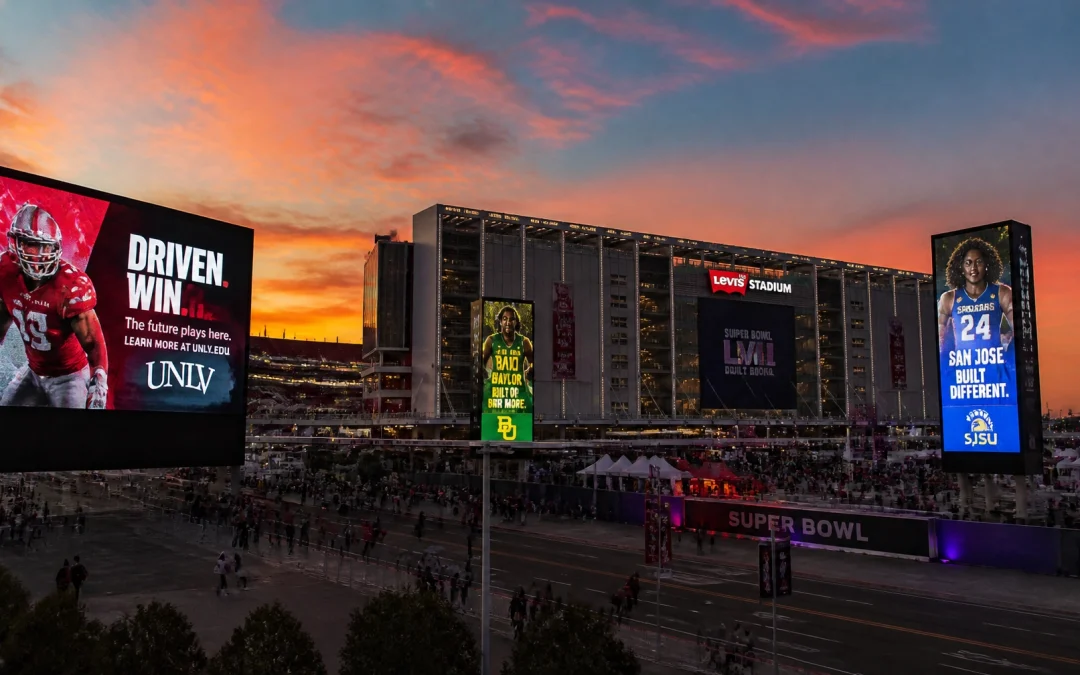
As the sports marketing landscape prepares for Super Bowl LX at Levi’s Stadium in Santa Clara, California, the convergence of Name, Image, and Likeness (NIL) and Digital Out-of-Home (DOOH) advertising presents a significant opportunity for brand managers and media buyers. By February 8, 2026, the traditional model of static sponsorship will have evolved into a dynamic, multi-channel ecosystem where authenticity and proximity drive consumer engagement.
The integration of over 20,000 student-athlete voices into a single, cohesive advertising strategy allows brands to bypass the noise of traditional broadcast slots. Instead, brands can leverage the local influence and digital presence of collegiate stars to saturate the 10-mile perimeter surrounding the Super Bowl venue. This strategy ensures that messaging is not only seen but is also delivered by voices that resonate with the modern sports consumer.
The Evolution of NIL in the Super Bowl Context
In 2026, NIL marketing is no longer characterized by isolated social media posts. It has matured into a professionalized, agency-style operation where school-affiliated collectives and third-party platforms facilitate long-term, high-impact partnerships. For media planners, the challenge lies in scaling these individual voices across a massive physical and digital footprint.
OOH Sports provides the infrastructure to bridge this gap. By combining the vast reach of the NIL platform with the Sportrons Network, brands can project student-athlete content onto digital video boards in bars, gyms, transit hubs, and inside the arena itself. The following five steps outline the strategic process for connecting with this network of 20,000+ athletes to dominate the Super Bowl 2026 advertising cycle.
Step 1: Secure the 10-Mile Strategic Perimeter
The primary objective during a high-profile event like the Super Bowl is to capture the attention of fans during the "transit and social" phases of their journey. Research indicates that a significant portion of brand engagement occurs outside the stadium walls in the days leading up to the game.
- Geo-Fencing and Proximity: Establish a digital perimeter up to 10 miles around Levi’s Stadium. This radius covers the high-traffic zones of Santa Clara and San Francisco where fans congregate.
- Venue Categorization: Target specific environments such as sports bars, fitness centers, and casual dining locations. These venues offer extended dwell times, allowing student-athlete messaging to penetrate the audience's consciousness.
- Saturation Tactics: Use a CPM-based approach to ensure continuous visibility across thousands of digital screens. By dominating the "last mile" of the fan journey, brands create a sense of omnipresence that rivals official event sponsorships.

Step 2: Onboard Authenticity via the NIL Platform
The power of NIL lies in the perceived authenticity of the athlete. When a consumer sees a collegiate star endorsing a product, the engagement rate is frequently higher than that of traditional celebrity endorsements.
- Athlete Selection: Access a pool of over 20,000 student-athletes across diverse sports, including high-growth areas like women’s basketball and volleyball.
- Narrative Alignment: Select athletes whose personal brands or geographic origins align with the campaign’s target demographic. For Super Bowl 2026, focusing on athletes from West Coast universities or those with a massive national following can maximize regional relevance.
- Content Standardization: Utilize the NIL platform to manage contracts and deliverables. This ensures that the 20,000+ voices remain on-brand while maintaining the unique "creator" feel that fans expect.
Step 3: Deploy Programmatic Creative for Real-Time Relevance
Digital Out-of-Home advertising in 2026 is driven by programmatic technology, allowing for real-time adjustments based on game-day data, weather conditions, or local events.
- Dynamic Creative Optimization (DCO): Use DCO to swap athlete creative based on the time of day or proximity to specific stadium events. For example, if a particular athlete is attending a pre-game event, their content can be prioritized on screens nearby.
- Trigger-Based Campaigns: Set campaign parameters to activate during peak fan activity. If there is a "rain out" or a delay at an outdoor venue, the programmatic system can pause or shift spend to indoor locations like sports bars and malls to follow the crowd.
- Flexibility in Spending: Programmatic DOOH allows media buyers to set CPM rates ranging from $5 to $30, providing the flexibility to scale up or down as the Super Bowl weekend progresses.
Step 4: Amplify Social Content onto Large-Format Screens
One of the most effective strategies for Super Bowl 2026 is the "Social-to-Screen" pipeline. Student-athletes are natural content creators, and their short-form vertical videos (TikToks, Reels) are highly effective at driving digital engagement.
- Format Transformation: Take high-performing social content from the NIL platform and adapt it for large-format digital video boards and Sportrons.
- Multi-Sensory Engagement: Combine visual athlete endorsements with PA announcements in transit hubs or stadium perimeters. This creates a multi-sensory brand experience that reinforces the athlete's voice.
- Creator-Style Assets: Prioritize "behind-the-scenes" or "day-in-the-life" content over polished studio shots. This style of creative feels more organic and less intrusive to the fan experience, leading to higher brand preference ratings.

Step 5: Execute Attribution and Measuring Impact
A successful campaign must be measurable. Modern DOOH platforms allow for sophisticated tracking that goes beyond simple impression counts.
- Device ID Exposure: Track the mobile device IDs of fans who have been exposed to the digital billboards. This data is critical for retargeting and cross-channel attribution.
- Brand Lift Studies: Conduct post-campaign studies to measure increases in brand awareness and purchase consideration. Previous campaigns on the OOH Sports network, such as the White Claw programmatic campaign, have demonstrated a 74% lift in purchase consideration.
- Conversion Tracking: Link exposure data to digital conversions, such as app downloads or website visits. For sports betting brands or retail apps, this creates a clear path from a roadside billboard to a mobile transaction.
The Strategic Importance of Direct Connectivity
Connecting with 20,000+ student-athlete voices for a single event like Super Bowl 2026 requires a platform that can handle the logistics of scale. By centralizing the management of these voices and pairing them with a nationwide network of digital screens, OOH Sports provides a turnkey solution for media buyers.
The following video provides further insight into the power of sports advertising and the impact of the Sportrons Network:
https://www.youtube.com/watch?v=l6J-0zileKE
Results and Expected Outcomes
Based on industry trends and past performance data, brands that integrate NIL voices with DOOH during major sporting events can expect significant measurable outcomes:
- Increased Engagement: Campaigns featuring athlete voices typically see a higher engagement rate compared to generic brand creative.
- Saturation without Fatigue: Because the content is distributed across 20,000+ different voices, the audience is less likely to experience "ad fatigue." The variety of creators keeps the messaging fresh.
- Positive Brand Association: Associating with collegiate athletes often results in a "halo effect," where the positive attributes of the athlete are transferred to the brand. In a study for Mike’s Hard Iced Tea, campaigns saw a 119% lift in positive brand image through targeted DOOH placement.
Conclusion
Super Bowl 2026 in Santa Clara represents a new frontier for digital advertising. The ability to coordinate 20,000+ student-athlete voices through a centralized NIL platform and deploy that content across a 10-mile digital perimeter is a powerful tool for any media buyer. By focusing on strategic perimeters, authentic content, and programmatic flexibility, brands can ensure their message is the most prominent voice in the room during the biggest game of the year.
For more information on launching a campaign within the perimeter of major stadiums, visit the OOH Sports blog or explore the Sportrons network for in-stadium opportunities.