
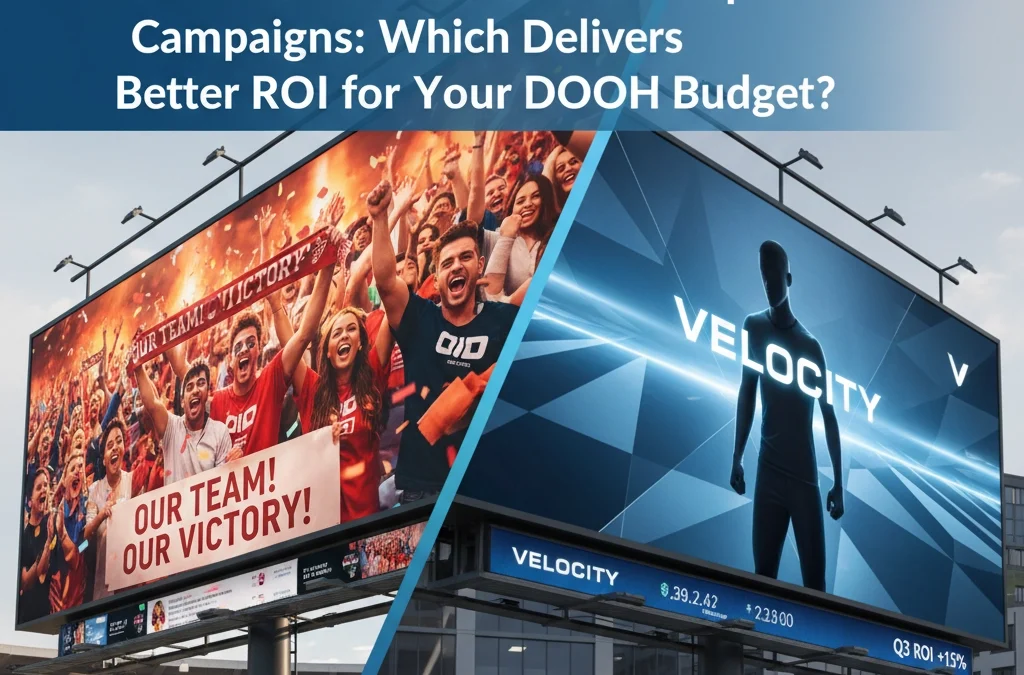
The landscape of sports marketing has reached a critical inflection point where traditional brand exposure strategies compete directly with experience-driven fan engagement approaches. For advertisers allocating digital out-of-home (DOOH) budgets, the choice between fan-centric and brand-centric campaigns fundamentally determines return on investment outcomes.
Recent industry data reveals a compelling narrative: engagement quality consistently outperforms audience quantity in driving measurable business results. This shift challenges conventional wisdom about sports sponsorship effectiveness and demands strategic recalibration of campaign approaches.
Understanding Fan-Centric Campaign Architecture
Fan-centric campaigns prioritize creating authentic connections through experiential activations that resonate beyond the initial touchpoint. This approach emphasizes Return on Experience (ROE), moving beyond traditional exposure metrics to focus on emotional engagement and behavioral response.
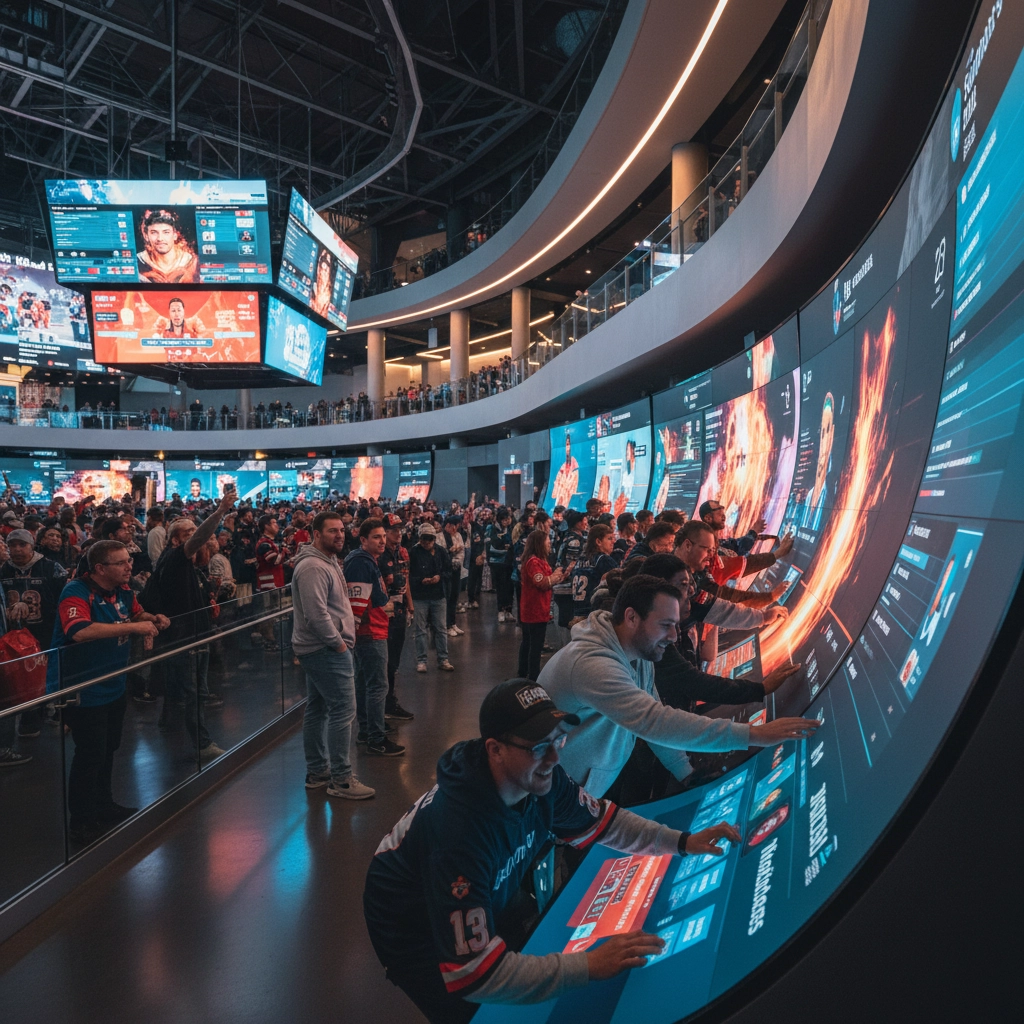
The methodology centers on understanding specific fan psychographics and behavioral patterns. Rather than broadcasting generic brand messages to mass audiences, fan-centric strategies develop targeted experiences that speak directly to passionate supporter communities.
Core Strategic Elements:
- Interactive DOOH installations that encourage fan participation
- Real-time content personalization based on audience demographics
- Integration of social media engagement mechanisms
- Post-event digital retargeting sequences
- Community-building initiatives that extend brand relationships
Data from passionate fan communities demonstrates remarkable engagement rates. Women's professional hockey provides a compelling case study: despite representing only 7% of survey respondents, 53% express strong openness to sponsor engagement compared to 27% of NFL fans. More significantly, 88% of women's hockey fans purchase from sponsors versus 75% of NFL fans, while 59% actively recommend sponsors compared to just 34% of NFL fans.
Analyzing Brand-Centric Campaign Performance
Brand-centric campaigns leverage traditional sponsorship visibility and mass market reach through established property partnerships. This approach capitalizes on broad audience exposure and brand positioning strategies that have historically dominated sports marketing investments.
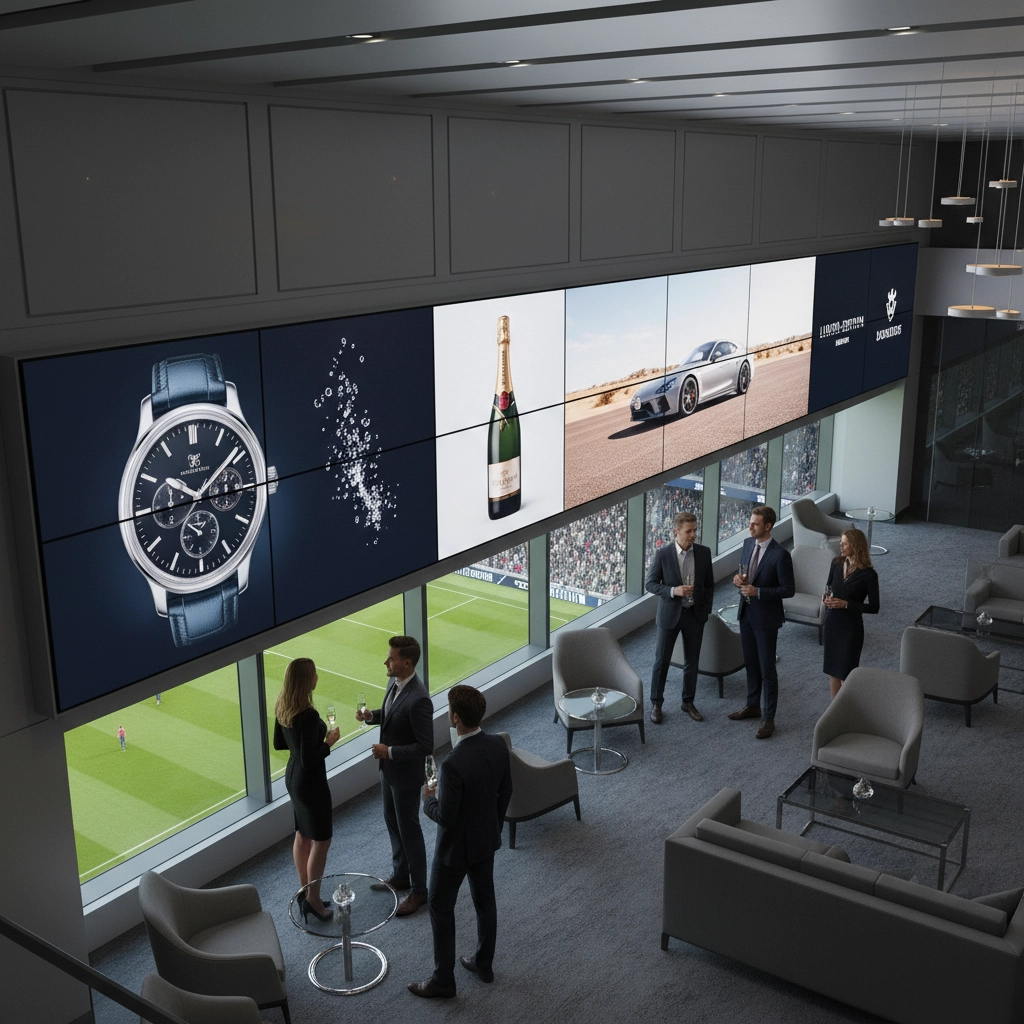
Industry research indicates that 67% of consumers find brands more attractive when sponsoring sports events, with 56% actively seeking information about sponsors. Major brands demonstrate substantial returns through strategic brand-centric implementations.
Established Success Patterns:
- Red Bull achieves massive social media impact through F1 team partnerships
- Emirates generated $290 million in digital return through valuable property sponsorships
- Heineken delivered $143 million in social media return during 2022, representing 28% of Champions League's total $426 million digital return
Brand-centric approaches offer predictable measurement frameworks, scalable implementation across multiple properties, and established baseline performance metrics. The strategy provides consistent visibility and broad awareness generation through strategic property alignments.
However, brand-centric campaigns face increasing consumer ad avoidance behaviors and diminishing returns on passive exposure investments. Modern audiences demonstrate reduced responsiveness to traditional advertising formats, particularly within saturated sports environments.
Direct Performance Comparison Analysis
The data presents clear differentiators between fan-centric and brand-centric campaign effectiveness across key performance indicators.
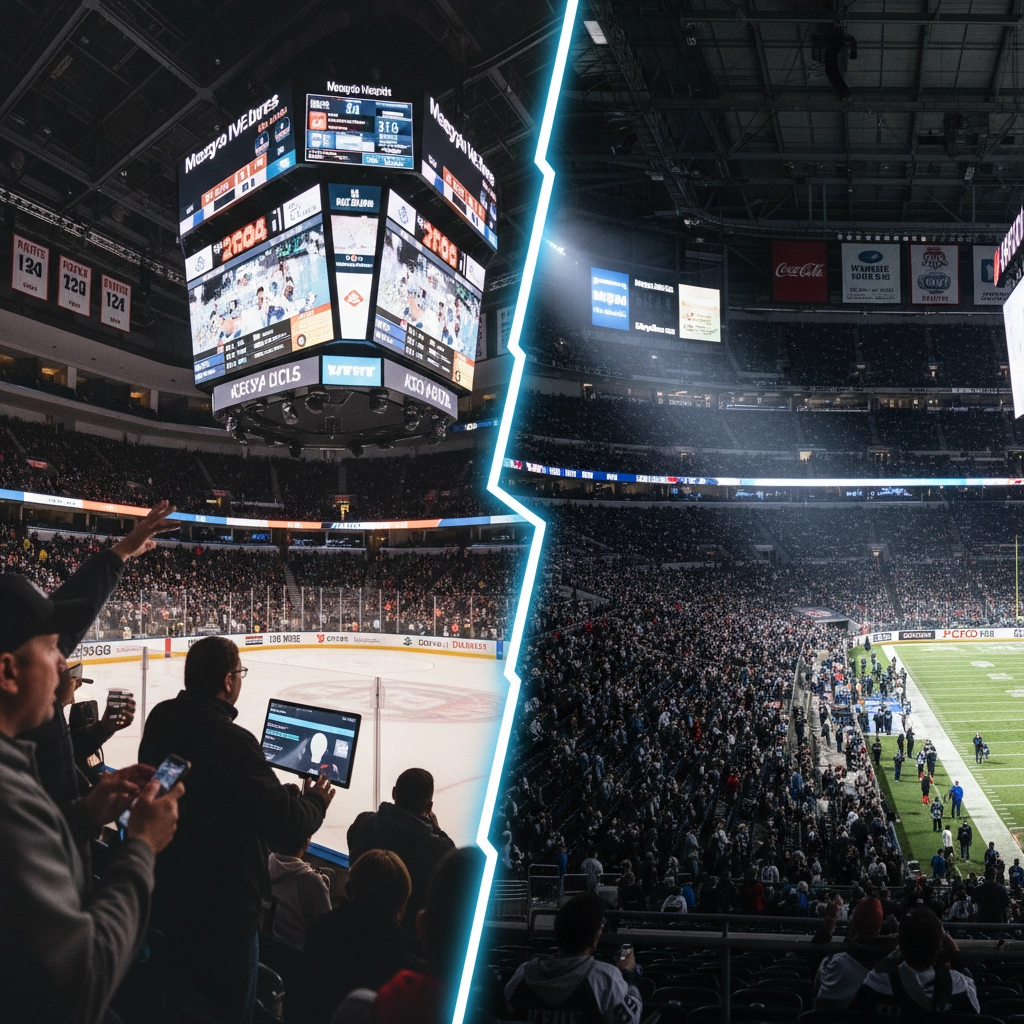
Engagement Quality Metrics:
- Fan-centric approaches generate 53% strong openness to sponsor engagement among passionate audiences
- Brand-centric strategies achieve 27% strong openness across mass market audiences
- Difference: 26-point advantage for targeted fan engagement
Purchase Conversion Analysis:
- Fan-centric campaigns drive 88% sponsor purchase rates
- Brand-centric approaches achieve 75% sponsor purchase rates
- Difference: 13-point conversion advantage for experiential activations
Organic Advocacy Generation:
- Fan-centric strategies produce 59% sponsor recommendation rates
- Brand-centric campaigns generate 34% sponsor recommendation rates
- Difference: 25-point advocacy advantage for engagement-focused approaches
These metrics translate directly into measurable revenue impact and long-term brand value creation, particularly when amplified through strategic DOOH deployment.
ROI Optimization Through DOOH Integration
Digital out-of-home advertising provides unique advantages for both campaign approaches, with distinct optimization opportunities based on strategic selection.
Fan-Centric DOOH Advantages:
- Precision targeting capabilities enable micro-audience segmentation
- Interactive elements transform passive viewing into active engagement
- Real-time content adaptation based on audience response patterns
- Integration with mobile engagement for extended interaction sequences
Brand-Centric DOOH Benefits:
- Broad reach maximization through high-traffic venue placements
- Consistent brand visibility across multiple touchpoints
- Cost-effective implementation for awareness generation
- Established measurement protocols for campaign evaluation
DOOH advertising delivers superior ROI compared to traditional advertising methods through enhanced targeting precision and measurable audience engagement. The technology enables campaign optimization based on real-time performance data and audience behavior analysis.
Strategic Budget Allocation Framework
Campaign selection should align with specific business objectives and audience characteristics rather than following industry conventions.

Limited Budget Scenarios:
Organizations with constrained DOOH investments should prioritize fan-centric campaigns targeting highly engaged niche audiences. The 25-point advantage in organic advocacy from passionate fan bases delivers exponentially higher long-term value than broad exposure campaigns.
Established Brand Applications:
Companies with significant market presence benefit from hybrid approaches combining brand-centric reach with fan-centric activations. Optimal allocation distributes 60% of DOOH budget toward targeted fan experiences and 40% toward broad visibility initiatives.
Maximum ROI Targeting:
Data consistently demonstrates that smaller, more passionate audiences generate superior purchase conversion and recommendation rates. Focus on sports properties with engaged fan bases rather than pursuing maximum audience size metrics.
According to Dan Kost, CEO of OOH Sports, "The industry has fundamentally shifted toward engagement-driven campaigns that prioritize authentic fan connections over traditional exposure metrics. Successful DOOH strategies must reflect this transformation."
Measurement and Attribution Considerations
Effective campaign evaluation requires distinct measurement frameworks for each approach.
Fan-Centric Measurement:
- Return on Experience (ROE) calculations
- Engagement depth and duration metrics
- Post-activation behavioral tracking
- Social amplification and organic reach analysis
- Long-term customer lifetime value assessment
Brand-Centric Measurement:
- Traditional reach and frequency calculations
- Brand awareness lift studies
- Purchase consideration improvement
- Market share impact analysis
- Competitive positioning evaluation
Both approaches require sophisticated attribution modeling to isolate DOOH contribution from broader marketing mix activities.
Implementation Recommendations
The evidence strongly favors fan-centric approaches for maximizing DOOH return on investment, particularly when campaigns emphasize experiential activations that transform passive viewers into active brand advocates.
Immediate Action Steps:
- Audit current campaign approaches against engagement quality metrics
- Identify passionate fan communities within target demographics
- Develop interactive DOOH creative concepts that encourage participation
- Implement measurement frameworks that capture engagement depth
- Test hybrid approaches with weighted fan-centric allocation
Long-term Strategic Considerations:
- Build internal capabilities for experiential campaign development
- Establish partnerships with specialized activation agencies
- Invest in DOOH technology that supports interactive engagement
- Develop customer journey mapping for sports audience segments
- Create feedback mechanisms for continuous campaign optimization
The transformation toward fan-centric sports marketing represents more than tactical adjustment; it reflects fundamental shifts in consumer behavior and engagement preferences. Organizations that adapt their DOOH strategies accordingly position themselves for sustained competitive advantage in an increasingly experience-driven marketplace.
For brands seeking measurable ROI improvement, the data provides clear direction: prioritize authentic fan engagement over broad audience exposure, leverage DOOH technology for interactive experiences, and measure success through behavioral change rather than awareness metrics alone.
Ready to optimize your sports DOOH campaigns for maximum ROI? Contact OOH Sports at oohsports.com or call our AI Receptionist at +1 (970) 703-0102 to discuss your campaign strategy. Visit our case studies to see proven results from successful fan-centric campaigns.
Share this post: LinkedIn | Facebook | Instagram | X
Tags: #Motivation #Branding #Strategy #Marketing #AdvertisingAndMarketing #digitalmarketing #Innovation #Sports #DOOH #FanEngagement #SportsTech #ROI