
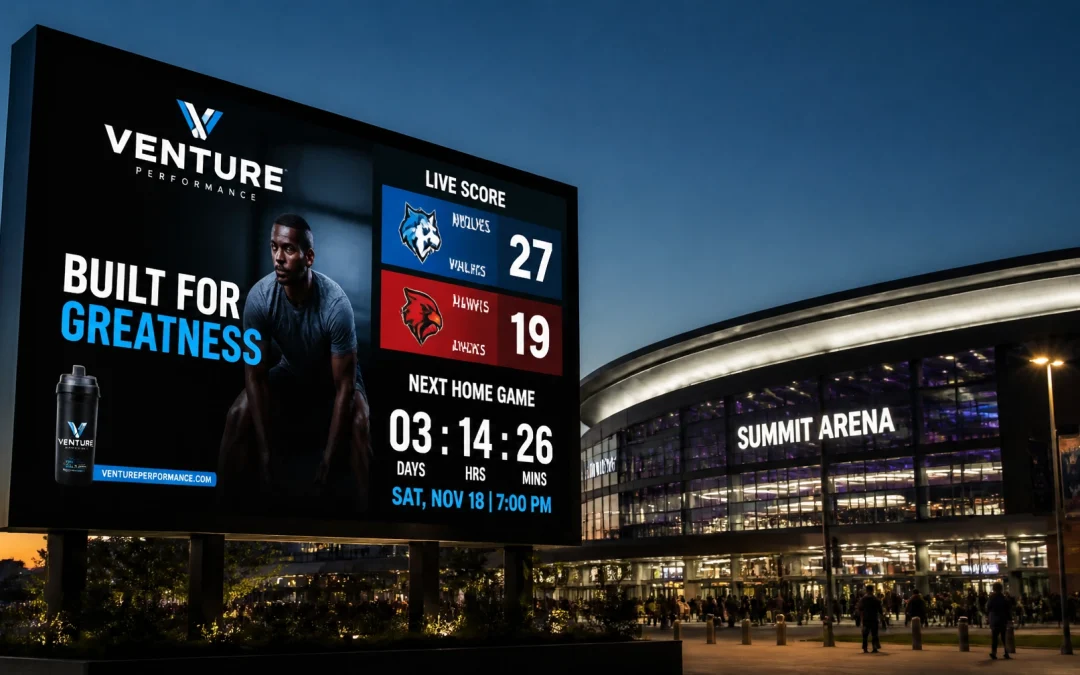
The landscape of sports marketing is undergoing a significant shift. Traditional static billboards are increasingly being replaced by dynamic, data-driven digital displays that capture fan attention with precision. Digital Out-of-Home (DOOH) advertising has emerged as a cornerstone for brands seeking to engage fans not just inside the arena, but throughout their entire game-day journey. By leveraging real-time data, programmatic buying, and proximity targeting, DOOH provides a high-impact channel for brand managers and media planners to connect with a highly motivated audience.
Innovation in this sector is driven by the ability to merge the physical scale of outdoor advertising with the digital flexibility of online channels. This integration allows for a level of relevance and engagement that was previously unattainable in traditional outdoor media. The following analysis explores the strategic framework, technological requirements, and measurable outcomes associated with modern sports DOOH campaigns.
Objective and Strategy
The primary objective for most sports-focused DOOH campaigns is to maximize brand visibility and fan engagement during high-interest periods. Unlike general awareness campaigns, sports DOOH strategies prioritize context and location. The strategy often centers on the "game-day journey," which encompasses the fan’s movement from their home to the stadium and back again.
Key components of this strategy include:
- Proximity Targeting: Campaigns are typically concentrated within a 10-mile radius of sports venues, arenas, and transit hubs. This ensures that the messaging reaches fans when their focus on the upcoming event is at its peak.
- Sequential Messaging: Advertisers deliver different messages based on the phase of the event. For example, pre-game creative focuses on anticipation and hype, while post-game creative reflects the final score or highlights.
- Omnichannel Integration: DOOH is used to reinforce mobile and digital campaigns. By aligning outdoor displays with social media pulses and mobile ads, brands create a unified experience for fans who are often using their phones as a second screen during the game.
By focusing on these strategic pillars, brands can transform a simple advertisement into a part of the fan experience. Information regarding how these strategies are reshaping the industry can be found in more detail at how digital out-of-home advertising is transforming sports marketing.

Strategy: The Game-Day Journey
Execution of a successful sports DOOH campaign requires a deep understanding of fan behavior and travel patterns. OOH Sports facilitates this by providing access to a network of digital screens strategically placed along the routes fans travel. This includes transit shelters, urban billboards, and displays within retail or hospitality environments near the stadium.
The tactical execution involves mapping the fan journey into three distinct phases:
- The Arrival Phase: During the hours leading up to a game, screens in high-traffic transit areas and main arteries leading to the stadium display countdowns, matchups, and brand messaging that builds excitement.
- The Participation Phase: Once fans are within the immediate vicinity of the venue, the focus shifts to interactive engagement. This often includes QR codes that lead to exclusive content, fantasy sports updates, or retail offers at nearby establishments.
- The Post-Game Phase: After the final whistle, the creative is updated in real time to reflect the outcome. Congratulations to the winning team or invitations to post-game celebrations keep the brand relevant during the fan's journey home.
This phased approach ensures that the brand remains a constant companion throughout the day. Detailed insights into this proximity-based approach are available through fan engagement strategies and stadium perimeter advertising.
Technology Partners and Logistics
The transition from static to dynamic DOOH is made possible by sophisticated programmatic platforms and data integrations. Programmatic DOOH (pDOOH) allows media buyers to purchase inventory based on specific triggers rather than fixed schedules. This automation provides the agility needed to respond to the unpredictable nature of live sports.
Logistics and technology requirements for these innovations include:
- Dynamic Creative Optimization (DCO): This technology allows for the automatic population of creative templates with live data feeds. When a goal is scored or a game enters overtime, the digital billboard updates instantly without manual intervention.
- Live Data Feeds: Integration with sports data providers ensures that scores, player statistics, and betting odds are accurate and timely. Research indicates that 72% of sports enthusiasts appreciate quick access to live updates, making this a high-value feature for DOOH displays.
- Demand-Side Platforms (DSPs): Media planners use DSPs to manage bids and target specific audience segments across thousands of screens. This allows for hyper-local targeting, such as activating screens only when certain crowd density thresholds are met.
The role of these technology partners is to provide the infrastructure that supports real-time engagement at scale. More information on how this playbook is being executed can be explored at the new playbook for sports DOOH innovation.

Creative Innovation and Fan Interaction
Creative content in sports DOOH is no longer limited to high-resolution imagery. Innovation is now centered on utility and interactivity. By providing fans with useful information, such as live scores or transit updates, brands can earn attention rather than just demanding it.
Specific creative tactics include:
- Real-Time Triggering: Creative updates based on live events. If a specific athlete breaks a record, the creative can immediately switch to a celebratory message.
- Second-Screen Synchronization: Since approximately half of sports fans use mobile devices during games to check stats, DOOH screens can display QR codes that link directly to these platforms, bridging the gap between the physical and digital worlds.
- Contextual Relevance: Displays in sports bars or retail locations can pair brand messaging with live game feeds, ensuring the advertisement is viewed when the audience is most engaged with the sport.
These innovations turn a passive viewing experience into an active engagement opportunity. Strategic advice on implementing these tactics is available at how stadium perimeter ads turn game day into a brand win.

Results and Measurement
One of the most critical advancements in sports DOOH is the ability to measure impact with greater precision. While traditional billboards were difficult to track, modern digital campaigns use a variety of methodologies to quantify success.
Data from recent industry studies and campaign reports highlight several key performance indicators:
- Ad Recall: Sports venue DOOH typically achieves an ad recall rate of approximately 86%. This is significantly higher than the average 60% recall rate observed in comparable television advertising.
- Follow-Up Action: Research shows that roughly 90% of fans who notice DOOH advertisements during major events take follow-up action. This includes searching for the brand online, discussing the ad with others, or visiting a retail location.
- Brand Lift: Campaigns focusing on the 10-mile stadium perimeter often deliver a 15% to 25% lift in aided brand awareness among the target audience.
- Attribution: By using device IDs and mobile location data, advertisers can track if a person exposed to a DOOH ad later visited a physical store or a specific website.
These measurable outcomes provide the data necessary for CMOs and brand managers to justify the investment in DOOH. The success of these campaigns is rooted in the high affinity fans have for sports sponsors. Studies suggest that 81% of fans feel more positive toward brands that support their favorite sports, and DOOH provides the most visible platform for that support.
Conclusion
The innovation within the sports DOOH sector is transforming how brands and fans interact. By moving away from static placements and embracing dynamic, real-time storytelling, advertisers can achieve a level of impact that resonates long after the game has ended. The combination of proximity targeting, programmatic flexibility, and creative utility makes DOOH an essential component of any modern sports marketing strategy.
For media buyers and planners, the opportunity lies in leveraging these technological advancements to deliver messages that are as dynamic and passionate as the sports themselves. Through strategic placement and data-driven creative, the OOH Sports network continues to redefine the boundaries of fan engagement.