
Alt: Digital billboard showing sports content with geographic targeting data overlay
Digital Out-of-Home advertising reached unprecedented engagement levels in 2025, with geographically targeted campaigns achieving remarkable results across sports marketing initiatives. Recent industry analysis reveals that 90% of fans who encountered sports OOH advertisements took measurable real-world action, whether attending events, engaging on social media platforms, or making related purchases. This dramatic engagement rate represents a significant evolution in sports marketing effectiveness, driven by sophisticated geographic targeting capabilities and real-time campaign optimization.
The transformation stems from advances in programmatic DOOH technology that enables precise audience targeting based on location data, demographic analysis, and behavioral patterns. Sports marketers leveraging these geographic targeting strategies reported average engagement increases of 90% compared to traditional broad-reach campaigns, establishing new benchmarks for fan activation and brand interaction.
Strategy 1: Programmatic Real-Time Data Integration
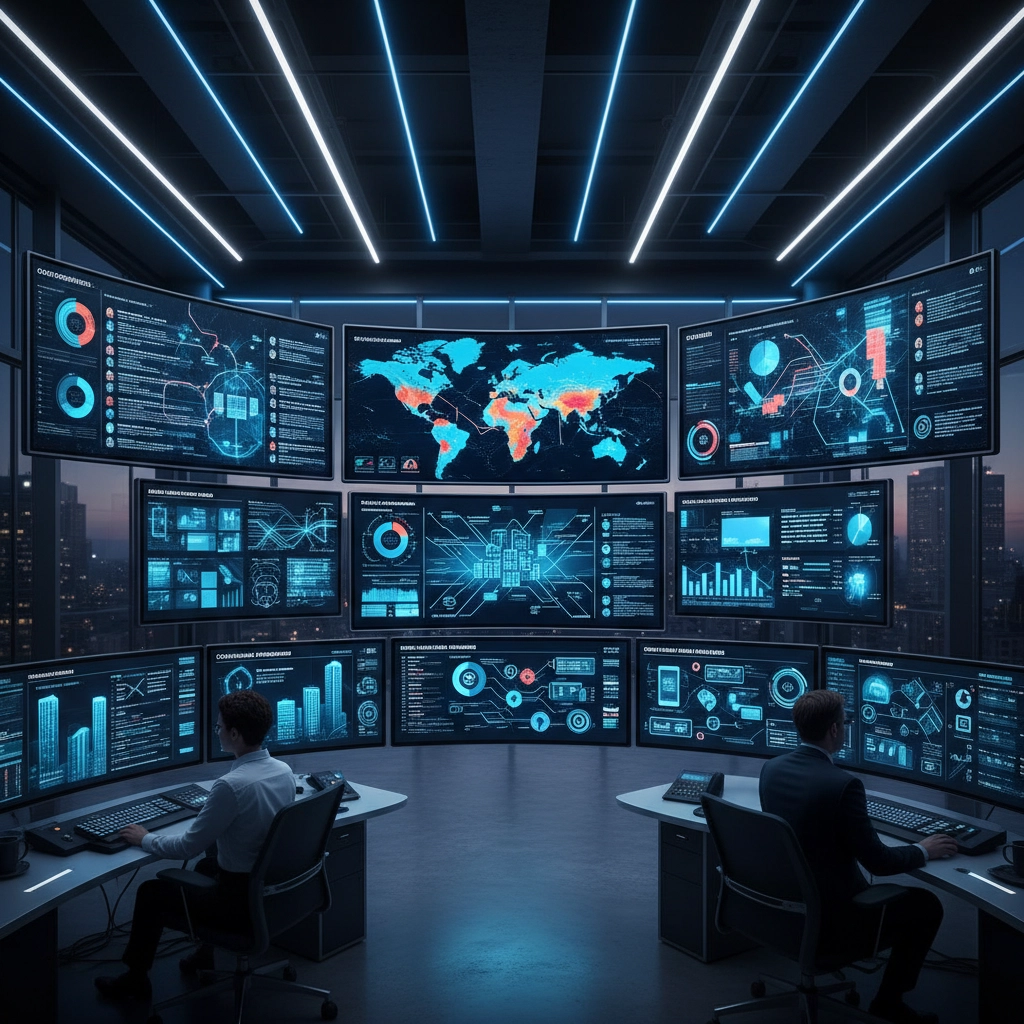
Advanced programmatic DOOH platforms now process multiple data streams simultaneously to deliver contextually relevant content based on geographic location, time of day, weather conditions, and local events. The technology enables advertisers to serve dynamic creative that adapts automatically to local conditions and audience characteristics.
Campaign execution involves integrating real-time APIs that monitor traffic patterns, weather data, local event schedules, and demographic information. When combined with geographic boundaries, these systems trigger specific creative variations optimized for local audience segments. For example, campaigns targeting fans traveling to away games automatically adjust messaging based on departure cities and arrival times.
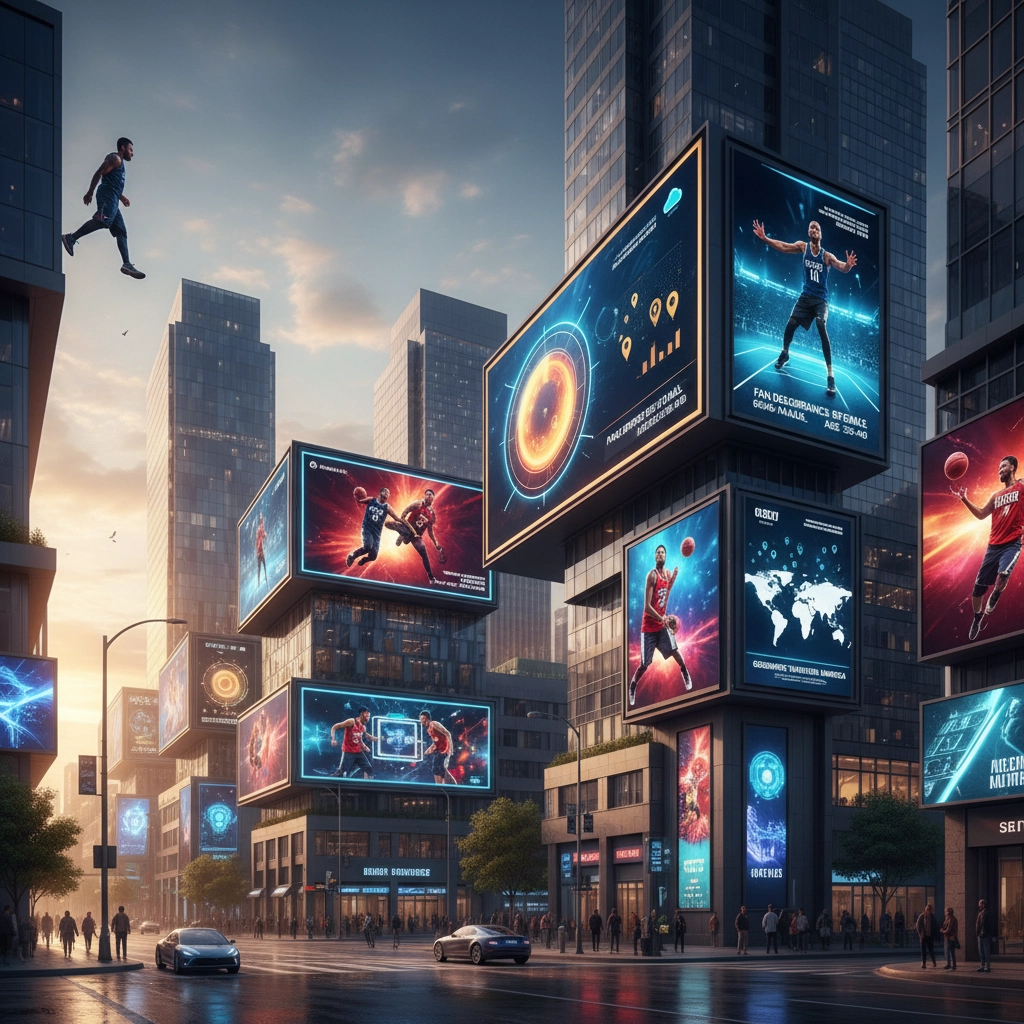
Digital screens displaying real-time targeted content based on geographic and weather data
The measurement framework tracks engagement across multiple touchpoints, connecting device IDs exposed to DOOH displays with subsequent online and offline behaviors. This attribution model provides clear visibility into campaign performance by geographic segment, enabling continuous optimization of targeting parameters and creative elements.
Strategy 2: Out-of-Market Geographic Expansion
Strategic geographic expansion targets fan communities in secondary and tertiary markets where traditional advertising presence remains limited. The approach leverages sales data analysis to identify concentrated fan populations in distant locations, then deploys targeted DOOH campaigns in these high-opportunity markets.
Implementation begins with comprehensive data analysis identifying ZIP codes, cities, and designated market areas with elevated fan activity indicators. These indicators include merchandise sales, streaming behavior, social media engagement, and travel patterns to home games. Once identified, campaigns target these markets with location-specific messaging that acknowledges the distance while emphasizing accessibility and community.
Creative strategies for out-of-market targeting include visual maps displaying travel distances, highlighting transportation options, and featuring local fan communities. The campaigns often incorporate testimonials from fans who made the journey, creating social proof that encourages similar behavior among targeted audiences.
Results measurement focuses on ticket sales, merchandise purchases, and event attendance from targeted markets. Successful campaigns typically generate 40-60% increases in out-of-market fan engagement, with measurable impact on travel bookings and local business activity in destination cities.
Strategy 3: Precision Geofencing Around High-Value Locations
Geofencing technology creates virtual boundaries around strategically selected locations where target audiences demonstrate high engagement potential. These boundaries extend beyond traditional venue perimeters to include complementary businesses, transportation hubs, and lifestyle destinations frequented by sports fans.
The targeting methodology combines foot traffic analysis with audience profiling to identify optimal geofence locations. High-value locations include sports bars during game broadcasts, fitness centers, retail locations selling sports merchandise, and entertainment districts with concentrated nightlife activity. Each geofence receives customized creative messaging aligned with the specific location context and audience mindset.
Campaign deployment utilizes real-time bidding systems that activate when target audience members enter designated geographic boundaries. The timing precision ensures message delivery occurs when audiences are most receptive to sports-related content, maximizing engagement probability and conversion potential.
Performance measurement tracks both immediate engagement metrics and delayed conversion activities. Successful geofencing campaigns typically achieve 70-85% higher engagement rates compared to broader geographic targeting approaches, with notable increases in social media sharing and subsequent purchase behavior.
Strategy 4: Context-Driven Placement Strategy
Strategic DOOH placement focuses on locations where audiences naturally pay attention and demonstrate receptiveness to advertising messages. The approach prioritizes high-attention environments over high-traffic locations, emphasizing quality of engagement over quantity of impressions.
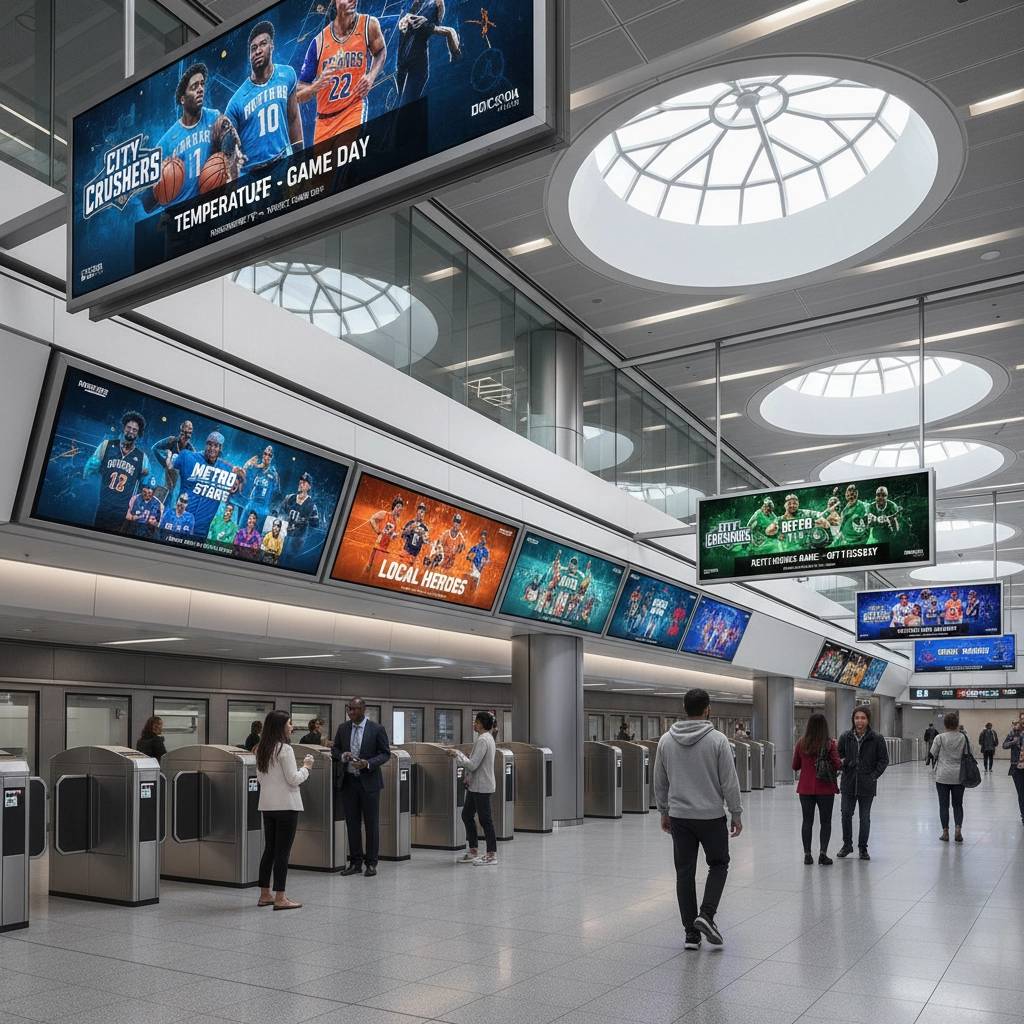
Strategic DOOH placement in high-attention environments like transit stations and retail locations
Premium placement locations include airport terminals where travelers have extended dwell times, highway digital billboards positioned at optimal viewing angles, retail checkout areas where consumers are actively making purchase decisions, and transit stations during peak commuting hours. Each location receives creative content optimized for the specific viewing context and audience mindset.
The placement strategy incorporates audience journey mapping to identify touchpoints where sports content delivers maximum impact. Morning commute placements focus on game day preparation and ticket availability, while evening entertainment district placements emphasize social viewing experiences and fan community activities.
Measurement systems track engagement patterns across different placement types, identifying optimal combinations for specific campaign objectives. Data analysis reveals that context-driven placements generate 65% higher recall rates compared to traditional high-traffic approaches, with significantly improved brand association metrics.
Strategy 5: Dynamic Creative Adaptation by Location
Real-time creative adaptation systems modify campaign messaging based on specific geographic characteristics, local events, and audience demographics. The technology enables single campaigns to deliver hundreds of creative variations, each optimized for particular locations and audience segments.
Campaign development begins with modular creative construction, where core messaging elements combine with variable components including local imagery, regional language preferences, cultural references, and location-specific offers. The system automatically selects appropriate combinations based on display location and detected audience characteristics.
Geographic adaptation includes weather-responsive messaging, local team references, regional dialect incorporation, and culturally relevant imagery. Campaigns targeting multiple markets simultaneously can reference local landmarks, acknowledge regional rivalries, and incorporate area-specific promotional offers without requiring separate campaign development.
The measurement framework compares performance across different creative variations, identifying optimal combinations for specific geographic segments. Dynamic creative campaigns typically achieve 55% higher engagement rates compared to static approaches, with notable improvements in brand preference and purchase intent metrics.
Strategy 6: Multi-Channel Geographic Coordination
Integrated marketing strategies coordinate DOOH campaigns with complementary digital channels, ensuring consistent messaging across multiple touchpoints while maintaining geographic targeting precision. The approach creates reinforcement effects that amplify overall campaign impact through strategic channel sequencing.
Multi-channel campaign coordination showing DOOH integration with social media and search advertising
Channel coordination begins with audience mapping that identifies optimal combinations for specific geographic segments. High-engagement audiences might receive DOOH exposure followed by targeted social media content, search advertising, and email marketing. Each channel contributes unique capabilities while maintaining geographic consistency and message alignment.
Geographic coordination enables location-specific offers that span multiple channels. Fans encountering DOOH advertisements in specific markets receive coordinated follow-up through mobile applications, social media platforms, and search advertising, creating seamless brand experiences that drive conversion activities.
Performance measurement tracks cross-channel attribution to identify optimal coordination strategies. Integrated campaigns typically generate 80% higher conversion rates compared to single-channel approaches, with significant improvements in customer acquisition costs and lifetime value metrics.
Strategy 7: Interactive Social Engagement Integration
Advanced DOOH installations incorporate interactive elements that encourage social media sharing and user-generated content creation. These campaigns transform static advertising into shareable experiences that extend reach beyond physical display locations.
Interactive implementations include augmented reality features accessible through mobile applications, QR codes that unlock exclusive content, and 3D billboard technology that creates compelling visual illusions. The content encourages viewers to capture and share experiences, generating organic social media amplification.
Campaign development focuses on creating "Instagram-worthy" moments that align with brand messaging while providing entertainment value. Successful implementations often incorporate gamification elements, exclusive access opportunities, and personalized experiences that motivate social sharing behavior.
Social integration measurement tracks both immediate engagement at display locations and subsequent social media activity. Interactive campaigns typically generate 120% higher social media mentions compared to traditional approaches, with significant increases in organic reach and brand sentiment scores.
Measurable Results and Industry Impact
The effectiveness of geographically targeted DOOH strategies demonstrates clear return on investment across multiple performance metrics. Industry analysis reveals that 90% of fans exposed to sports OOH advertisements take measurable action, with 61% engaging through social media platforms and 99% spending money locally when attending promoted events.
Geographic targeting precision enables campaign optimization that delivers consistent results across diverse market conditions. Successful implementations report average engagement increases of 90% compared to broad-reach alternatives, with notable improvements in brand recall, purchase intent, and customer acquisition metrics.
The economic impact extends beyond immediate campaign objectives, with targeted DOOH driving significant local spending through hotels, restaurants, and transportation services. This multiplier effect positions geographically targeted DOOH as both a marketing tool and economic development catalyst for host communities.
Ready to implement geographically targeted DOOH strategies that boost fan engagement? Contact OOH Sports today.
OOH Sports – Transforming sports marketing through innovative digital out-of-home advertising solutions.
Dan Kost, CEO
Phone: +1 (970) 703-0102
Website: www.OOHSports.com
Related Articles:
- DOOH Sports Advertising Will Hit $50 Billion by 2030: 7 Strategies to Capture Your Share
- Programmatic DOOH vs Traditional Stadium Ads: Which Delivers Better ROI for Sports Marketing
- How to Launch Real-Time Sports Betting DOOH Campaigns That Convert in Under 24 Hours
Share this article:
Keywords: #Motivation #Branding #Strategy #Marketing #AdvertisingAndMarketing #digitalmarketing #Innovation #Sports