

Traditional stadium billboards are not entirely dead, but they face an unprecedented transformation as digital screens reshape the sports marketing landscape. The emergence of over 25,000 digital displays across global sports venues signals a fundamental shift from static advertising to dynamic, data-driven marketing strategies that are redefining fan engagement and advertiser ROI.
This revolution extends far beyond simple screen upgrades. Modern sports venues now deploy sophisticated ecosystems of interconnected displays that respond to real-time data, audience behavior, and contextual triggers. The implications for brands, venues, and fans represent one of the most significant changes in sports marketing since the introduction of television broadcasting.
The Digital Transformation of Sports Venues
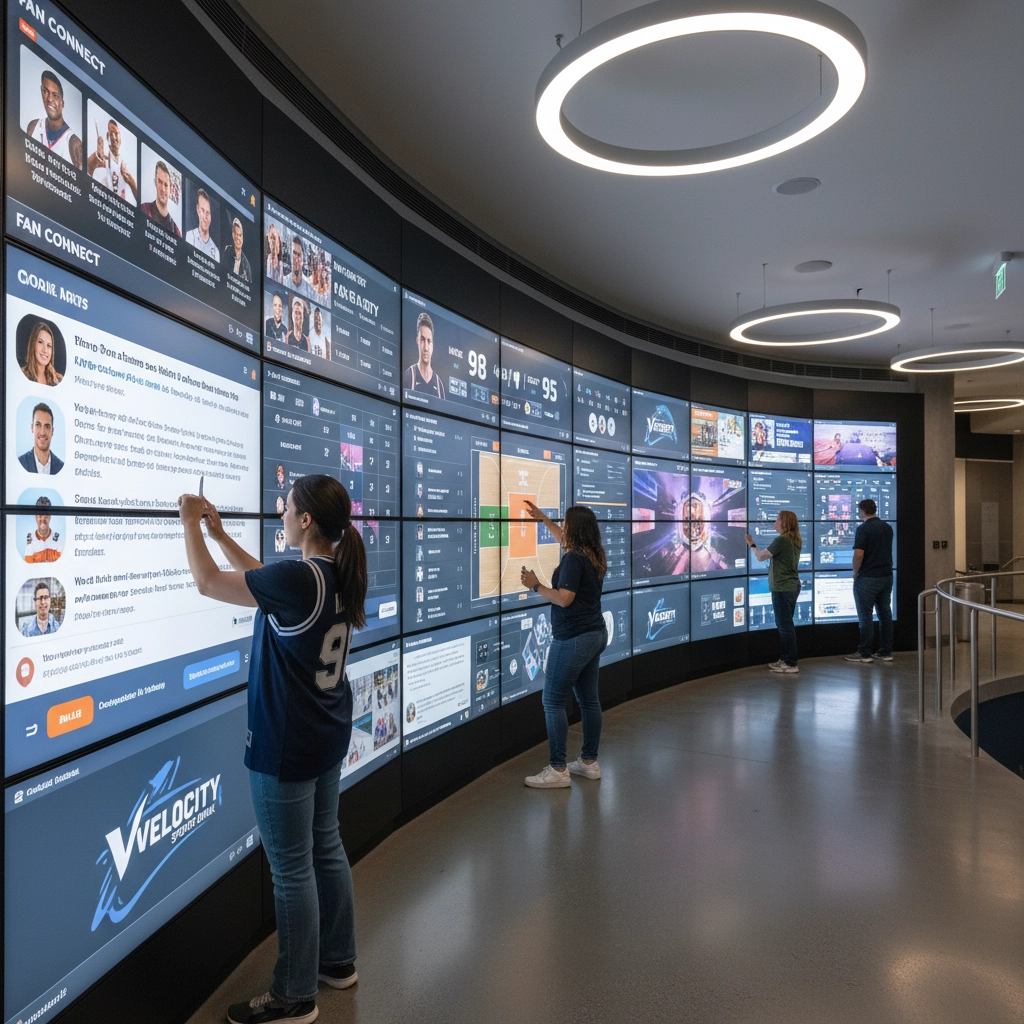
Digital signage in sports arenas has evolved from basic scoreboards into comprehensive entertainment and marketing platforms. Modern venues implement dynamic, high-definition displays that provide immersive experiences through colorful graphics, real-time replays, and interactive content opportunities. These systems have progressed beyond simple information displays to become powerful marketing tools incorporating touchscreen kiosks, mobile app integrations, and interactive video walls where fans participate in live polls, access detailed game statistics, and view social media feeds.
The transformation represents more than upgraded technology. It reflects a complete reimagining of how sports marketing engages audiences. Digital displays cycle through multiple messages and incorporate real-time updates, adjusting messaging throughout events based on audience behavior, weather conditions, promotional opportunities, and game dynamics.
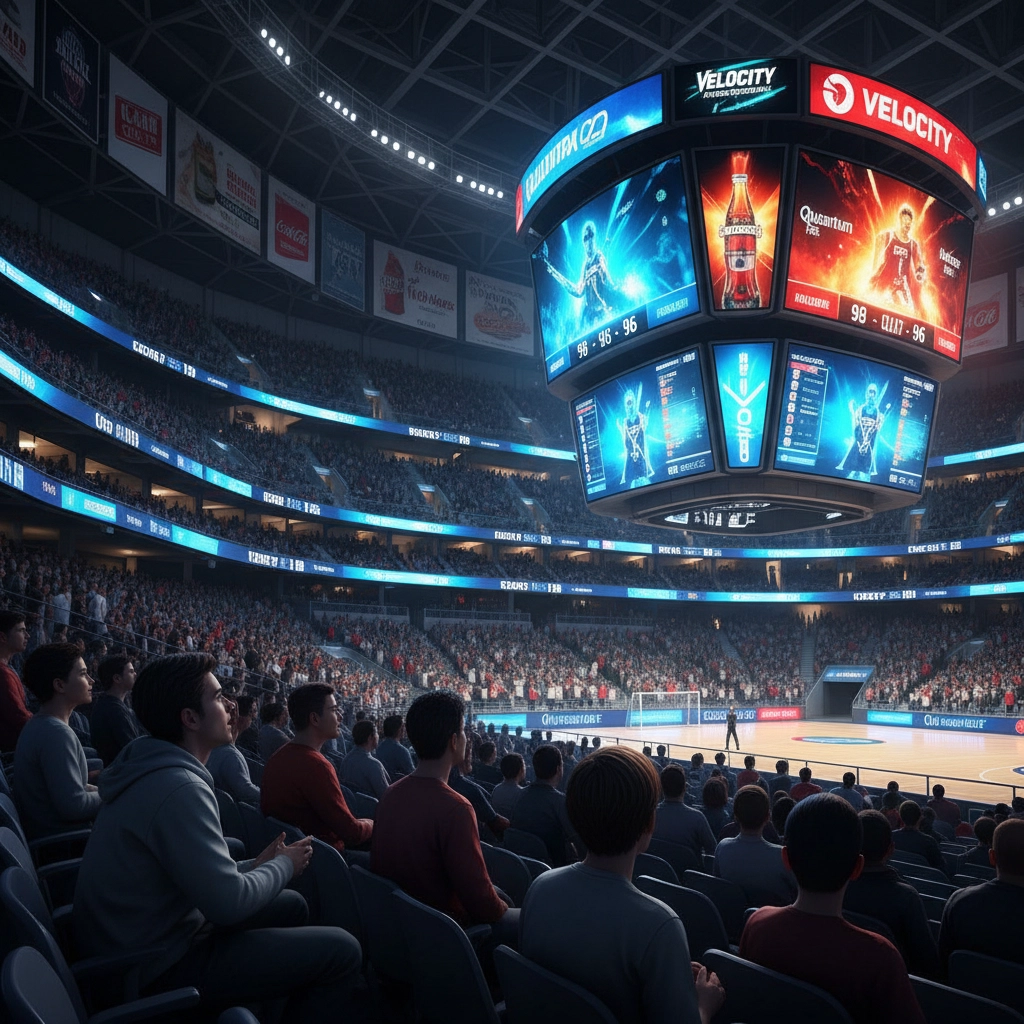
Stadium operators now leverage these systems to create personalized experiences that extend well beyond traditional advertising. Fans receive targeted messaging based on their seating location, purchase history, and demographic profiles. This level of personalization was impossible with static billboard installations.
Traditional vs Digital Stadium Advertising: A Comprehensive Analysis
Traditional Stadium Billboards maintain several core strengths despite the digital revolution. Static displays provide constant, uninterrupted visibility without competing for attention through rotating advertisements. They remain cost-effective solutions with lower upfront costs and fixed pricing structures, making them accessible for smaller sponsors or long-term brand awareness campaigns. Their simplicity ensures consistent messaging throughout campaign duration without technical complications.
Traditional formats excel in specific scenarios where sustained brand presence and budget efficiency are primary objectives. Long-term venue partnerships often utilize static displays for foundational branding while reserving premium digital spaces for tactical campaigns.
Digital Stadium Displays offer unprecedented flexibility and engagement capabilities. These systems display multiple images simultaneously and allow instant content changes across multiple screens with a single command. Digital platforms excel at promoting time-sensitive offers, special promotions, and new products while enabling targeted messaging for different times, locations, and audience segments.
The ability to provide real-time updates and interactive experiences creates opportunities for enhanced fan engagement that static displays cannot match. Brands can adjust messaging based on game flow, weather conditions, and audience reactions, maximizing impact and relevance.
| Factor | Traditional Stadium Billboards | Digital Stadium Displays |
|---|---|---|
| Initial Investment | Lower upfront costs, fixed pricing | Higher installation costs, variable pricing |
| Content Flexibility | Fixed message for campaign duration | Instant content changes and rotation |
| Fan Engagement | Passive viewing experience | Interactive, immersive experiences |
| Revenue Generation | Single advertiser per space | Multiple advertisers sharing premium locations |
| Maintenance Requirements | Minimal ongoing costs | Regular technical maintenance required |
| Creative Capabilities | Static images only | Dynamic content, video, real-time data integration |
| Targeting Precision | Broad audience reach | Demographic and behavioral targeting |
| Performance Measurement | Limited analytics available | Comprehensive engagement metrics |
Revenue Impact and ROI Considerations
Digital displays generate significantly higher revenue per square foot compared to traditional billboards. Venues can sell the same premium space to multiple advertisers throughout a single event, maximizing revenue potential. Dynamic pricing models allow venues to adjust rates based on game importance, audience size, and advertiser demand.
The enhanced engagement metrics provide advertisers with detailed performance data previously unavailable with static formats. Brands can measure dwell time, interaction rates, and conversion tracking through integrated technologies. This data-driven approach enables continuous campaign optimization and demonstrates clear ROI to marketing stakeholders.
Digital advertising also supports innovative revenue models including auction-based pricing, performance-based partnerships, and integrated sponsorship packages that combine physical and digital touchpoints across the venue experience.
Technology Integration and Implementation Strategies
Modern digital display systems integrate seamlessly with venue management platforms, ticketing systems, and mobile applications. This connectivity enables sophisticated targeting based on fan profiles, purchase behavior, and real-time preferences. Venues deploy advanced analytics platforms that track engagement patterns and optimize content delivery across different screen locations and time periods.
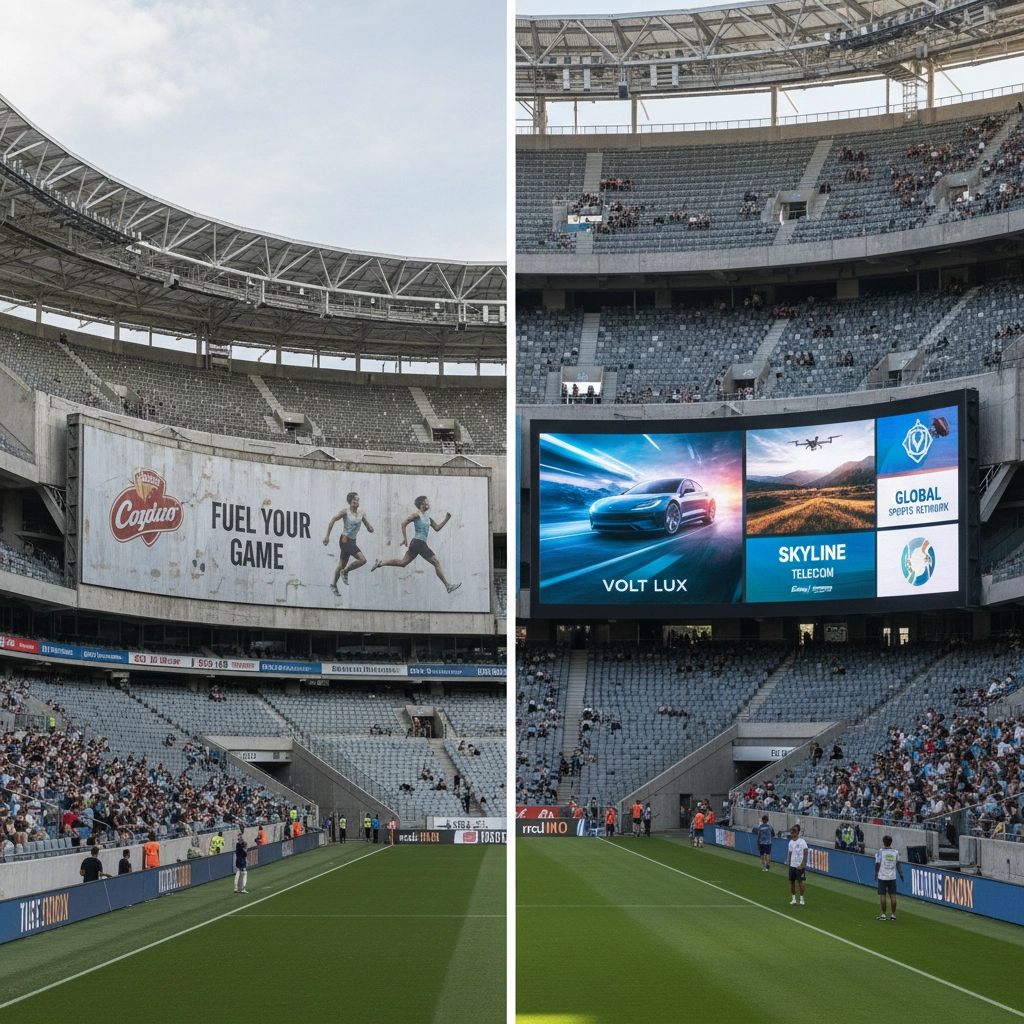
Implementation strategies vary based on venue size, budget constraints, and technical infrastructure. Successful deployments often begin with high-traffic areas and expand systematically based on performance data and advertiser demand. The most effective installations balance advertiser needs with fan experience, ensuring digital content enhances rather than distracts from the sporting event.
Technical considerations include network capacity, power requirements, maintenance protocols, and content management systems. Venues must establish robust processes for content approval, scheduling, and quality control to maintain professional standards and advertiser satisfaction.
The Strategic Evolution of Sports Marketing
The proliferation of digital displays aligns with broader trends in programmatic advertising and data-driven marketing. Sports venues now function as sophisticated marketing platforms that deliver targeted messages based on real-time data and audience insights. This evolution parallels developments in digital out-of-home advertising across urban environments and transportation networks.
Brands increasingly view sports venues as extension of their omnichannel marketing strategies rather than isolated advertising opportunities. Digital displays enable seamless integration with mobile campaigns, social media activations, and e-commerce platforms, creating comprehensive fan journey experiences.
The most successful sports marketing campaigns now employ hybrid approaches that combine both static and digital elements strategically. Brands utilize traditional billboards for sustained brand presence and budget-friendly reach while incorporating digital displays for tactical messaging, event-driven campaigns, and interactive fan experiences.
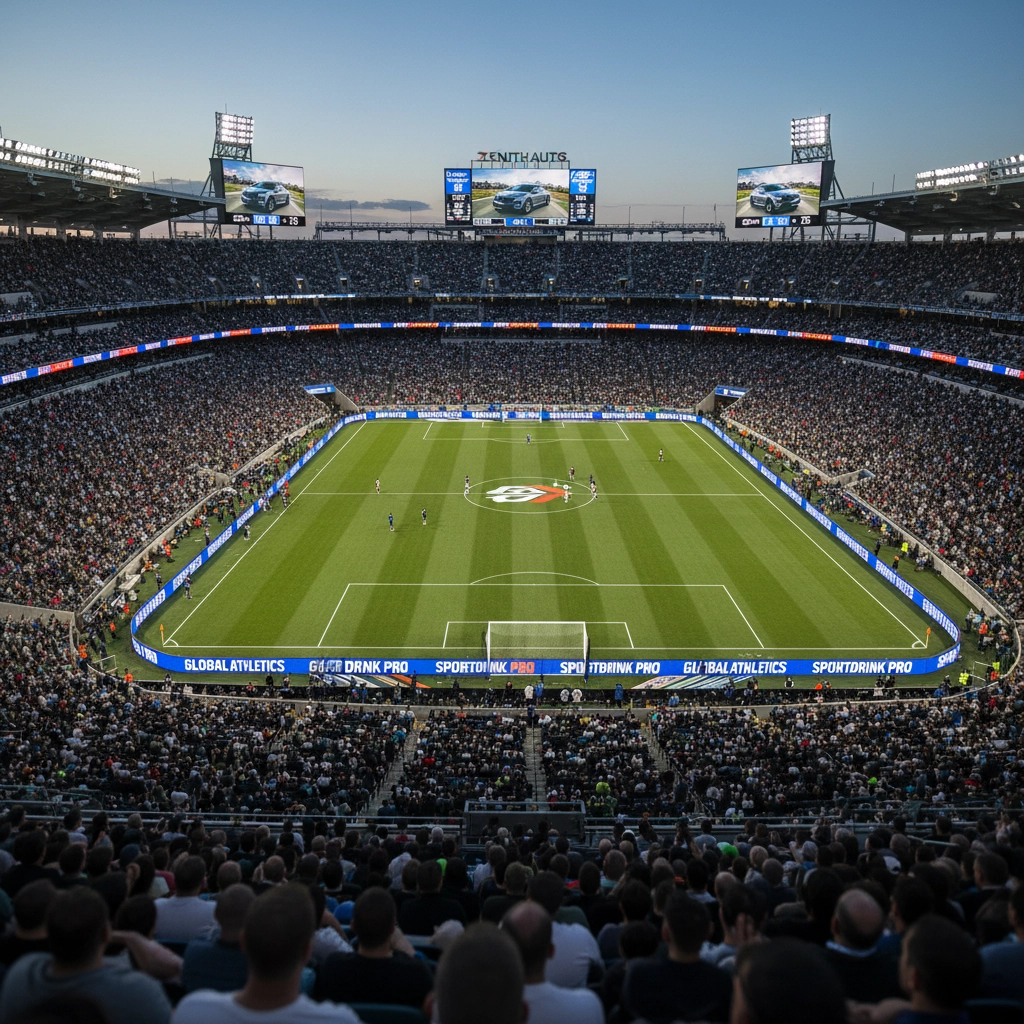
The Future Landscape of Stadium Advertising
The next phase of stadium advertising evolution involves artificial intelligence, augmented reality, and personalization technologies that will further differentiate digital from traditional formats. Predictive analytics will enable proactive content optimization based on fan behavior patterns and environmental factors.
Integration with 5G networks will support real-time content streaming and interactive experiences that blur the lines between physical and digital advertising. Venues will deploy facial recognition and sentiment analysis technologies to measure engagement more precisely and adjust content accordingly.
However, traditional stadium billboards will continue serving specific purposes where consistent, cost-effective brand visibility remains the primary goal. The most effective venue strategies balance traditional and digital formats based on campaign objectives, target audiences, and budget considerations.
Strategic Recommendations for Brands and Venues
Successful navigation of this transformed landscape requires strategic thinking about format selection, content development, and performance measurement. Brands should evaluate their sports marketing objectives and select the optimal mix of traditional and digital placements based on campaign goals rather than assuming digital solutions are universally superior.
Venues must invest in comprehensive digital infrastructure while maintaining selective traditional inventory for budget-conscious advertisers. The key lies in understanding when each format delivers optimal results and creating integrated packages that maximize advertiser value and fan experience.
The 25,000+ digital screens transforming sports venues represent a shift toward more sophisticated, data-driven marketing that adapts in real-time to maximize impact. This revolution is not eliminating traditional formats entirely but rather redefining their role within a more complex and capable advertising ecosystem.
For more insights on digital sports marketing strategies and the latest trends in programmatic DOOH campaigns, explore our comprehensive analysis at OOH Sports or contact Dan Kost, CEO, for strategic consultation.
Share this article:
📱 LinkedIn | 📘 Facebook | 📷 Instagram | 🐦 X
Ready to revolutionize your sports marketing strategy with digital displays? Connect with our team at +1 (970) 703-0102 or explore our latest campaign insights.