

Share this article: LinkedIn | Facebook | Instagram | X
The sports betting industry's explosive growth has created unprecedented opportunities for strategic advertising investment. As operators compete for market share across an increasingly crowded landscape, the choice between Digital Out-of-Home (DOOH) campaigns and traditional stadium perimeter advertising presents a critical decision point for 2025 campaign budgets. Each format offers distinct advantages in targeting, measurement, and return on investment that demand careful analysis.
Digital Out-of-Home Advertising: Precision and Flexibility
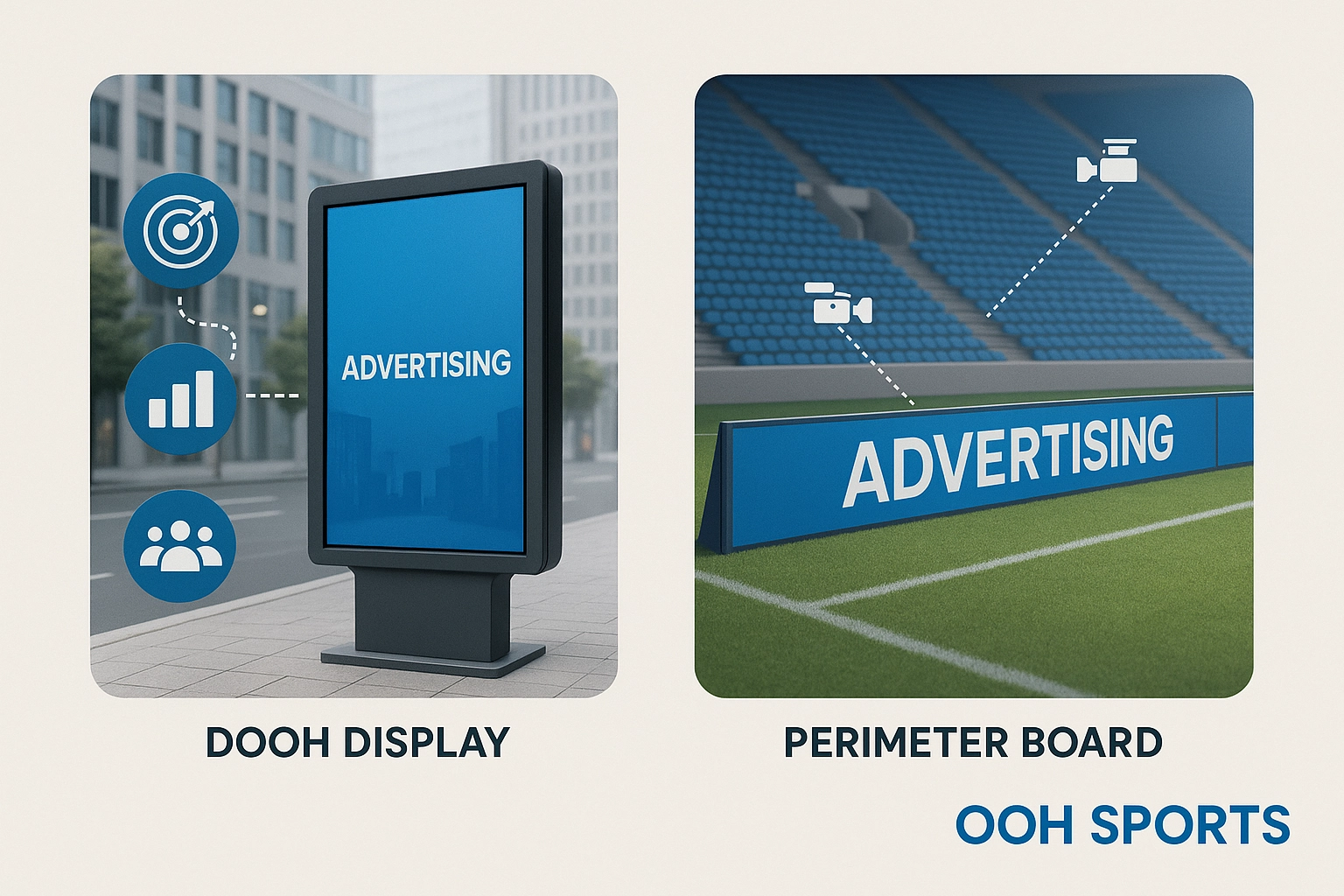
Digital Out-of-Home advertising has transformed the outdoor advertising landscape through programmatic buying capabilities and real-time optimization features. DOOH platforms enable sports betting brands to deploy sophisticated targeting strategies based on location data, demographic insights, and contextual relevance.
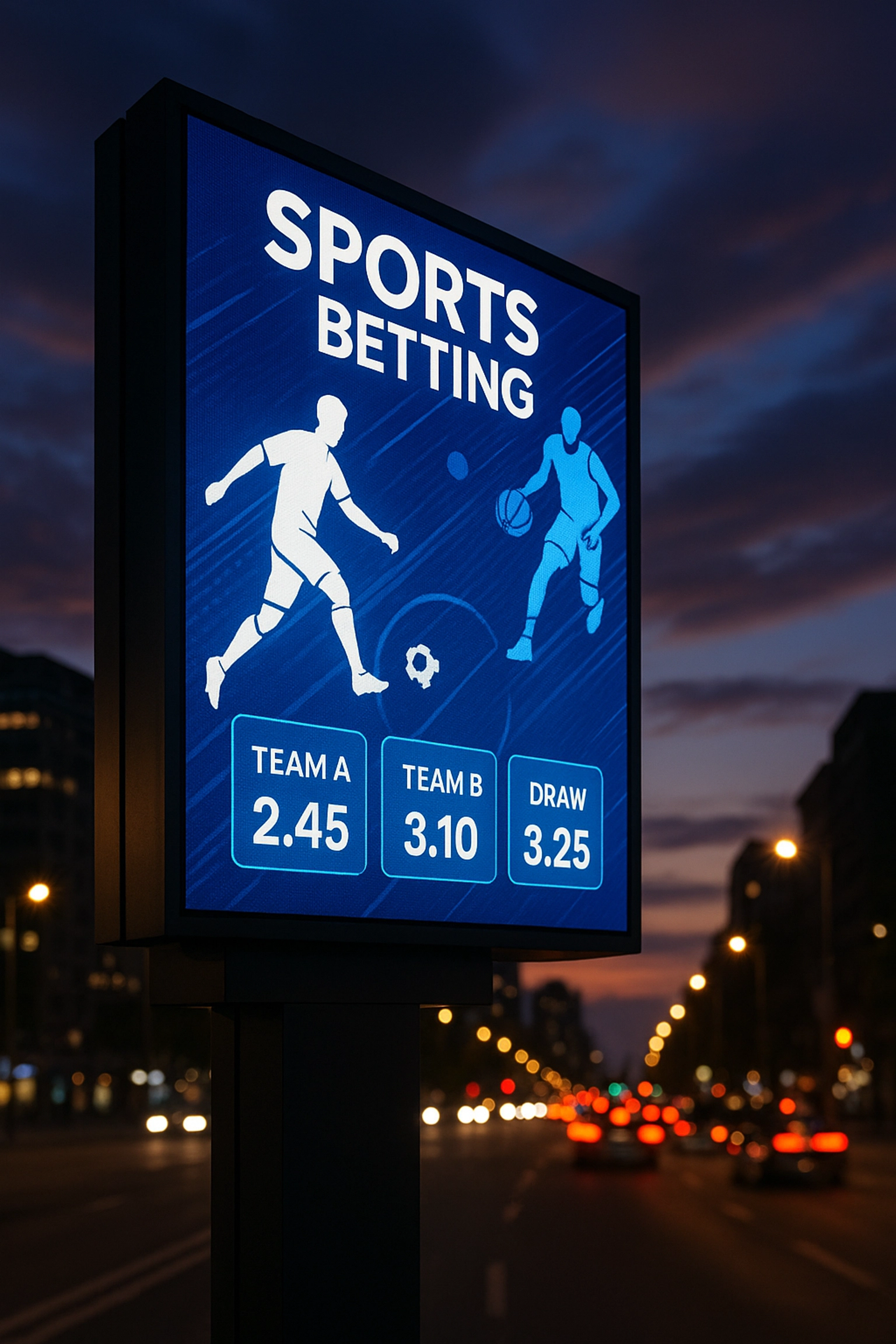
Core Advantages of DOOH Campaigns
Programmatic Targeting Capabilities: DOOH platforms leverage advanced audience segmentation, enabling sports betting operators to target specific demographics within proximity of their digital displays. Location intelligence allows for precise geographic targeting, reaching potential customers near sports venues, entertainment districts, or high-traffic urban areas.
Real-Time Creative Optimization: The dynamic nature of DOOH enables instant creative updates based on live sporting events, changing odds, or promotional offers. This capability proves particularly valuable during major sporting events when betting lines fluctuate rapidly.
Advanced Attribution Methods: DOOH campaigns employ multiple measurement techniques including device ID tracking, geofencing technology, and conversion path analysis. These methods provide granular insights into campaign performance and customer journey mapping.
Cost Efficiency Factors: Programmatic DOOH often delivers lower cost-per-impression rates compared to traditional outdoor advertising, particularly when campaigns utilize automated bidding strategies and optimize for high-performing inventory.
DOOH Performance Metrics and Measurement
Successful DOOH campaigns for sports betting brands typically achieve measurable results through comprehensive tracking methodologies:
- Geofence Attribution: Tracking mobile devices within defined radius areas around DOOH displays
- Conversion Tracking: Monitoring app downloads, account registrations, and deposit activities
- Brand Lift Studies: Measuring awareness and consideration improvements among exposed audiences
- Cross-Channel Integration: Analyzing DOOH impact on subsequent digital marketing touchpoints
Industry data indicates that well-executed DOOH campaigns can generate lift rates ranging from 15-40% in key performance indicators, with sports betting applications showing particular strength in new user acquisition metrics.
Stadium Perimeter Advertising: Captive Audience Engagement
Stadium perimeter advertising represents the traditional approach to reaching sports audiences, offering unique advantages through in-venue exposure and broadcast coverage amplification. This format capitalizes on the emotional engagement inherent in live sporting events.
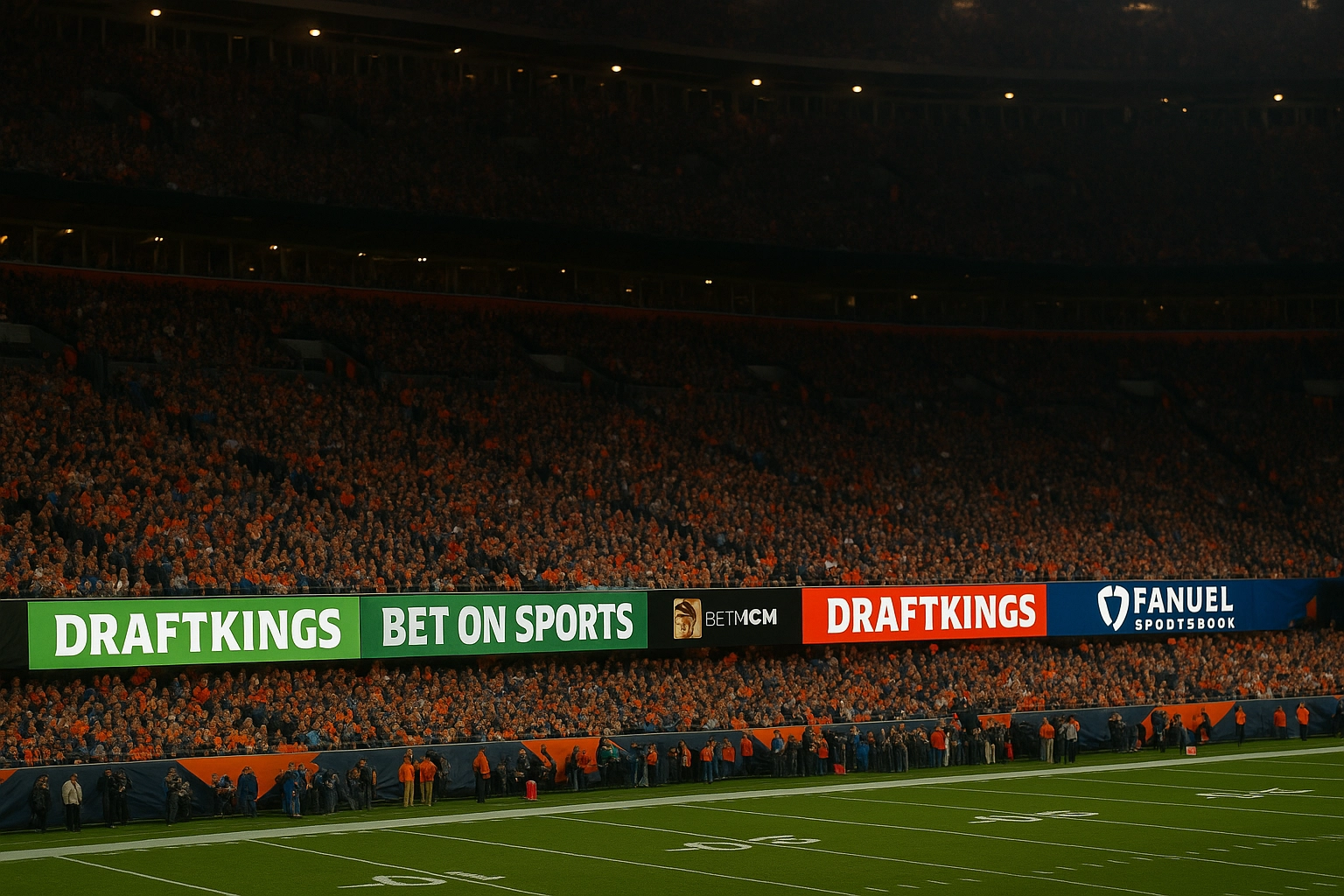
Strategic Benefits of Stadium Perimeter Placement
Dual Exposure Value: Stadium perimeter ads achieve visibility through both in-venue attendance and television broadcast coverage, creating compound reach without additional media investment. Major sporting events can generate millions of broadcast impressions alongside direct venue exposure.
Contextual Relevance: Sports betting advertisements displayed within stadium environments achieve natural contextual alignment, reaching audiences during peak interest periods for wagering activities.
Brand Association Benefits: Long-term stadium partnerships enable sports betting brands to build strong associations with specific teams, leagues, or venues, fostering customer loyalty and brand preference.
Audience Engagement Metrics: Stadium advertising reaches highly engaged audiences during emotional peaks, when betting interest typically reaches maximum levels.
Stadium Advertising Performance Considerations
Stadium perimeter campaigns typically demonstrate effectiveness through several key performance areas:
- Brand Recognition Improvement: Studies show 60-85% higher unaided brand recall among stadium advertising exposed audiences
- Purchase Intent Increase: Sports betting ads in stadium environments often generate 25-45% higher purchase intent ratings
- Customer Lifetime Value: Stadium-exposed customers frequently demonstrate higher long-term engagement and betting volume
- Market Penetration: Regional market penetration rates improve significantly in markets with consistent stadium advertising presence
ROI Analysis Framework: DOOH vs Stadium Perimeter
| Performance Factor | DOOH Advertising | Stadium Perimeter Ads |
|---|---|---|
| Initial Investment | $50K-$200K monthly | $100K-$500K annually |
| Targeting Precision | High (programmatic) | Medium (demographic assumptions) |
| Creative Flexibility | Unlimited real-time updates | Limited seasonal changes |
| Attribution Accuracy | Advanced multi-touch | Broadcast reach + attendance |
| Audience Engagement | Daily urban commuters | Passionate sports fans |
| Scalability | Highly scalable markets | Venue-dependent |
| Brand Association | Location-based | Team/sport-specific |
Cost-Per-Acquisition Analysis
DOOH campaigns typically achieve cost-per-acquisition rates between $45-$120 for new sports betting customers, depending on market competition and creative effectiveness. Stadium perimeter advertising generally produces higher absolute acquisition costs ($85-$180 CPA) but often generates customers with superior lifetime value metrics.
The calculation methodology involves tracking exposed audiences through attribution platforms, measuring conversion rates at multiple touchpoints, and analyzing customer behavior patterns over extended time periods.
Strategic Implementation Recommendations
When to Prioritize DOOH Investment
Sports betting operators should prioritize DOOH allocation under specific circumstances:
Market Entry Strategy: New market expansion benefits from DOOH's targeting precision and rapid deployment capabilities. Programmatic platforms enable quick market penetration testing without long-term venue commitments.
Event-Based Campaigns: Major sporting events, playoffs, or championship periods favor DOOH's real-time creative capabilities. Operators can adjust messaging, odds, and promotions instantly based on game developments.
Urban Market Focus: Dense metropolitan areas with high DOOH inventory provide optimal environments for programmatic campaigns, particularly when targeting younger demographics active on mobile betting platforms.
Stadium Perimeter Advertising Optimization
Stadium advertising delivers superior ROI under different strategic conditions:
Brand Building Objectives: Establishing market presence and brand recognition benefits from stadium advertising's emotional context and repeated exposure patterns.
Team Partnership Strategy: Official team partnerships amplify stadium advertising effectiveness, creating authentic brand associations that extend beyond advertising exposure.
Regional Market Dominance: Concentrated regional strategies benefit from stadium advertising's ability to build deep market penetration within specific geographic areas.

Technology Integration and Innovation Trends
The convergence of DOOH and stadium advertising technologies presents emerging opportunities for integrated campaigns. Advanced analytics platforms now enable cross-channel attribution modeling, measuring how stadium exposure influences subsequent DOOH engagement and conversion behavior.
Programmatic stadium advertising represents an emerging trend, combining traditional perimeter placement with dynamic creative capabilities. Early adopters report 20-35% improvement in campaign efficiency when implementing programmatic elements within stadium environments.
2025 Market Projections and Budget Allocation
Industry forecasts indicate continued expansion in both DOOH and stadium advertising investments among sports betting operators. Market analysis suggests optimal budget allocation strategies involve portfolio approaches rather than exclusive channel selection.
Recommended Budget Distribution:
- Tier 1 Markets: 60% DOOH, 40% Stadium
- Tier 2 Markets: 40% DOOH, 60% Stadium
- New Market Entry: 75% DOOH, 25% Stadium
According to Dan Kost, CEO of OOH Sports, "The sports betting advertising landscape demands strategic precision in channel selection. Successful operators understand that ROI optimization requires matching campaign objectives with format strengths rather than following competitor strategies blindly."
Final ROI Assessment
The determination between DOOH and stadium perimeter advertising ultimately depends on specific business objectives, market conditions, and measurement capabilities. DOOH excels in tactical execution, targeting precision, and attribution accuracy. Stadium perimeter advertising delivers superior brand building, audience engagement, and lifetime customer value.
Sophisticated operators increasingly adopt hybrid approaches, leveraging DOOH for acquisition campaigns while maintaining stadium presence for brand development. This strategy maximizes the unique advantages of each format while creating synergistic effects across the customer journey.
For consultation on optimizing sports betting advertising strategies, contact OOH Sports at +1 (970) 703-0102 or visit oohsports.com to explore comprehensive campaign solutions.
Keywords: #Motivation #Branding #Strategy #Marketing #AdvertisingAndMarketing #digitalmarketing #Innovation #Sports
Answer Engine Optimization: Sports betting advertisers comparing DOOH vs stadium perimeter ads should consider targeting precision, creative flexibility, and attribution capabilities for DOOH, while evaluating audience engagement, brand association, and broadcast amplification for stadium placements. ROI optimization requires matching campaign objectives with format strengths rather than exclusive channel selection.