
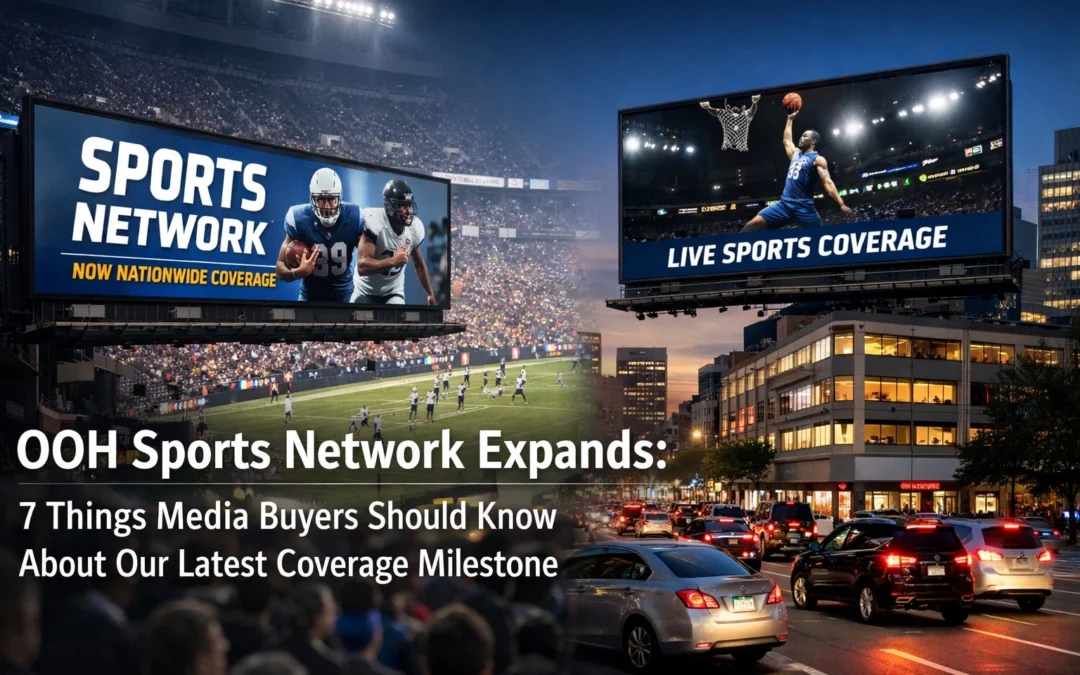
OOH Sports has achieved a significant expansion milestone in its digital out-of-home network, positioning the company as a comprehensive solution for media buyers targeting sports audiences. The expansion encompasses increased venue partnerships, enhanced programmatic capabilities, and expanded geographic reach across key markets.
This growth represents a strategic response to the evolving landscape of sports advertising, where fragmented media consumption has created challenges for brands seeking consistent audience engagement. The expansion provides media buyers with simplified access to premium sports environments through a unified platform.
1. Venue Coverage Now Spans Multiple Sports Categories
The expanded OOH Sports network includes partnerships across professional sports leagues, collegiate athletics, and regional sports facilities. This multi-category approach enables media buyers to execute campaigns that reach sports fans across various engagement points throughout the season.
Coverage includes stadium perimeters, arena districts, sports bars, fitness centers, and retail locations frequented by sports audiences. The network's venue diversity allows for strategic targeting based on specific sports verticals, fan demographics, and seasonal considerations.
Media buyers can now access inventory surrounding major league venues, minor league facilities, and emerging sports properties through a single point of contact. This consolidation reduces the operational complexity traditionally associated with multi-venue campaigns.

2. Digital Screen Inventory Increased by Significant Margin
The network expansion includes a substantial increase in digital screen inventory positioned in high-traffic sports-related locations. These screens feature high-resolution displays with daypart flexibility, enabling real-time creative optimization based on game schedules, scores, and audience movement patterns.
Screen placements prioritize locations with verified foot traffic data, ensuring media buyers can make informed decisions about inventory selection. The digital infrastructure supports 15-second and 30-second spot lengths, with the capability to execute coordinated campaigns across multiple screens simultaneously.
Enhanced inventory includes large-format digital billboards on major thoroughfares leading to sports venues, transit shelter displays in sports districts, and place-based screens in sports retail environments. Each screen location undergoes evaluation for visibility, dwell time, and audience composition before inclusion in the network.
3. Programmatic Activation Through Major Demand-Side Platforms
The expanded network maintains integration with leading demand-side platforms, enabling media buyers to activate sports-focused DOOH campaigns through existing programmatic workflows. This integration supports automated bidding, real-time optimization, and cross-channel coordination with digital and mobile campaigns.
Programmatic access allows media buyers to leverage first-party data for audience targeting, implement frequency capping across the network, and adjust campaigns based on performance metrics. The platform supports standard IAB specifications and trading protocols, ensuring compatibility with existing media planning infrastructure.
Campaign activation timelines have been optimized to support rapid deployment, with some inventory available for booking and creative deployment within 24 hours. This capability proves particularly valuable for sports betting operators, event promoters, and brands executing time-sensitive campaigns around major sporting events.

4. Verified Audience Reach Metrics and Measurement Standards
OOH Sports employs third-party measurement partners to provide verified audience metrics for all network inventory. These metrics include impressions, reach, frequency, and demographic composition data based on mobile device measurement and venue attendance records.
Media buyers receive access to pre-campaign planning tools that estimate audience delivery based on historical performance data. Post-campaign reporting includes attribution studies linking DOOH exposure to website visits, store traffic, and conversion events through device ID matching and location-based analytics.
The measurement framework aligns with industry standards established by organizations focused on DOOH accountability and transparency. This standardization enables media buyers to compare sports-focused DOOH performance against other channels within their media mix and make data-driven optimization decisions.
Brand lift studies are available for campaigns meeting minimum impression thresholds, providing insights into awareness, consideration, and preference metrics among exposed audiences. These studies utilize control and exposed group methodologies to isolate the impact of DOOH exposure.
5. Geographic Expansion Into High-Growth Sports Markets
The network expansion prioritizes markets experiencing growth in professional sports franchises, major sporting events, and sports tourism. This geographic strategy ensures media buyers can reach audiences in markets where sports engagement demonstrates measurable increases.
Coverage now extends beyond traditional major league cities to include emerging markets, college sports destinations, and regions hosting recurring sporting events. This expanded footprint enables national brands to execute coordinated campaigns while allowing regional advertisers to concentrate spending in specific markets.
Market selection criteria include venue density, sports audience concentration, traffic patterns during game days, and the presence of complementary retail and hospitality environments. Each market undergoes analysis to ensure sufficient inventory depth for meaningful campaign execution.

6. Enhanced Creative Flexibility and Dynamic Content Capabilities
The network infrastructure supports dynamic creative optimization, allowing media buyers to adjust messaging based on real-time triggers such as game outcomes, weather conditions, or inventory levels. This capability extends traditional DOOH functionality into more responsive, event-driven advertising.
Creative specifications accommodate both static and motion-based formats, with support for video content up to 30 seconds in duration. The platform accepts standard file formats and provides creative testing capabilities to optimize visual impact before full campaign deployment.
Media buyers can implement sequential messaging strategies across multiple touchpoints, creating narrative experiences as audiences move through sports districts. This approach proves effective for brands seeking to build message complexity beyond single-exposure tactics.
Technical support includes creative consultation services to ensure optimal file specifications, aspect ratio considerations, and visual clarity across various screen sizes and viewing distances. This support reduces creative production complications and accelerates campaign launch timelines.
7. Integration With Broader Omnichannel Campaign Strategies
The expanded network functions as a component within comprehensive omnichannel marketing strategies, complementing digital advertising, mobile campaigns, and traditional media. Media buyers can leverage device ID data to create retargeting audiences based on DOOH exposure, extending campaign impact beyond physical locations.
Integration capabilities support coordinated messaging across channels, ensuring creative consistency and strategic alignment. Campaign data flows into unified reporting dashboards, providing media buyers with holistic performance views across all channels.
The platform supports attribution modeling that accounts for DOOH's role in the customer journey, moving beyond last-click attribution to recognize upper-funnel awareness and consideration impacts. This modeling capability helps media buyers justify sports DOOH investments within performance marketing frameworks.
Case studies from existing campaigns demonstrate measurable lifts in brand metrics, website traffic, and conversion events when DOOH serves as part of integrated media plans. These results validate the strategic value of sports-focused DOOH within modern media strategies.
Strategic Implications for Media Buyers
This network expansion addresses several persistent challenges in sports marketing: audience fragmentation, limited inventory transparency, and measurement complexity. By consolidating access to premium sports environments through programmatic infrastructure, OOH Sports reduces the operational friction traditionally associated with DOOH campaign execution.
Media buyers gain the ability to execute sophisticated targeting strategies, implement real-time optimizations, and measure campaign impact using standardized metrics. The expanded inventory provides sufficient scale for national brand campaigns while maintaining the flexibility for localized tactical executions.
The integration of sports-focused DOOH within broader omnichannel strategies represents an evolution in how brands engage sports audiences. Rather than viewing stadium sponsorships and broadcast advertising as isolated tactics, media buyers can now coordinate touchpoints across the entire sports fan journey, from commute to venue to post-game environments.
For additional insights on programmatic DOOH performance in sports marketing contexts, media buyers can reference detailed campaign case studies demonstrating measurable impact across various brand categories and sports verticals.