

Major Network Milestone Transforms Sports Marketing Landscape
OOH Sports has reached a significant infrastructure milestone with the expansion of its digital out-of-home advertising network to more than 25,000 screens nationwide. This expanded footprint positions the company as a leading provider of stadium perimeter advertising solutions, offering brands unprecedented access to sports fans during the moments that matter most.
The network expansion represents a fundamental shift in how advertisers connect with sports audiences. Rather than limiting exposure to in-stadium signage alone, OOH Sports' digital infrastructure creates a comprehensive engagement zone that surrounds major sporting venues, reaching fans throughout their entire game day experience.
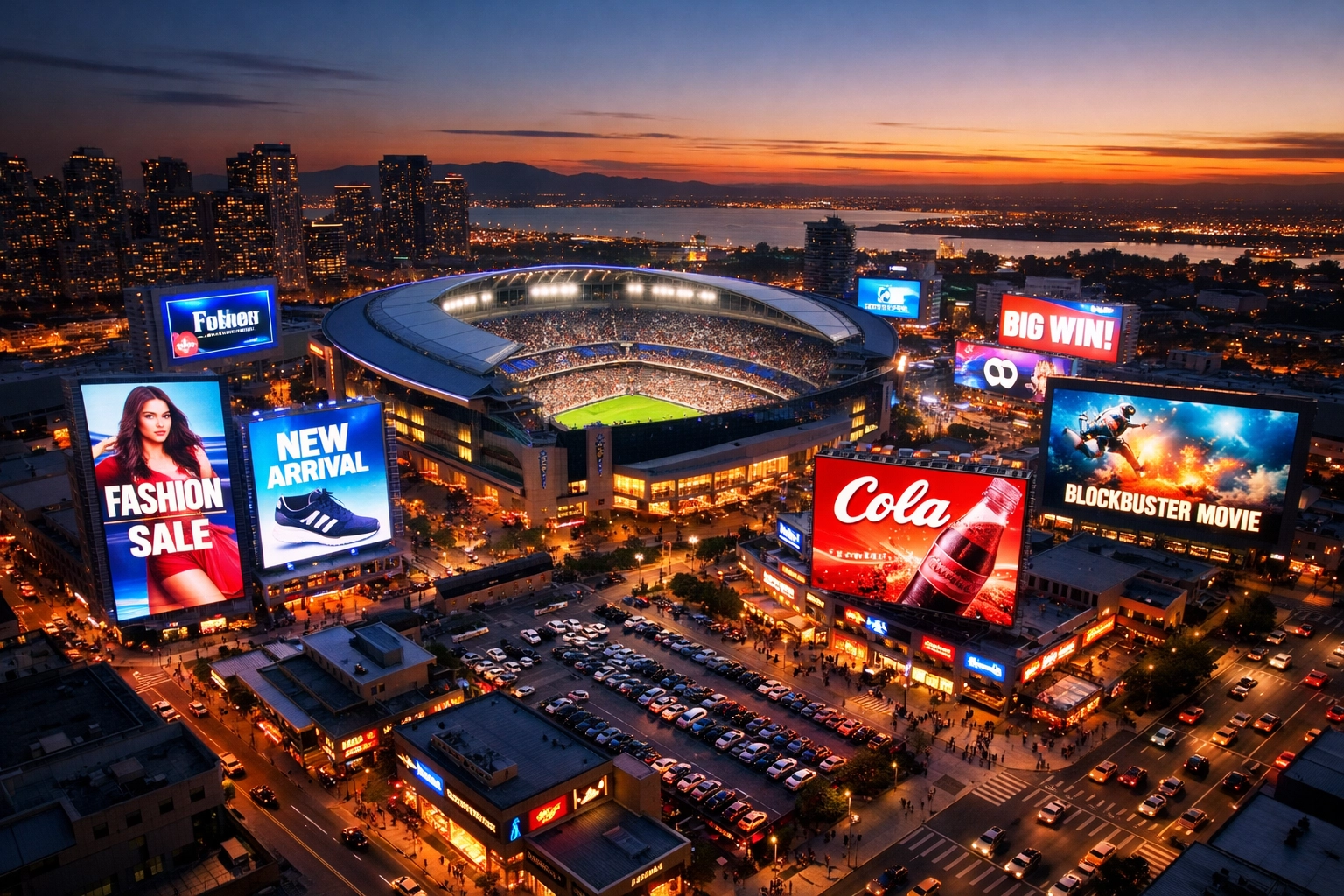
Network Scale and Geographic Coverage
The 25,000-screen network spans major metropolitan markets across North America, strategically positioned within a three-mile radius of professional and collegiate sports venues. This geographic targeting approach ensures that advertising messages reach fans during peak engagement periods, from pre-game excitement through post-game celebrations.
The network includes digital billboards, transit displays, and street-level screens in high-traffic areas surrounding stadiums and arenas. Coverage extends across multiple sports leagues and encompasses venues hosting football, basketball, baseball, hockey, and soccer events throughout the season.
Key network characteristics include:
- Strategic placement in approach routes to stadiums and arenas
- Coverage in entertainment districts surrounding sports venues
- Digital screens positioned in high-traffic pedestrian zones
- Transit corridor placements capturing commuter and fan traffic
- Integration with parking areas and fan gathering locations
Technology Infrastructure and Capabilities
The expanded network operates on a programmatic digital out-of-home platform, enabling advertisers to deploy campaigns with precision timing and geographic specificity. This technology infrastructure supports real-time campaign adjustments, dynamic creative optimization, and sophisticated audience targeting capabilities.
Programmatic activation allows brands to trigger advertising displays based on game schedules, team performance, weather conditions, and other relevant factors. The system processes campaign parameters and delivers appropriate creative content across the network automatically, ensuring optimal message delivery without manual intervention.
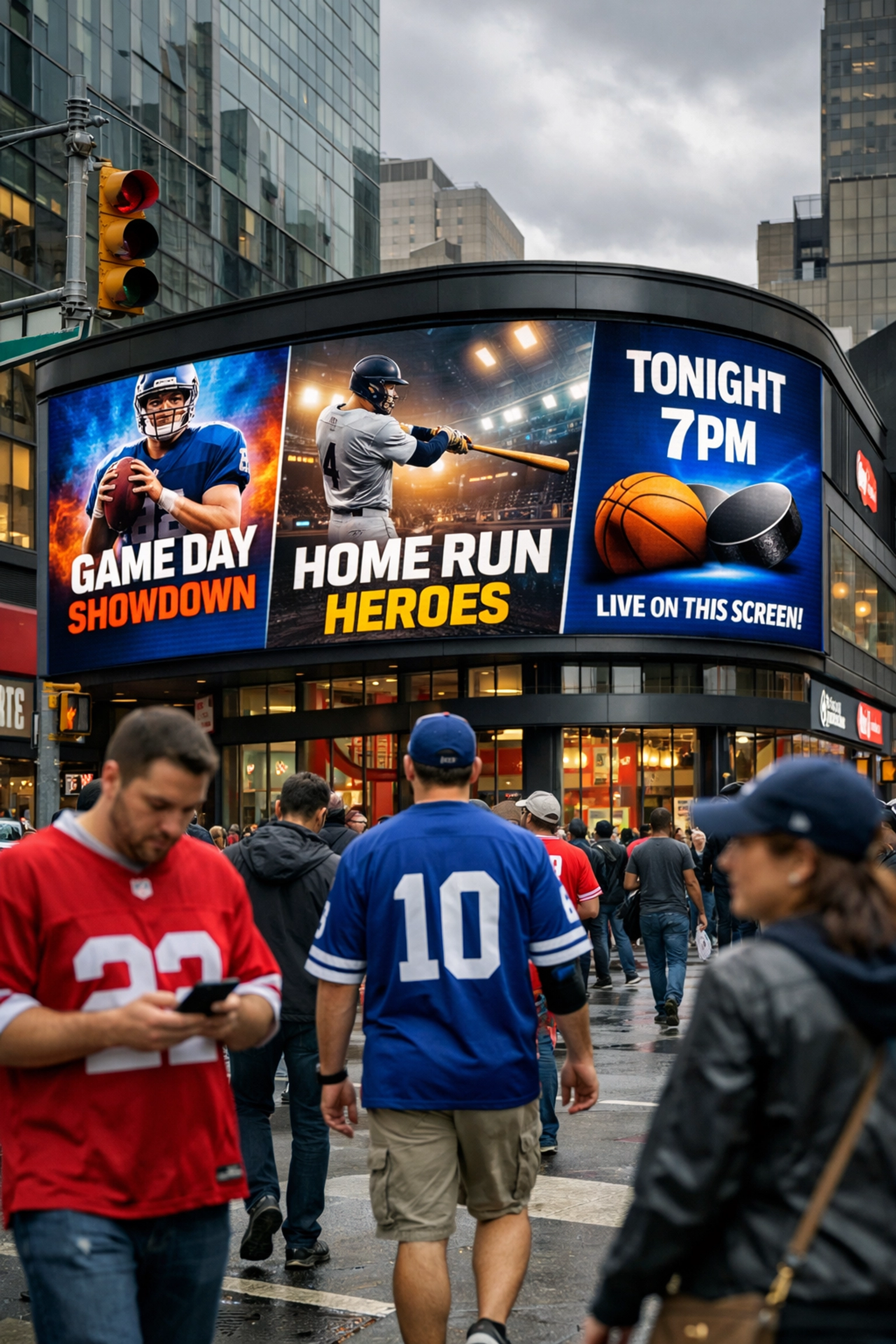
The technology platform supports multiple creative formats, including static imagery, video content, and sequential messaging. Advertisers can deploy different creative executions across network segments, tailoring messages to specific audience demographics or geographic contexts.
Advanced targeting capabilities include:
- Game day activation triggered by event schedules
- Team-specific targeting for rival market matchups
- Daypart optimization for pre-game and post-game periods
- Weather-responsive creative adjustments
- Performance-based dynamic content updates
Strategic Market Positioning
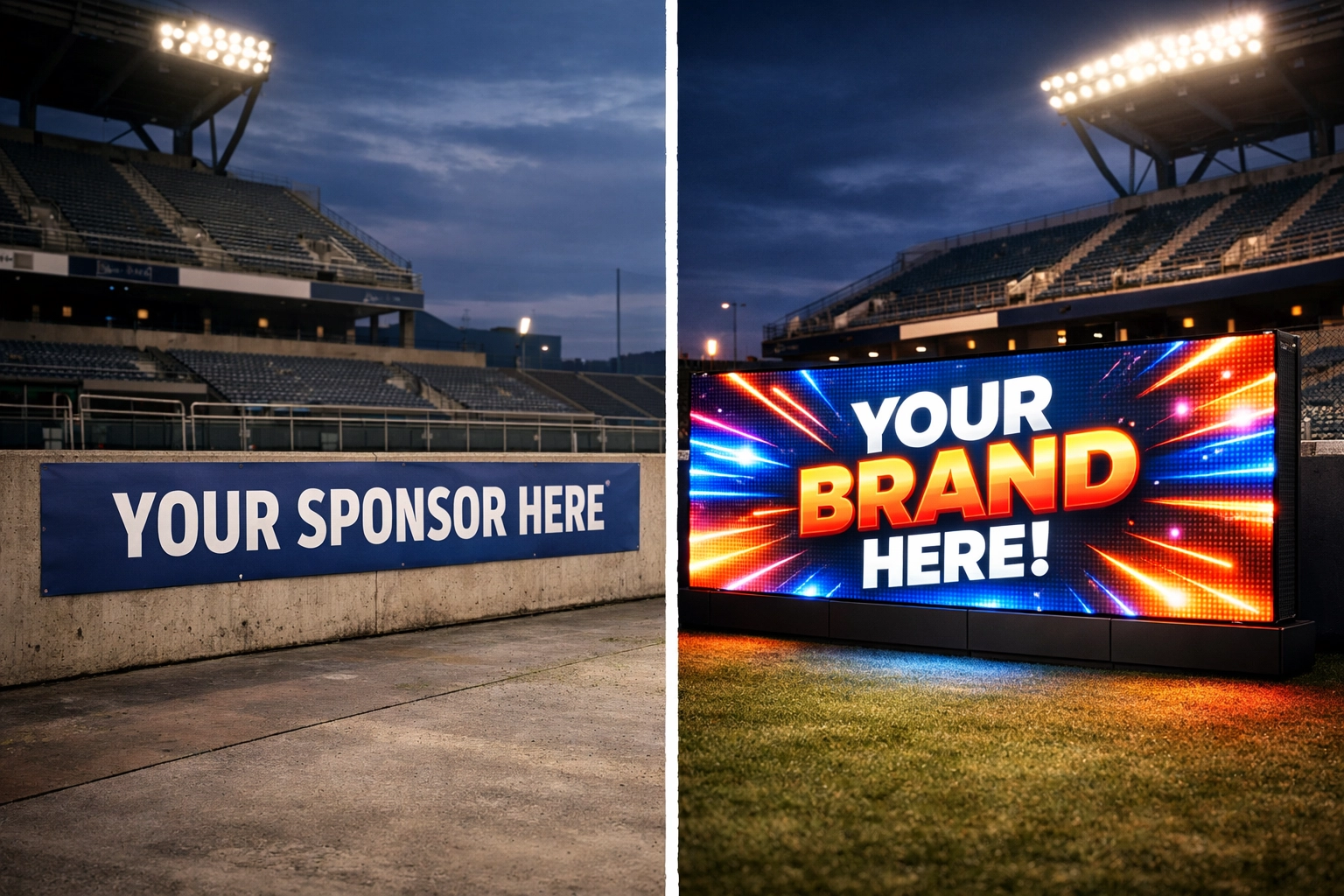
The network expansion addresses a critical gap in traditional sports marketing approaches. While stadium sponsorships and in-venue signage reach captive audiences, these tactics often carry significant cost barriers and limited flexibility. OOH Sports' digital network provides brands with comparable audience access at more accessible investment levels.
Stadium perimeter advertising delivers dual advantages for brand visibility. Fans traveling to venues encounter messaging during high-engagement moments when sports enthusiasm peaks. Additionally, the surrounding digital infrastructure captures audiences who participate in game day activities without attending events directly, including bar and restaurant patrons, local residents, and entertainment district visitors.
This expanded reach proves particularly valuable for brands targeting sports demographics without requiring full stadium partnership commitments. The programmatic nature of the platform allows advertisers to test markets, adjust strategies, and scale campaigns based on performance data.
Impact on Traditional Stadium Advertising Models
The growth of digital perimeter networks challenges conventional stadium advertising economics. Traditional venue sponsorships typically involve long-term contracts, substantial financial commitments, and limited creative flexibility. Digital out-of-home alternatives provide comparable audience reach with significantly greater agility and measurement capabilities.

Brands can now activate sports-themed campaigns with shorter lead times and more precise budget controls. The ability to deploy messaging around specific games, rival matchups, or playoff periods provides strategic advantages that static venue signage cannot match. Additionally, the broader geographic footprint extends brand exposure beyond stadium walls, capturing audiences throughout the surrounding community.
The technology also enables multi-market coordination, allowing national brands to execute consistent messaging across multiple cities simultaneously while maintaining the flexibility to customize creative elements for local contexts. This combination of scale and specificity represents a significant advancement in sports marketing capabilities.
Measurability and Performance Tracking
The digital infrastructure supporting the 25,000-screen network includes comprehensive measurement capabilities. Campaign performance tracking encompasses impression delivery verification, audience exposure metrics, and foot traffic attribution analysis. These measurement tools provide advertisers with detailed performance data that traditional out-of-home formats struggle to deliver.
Attribution methodology connects advertising exposure to subsequent consumer behaviors through mobile device tracking and location analytics. The system identifies devices exposed to campaign messaging and tracks movement patterns, enabling measurement of venue visits, retail location traffic, and other conversion behaviors.
Performance measurement capabilities include:
- Verified impression delivery across network screens
- Device exposure tracking and audience reach analysis
- Foot traffic attribution to specific locations
- Brand lift measurement through partnership studies
- Multi-touch attribution across channel combinations
- Campaign frequency and recency optimization
Advertiser Applications and Use Cases
The expanded network serves diverse advertiser categories with varying objectives. Consumer brands leverage game day activation to drive immediate purchase behaviors, directing fans toward retail locations, restaurants, or product experiences. Automotive advertisers target sports enthusiasts with model launches and promotional offers. Entertainment properties promote content releases aligned with sports audiences.
Local businesses benefit particularly from the perimeter approach, as screens positioned near venues drive foot traffic to nearby establishments. Restaurants, bars, retail stores, and service providers can activate targeted messaging during specific games or throughout entire seasons, capturing audiences already present in their geographic markets.
National brands utilize the network for broader awareness campaigns, leveraging sports enthusiasm to amplify messaging impact. The ability to coordinate national campaigns while maintaining local market flexibility enables sophisticated multi-market strategies that align with regional team followings and local market dynamics.
Future Network Development
The achievement of 25,000 screens represents a foundation for continued expansion rather than a final destination. The company continues evaluating additional markets, venue partnerships, and screen locations to extend network reach. Future development priorities include enhanced screen formats, expanded venue coverage, and integration with emerging advertising technologies.
The evolution of programmatic digital out-of-home continues accelerating, with improved targeting capabilities, enhanced creative formats, and more sophisticated measurement methodologies emerging regularly. OOH Sports' expanded infrastructure positions the company to incorporate these advancements as the technology landscape evolves.
Industry Implications
The growth of digital perimeter networks signals broader shifts in sports marketing allocation strategies. As brands seek more flexible, measurable, and cost-effective alternatives to traditional stadium partnerships, programmatic digital out-of-home presents increasingly compelling value propositions.
The expanded network demonstrates that effective sports audience engagement need not require exclusive venue relationships or long-term sponsorship commitments. Brands can achieve meaningful connection with sports fans through strategic placement, precise timing, and relevant creative messaging delivered via digital infrastructure surrounding the live event experience.
This evolution benefits the broader sports marketing ecosystem by creating new inventory sources, expanding advertiser participation, and introducing greater competition into markets historically dominated by traditional venue partnerships. The result is a more dynamic, accessible, and performance-oriented advertising landscape that serves brands, venues, and audiences more effectively.
For more information about stadium perimeter advertising opportunities and programmatic digital out-of-home capabilities, visit OOH Sports or explore additional insights on the OOH Sports blog.