
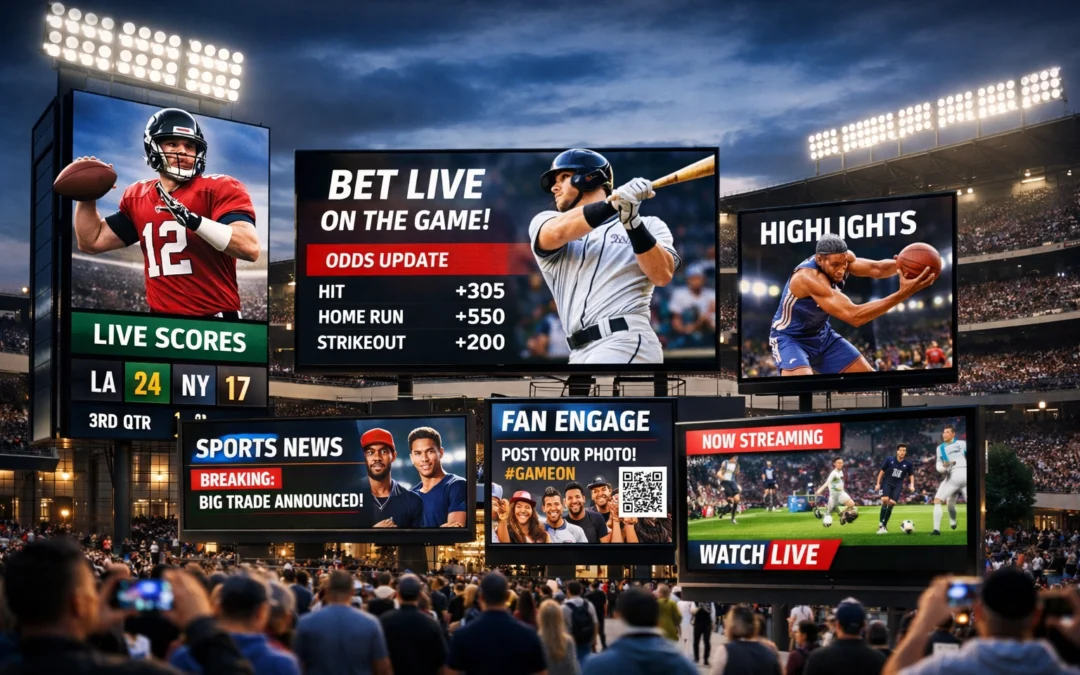
The landscape of sports advertising is shifting faster than a breakaway on the ice. For brands looking to capture the attention of passionate fans, the traditional playbook is being rewritten by Digital Out-of-Home (DOOH) technology. Sports DOOH represents a unique intersection of high-energy environments, long dwell times, and cutting-edge data capabilities.
As the industry moves toward a future where DOOH sports advertising is projected to reach significant global milestones, staying ahead of the curve is essential. Here are the 10 key trends currently shaping the world of sports DOOH.

1. Explosive Network Expansion
The physical footprint of digital screens is growing at an unprecedented rate. OOH Sports has reached a milestone of over 25,000 digital screens strategically positioned across the nation. This expansion is not just about quantity. It is about strategic placement in environments where sports fans naturally congregate. By focusing on sports bars, entertainment districts, and fitness centers, the network ensures that brand messages are seen during peak moments of engagement. This massive scale allows advertisers to execute national campaigns while maintaining the local relevance necessary for sports marketing.
2. Programmatic Dominance
The way sports media is bought and sold is undergoing a digital transformation. Programmatic DOOH is quickly becoming the standard, with projections indicating it will soon account for nearly half of all OOH ad spending. This shift is driven by the demand for automation, flexibility, and measurable outcomes. Programmatic platforms allow for more efficient media buying, enabling brands to pivot their strategies based on real-time data rather than relying on static, long-term contracts. This adoption is particularly visible in omnichannel campaigns that integrate DOOH with mobile and social media efforts, as seen in recent spotlights on StackAdapt DSP.

3. Real-Time Campaign Responsiveness
In the world of sports, things change in a heartbeat. A last-minute goal, a sudden injury, or an underdog victory can completely shift the mood of a crowd. Modern DOOH technology allows brands to adjust campaigns in real time based on these live events. If a specific team wins a playoff game, ads can immediately switch to congratulatory messaging or limited-time offers. This level of responsiveness ensures that the advertising feels like part of the fan experience rather than an interruption.
4. Dynamic Creative Optimization (DCO)
Dynamic Creative Optimization (DCO) takes real-time responsiveness a step further by automating the creative process. Advertisers can now instantly adapt messaging to match real-world triggers, such as weather changes, game scores, or even crowd density. For example, a beverage brand might display a refreshing iced tea ad when the temperature spikes or a celebratory message immediately after a home team victory. This relevance helps brands cut through the noise and connect with fans on a more personal level.
5. Geofencing and Behavioral Targeting
Precision is the name of the game in modern advertising. Advanced targeting uses mobile device data and geofencing around high-intent zones to activate ads when fan engagement is at its peak. These zones include stadiums, airports, transit hubs, and fan zones. By identifying where fans are and how they are moving, DOOH platforms can deliver highly localized content that resonates with the specific audience in that area. This ensures that the right message reaches the right person at the right time.
6. Multi-Venue Audience Reach
The fan journey does not begin and end at the stadium gate. Digital screens are now deployed across a diverse range of venue categories, including bowling alleys, golf venues, and fitness facilities. This multi-venue approach enables a consistent brand presence throughout the customer journey. Whether a fan is grabbing a drink at a sports bar or working out at the gym, the brand remains top-of-mind. This strategy is central to the Sportrons network, which brings high-impact digital displays to the places where people play and watch.

7. Interactive and Shoppable Ads
The line between awareness and conversion is blurring. Audience-based creative now delivers personalized messages to different viewer segments, while interactive video ads allow for direct engagement. Some of the latest innovations include shoppable ads where audiences can add products directly to a digital cart using a remote click or a QR code during a broadcast. This turns a passive viewing experience into an active shopping opportunity, significantly shortening the sales funnel for consumer goods.
8. Extended Dwell Time Advantage
One of the most powerful aspects of sports DOOH is the concept of dwell time. Patrons at sports venues, particularly sports bars and entertainment complexes, often stay for two to four hours during a broadcast. This creates multiple impression opportunities for a single viewer. Unlike a roadside billboard that might get three seconds of attention, a screen in a sports venue has the luxury of time. This leads to higher message retention and a deeper brand connection, providing a distinct advantage over traditional outdoor advertising.
9. Closed-Loop Measurement and Attribution
For a long time, the impact of OOH was difficult to quantify. That has changed. Today, the technology stack integrates with major ad tech platforms and measurement providers to offer robust attribution analysis. By using mobile device IDs, brands can connect DOOH exposure to real-world outcomes, such as website visits, app downloads, or in-store purchases. Case studies have shown significant lifts in purchase consideration and brand image through these data-driven insights. For instance, White Claw's programmatic campaign saw a 74 percent lift in purchase consideration, proving the efficacy of this measured approach.

10. Post-Event Behavioral Analytics
The data collection does not stop when the game ends. Advertisers are now using post-event behavioral analytics to track consumer behavior long after they have left the venue. By analyzing mobile-location data, brands can measure increases in footfall at retail locations or follow the customer journey across a host city during major events. This long-term view helps advertisers understand the true ROI of their campaigns and refine their strategies for future sporting seasons.
Conclusion
The sports DOOH sector is no longer just about putting a logo on a screen. It is about data, timing, and integration. From the massive expansion of digital networks to the precision of programmatic buying and the depth of post-event analytics, these trends are defining a new era of sports marketing.
For brands looking to navigate this evolving landscape, the focus must remain on providing value to the fan experience while leveraging the technological tools available to prove performance. To learn more about how to implement these strategies, visit the OOH Sports marketing page or contact the team to discuss your next campaign.
The future of sports advertising is digital, dynamic, and data-driven. By staying informed on these trends, advertisers can ensure they are not just watching the game from the sidelines but are an active part of the winning play.