
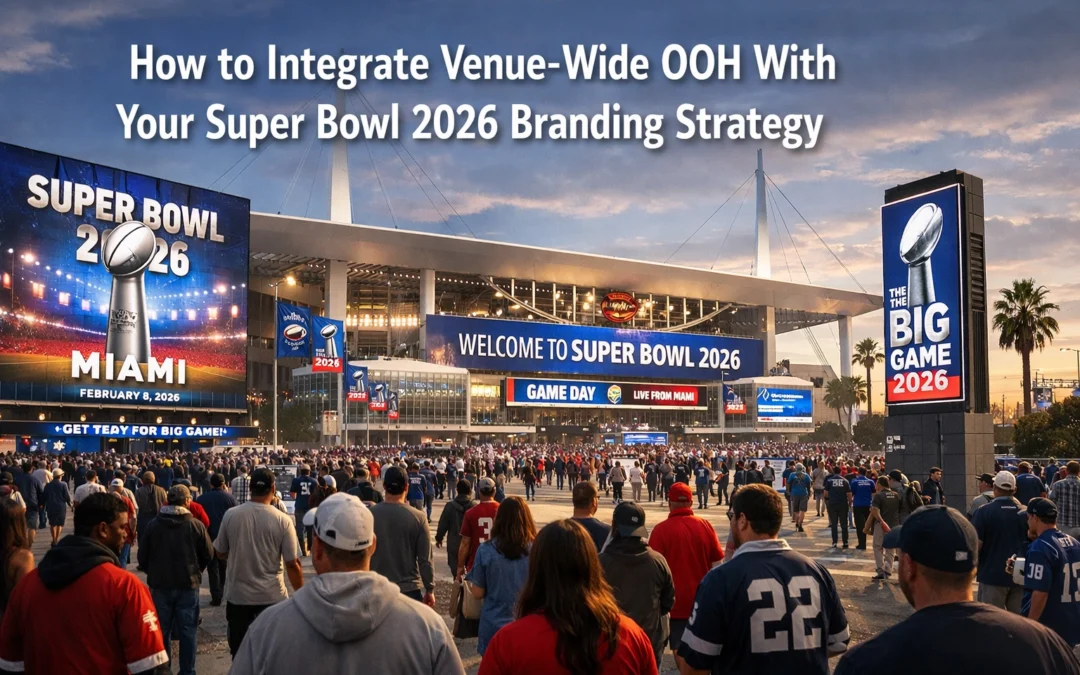

The Super Bowl is more than just a championship game. It is the pinnacle of American culture, entertainment, and advertising. As the world turns its eyes toward the 2026 festivities, brands are looking for ways to cut through the noise. Standing out in a sea of commercials is tough, but OOH Sports has spent the last 40 years mastering the art of the physical impression. Led by CEO Dan Kost, OOH Sports has transitioned from traditional billboards to a comprehensive, venue-wide advertising powerhouse that dominates the fan experience from the moment they leave their hotels until they take their seats.
This Super Bowl 2026 newsletter explores how to leverage 40 years of industry leadership to create a branding strategy that is impossible to ignore.
Forty Years of Advertising Leadership
Advertising has changed significantly since 1986. We have moved from static paper posters to programmatic digital screens that update in real time. Throughout these four decades, OOH Sports has remained at the forefront of the industry. The vision of Dan Kost has always been simple: reach the fans where they are most excited. In the context of the Super Bowl, that excitement is not just found on a television screen. it is found in the streets, the transit hubs, and the stadium concourses.
The expertise built over 40 years allows for a sophisticated understanding of crowd psychology and movement. It is not just about placing an ad. it is about owning the environment. By integrating venue-wide Out-of-Home (OOH) strategies, brands can achieve a level of frequency and reach that digital-only campaigns simply cannot match.
Mapping the Three Primary Fan Flows
A successful Super Bowl strategy begins with understanding how people move. For the 2026 game, OOH Sports identifies three primary fan flows that brands must capture to ensure total brand recall.
- The Arrival Routes: This includes major airports, train stations, and highway corridors. These are the first touchpoints where fans enter the "Super Bowl Bubble."
- The Entertainment Districts: Areas surrounding the stadium, including fan zones, official NFL experiences, and high-traffic sports bars. Fans spend hours here before the gates even open.
- The Stadium Approach: The final 60 minutes before kickoff are the most intense. This is the path from the parking lots and rideshare drop-offs to the stadium gates.

By placing messaging along these specific flows, a brand becomes a constant companion to the fan. Instead of a single impression, the brand achieves a "surround-sound" effect. This strategic positioning ensures that by the time the national anthem begins, your brand is already a familiar part of the day's narrative.
Total Venue Coverage: From Floors to Billboards
One of the most effective ways to integrate OOH with a Super Bowl strategy is to think beyond the vertical plane. While large-format billboards are essential for scale, the most intimate and high-impact impressions often happen closer to the ground.
Venue-wide coverage means utilizing every available surface. This includes:
- Floor Graphics: Often overlooked, floor graphics in convention centers and transportation hubs have a high dwell time. They guide fans through the venue while keeping the brand underfoot.
- Transit Shelters and Kiosks: These capture the attention of pedestrians and those waiting for public transport. They are perfect for detailed messaging and QR code integration.
- Concourse Digital Displays: Once inside the stadium, the advertising should not stop. Concourse screens and concession area displays reach fans when they are taking a break from the action but are still highly engaged.
- Digital Billboards: High-impact LEDs that can change content based on the time of day. For example, a brand could show breakfast specials at 8 AM and switch to post-game celebratory messaging by evening.
This multi-format environmental ownership creates a cohesive ecosystem. When a brand uses a mix of Sportrons and street-level assets, they cover every possible angle of the fan journey.
The Power of Visual Impact
Seeing is believing. To understand the scale of what is possible with venue-wide OOH, watch how these placements come to life in high-energy environments:
https://www.youtube.com/watch?v=l6J-0zileKE
This video demonstrates how movement and color can transform a standard venue into a branded experience. For the Super Bowl, this level of visual dominance is the difference between being a sponsor and being the highlight of the weekend.
The Strategy of Sequenced Messaging
A common mistake in Super Bowl branding is repeating the same creative over and over. With 40 years of data, OOH Sports recommends a sequenced approach: Awareness, Action, and Proof.
During the week leading up to the game, the messaging should focus on awareness. As the weekend progresses, the call to action should become more immediate. On game day, the messaging should reflect the excitement of the moment. This strategy has been proven to work in various contexts, from Nike's NYC Marathon takeover to seasonal holiday campaigns.

By using clear logos, high-contrast colors, and minimal copy, brands ensure their message is legible from a distance and at high speeds. Whether a fan is walking past a kiosk or driving past a billboard, the message hits home instantly.
Connecting Physical Placements With Digital Engagement
In 2026, OOH does not exist in a vacuum. It is the physical anchor for a digital world. By embedding QR codes on transit ads or displaying branded hashtags on digital billboards, brands can drive mobile engagement in real time.
Imagine a fan waiting for a rideshare outside the stadium. They see a digital billboard featuring a live social media feed of fan photos. They are encouraged to post their own selfie with a specific hashtag to be featured. This transforms a passive viewing experience into active participation. This type of integration has led to significant lifts in purchase consideration for brands like White Claw and Sea-Doo.
This synergy between the physical and digital worlds is what makes modern OOH so powerful. It creates earned media that extends far beyond the physical location of the ad.
The Sportron Digital Network: Real-Time Precision
For the Super Bowl, timing is everything. The Sportron Digital Network allows brands to deliver targeted messaging across multiple venues simultaneously. This technology enables advertisers to adjust creative based on audience demographics or live game statistics.
Using programmatic DOOH (Digital Out-of-Home), brands can bid on space in real time, ensuring they are only paying for the most impactful moments. This level of precision is a major reason why sports advertising is projected to hit $50 billion by 2030. It provides the scale of a traditional stadium ad with the ROI and tracking of a digital campaign.

Measurable Results and ROI
In the past, OOH was seen as difficult to measure. Today, that is no longer the case. Through integrated sensors and mobile data, OOH Sports can track impressions, dwell time, and even audience sentiment.
Case studies have shown that programmatic DOOH can lead to a 119% lift in positive brand image, as seen in campaigns for Mike’s Hard Iced Tea. For a high-stakes event like the Super Bowl, having this data is crucial for justifying the investment and planning for future years.
The ability to retarget audiences who pass specific placements ensures that the conversation continues long after the fans have left the stadium. By capturing device IDs, brands can serve follow-up ads on social media or mobile apps, reinforcing the message and driving conversion.
Winning the Game Before It Starts
Integrating venue-wide OOH into a Super Bowl 2026 strategy is about more than just visibility. It is about dominance. With 40 years of leadership and a deep understanding of the fan journey, OOH Sports provides the tools and the locations necessary to own the moment.
From the floors of the convention center to the massive digital billboards overlooking the stadium, every inch of space is an opportunity to connect with an audience of millions. As the industry continues to evolve, the brands that win will be the ones that embrace the "surround-sound" approach of venue-wide advertising.
For more information on how to secure your spot for the next big game, visit the OOH Sports contact page or explore our latest blog posts for more insights into the future of sports marketing.