
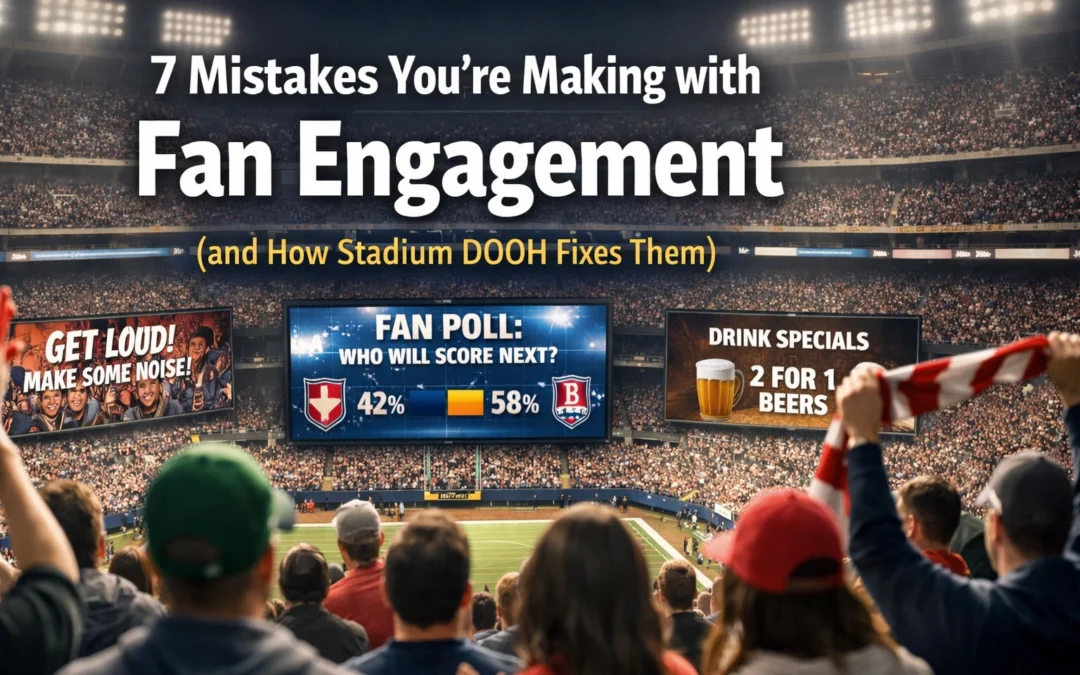
Fan engagement in the modern sports era is no longer about simply having a presence in the stadium. For Creative Directors and CMOs, the challenge lies in capturing attention in an environment filled with distractions. Traditional advertising methods often fall short because they fail to account for the psychological and physical journey of a fan. Digital Out of Home (DOOH) advertising, particularly within stadium environments, offers a sophisticated solution to these common pitfalls.
When brands transition from static to dynamic assets, the impact on brand sentiment and purchase intent is significant. By understanding the common mistakes in fan engagement, organizations can better utilize OOH Sports and stadium technology to create memorable experiences.
1. Treating Stadium Ads as Static Background
One of the most frequent errors in sports marketing is treating perimeter advertising as "wallpaper." When ads are static, they eventually blend into the architecture of the stadium. The human eye is naturally drawn to movement and contrast. Relying on a single, unmoving creative for the duration of a three hour event leads to visual fatigue.
Stadium DOOH fixes this by introducing motion and variety. Digital displays allow for creative rotation, ensuring that the brand message remains fresh. High contrast visuals and subtle animations can draw the eye toward the perimeter at key moments without distracting from the game. This approach ensures that the brand remains at the forefront of the fan experience rather than fading into the background.

2. Ignoring the "Downtime" During Play
Every sporting event has natural lulls, including timeouts, halftime, and breaks in play. Many brands fail to capitalize on these moments, assuming that if the ball is not in motion, the fans are not paying attention. In reality, these are the moments when fans are most likely to look around the stadium, check the scoreboards, and engage with their surroundings.
DOOH technology allows brands to own these moments of downtime. Digital displays can switch from standard branding to interactive content, such as trivia, player stats, or behind the scenes footage. By providing entertainment when the primary action has stopped, brands become a source of value rather than just another commercial interruption. This strategy keeps the audience engaged throughout the entire stadium visit.
3. Overlooking Navigational Friction
A major pain point for fans is navigating large, complex stadium layouts. Research indicates that many fans experience "seat find anxiety" or frustration when trying to locate restrooms and specific concession stands. When fans are stressed or lost, they are less receptive to brand messaging.
Digital signage solves this operational inefficiency through interactive wayfinding and real time updates. Strategic placement of Sportrons and digital concourse displays can guide fans efficiently through the venue. By integrating brand messaging into helpful navigational content, a brand can position itself as a helpful assistant in the fan journey. This reduces concourse congestion and allows stadium staff to focus on higher value customer service interactions.

4. Silent Social Integration
In an era where one in four fans desires greater digital interaction with their favorite teams, failing to bridge the gap between the physical stadium and social media is a missed opportunity. Many campaigns operate in a vacuum, with no clear path for a fan to take their in stadium experience online.
Stadium DOOH facilitates this connection by displaying real time social media walls and user generated content. When a fan sees their own post or a trending hashtag on a massive digital display, the incentive to engage digitally increases. This creates a feedback loop where the physical advertising drives digital impressions, and digital activity enhances the atmosphere within the stadium. This cross channel synergy is essential for modern branding.
5. Using a One-Size-Fits-All Messaging Strategy
Blanket messaging ignores the diversity of the stadium audience. A fan in a luxury suite has different needs and interests than a family in the upper deck or a student in the supporters' section. Traditional static boards cannot differentiate between these groups, leading to less relevant advertising.
Programmatic DOOH allows for precision targeting and location based notifications. Creative can be tailored based on the specific area of the stadium. For example, VIP areas might see ads for premium spirits or luxury automotive brands, while family sections see promotions for quick service restaurants or apparel. Campaigns like the White Claw programmatic DOOH launch have demonstrated that tailored, data driven placement leads to a significant lift in purchase consideration.
6. Missing the Impulse Buy Window at Concessions
Static menu boards at concession stands are often difficult to read and impossible to update in real time. This leads to slower lines and missed revenue opportunities. If a specific item is sold out or if a brand wants to run a "happy hour" special during the second quarter, static signage cannot adapt.
Digital menus and concourse DOOH displays allow for dynamic pricing and enticing, colorful imagery that encourages impulse buys. By using high resolution video of food and beverages, brands can trigger a sensory response that static text cannot achieve. Research shows that dynamic digital menus significantly increase the average transaction value. For more on how digital strategy impacts consumer behavior, exploring the case studies provided by OOH Sports offers clear evidence of success.

7. Failing to Measure Impact with Data
For a long time, stadium advertising was viewed as a "brand awareness" play that was difficult to quantify. CMOs often struggled to justify the spend without hard data. The mistake lies in assuming that stadium OOH is untraceable.
Modern DOOH provides a wealth of data through device ID exposure and brand lift studies. By tracking the mobile IDs of fans exposed to certain displays, brands can measure foot traffic to retail locations after the game or track online search surges. For instance, Mike's Hard Iced Tea saw a 119 percent lift in positive brand image through a programmatic DOOH campaign. This level of measurement turns "gut feeling" marketing into a data driven science.
Strategy and Objective
The primary objective of implementing stadium DOOH is to move beyond passive visibility. The strategy involves integrating the brand into the literal and emotional journey of the fan. From the moment they enter the concourse to the final whistle, the digital touchpoints must provide either utility (wayfinding, stats) or entertainment (dynamic creative).
By focusing on the "Four Es": Experience, Exchange, Evangelism, and Everywhere: brands can ensure their stadium presence is comprehensive.
- Experience: Creating a visual spectacle.
- Exchange: Offering value, such as discounts or information, in return for attention.
- Evangelism: Encouraging social sharing.
- Everywhere: Ensuring a consistent presence across the stadium's digital ecosystem.
Technology and Execution
The execution of a high impact stadium campaign requires a mix of hardware and software. OOH Sports utilizes advanced Sportrons and perimeter LED systems that are capable of real time content triggers.
Tactics include:
- Time-of-Day Triggers: Changing creative based on whether it is pre game, mid game, or post game.
- Score-Based Triggers: Automating a "celebration" creative when the home team scores.
- Weather Triggers: Promoting cold drinks on hot days or branded hoodies when the temperature drops.
- Audience Analytics: Using sensors to determine crowd density and dwell time near specific displays.

Results and Measurable Impact
The shift toward digital stadium environments has yielded impressive results across various industries. When looking at the broader landscape of digital out of home effectiveness, the numbers are consistently positive.
- Purchase Consideration: Sea-Doo's first digital OOH campaign resulted in a 144 percent increase in purchase consideration.
- Brand Image: Programmatic DOOH has been shown to improve brand favorability by double digits in nearly every category, from beverage to tech.
- Operational Efficiency: Stadiums using digital wayfinding report a reduction in staff hours dedicated to basic directional questions, allowing personnel to focus on security and high level hospitality.
Conclusion
The mistakes made in fan engagement are often the result of using old tools for a new generation of fans. Static signs and disconnected campaigns are no longer sufficient in an environment where every fan has a smartphone in their pocket. Stadium DOOH bridges the gap between the physical and digital worlds, solving operational problems like wayfinding while driving measurable brand growth.
By avoiding the pitfalls of static, unmeasured, and generalized advertising, Creative Directors and CMOs can turn the stadium into a powerful engine for brand loyalty. The future of the fan experience is digital, dynamic, and deeply integrated. Organizations looking to refine their approach can find further resources and strategic guidance at the OOH Sports blog.