
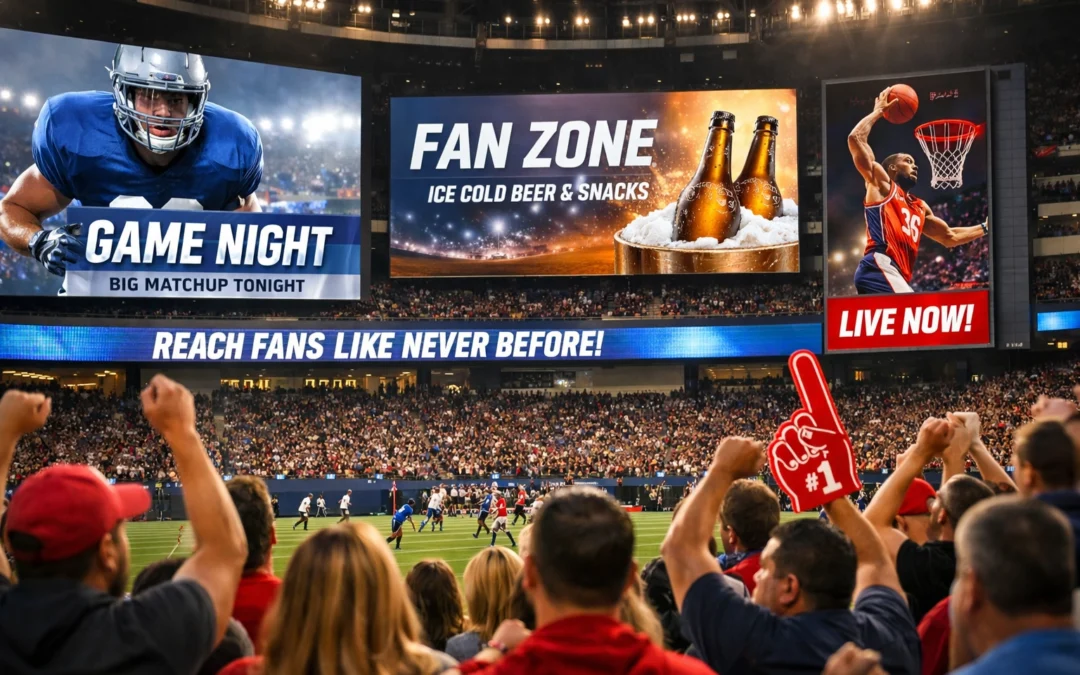
The landscape of sports marketing is undergoing a significant transformation. As traditional media channels face increasing fragmentation, brands and media buyers are seeking more effective ways to capture the attention of highly engaged audiences. Digital Out-of-Home (DOOH) advertising has emerged as a cornerstone of this evolution, offering a blend of physical presence and digital intelligence. By leveraging sports-focused DOOH, advertisers can move beyond static placements to create dynamic, real-time connections with fans at every stage of their journey.
This shift is driven by a combination of technological advancements and changing consumer habits. With more fans moving toward ad-free streaming services and curated content, the physical environment remains one of the few places where brands can guarantee visibility. OOH Sports provides the tools and infrastructure to navigate this new terrain, ensuring that marketing messages resonate when fan emotions and engagement levels are at their peak.
Addressing Media Fragmentation
One of the primary challenges facing modern brand managers is the splintering of audience attention. In the past, a single TV spot during a major game could reach the vast majority of sports fans. Today, viewing is spread across linear television, various streaming platforms, and social media highlights. This fragmentation makes it increasingly difficult to achieve meaningful scale through traditional digital or broadcast channels alone.
DOOH fills this gap by occupying the physical spaces where fans naturally congregate. Whether they are traveling to a stadium, gathering at a sports bar, or celebrating in a downtown fan zone, fans are present in the real world. Unlike digital ads that can be blocked or skipped, physical screens provide unavoidable visibility. For the growing segment of households that utilize ad-free tiers of streaming services, DOOH is often the primary way they encounter brand messaging during the sports season.
The Role of Real-Time Personalization
The true innovation in sports DOOH lies in its ability to adapt to live events. Through Dynamic Creative Optimization (DCO), brands can now tailor their messaging based on real-time data triggers. This level of relevance ensures that an advertisement feels less like an interruption and more like a part of the game-day experience.
Several factors can trigger these dynamic updates:
- Live Game Scores: Advertisements can update instantly to reflect the current score, celebrating a home team lead or building anticipation during a close game.
- Weather Conditions: If a sudden rainstorm begins near a venue, apparel brands can switch their creative to feature rain gear or jackets.
- Betting Odds: For partners in the gaming industry, live odds can be streamed directly to screens in high-traffic areas or sports bars, providing immediate utility to fans.
- Game Milestones: Special creative can be triggered when a player breaks a record or a team clinches a playoff spot.
This real-time capability transforms a standard digital billboard into a reactive piece of content. By providing information that fans actually want, such as score updates or live odds, brands establish a higher level of trust and value. This strategy is further explored in the discussion of real-time sports betting campaigns.

Maximizing Reach Through Omnichannel Reinforcement
DOOH does not operate in a vacuum. Its most powerful application is as a reinforcement tool for broader omnichannel strategies. Research indicates a strong "priming effect" when fans encounter a brand across different mediums. For instance, a fan who sees a long-form commercial on television and then sees a shorter, punchy version of that same ad on a digital street furniture panel is much more likely to retain the brand's message.
This multi-touchpoint approach strengthens the memory structures associated with a campaign. It ensures that the brand remains top-of-mind from the moment a fan leaves their home until they return. By integrating DOOH with mobile retargeting, media buyers can close the loop, serving digital ads to devices that were in the vicinity of a specific OOH placement. This coordination increases the efficiency of every marketing dollar spent.
Quantifiable Success: Data-Driven Outcomes
Modern sports DOOH is backed by robust measurement and attribution models. Media buyers no longer have to rely on guesswork regarding how many people saw a sign. Current technology allows for the tracking of exposed device IDs, foot traffic attribution, and brand lift studies.
Data consistently shows that fans are highly receptive to OOH advertising. Nearly six in ten fans recall seeing OOH ads at major sporting events. Even more impressive is the action-oriented nature of this audience. Over 90 percent of fans who notice these ads take some form of follow-up action, such as searching for the brand online or making a purchase.
Specific examples of this impact include:
- Purchase Consideration: A programmatic DOOH campaign for a vodka launch saw a 74 percent lift in purchase consideration, demonstrating how effectively DOOH can introduce new products to a competitive market. More details can be found in this White Claw case study.
- Brand Image: A beverage campaign focused on iced tea resulted in a 119 percent lift in positive brand image, showing that the emotional high of a sports environment transfers to the sponsoring brands. See the Ab InBev results for more insight.
- Targeted Growth: The use of digital OOH increased purchase consideration by 144 percent for a specialized recreational vehicle brand, proving that DOOH works for niche luxury items just as well as consumer packaged goods. Review the Sea-Doo case study for a deeper dive.
Extending Brand Presence Across the Fan Journey
A common misconception is that sports marketing only happens inside the stadium during the game. In reality, the fan journey begins hours, or even days, before the opening whistle and continues long after the final score is recorded.
Effective DOOH strategies target fans along the entire path to purchase:
- The Commute: Digital panels on transit routes, highways, and near parking facilities reach fans as they head toward the venue.
- The Pre-Game: Screens in retail centers and entertainment districts capture attention while fans are shopping for gear or grabbing a meal.
- The Social Hour: Sports bars and hospitality venues offer extended dwell times. Fans often spend several hours in these environments, allowing for multiple ad exposures in a relaxed, positive setting.
- The Post-Game: As fans exit, celebratory or "safe ride home" messaging can provide a final, impactful touchpoint.
By utilizing platforms like Sportrons, brands can place their creative in these high-value zones without needing to secure expensive, long-term stadium contracts.

Lowering the Barrier to Entry with Programmatic DOOH
Historically, sports sponsorship was reserved for brands with massive budgets capable of signing multi-year deals with leagues or stadiums. Innovation in programmatic DOOH has democratized this access. Brand managers can now buy inventory around major events on a flexible, per-impression basis.
This allows challenger brands to establish a presence right alongside official sponsors. For example, a brand may not be the official sponsor of a city marathon, but by strategically buying DOOH inventory along the race route and in surrounding neighborhoods, they can achieve a similar level of perceived association. This tactic was successfully employed by Nike during the NYC Marathon, where they maintained high visibility without an official sponsorship title.
Programmatic buying also allows for agility. If a brand sees a specific market performing well, they can instantly increase their spend in that geographic area. Conversely, if a campaign needs adjustment, changes can be made in real time, a feat impossible with traditional printed billboards.

Strategic Considerations for Media Buyers
To capitalize on the growth of sports DOOH, which is projected to reach significant market milestones by 2030, media buyers should focus on a few key strategies. For a more comprehensive list, the guide on strategies to capture market share offers valuable insights.
First, prioritize location data. Understanding where fans live, work, and play is essential for selecting the right screens. Second, lean into the creative possibilities. Sports fans are passionate. Creative that reflects that passion, uses local team colors, or references local rivalries will always perform better than generic national creative.
Finally, ensure that the campaign is set up for measurement from day one. By working with partners like OOH Sports, brands can access the analytics needed to prove ROI and justify future marketing spend.

The Future of the Fan Experience
As technology continues to advance, the line between the physical and digital worlds will continue to blur. Augmented reality (AR) integrations, where fans can interact with a DOOH screen via their smartphones, are already becoming more common. The goal remains the same: to reach fans where they are most engaged and provide them with content that enhances their experience.
Innovation in sports DOOH is not just about new screens. It is about a smarter, more efficient way to reach an audience that is notoriously difficult to capture. By combining the scale of out-of-home with the precision of digital targeting, brands can ensure they are always part of the conversation, regardless of how the game is being watched.
For those looking to begin their journey into the world of sports-focused advertising, exploring current industry trends or reviewing company policies is an excellent starting point. The era of static, one-size-fits-all sports marketing is over. The future belongs to those who can move as fast as the game itself.