
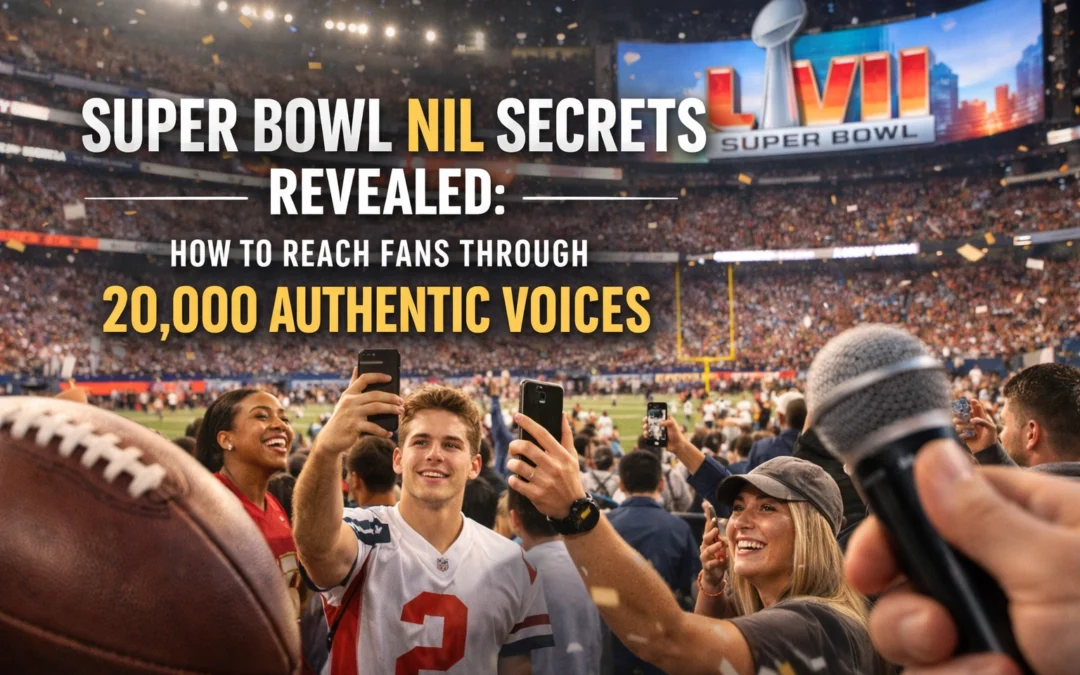
The Super Bowl has always been the ultimate stage for advertising. For decades, brands saved their entire yearly budget for a single 30-second spot. But as we look at the data from the 2026 season, the game has changed. The loudest voices in the stadium weren't just the ones on the Jumbotron. They were the 20,000 student-athletes speaking directly to their fans through Name, Image, and Likeness (NIL) partnerships.
For media buyers, the challenge is no longer just getting a slot during the broadcast. The challenge is capturing the "second screen" where fans actually live. By leveraging a massive network of authentic voices, brands are finding that they can achieve better ROI and deeper engagement than a traditional TV spot ever could.
The Shift from Celebrity to Authenticity
In the past, a Super Bowl ad meant hiring a Hollywood A-lister. Today, the most valuable currency is authenticity. Gen Z and Millennial fans don't just want to see a product; they want to see it used by someone they follow and trust.
OOH Sports has been at the forefront of this shift, helping brands navigate the complex world of NIL. Instead of putting all their eggs in one basket with a single superstar, smart brands are using a portfolio strategy. They are pairing a few national names with thousands of mid-tier athletes who have highly engaged, niche followings.
The Three-Phase NIL Framework
Success in the 2026 Super Bowl wasn't about a single moment. It was about a sustained narrative. The most successful campaigns followed a strict three-phase framework that kept the brand top-of-mind for over a month.
Phase 1: The Pre-Game Hype (January 15 – February 7)
The campaign starts long before kickoff. During this window, NIL partners create behind-the-scenes content. They share their training routines, their game-day predictions, and how the brand fits into their lifestyle. This builds organic momentum. By the time the Super Bowl commercials air, the audience has already seen the product dozens of times in a natural setting.
Phase 2: Game-Day Real-Time Commentary
This is where the "20,000 voices" strategy really shines. During the game, these athletes act as digital ambassadors. They post real-time reactions to the plays, the halftime show, and even the other commercials. While the average viewer might mute the TV during a break, they are checking their phones to see what their favorite athletes are saying. This creates a continuous stream of engagement throughout all four quarters.
Phase 3: Post-Game Sustainability
Most Super Bowl ads are forgotten by Monday morning. NIL content has a longer shelf life. Athletes continue the conversation with post-game analysis and recaps. This extended engagement ensures that the brand remains relevant well into the following weeks.

The Blitz Strategy: Multi-Platform Dominance
To reach fans effectively, you can't just stick to one app. The "Blitz" strategy involves a coordinated strike across TikTok, YouTube, Meta, and X. Each platform serves a different purpose. TikTok is for quick, high-energy trends. YouTube is for longer, deep-dive content. Meta and X are for real-time conversation.
By using a network of over 20,000 athlete voices, brands can flood every platform simultaneously. This doesn't feel like a corporate takeover because each athlete creates content in their own unique style. It’s not one ad seen 20,000 times; it’s 20,000 unique stories about one brand.
To see how these strategies come to life, watch this breakdown of modern sports marketing:
https://www.youtube.com/watch?v=l6J-0zileKE
Why Portfolio Strategy Beats the "Hail Mary"
Many media buyers are tempted to spend their entire budget on one or two "big" athletes. However, the data suggests that mid-tier athletes (those with 50,000 to 200,000 followers) often deliver deeper market penetration. These athletes have a more direct connection with their audience.
When a brand uses a portfolio strategy, they are diversifying their risk. If one athlete has an off day, there are 19,999 others still pushing the message forward. This approach also allows for better geographic targeting. For example, if you want to win over fans in a specific college town, you can activate fifty local athletes rather than one national star who might not resonate in that specific region.
This is similar to how brands are moving away from massive stadium deals. As discussed in our article on why 2M dollar stadium sponsorships are dying, the trend is toward smarter, more scalable digital activations.
Driving ROI with Performance Incentives
One of the biggest secrets revealed in the 2026 Super Bowl cycle was the power of performance-based incentives. Contracts that included equity stakes or bonuses based on engagement saw 40-60% higher interaction rates. When athletes are personally invested in the success of the campaign, the content they produce is noticeably better.
In the 2026 activations, the median earnings for participating athletes was around $1,850. However, top performers who went above and beyond with creative content were clearing $25,000 or more. This merit-based system ensures that the most talented creators get the most visibility, which in turn drives better results for the brand.

Integrating NIL with Out-of-Home (OOH) Advertising
While NIL is a digital-first strategy, its real power is unlocked when combined with physical Out-of-Home advertising. Imagine a fan walking through a city and seeing a digital billboard featuring the same athlete they just saw on their TikTok feed. This reinforces the message and makes the campaign feel omnipresent.
Using programmatic DOOH (Digital Out-of-Home), brands can launch campaigns that mirror the real-time nature of NIL. If an athlete goes viral for a specific play, a brand can have that athlete's face on digital screens across the country in under 24 hours. You can learn more about this in our guide on launching real-time sports betting campaigns.
A great example of this "omnichannel" approach is how brands managed the NYC Marathon. Even without being official sponsors, they used clever targeting to dominate the conversation. Check out the details here: Nike wasn't an official sponsor, but you'd never know it.
Avoiding Common Mistakes
With 20,000 voices, things can get messy if they aren't managed correctly. The biggest mistake brands make is trying to force a rigid, pre-scripted endorsement. Gen Z fans can smell a "fake" ad from a mile away. The key is to allow athletes to co-create content naturally within their own ecosystem.
Other common pitfalls include:
- Poor Measurement: Failing to use AI-powered analytics to track which athletes are actually driving conversions.
- Ignoring the "Second Screen": Focusing too much on the TV broadcast and not enough on the social feeds where the conversation is happening.
- Lack of Real-Time Flexibility: Not being able to pivot the creative based on game-day events.
For more on avoiding these errors, read our breakdown of 7 mistakes you're making with sports DOOH campaigns.
The Future of Sports Marketing
The 2026 Super Bowl proved that the "Blitz" strategy is here to stay. By the year 2030, sports advertising is expected to be a $50 billion industry. Much of that growth will come from programmatic DOOH and NIL platforms. Brands that start building their network of authentic voices now will be the ones winning the championships of tomorrow.
If you are ready to scale your reach and connect with fans in a way that actually moves the needle, it is time to look beyond the 30-second spot. The future is personal, it is authentic, and it is powered by thousands of voices.
Whether you are looking for a 144% lift in purchase consideration or just want to make sure you aren't wasting time on guesswork, OOH Sports is here to help you navigate the new landscape.

Final Thoughts for Media Buyers
The secret is out. You don't need a $7 million budget to own the Super Bowl conversation. You need a strategy that values authenticity over production value. You need a platform that can manage 20,000 voices without losing the brand's core message. And most importantly, you need to be where the fans are: on their screens, in the streets, and in their social feeds.
To learn more about how to capture your share of the sports marketing gold rush, visit oohsports.com and let’s start building your next winning campaign.