
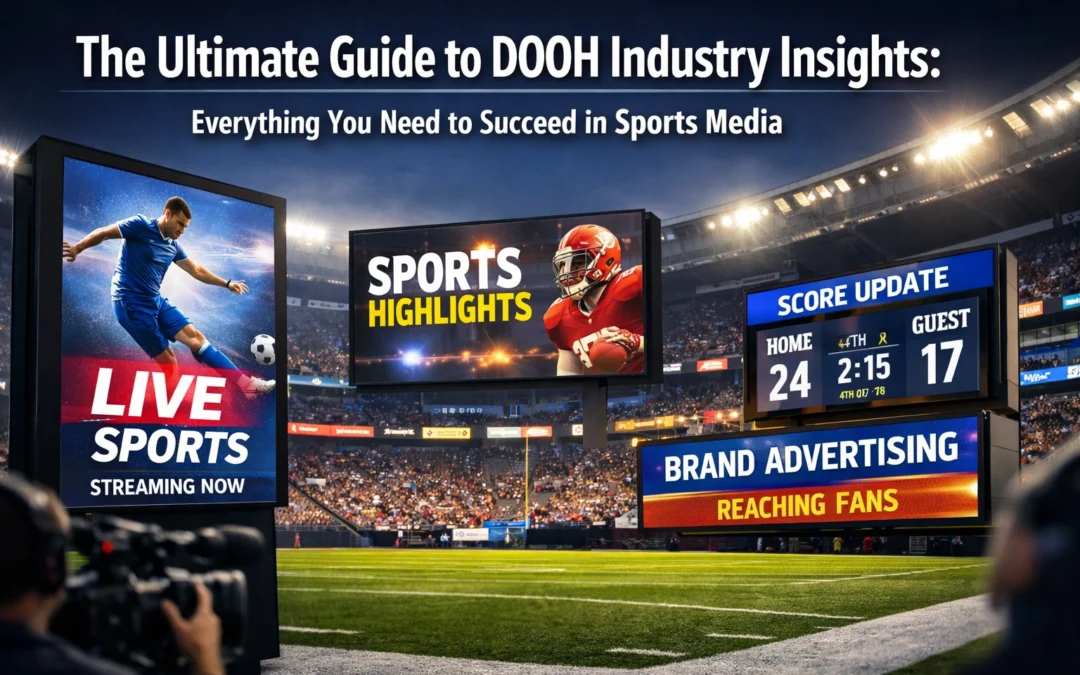
The world of sports media is moving faster than a championship breakaway. For years, the gold standard of sports marketing was the multi-million dollar television spot or the static stadium billboard. But things have changed. Fans are no longer just sitting on their couches watching the big game; they are living the game across multiple cities, devices, and physical environments.
At OOH Sports, we have watched this evolution closely. Digital Out-of-Home (DOOH) advertising has transformed from a secondary thought into a primary driver for brand growth. If you want to reach a fan today, you have to meet them where their passion lives, which is often outside the home. This guide dives into the latest industry insights and trends to help you navigate this high-energy landscape.
The Massive Shift in Sports Advertising
The numbers do not lie. The sports advertising market is experiencing a significant pivot toward digital screens. Experts suggest that DOOH sports advertising will hit $50 billion by 2030, driven by the move toward programmatic buying and real-time data integration.
Why is this happening? Because sports are one of the few remaining "appointment viewing" events that can aggregate a massive, live audience. However, that audience is no longer tethered to a single screen. They are at sports bars, transit hubs, fan zones, and walking the streets near the stadium. DOOH allows brands to capture that collective energy in a way that feels organic rather than intrusive.
The Power of the "Priming Effect"
One of the most valuable insights in modern media planning is the "priming effect." Research shows that when a fan sees a brand on a digital urban panel during their morning commute or outside a stadium, they are significantly more likely to engage with that same brand's television or social media ad later.
DOOH functions as the ultimate amplifier. It builds a memory structure in the consumer's mind. By the time they see your 30-second spot on a streaming service or a post-game highlight on their phone, the heavy lifting of brand recognition has already been done. This synergy can increase the reach of major media channels to more than 90 percent.

Programmatic DOOH: Precision at Scale
The biggest trend currently reshaping the industry is the rise of Programmatic DOOH (pDOOH). In the past, buying a billboard was a long-term commitment that involved manual paperwork and static creative. Today, pDOOH allows for the same level of targeting and flexibility you find in online display advertising.
With pDOOH, you can buy inventory based on specific triggers. For example, a sports betting brand can activate screens only when a game is within a certain point spread, or a beverage brand can increase its presence when the temperature hits a certain degree. This level of precision ensures that you aren't wasting your budget on impressions that don't matter.
We have seen this work across various categories. For instance, White Claw’s programmatic DOOH campaign drove a 74 percent lift in purchase consideration by focusing on high-intent moments and locations. This isn't just about being "loud" on a big screen; it is about being relevant.

Mapping the Fan Journey: From Commute to Kickoff
To succeed in sports media, you have to think about the fan’s entire day, not just the four quarters of play. A fan’s journey usually looks something like this:
- The Anticipation Phase: During the morning commute or the day before a big event, fans are checking scores and reading previews. DOOH screens in transit hubs and office lobbies reach them during this "planning" stage.
- The Arrival: As fans move toward the stadium or a popular sports bar district, they are in a high-arousal state. Screens near stadium gates and in entertainment districts offer peak engagement.
- The Celebration (or Commiseration): After the game, fans flock to bars or head home via public transport. This is the perfect time for retargeting and reinforcement.
Strategically choosing your placements is key. Should you focus on the stadium gate or the local sports bar? The answer depends on your goal. While stadium gates offer prestige, placements in sports bars can often deliver a higher ROI because of the extended dwell time and the social nature of the environment.
Creative Strategy: Fan-Centric vs. Brand-Centric
A common mistake in sports DOOH is simply resizing a print ad and putting it on a digital screen. To truly resonate, the creative needs to be "fan-centric."
A brand-centric ad talks about the product’s features. A fan-centric ad talks about the experience of being a fan. This might mean using real-time game scores, countdown clocks to kickoff, or localized messaging that references a specific city’s rivalry. When brands align themselves with the emotional state of the fan, the connection is much stronger.
Understanding whether a fan-centric or brand-centric approach works best for your specific KPIs is a crucial part of the planning process. Often, the best results come from a hybrid approach that uses the brand's voice to celebrate the fan's passion.

Ambush Marketing and the "Non-Sponsor" Advantage
You don't always need to be an official sponsor of a league or a stadium to win at sports marketing. In fact, some of the most successful campaigns we have seen come from brands that use DOOH to "own" the city during a major event without paying the official sponsorship fees.
Consider how Nike managed to dominate the conversation during the NYC Marathon despite not being an official sponsor. By blanketing the city with high-impact digital displays and hyper-local messaging, they created a presence that felt synonymous with the event. This "smart scaling" allows brands to reach the same audience as official sponsors but at a fraction of the cost.
Measurement and Data: No More Guesswork
The old saying that "half the money spent on advertising is wasted" is no longer true in the world of DOOH. Modern analytics allow us to track everything from foot traffic lift to brand sentiment.
By using mobile location data, we can see if a person who was exposed to a DOOH ad actually visited a retail location or attended a game. We can also integrate with online data to see if there was a spike in web traffic or social mentions in specific geographic areas following a campaign launch.
If you want to stop guessing, you need to focus on AI-powered DOOH analytics that prove success. These tools provide a clear picture of how your offline spend is driving online (and in-person) actions.

Best Practices for Your Next Campaign
If you are looking to get started or optimize your current sports media strategy, keep these principles in mind:
- Be Contextual: Use data to change your creative based on the score, the weather, or the time of day.
- Think Omnichannel: Don't treat DOOH as an island. Coordinate it with your social media and CTV buys for a unified message.
- Secure Inventory Early: For major sporting events, the best screens sell out fast. Even with programmatic options, early planning is essential for high-demand windows.
- Focus on the Fan: Move beyond just selling a product. Become part of the game-day ritual.
- Measure Everything: Use brand lift studies and attribution tools to ensure every dollar is working for you.
The Future is Digital and Out-of-Home
The sports landscape is more fragmented than ever, but that fragmentation creates opportunity for those who know where to look. Digital Out-of-Home is the bridge that connects the digital world with the physical passion of sports.
By staying on top of these trends and leveraging the latest technology, your brand can do more than just show up, it can stand out. Whether you are a global apparel brand or a local service provider, the screens are waiting. It is time to get your message in front of the fans who matter most.