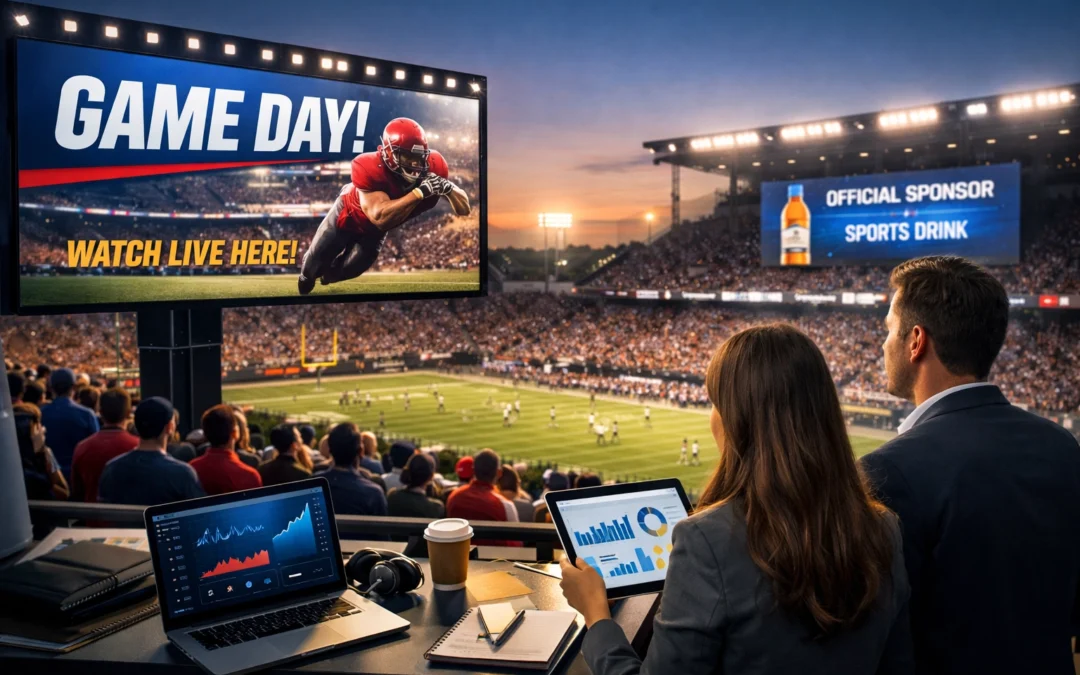
Digital out-of-home (DOOH) advertising has transitioned from a supplementary media buy to a primary driver of engagement in the sports marketing sector. As digital screens become more integrated into the urban and stadium landscape, DOOH now accounts for approximately 36.3 percent of total out-of-home revenues. This growth is supported by a steady annual increase in adoption, reflecting the ability of the medium to capture attention at peak moments of fan enthusiasm.
In the high stakes environment of sports marketing, the ability to reach a captive audience is essential. Fans are not just spectators. They are active consumers who travel, dine, and celebrate in concentrated geographical zones. This guide provides a comprehensive overview of the strategies and insights necessary to navigate the modern DOOH landscape.
The Strategic Framework of Sports DOOH
Successful sports marketing campaigns do not rely on a single moment. Instead, they operate across a timeline that mirrors the fan journey. By segmenting a campaign into pre-game, game-time, and post-game phases, brands can maintain a continuous presence that builds momentum.
Phase One: The Pre-Game Build
The objective during the pre-game phase is to establish brand recognition and top of mind awareness. Marketers often utilize upper-funnel channels, such as connected TV (CTV) or social media, to introduce a campaign. DOOH acts as the physical reinforcement of these digital messages.
During this phase, locking in high-demand screens near transit hubs and major thoroughfares ensures that the brand is the first thing fans see as they begin their journey. Programmatic digital OOH (pDOOH) adds a layer of flexibility here, allowing brands to adjust messaging as the event draws closer. For example, campaigns focused on purchase consideration have seen significant results when utilizing these methods. Case studies involving beverage brands, such as White Claw, have demonstrated that a programmatic approach can lead to a 74 percent lift in purchase consideration. Detailed insights on this can be found in the analysis of White Claw’s programmatic campaign.
Phase Two: Game-Time Execution
When the event begins, the focus shifts to hyper-local targeting. Attention is concentrated in specific areas: stadiums, fan zones, sports bars, and entertainment districts. This is the most valuable real estate for any marketer.
Using pDOOH, messaging can be updated in real time to reflect the live action. If a major play occurs or a specific player scores, the creative content on nearby screens can change within minutes to mirror the crowd’s emotion. This level of responsiveness creates a "priming effect" that makes traditional advertising feel more relevant. Brands like Mike’s Hard Iced Tea have used these real-time strategies to achieve a 119 percent lift in positive brand image. More on this strategy is available in the report on AB InBev’s programmatic DOOH success.

Phase Three: Post-Game Retention
The campaign does not end with the final whistle. The post-game phase is about maintaining relevance as fans disperse. Refreshing DOOH content across commuter corridors and city-center screens allows a brand to guide the audience toward their next action, whether that is a post-game meal or an online purchase.
Retargeting is a critical component here. By identifying mobile devices that were exposed to DOOH screens during the game, marketers can follow up with digital audio or display ads. This omnichannel integration ensures the brand remains top of mind long after the fans have left the stadium. Sea-Doo utilized similar lifecycle targeting to increase purchase consideration by 144 percent, highlighting the power of sustained engagement. The specifics are outlined in the Sea-Doo digital OOH case study.
Targeting and Activation Strategies
The effectiveness of DOOH in sports is driven by its ability to reach fans where they are, rather than just where the game is being played. Research indicates that 99 percent of fan attention happens in everyday spaces outside the actual arena. This makes the surrounding city infrastructure the "connective tissue" of a sports marketing campaign.
Geo-Specific Activation
Marketers are increasingly looking toward less obvious locations to find high-value audiences. Fan festivals, public viewing areas, and even nightlife districts offer high-traffic opportunities at a lower entry cost than official stadium sponsorships. Programmatic platforms enable brands to target these screens without the need for massive in-house buying teams or long-term contracts.
Strategic targeting involves moving beyond static screen selection. By using geofencing and real-time movement data, ads can be activated precisely when foot traffic peaks. This ensures that impressions are not wasted on empty streets but are instead delivered to a moving, engaged crowd. For a comparison between this agile approach and traditional methods, the industry often looks at programmatic DOOH vs traditional stadium ads.

The Power of Real-Time Data
The integration of real-time data feeds has revolutionized the creative side of OOH. Dynamic Creative Optimization (DCO) allows an ad to change based on external triggers like weather, game scores, or betting odds. This is particularly relevant for the sports betting industry, where odds fluctuate by the second. Campaigns that can launch real-time betting updates in under 24 hours have a significant competitive advantage. Strategies for this are detailed in the guide on launching real-time betting DOOH campaigns.
Creative Optimization and Interactivity
In a crowded visual environment, the quality of the creative execution determines the success of the campaign. DOOH provides a canvas for interactive elements that were previously impossible in outdoor advertising.
Interactivity and Engagement
The inclusion of QR codes, mobile prompts, and live polls transforms a passive impression into an active exchange. These elements allow brands to collect first-party data and drive immediate conversions. For example, a QR code on a digital screen at a transit station could lead a fan directly to a team store or a limited-time promotional offer.
Visual Synergy
When DOOH is paired with other channels, the results are amplified. A fan who sees a 30 second television spot followed by a 6 second version of that same creative on an urban digital panel is more likely to remember the brand. This synergy is a key reason why 67 percent of media planners are shifting their budgets toward DOOH. The reasons behind this shift are explored in the report on the sports DOOH gold rush.

Measuring ROI and Campaign Success
One of the historical challenges of out-of-home advertising was measurement. However, modern technology has provided a suite of tools to quantify the impact of a campaign with precision.
Key Performance Indicators
To prove ROI, marketers focus on several core metrics:
- Footfall Tracking: Measuring the increase in physical visits to a retail location following exposure to a DOOH ad.
- Brand Lift Studies: Assessing changes in brand perception, awareness, and purchase intent through surveys of exposed audiences.
- App Activity: Tracking spikes in app downloads or usage, particularly for sports betting or delivery services, during event windows.
- Sales Attribution: Correlating DOOH impressions with actual sales data using anonymized mobile device IDs.
Effective measurement allows brands to pinpoint which cities or specific fan zones are driving the most engagement. This data-driven approach ensures that future budgets are allocated to the highest-performing locations. For more on maximizing impact in competitive markets, see the insights on New York City as a premier OOH destination.
The Future of Sports Marketing
The trajectory of the industry points toward a future where digital screens are a fundamental part of the fan experience. The move toward direct-to-fan streaming and AI-powered creative means that DOOH will become even more personalized and data-responsive.
Traditional stadium sponsorships are facing competition from the flexibility of digital networks. As stadiums are built with digital signage integrated into their architecture, the line between "inside the stadium" and "outside the stadium" continues to blur. Modern marketers must decide whether to invest in static, high-cost signage or the agile, programmatic networks that allow for real-time adjustments. This shift is discussed further in the analysis of why traditional stadium sponsorships are evolving.

Conclusion
Succeeding in sports marketing requires a combination of strategic timing, creative agility, and robust measurement. By leveraging the latest trends in DOOH and programmatic technology, brands can reach fans at the moment of highest engagement. Whether it is through real-time score updates or hyper-local targeting in fan zones, the opportunities within the DOOH space are vast and growing.
For those looking to stay ahead of the curve, staying informed on platform developments is essential. Using specialized tools, such as the StackAdapt DSP, can help drive programmatic adoption and improve campaign efficiency. As the industry moves toward a projected 50 billion dollar market cap by 2030, the strategies implemented today will define the leaders of tomorrow.