
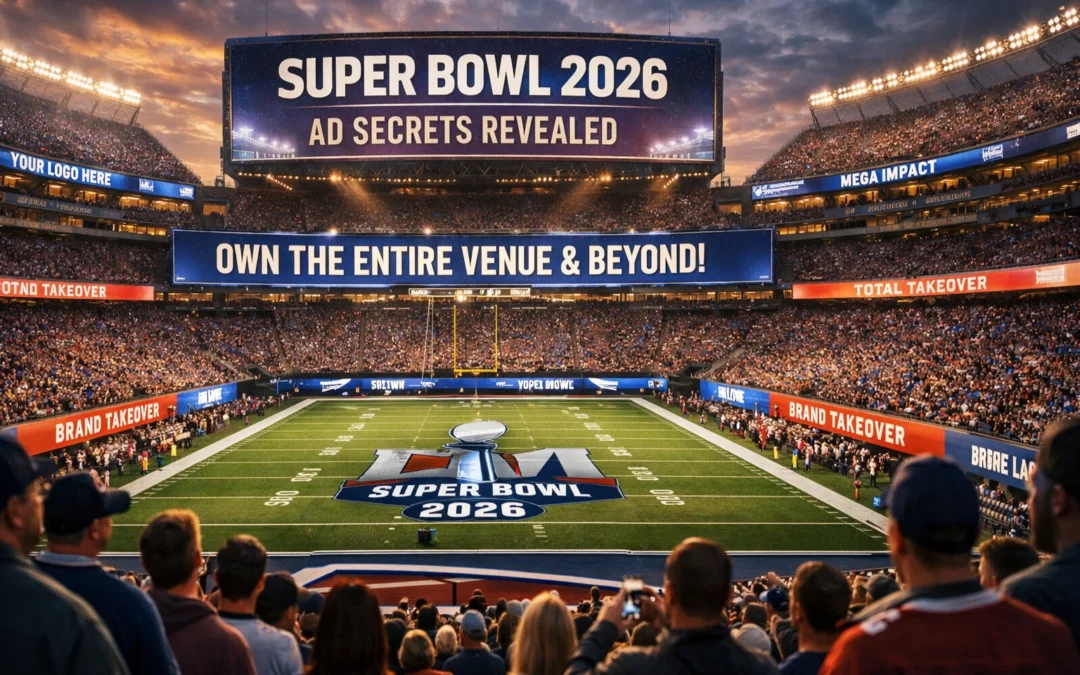
The Super Bowl remains the ultimate frontier for global advertising, and the 2026 iteration proved to be the most technologically advanced event in the history of sports marketing. As brands navigated the high stakes of Super Bowl LXI, the shift from traditional television-centric models to immersive, venue-wide digital out-of-home (DOOH) strategies became the defining trend of the season.
OOH Sports, drawing on 40 years of advertising leadership, executed a framework that moved beyond the standard 30-second commercial. By utilizing every available surface, from stadium floors to massive external billboards, the approach transformed the venue into a 360-degree brand ecosystem. This strategy leveraged the reality that modern fans are multi-screen consumers who engage with physical environments as much as digital platforms.
The 40-Year Evolution of Venue Dominance
Four decades ago, stadium advertising was limited to static signage and basic scoreboard mentions. The transition to the 2026 landscape reflects a total digital overhaul. Today, OOH Sports manages an inventory that includes over 25,000 digital screens, enabling a level of saturation that was previously impossible.
The mastery of this space requires more than just screen time. It requires a deep understanding of fan movement and psychological triggers during high-pressure sporting events. In 2026, successful brands moved away from isolated placements in favor of a synchronized "venue takeover." This involved coordination across concourse screens, digital floor projections, and large-format exterior displays that greeted fans miles before they reached the stadium gates.

The Three-Phase Winning Strategy
Dominating the 2026 Super Bowl required a calculated, three-phase execution plan. Data from the event suggests that brands focusing solely on game day missed nearly 50 percent of the total potential engagement.
Phase 1: Pre-Game Momentum (January 15 to February 7)
Strategic advantages were secured weeks before kickoff. Brands that initiated programmatic DOOH campaigns in mid-January observed a 16 to 30 percent higher cost-per-click efficiency compared to those that waited until the week of the game. During this period, the objective was to build brand familiarity across transit hubs, airports, and sports bars. By the time fans arrived in the host city, the brand was already established as a primary sponsor of the experience.
Phase 2: Game Day Saturation
On February 8, 2026, the strategy shifted to real-time execution. With over 70 percent of viewers utilizing a second screen during the broadcast, the physical environment became the primary anchor for attention. OOH Sports utilized real-time data triggers to update ad creative based on the score, player performance, and crowd sentiment. This "agentic marketing" approach ensured that the messaging remained contextually relevant to the unfolding drama on the field.
Phase 3: Post-Game Saturation (February 9 to February 15)
The conclusion of the game marked the beginning of the retargeting phase. In the week following the Super Bowl, search volume for viral moments and highlights spiked. Brands maintained their presence on digital billboards across major metropolitan areas to capture the lingering hype. This phase focused on converting the high awareness generated during the game into measurable purchase intent.

Tactical Execution: From Floors to Billboards
The 2026 campaign mechanics were characterized by their physical diversity. The integration of digital floor graphics in high-traffic stadium zones allowed brands to capture attention during the natural lulls of the game, such as half-time or commercial breaks when fans move toward concessions.
https://www.youtube.com/watch?v=l6J-0zileKE
This video demonstrates the scale of modern sports DOOH. By combining massive exterior billboards with granular, eye-level digital displays, OOH Sports creates a seamless brand narrative. The logistics involved in managing these synchronized displays across thousands of touchpoints are supported by advanced AI-driven scheduling, ensuring that every frame of creative is optimized for maximum visibility.
Programmatic DOOH vs. Traditional Stadium Sponsorships
One of the most significant shifts in 2026 was the movement of budgets from traditional $7 million TV spots and $2 million fixed stadium sponsorships toward programmatic DOOH. The ROI delivered by digital out-of-home platforms often surpassed traditional methods due to the ability to target specific demographics in real-time.
For instance, brands that utilized perimeter DOOH targeting saw significantly lower entry costs while maintaining high-impact visibility. Studies indicated that smart brands could scale their presence for approximately 80 percent less than the cost of a primary stadium sponsorship. This efficiency is explored in detail in the analysis of how smart brands scale with perimeter DOOH.
Case Studies: High-Impact ROI
The effectiveness of these strategies is supported by empirical data from recent major campaigns. These results serve as a blueprint for the 2026 Super Bowl execution:
- White Claw: A programmatic DOOH campaign drove a 74 percent lift in purchase consideration during a high-profile launch. The brand utilized a network of screens to maintain a constant presence across multiple consumer touchpoints. For more on this, view the White Claw case study.
- Mike’s Hard Iced Tea: This campaign achieved a 119 percent lift in positive brand image by utilizing real-time sports triggers and strategic placement near sports bars and stadium entrances.
- Sea-Doo: By targeting specific geographic zones and fan-centric areas, Sea-Doo increased purchase consideration by 144 percent through its first major DOOH effort.
These examples highlight a critical lesson: success in 2026 was not about the size of the budget, but the precision of the placement and the relevance of the data.

AI-Powered Analytics and Measurement
In 2026, guesswork in advertising has been eliminated through the use of AI-powered analytics. OOH Sports employs predictive modeling to determine where fan engagement will be highest at any given minute. This includes monitoring device ID exposure and foot traffic patterns to provide concrete attribution data to advertisers.
Measurement of campaign success is now conducted through sophisticated brand lift studies and real-time conversion tracking. By leveraging AI-powered DOOH analytics, media planners can prove the success of a campaign with granular detail, comparing exposed audiences against control groups to determine exact shifts in brand preference.
The Future of Sports Advertising
As the sports advertising market is projected to hit 58 billion dollars by 2030, the strategies perfected during the 2026 Super Bowl will become the standard for all major athletic events. The ability to own a venue from the floor to the sky provides a competitive edge that television alone cannot replicate.
The 2026 Super Bowl proved that the physical venue is the most valuable real estate in the world when it is backed by 40 years of expertise and the latest in DOOH technology. Brands that successfully integrated themselves into the fan's journey, rather than merely interrupting it, emerged as the true winners of the season.

Strategic Summary
The secrets of Super Bowl 2026 success can be condensed into three core pillars:
- Saturation: Utilizing 25,000+ screens to ensure the brand is visible at every point of the fan experience.
- Timing: Executing a three-phase approach that builds momentum weeks in advance and maintains it through post-game retargeting.
- Data: Using programmatic triggers and AI analytics to ensure every ad placement is backed by real-time audience insights.
The transition from traditional advertising to a venue-wide digital takeover is no longer a luxury, it is a requirement for brands that intend to lead in the sports marketing space. OOH Sports continues to pioneer these methods, ensuring that every square inch of the stadium becomes an opportunity for engagement and growth.