
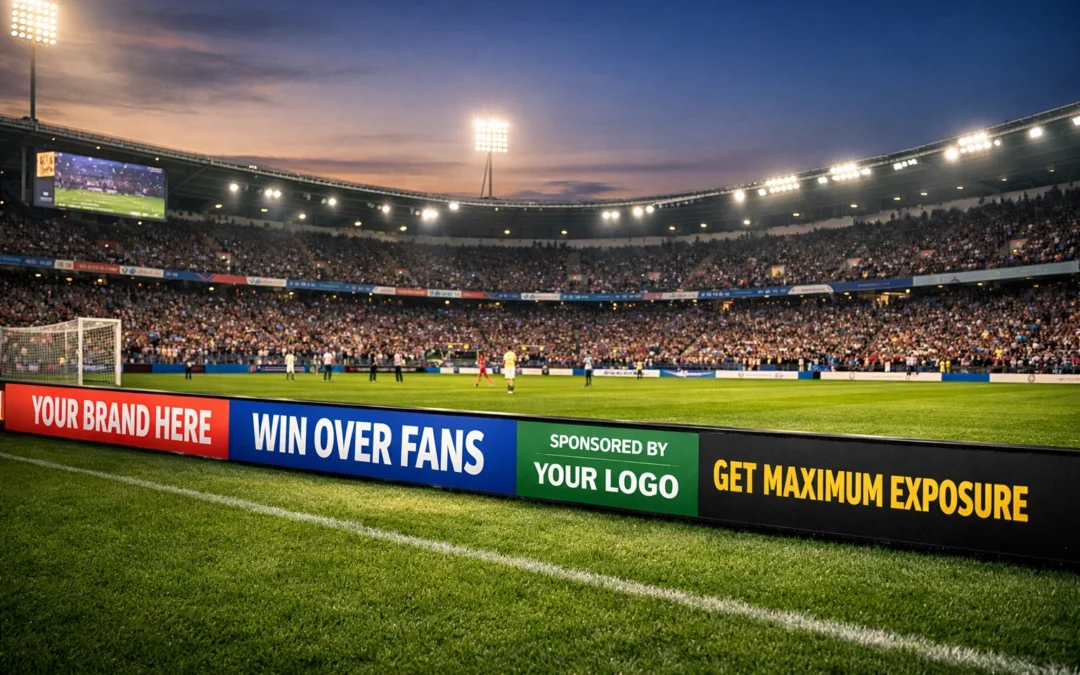
The stadium environment represents one of the most high-energy advertising landscapes in the modern marketing mix. For creative directors and CMOs, the stadium perimeter is no longer just a physical boundary. It is a dynamic storytelling canvas that bridges the gap between the live physical experience and a global broadcast audience. Successful stadium perimeter branding requires a blend of technical precision, psychological insight into fan behavior, and strategic asset placement.
The Evolution of the Stadium Perimeter
Traditionally, stadium branding relied on static assets such as windscreens and fence screens. These elements utilized team colors, logos, and sponsor messaging to create a visual enclosure for the playing field. While these static components remain fundamental for defining the venue identity, the industry has transitioned toward digital integration.
Modern venues now prioritize LED perimeter technology. These modular digital display screens replace traditional banners with high-definition, animated content. The shift from static to digital allows for real-time updates and multiple sponsor rotations within a single event. This flexibility increases the inventory available to advertisers while maintaining a clean, professional aesthetic within the venue.

Technical Specifications for Maximum Visibility
Achieving impact in a stadium requires an understanding of environmental variables. Stadium lighting ranges from harsh direct sunlight to powerful evening floodlights. Perimeter branding assets must be engineered to withstand these conditions without losing visual integrity.
LED perimeter boards are built with high-brightness capabilities to ensure clarity regardless of the weather. These systems utilize modular designs, allowing for a seamless visual wall that contours to the specific layout of the field. Beyond brightness, the refresh rate of these screens is critical for broadcast quality. High-end systems prevent the flickering effect often seen on television when digital screens are filmed, ensuring the brand appears crisp to millions of viewers at home.
Safety is another technical priority. Modern LED systems feature soft front masks and flexible structures. This design reduces the risk of injury if a player makes contact with the boards during a high-speed play. For brands, this association with safety and professional-grade equipment reinforces a commitment to quality.
Strategic Design Principles for Sports Environments
Designing for a stadium is fundamentally different from designing for a standard billboard or a digital banner. The distance between the viewer and the asset, combined with the speed of the game, necessitates a simplified creative approach.
Readability and Contrast
Creative directors must prioritize high-contrast color palettes and bold, sans-serif typography. In a stadium, complex graphics and intricate details are lost. The goal is instant brand recognition. A fan should be able to identify a brand from the opposite side of the stadium in less than a second.
Motion and Animation
With digital perimeters, motion is a powerful tool to capture attention. However, excessive movement can be distracting or even violate broadcast regulations. Effective strategies use subtle animations, such as a logo wipe or a sliding text effect, to draw the eye without disrupting the fan's focus on the game.
Consistency Across Touchpoints
Perimeter branding should not exist in a vacuum. It must align with the broader visual identity found in concourse graphics, entryways, and digital scoreboards. This consistency builds a cohesive brand world within the venue. Interested parties can explore more about cohesive strategies through the OOH Sports marketing resources.

Integrated Fan Engagement Strategies
Winning over fans requires moving beyond passive visibility. Engagement is built when a brand becomes part of the game-day ritual. Perimeter branding acts as the visual anchor for these deeper connections.
One effective tactic involves the use of real-time data integration. Digital boards can display live statistics, social media feeds, or interactive prompts that encourage fans to participate via their mobile devices. This bridge between the physical perimeter and the digital handheld screen creates an omnichannel experience that resonates with modern audiences.
Furthermore, perimeter branding often supports "Fan Zones." These are dedicated areas within the concourse or exterior of the stadium where fans can interact with brand activations. The perimeter signage guides fans to these locations, creating a journey that starts at the field and ends with a direct brand interaction.
Maximizing Broadcast and Global Exposure
The value of stadium perimeter branding extends far beyond the thousands of people in the seats. In many cases, the primary audience is the millions of viewers watching the live broadcast.
Camera angles are a primary consideration during the installation of perimeter assets. Marketing teams work with stadium architects to identify the "TV Arc," which is the area most frequently captured by broadcast cameras. Placing high-value branding within this arc ensures maximum "dwell time" on screen. Research indicates that perimeter advertising during high-profile matches can generate significant brand lift, as the brand is associated with the peak emotional moments of the event.
For brands looking for measurable results, programmatic digital out-of-home (DOOH) has become a game-changer. By using data-driven insights, brands can trigger specific creative content based on game events, such as a goal or a halftime break. This precision increases the relevance of the message. Case studies, such as the White Claw programmatic campaign, demonstrate how specialized OOH strategies drive significant lifts in purchase consideration.

Measuring the ROI of Stadium Branding
Quantifying the success of stadium perimeter branding involves a mix of traditional metrics and advanced attribution modeling. Key performance indicators often include:
- Sponsor Value: Calculating the equivalent cost of airtime based on the brand's visibility during the broadcast.
- Brand Lift: Using surveys to measure changes in brand awareness and preference among attendees.
- Engagement Rates: Tracking QR code scans or social media mentions triggered by stadium creative.
- Purchase Intent: Measuring the correlation between stadium exposure and subsequent sales or web traffic.
Data suggests that sports-related DOOH is on a massive growth trajectory. According to recent industry analysis, sports advertising in this sector is projected to reach significant heights by the end of the decade. For a deeper dive into these projections, the report on DOOH sports advertising trends provides strategic context.

Implementation Best Practices
For a CMO, the logistics of a stadium rollout are as important as the creative itself. Execution requires coordination between the brand, the agency, the venue management, and the technology providers.
- Site Inspection: Every stadium has unique sightlines and architectural quirks. A professional site survey is necessary to ensure that perimeter boards are not obstructed by equipment or stadium staff.
- Compliance with Regulations: Major sports leagues, such as FIFA or the NFL, have strict guidelines regarding the dimensions, brightness, and content of perimeter displays. Adhering to these standards is essential to avoid penalties or broadcast blackouts.
- Content Management: Utilizing a robust content management system (CMS) allows for seamless transitions between different sponsors and the ability to update creative on the fly.
- Weatherproofing: All physical materials, including static banners and pole wraps, must be treated for UV resistance to prevent fading over the course of a long season.
For detailed information on the technical specifications used in these environments, the OOH Sports Sportrons page offers a comprehensive look at the hardware used to power these displays.
The Future of Stadium Branding
As technology advances, the boundary between the stadium and the digital world will continue to blur. Augmented reality (AR) is already beginning to play a role, allowing fans to point their phones at a perimeter board and see hidden content or 3D animations.
However, the core principle remains the same. Success in stadium perimeter branding is about respect for the fan experience. The most effective brands are those that enhance the atmosphere of the game rather than cluttering it. By focusing on high-quality design, strategic placement, and technical reliability, brands can secure a permanent place in the hearts and minds of the fans.
For more insights into the evolving world of sports marketing and out-of-home advertising, visit the OOH Sports blog or reach out via the contact page to learn how these strategies can be tailored to specific campaign goals.
