
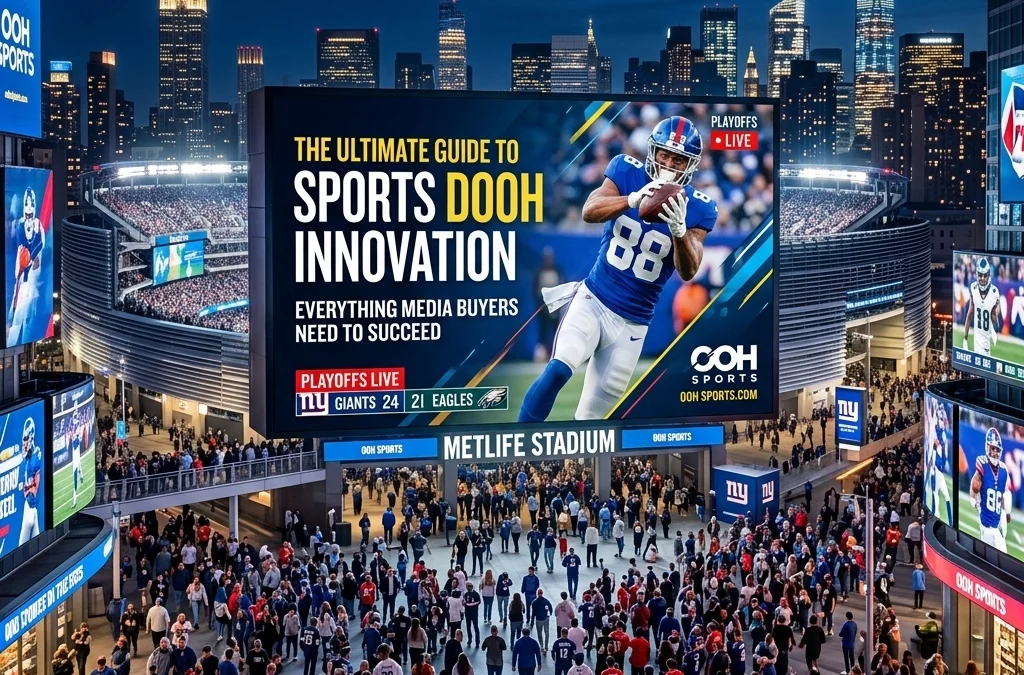
Digital Out-of-Home (DOOH) advertising has transitioned from a supplementary media buy to a central pillar of modern sports marketing. As traditional television viewership becomes increasingly fragmented, the ability to reach fans in the physical world offers a level of impact that digital banners and social feeds often struggle to match. For media buyers and brand managers, navigating this landscape requires a deep understanding of how technology, location, and fan behavior intersect.
The sports environment is unique because it is fueled by high emotional engagement and predictable movement patterns. Whether fans are heading to a stadium, gathering at a local bar, or celebrating a victory in a city center, they are part of a captive and attentive audience. This guide explores the strategies and innovations that allow brands to leverage OOH Sports to drive measurable results.

The Strategic Value of Contextual Targeting
Context is the primary driver of success in sports marketing. Unlike standard digital advertising, which relies on cookies and tracking pixels, DOOH thrives on real-world relevance. Media buyers can target specific environments where sports fans are naturally concentrated.
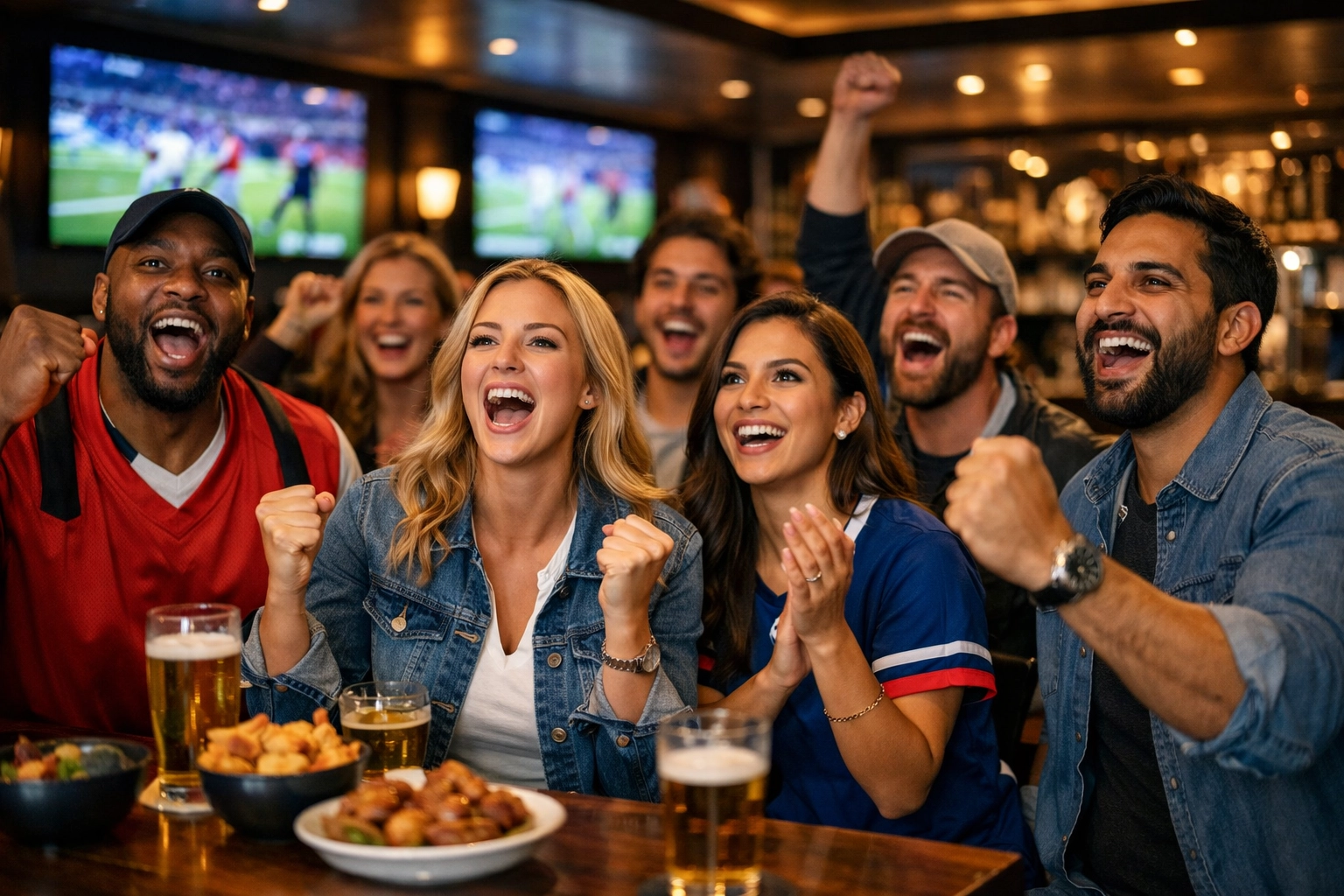
One of the most effective strategies involves the "Sports Bar Blitz." Research indicates that a significant majority of adults watch major sporting events at on-premise venues. Specifically, younger demographics show a nearly 91 percent attendance rate at bars and restaurants during key games. This environment provides a high-dwell time setting where consumers are already in a mindset of consumption and social interaction.
Placing ads during pre-game warm-ups, halftime breaks, or post-game celebrations ensures that the brand message is aligned with the emotional peaks of the event. This strategy is particularly effective for beverage brands, quick-service restaurants, and sports betting applications.
Stadium Surround: Capturing the Fan Journey
The stadium experience begins long before the first whistle and continues well after the final play. A "Stadium Surround" strategy involves geo-fencing the area around an arena to target fans at every touchpoint of their journey.
This includes digital billboards on transit routes, screens in residential lobbies near the venue, and urban panels in high-traffic pedestrian zones. By maintaining a presence throughout the commute, tailgating, and the return home, brands keep their message top of mind. This holistic approach ensures that the brand becomes part of the game-day ritual rather than just a fleeting advertisement inside the venue.
Strategic placements in these zones often deliver a higher return on investment than traditional stadium sponsorships. While a permanent in-stadium sign may be limited to a single view, a perimeter DOOH campaign can follow the fan across the entire city. For a deeper look at this comparison, media buyers often evaluate how smart brands scale with perimeter DOOH for significantly less cost than traditional multi-million dollar sponsorships.
The Shift to Programmatic DOOH (pDOOH)
The most significant innovation in the sector is the rise of Programmatic DOOH. This technology allows media buyers to purchase screen time with the same flexibility and data-driven precision as online display ads.
Programmatic capabilities enable real-time triggers. For example, a campaign can be set to go live only when a specific team wins, when a certain scoring threshold is met, or even based on local weather conditions. If a sudden rain delay occurs at a baseball game, a brand can instantly pivot its creative to promote indoor activities or weather-appropriate gear.
This level of agility eliminates the wasted spend associated with static or non-targeted placements. Buyers can access hundreds of thousands of digital screens across multiple networks through streamlined deal IDs, maximizing impact across billboards, urban panels, and transit hubs simultaneously.
Measuring ROI and Brand Lift
A common misconception in out-of-home advertising is that it is difficult to measure. Modern DOOH uses sophisticated analytics to prove campaign success. Through the use of anonymized mobile location data and device IDs, advertisers can track "exposed" audiences and determine if they took a specific action after seeing an ad.
For instance, a campaign for a new beverage can measure the lift in purchase consideration or brand favorability. Case studies have shown remarkable results in this area:
- A programmatic DOOH campaign for a vodka launch saw a 74 percent lift in purchase consideration.
- A major iced tea brand experienced a 119 percent lift in positive brand image through targeted DOOH placements.
- A campaign for outdoor recreational vehicles increased purchase consideration by 144 percent.
These metrics allow brand managers to move beyond "estimated impressions" and focus on hard data that proves the effectiveness of their spend. To avoid common pitfalls in this process, it is essential to understand which AI-powered analytics actually prove success versus those that are simply vanity metrics.
The Priming Effect: DOOH as an Omnichannel Multiplier
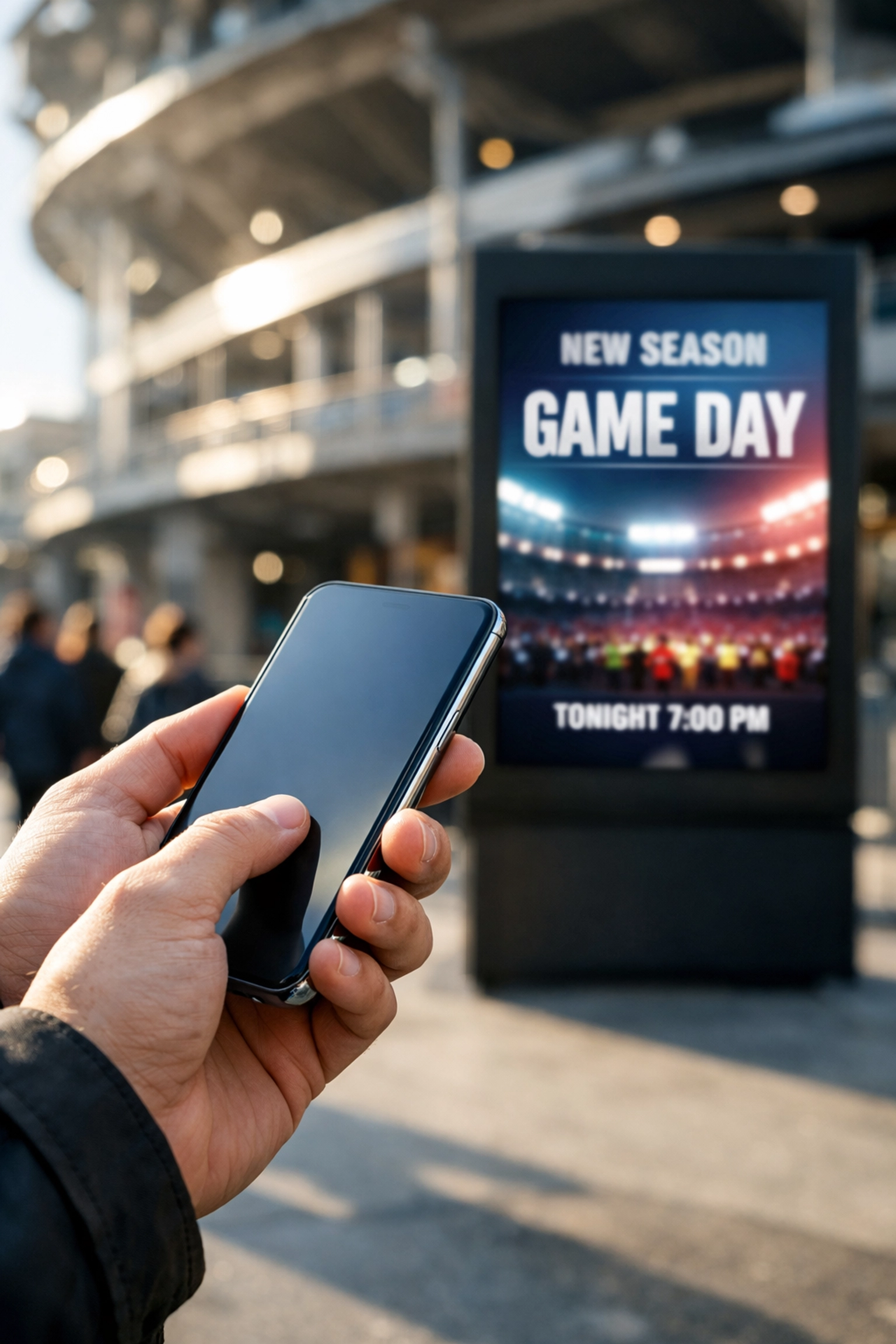
DOOH does not exist in a vacuum. Its greatest strength is its ability to amplify other media channels through what is known as the "priming effect." When a consumer sees a long-form advertisement on television or social media and then encounters a shorter, reinforced version of that ad on a digital billboard, the memory structure is significantly strengthened.
This reinforcement makes every other marketing dollar work harder. A fan who sees a 30-second spot during a game and then sees a 6-second cutdown of the same creative on an urban panel during their commute is much more likely to retain the brand message. This synergy drives search activity, social sharing, and eventually, conversions.
AI and Real-Time Creative Optimization
The integration of AI into DOOH is changing how creative content is delivered. Instead of running a single static loop, AI-powered platforms can analyze data in real-time to determine which creative version will perform best at any given moment.
In the context of sports, this means dynamic creative that updates with live scores, player stats, or league standings. This level of personalization creates a sense of immediacy and relevance that traditional advertising cannot match. It transforms an advertisement into a useful piece of information for the fan, thereby increasing engagement and positive brand association.
When comparing programmatic DOOH vs traditional stadium ads, the ability to change creative on the fly is a decisive advantage for brands that need to stay relevant in the fast-moving sports world.
Best Practices for Media Buyers
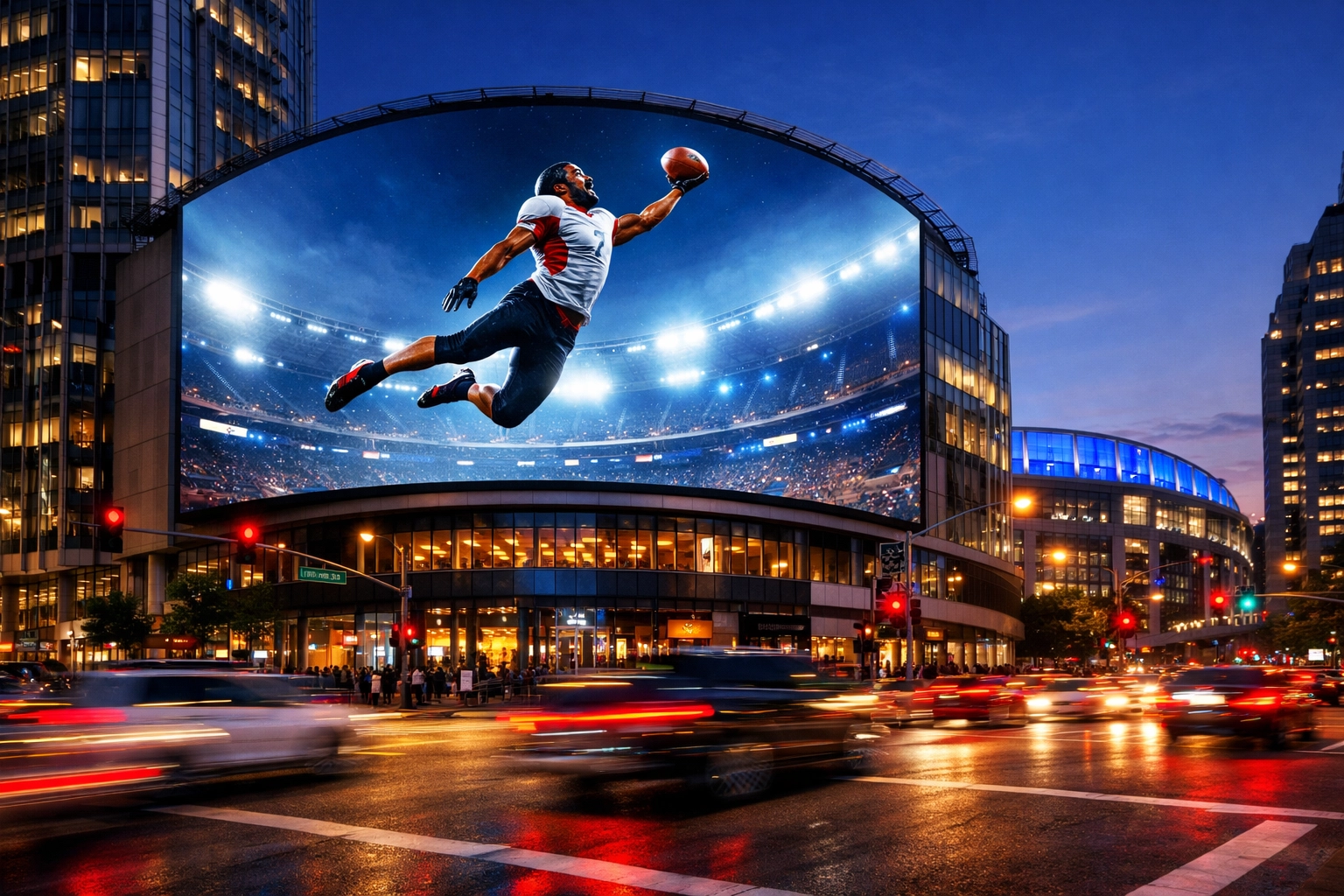
To succeed in the evolving sports DOOH space, media buyers should adhere to several core principles:
- Prioritize Location Over Volume: A thousand screens in irrelevant locations are less valuable than ten screens in a high-density fan zone during a major event.
- Use Data-Driven Triggers: Leverage live game data to ensure creative is always timely.
- Integrate with Mobile: Use DOOH to prime audiences for retargeting on their mobile devices.
- Focus on the Fan Journey: Map out where the fan goes before, during, and after the game.
- Demand Transparent Measurement: Work with partners who provide clear attribution and brand lift studies.
The Future of Sports Marketing Innovation
The future of sports marketing is defined by direct-to-fan engagement and hyper-personalization. As digital immersion becomes the norm, the physical world remains the final frontier for capturing undivided attention.
Innovation in this space is no longer just about the hardware of the screens, but about the intelligence of the software behind them. By using programmatic platforms and AI-driven analytics, brands can ensure that their message is seen by the right person, at the right time, in the most impactful environment possible.
Whether it is a startup looking to make a splash or an established brand seeking to maintain market dominance, the strategic use of sports DOOH is an essential component of a high-performing media mix. The brands that succeed will be those that view DOOH not as a standalone tactic, but as a dynamic and integrated part of the fan experience.